Technology Companies Work to Combat Pilot Fatigue
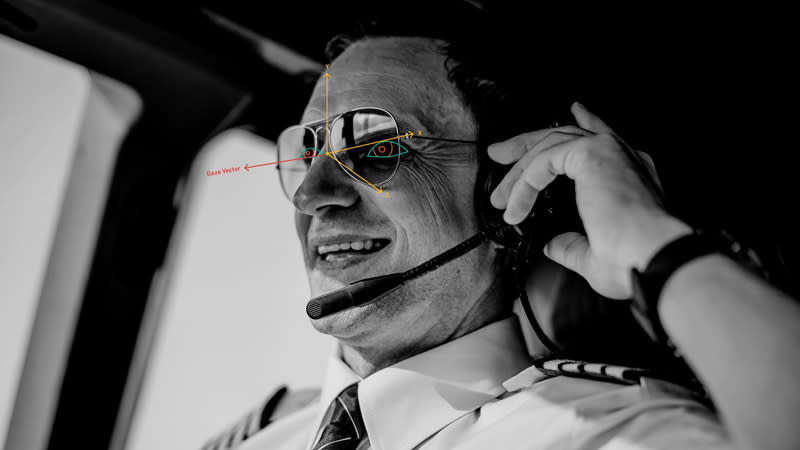
Collins Aerospace and Seeing Machines, a leader in eye tracking and driver safety technology, are working together to develop and deliver revolutionary fatigue management technology solutions to increase safety across the aerospace industry. These solutions will sense levels of fatigue and alertness, visible in a pilot’s eyes, to better understand the impact of their workload.
Collins will incorporate Seeing Machine’s advanced eye-tracking optics, embedded processing, human factors, and algorithm expertise in the development of its Pilot Support System (PSS) product line. With flight crews operating demanding schedules, often across multiple time zones, managing fatigue risk is critical. While airlines have robust processes for tracking pilot fatigue, these burden pilots with manual self-evaluation and reporting. This new technology provides another level of safety and higher quality data by using innovative eye and pupil tracking algorithms to sense a pilot’s level of alertness.
“As the aviation industry looks to the future of intelligent aircraft design, understanding the cognitive state of the pilot and crew is paramount,” said Christophe Blanc, vice president & general manager, Business & Regional Avionics for Collins Aerospace. “Pilot workload and wellbeing are key focus areas of our avionics design, and this collaboration will allow us to further support the pilots and their needs.”
Once completed, the PSS technology will be available to aircraft OEMs and operators as both forward-fit and after-market solutions.
Seeing Machines, headquartered in Australia, specializes in vision-based monitoring technology that enable machines to see, understand and assist people. Seeing Machines’ technology portfolio of AI algorithms, embedded processing and optics, power products that need to deliver reliable real-time understanding of vehicle operators. The technology spans the critical measurement of where a driver is looking, through to classification of their cognitive state as it applies to accident risk.
More From SAE Media Group
Aerospace & Defense Tech Briefs
Aireon to Launch Free, Real-Time Emergency Aircraft Location Service

Aerospace & Defense Tech Briefs
Unleashing AI in Aviation Will Accelerate Move to Zero-Pilot Cargo and Passenger Aircraft
Aerospace INSIDER
Northrop Grumman to Develop Prototype Artificial Intelligence Assistant
Aerospace & Defense Tech Briefs
Industry Invited to Participate in AeroTech Aerospace and Defense Technical Program
Aerospace & Defense Tech Briefs
Curtiss-Wright Black Boxes Receive European Approval
Aerospace & Defense Tech Briefs
Air Mobility Innovations Take Center Stage at Aerospace Systems and Technology Conference
Aerospace & Defense Tech Briefs
FLYHT and Spectralux Avionics Integrate Systems to Deliver FANS-Over-Iridium Satellite Communications to Airlines
Aerospace & Defense Tech Briefs
Curtiss-Wright and Honeywell Team to Develop Cloud-Enabled Flight Recorders of the Future
Aerospace INSIDER
Existing Navigation Data Can Help Pilots Avoid Turbulence
Aerospace & Defense Tech Briefs
SAE International Extends Call for Abstracts, Seeks Submissions for AeroTech Conference
Aerospace INSIDER
Helsing Unveils New Autonomous Fighter Jet 'CA-1 Europa'
NASA Spinoff
Flying in the Fast Lane with Air Traffic Software
Aerospace & Defense Tech Briefs
Collins Aerospace Provides Avionics for C-130H Modernization Program
Aerospace & Defense Tech Briefs
AI Algorithms Pilot X-62A in First Aerial Dogfight
Aerospace INSIDER
Egypt’s Apache Helicopter Fleet to Get Upgraded Sensor Systems
Tech Briefs
‘Digital Winglets’ for Real-Time Flight Paths
Aerospace & Defense Tech Briefs
Connected Aircraft Technologies Benefit Manufacturers, Airlines, and Travelers
Aerospace & Defense Tech Briefs
Helsing’s New CA-1 Europa Autonomous Fighter Jet
Aerospace INSIDER
New Displays Could Lower Risk of Small Aircraft Midair Collisions

Aerospace & Defense Tech Briefs
FAA Certifies AeroVonics' Economical Avionics Upgrade for Light General Aviation Aircraft
Aerospace & Defense Tech Briefs
Remotely Piloted Aircraft
Off-Highway Engineering
Argus Makes Fleet Protection Cybersecurity Available to Both Automotive and Aircraft Fleets
Aerospace & Defense Tech Briefs
ANSYS Will Help Airbus Develop AI-Enabled Flight Controls for the FCAS Program’s Autonomous Wingmen
Aerospace & Defense Tech Briefs
Abaco’s FORCE2 Flight Computer Enables National and International Ground Control Station Certification
Top Stories
NewsRF & Microwave Electronics
 Microvision Aquires Luminar, Plans Relationship Restoration, Multi-industry Push
INSIDERAerospace
 A Next Generation Helmet System for Navy Pilots
INSIDERDesign
 New Raytheon and Lockheed Martin Agreements Expand Missile Defense Production
INSIDERMaterials
 How Airbus is Using w-DED to 3D Print Larger Titanium Airplane Parts
NewsPower
 Ford Announces 48-Volt Architecture for Future Electric Truck
ArticlesAR/AI

Webcasts
Electronics & Computers
 Cooling a New Generation of Aerospace and Defense Embedded...
Automotive
 Battery Abuse Testing: Pushing to Failure
Power
 A FREE Two-Day Event Dedicated to Connected Mobility
Unmanned Systems
 Quiet, Please: NVH Improvement Opportunities in the Early Design Cycle
Automotive
 Advantages of Smart Power Distribution Unit Design for Automotive &...
Energy
 Sesame Solar's Nanogrid Tech Promises Major Gains in Drone Endurance
Similar Stories
INSIDERElectronics & Computers
 Airbus Starts Testing Autonomous Landing, Taxi Assistance on A350 DragonFly...
INSIDERPhotonics/Optics
 New Enhanced Visual Acuity System Will Help Pilots Fly More Safely
INSIDERAR/AI
 Northrop Grumman to Develop Prototype Artificial Intelligence Assistant