




Ultrasonic Guided Wave Analysis for Detecting and Classifying Damage in a Thin Metallic Plate
Ultrasonic guided waves are a nondestructive technique for monitoring damage in aircraft and rotorcraft structures.
A ircraft and rotorcraft structures are being redesigned with new lower weight materials; however, older metallic structures continue to be used. These older structures need monitoring and characterization of damage for con-
tinued operation. The use of ultrasonic guided waves is one nondestructive technique that can be used to interrogate such structures. Typically, large cracks or geometric variations can be found by examining signal amplitude,
but smaller damage that can suddenly grow in size and cause serious damage cannot be detected.
Guided Lamb wave nondestructive evaluation is a tool used in structural health monitoring of aircraft, civil, and mechanical infrastructures. The goal is to determine how wave velocity and mode shape are influenced by changes in geometry and/or boundary conditions caused by structural damage or degradation. These waves propagate in thin plates and plate-like structures, and are formed by the interference of multiple reflections and mode conversions of longitudinal and shear waves at the plate surfaces. Guided waves are typically generated and detected using conventional piezoelectric transducers, oriented either flat or at an angle with respect to the surface. Two types of waves propagate a symmetric wave and an antisymmetric wave, each with multiple modes and at different frequency and speeds that complicate data analysis. To avoid analysis complications, fundamental symmetric (S0) and antisymmetric (A0) modes at low-frequency thickness values are typically used for inspections by limiting source transducer bandwidth. Processing and analysis of guided wave signals are typically performed in the time and frequency domain. Other popular analysis methods include integrated time-frequency domain and wavelet analysis. In some cases, baseline signals are subtracted from inspection signals to enhance results.
A finite-difference model was used to simulate wave propagation in a thin aluminum plate with a notch. For this modeling and simulation, commercial software was used based on a published algorithm that solves a 2D (plane strain) acoustic wave equation. In the model, the ultrasonic source and receiver were each 10 mm in diameter and in planar contact with the sample surface positioned 100 mm apart. The aluminum plate was 2.0 mm thick and 600 mm wide. A wide width was used to prevent interference of edge reflections. Aluminum properties of the material used in the model were longitudinal velocity of 6420 m/s, transverse velocity of 3040 m/s, and density of 2700 kg/m3. The simulated damage (the notch) had a width of 6.0 mm and depth from the sample back surface that ranged from 0.0 to 1.0 mm in 0.1-mm steps. Notch depth translated to a depth-to-thickness ratio of 0% to 50%. To vary the location of the notch, the source and receiver transducers were repositioned but always kept 100 mm apart. For example, the notch was centered at 0.0 along the axis, the source was positioned at -40 mm, and the receiver positioned at 60 mm.
Two different transmitter or source signals were used. A sine Gaussian pulse and sine exponential pulse were available as functions in the software. The sine Gaussian pulse spectrum has a full-width-half-height (FWHH) bandwidth of ~0.32 MHz and ranges from 0.0 to 1.0 MHz. The sine exponential pulse spectrum has a FWHH bandwidth of ~0.43 MHz and frequency range from 0.0 to ~2.0 MHz, with low amplitude frequency components above 1 MHz.
Time, frequency, and time-frequency analysis methods of ultrasonic guided waves for detecting a small notch were present. Ultrasonic-guided wave signals were numerically generated using a finite-difference model. In this model, damage was simulated in a rectangular notch of varying depth and position between a source and receiver transducer. The signals displayed the classical symmetric and antisymmetric modes. Analysis of these signals as a function of notch depth showed a flat response or no change in signal amplitude, spectral magnitude, and average power up to a damage depth of ~0.5 mm (or 25% of the sample thickness). For greater damage or notch depths, larger changes were observed. This result showed that gross damage could be detected, but not shallow damage less than 25% of material thickness.
This work was done by Robert F. Anastasi of the Army Research Laboratory. ARL-0127
This Brief includes a Technical Support Package (TSP).
Ultrasonic Guided Wave Analysis for Detecting and Classifying Damage in a Thin Metallic Plate
(reference ARL-0127) is currently available for download from the TSP library.
Don't have an account?
More From SAE Media Group
Aerospace & Defense Tech Briefs
Nonlinear Acoustic Metamaterials for Sound Attenuation Applications
Aerospace & Defense Tech Briefs
Fatigue Crack Detection Via Load-Differential Guided Wave Methods
Photonics Tech Briefs
Cancellation of Laser Noise in an Unequal-Arm Interferometer



Tech Briefs
Levitating Objects with Light
Tech Briefs
Acoustical-Sensor Assemblies for Use in Flows
Aerospace & Defense Tech Briefs
Multifunctional Vehicle Structural Health Monitoring with Piezoelectric Wafer Active Sensors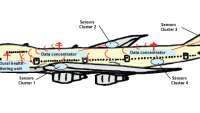
Motion Design INSIDER
Friction That Cools
Aerospace & Defense Tech Briefs
Expanding Possibilities for Superconducting Qubits With Niobium
Aerospace & Defense Tech Briefs
This Laser Clock Could Transform Satellite Navigation Accuracy
Photonics & Imaging Technology
Twisted Light in Optical Fibers May Lead to Substantial Capacity Enhancements

Aerospace & Defense Tech Briefs
Portable Data Recorder for Measuring Sand Grain Fracture After Blasts
Aerospace & Defense Tech Briefs
Outdoor Synthetic Aperture Acoustic Ground Target Measurements

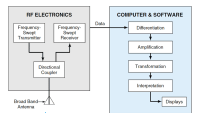
Aerospace & Defense Tech Briefs
Bi-Axial Vibration Energy Harvesting
Motion Design INSIDER
The Skillful Skydiving of Wingless Springtails
Motion Design INSIDER
Crane Safety Equation
Tech Briefs
Compact Infrasonic Windscreen
Electronics & Sensors INSIDER
New Tech May Lead to Smaller, More Powerful Wireless Devices
Tech Briefs
PGUOM Can Block Noise Without Blocking Air
Power Electronics INSIDER
Diamond Quantum Imaging Can Enable Next-Gen Power Electronics
Photonics & Imaging Technology
Large Format Windows: From Material to Mission
Power Electronics INSIDER
Powerful and Precise Multi-color Lasers Now Fit on a Single Chip
Overview
The document titled "Investigating the Use of Ultrasonic Guided Wave Analysis Methods for Detecting and Classifying a Small Notch in a Thin Metallic Plate" by Robert F. Anastasi presents a comprehensive study on the application of ultrasonic guided wave techniques for the detection and classification of small notches in thin metallic plates. This research is particularly relevant for industries where structural integrity is critical, such as aerospace and civil engineering.
The report begins with an introduction to the fundamental concepts of Lamb waves, which are a type of guided wave that can propagate in thin plates. The study emphasizes the importance of accurately identifying and characterizing defects, such as notches, to prevent catastrophic failures in structures. The author discusses the theoretical background of Lamb waves and their modes, which are essential for understanding how these waves interact with defects.
The methodology section outlines the use of finite-difference modeling and simulations to analyze the propagation of Lamb waves in the presence of notches. This approach allows for the visualization of wave behavior and the development of techniques for defect detection. The report details the time-frequency analysis methods employed, including the short-time Fourier transform (STFT) and its applications in generating time-frequency representations of the signals.
Results from the integrated time-frequency analysis demonstrate the effectiveness of these ultrasonic methods in identifying and classifying notches. The study highlights the advantages of using time-frequency representations, such as spectrograms, to enhance the detection capabilities of ultrasonic testing. The findings indicate that the proposed methods can significantly improve the accuracy of defect identification compared to traditional techniques.
The document concludes with a discussion of the implications of the research findings for practical applications in non-destructive testing (NDT). The author suggests that the integration of advanced ultrasonic guided wave analysis methods can lead to more reliable assessments of structural integrity, ultimately contributing to safer engineering practices.
Overall, this report provides valuable insights into the use of ultrasonic guided waves for defect detection in metallic structures, showcasing innovative approaches that can enhance the reliability and efficiency of NDT methods. The research is approved for public release, making it a significant contribution to the field of structural health monitoring.
Top Stories
INSIDERMaterials
 How Airbus is Using w-DED to 3D Print Larger Titanium Airplane Parts
NewsSensors/Data Acquisition
 Microvision Aquires Luminar, Plans Relationship Restoration, Multi-industry Push
INSIDERDesign
 A Next Generation Helmet System for Navy Pilots
NewsManned Systems
 Accelerating Down the Road to Autonomy
INSIDERWeapons Systems
 New Raytheon and Lockheed Martin Agreements Expand Missile Defense Production
ArticlesDesign
 CES 2026: Bosch is Ready to Bring AI to Your (Likely ICE-powered) Vehicle
Webcasts
Transportation
 Advantages of Smart Power Distribution Unit Design for Automotive...
Automotive
 Quiet, Please: NVH Improvement Opportunities in the Early Design...
Electronics & Computers
 Cooling a New Generation of Aerospace and Defense Embedded...
Power
 Battery Abuse Testing: Pushing to Failure
AR/AI
 A FREE Two-Day Event Dedicated to Connected Mobility
