




Disposable Chemical Sensor and Wireless Communication Device
This system can be used to determine the safety of an environment under the rubble of a collapsed building, and to provide two-way communication between survivors and rescuers.
A disposable chemical sensor and temperature device has been developed that may be dropped into building rubble or other areas not accessible by rescue personnel to test the environment in the rubble. The system also provides wireless two-way communication and control to obtain information concerning the environment prior to disturbing an area under the rubble, and gives an indication of the likelihood that the area is a candidate for finding survivors. In addition, it would provide two-way communication between a survivor trapped in the rubble and a surface rescue worker, such that a survivor can be alerted to the fact that he or she should make a sound to make his or her presence known.
The system consists of a disposable radio communication, chemical sensor, and temperature sensor device comprising a body defining an enclosed chamber, a power source mounted in the chamber, an on-off switch mounted on the body and accessible from outside the body, a processor mounted in the chamber and powered by the power source, a transceiver mounted in the chamber and in communication with the processor, a temperature sensor mounted on the exterior of the body and in communication with the processor, and one or more chemical sensors mounted on the exterior of the body and in communication with the processor.
A speaker is mounted in the body and is in communication with the processor. A microphone is mounted in the body and in communication with the processor. The transceiver is adapted to receive a voice signal or other sound signal from a remote unit, and input the signal to the speaker for broadcast. The microphone is adapted to receive a sound signal from outside the body and input the received signal to the processor for transmittal by the transceiver to the remote unit.
The disposable chemical sensor and wireless communication device includes a body that is rugged enough to withstand impacts and other crushing forces. The body is made of a hard metal such as titanium or metal alloy such as titanium and steel, and is reinforced with internal supports of the same material. The body is weighted to keep it oriented in a particular spatial plane. A power source is mounted in the chamber and may comprise one or more dry cell batteries. A processor on-off switch is mounted on the body and is accessible from outside the body to turn on a digital processor. The processor serves as a controller and can receive data from the parts as input. A transceiver communicates with the processor and has an antenna for communications between the transceiver and the remote unit.
A broadcast speaker is mounted on the body and has a face portion that is substantially coextensive with the spherical surface of the body. The speaker communicates with and is controlled by the processor. A chemical sensor capable of detecting toxic chemicals is mounted on the body, as is a temperature sensor. Both sensors are in communication with and controlled by the processor.
The transceiver receives a voice signal from a remote unit and inputs the signal to the processor and then to the speaker for broadcast. The microphones are adapted to receive any voice or other sound message. The broadcast signal may be from a rescue worker at the remote unit, or a recording urging survivors to utter or tap out a sound. The sound signal is typically a voice message, but may be any other noise a survivor is capable of producing.
An orientation sensor is disposed in the chamber and provides the rescue worker an indication as to the direction from which a voice or other sound signal reaches the body. A motorized weight displacement system will shift the weighting of the body to cause it to move in a desired direction if the device should come to rest in an undesirable location.
In operation, the switch is moved by an operator to the “on” position, which starts operation of the processor. The body is dropped into a void in a rubble area. Because of the shape and weight of the body, it tends to roll and bounce through openings in the rubble until coming to a stop. Upon receipt of a voice message from a rescue worker at a remote site, the speaker begins broadcasting the message into the surrounding rubble. The processor continues operation of the speaker, the transceiver, and the microphones as long as there is power provided. At the same time, one or more chemical sensors and the temperature sensor are attempting to detect any potential toxic gasses and measure the temperature of the surrounding environment in the rubble. In practice, a number of the devices are tossed into a rubble pile, all in communication with the remote unit.
The orientation sensor provides an indication as to the attitude of the body, whether right-side up, upside down, or the like. The processor and transceiver provide an indication as to which microphone has received the most pronounced signal. The rescue workers, knowing roughly the location of the body, are thereby enabled to start a search in the likeliest location of a survivor.
This work was done by Charles Philip Amidon of the Naval Undersea Warfare Center. NUWC-0011
This Brief includes a Technical Support Package (TSP).
Disposable Chemical Sensor and Wireless Communication Device
(reference NUWC-0011) is currently available for download from the TSP library.
Don't have an account?
More From SAE Media Group
Aerospace & Defense Tech Briefs
Robust Quantum Sensors Program

Battery & Electrification Technology
Designing Safer, Higher-Performance Lithium Batteries

Motion Design
Flexible Conductive Skin Gives Robots the Human Touch

Tech Briefs
Extended-Range Passive RFID and Sensor Tags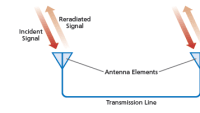
Aerospace & Defense Tech Briefs
Modular, Portable, and Reconfigurable Wireless Sensing System


Aerospace & Defense Tech Briefs
Distributed Fiber Optic Sensing for Homeland Security
Aerospace & Defense Tech Briefs
Fiber-Optic Seismic Sensor for Unattended Ground Sensing
Electronics & Sensors INSIDER
Self-Powered Sensor Automatically Harvests Magnetic Energy
Tech Briefs
A New Kind of Microphone
Aerospace & Defense Tech Briefs
Outdoor Synthetic Aperture Acoustic Ground Target Measurements
Electronics & Sensors INSIDER
New Tech May Lead to Smaller, More Powerful Wireless Devices

Electronics & Sensors INSIDER
Careful Heating Unlocks Unprecedented Sensitivity to Pressure in Semiconductor Materials
Battery & Electrification Technology
New Products
Electronics & Sensors INSIDER
Blocking Electromagnetic Radiation with the Flip of a Switch
Tech Briefs
Products of Tomorrow


Tech Briefs
When Mushrooms Control Robots
Aerospace & Defense Tech Briefs
Making a Material Difference in Aerospace & Defense Electronics
RF & Microwave Technology
Antenna Electronically Steered Using MEMS Phase Shifters
Tech Briefs
Deployable Fresnel Rings
Aerospace & Defense Tech Briefs
Implementing a GPS Waveform Under the SCA
Overview
The document outlines a patent application for a "Disposable Chemical Sensor and Wireless Communication Device," identified by Attorney Docket No. 84589. This invention is a continuation of a prior application (No. 11/183,341) and aims to enhance safety and efficiency in rescue operations, particularly in scenarios involving collapsed structures.
The invention features a rugged, spherical body designed to withstand impacts and crushing forces, made from durable materials such as titanium or metal alloys. It includes an enclosed chamber housing essential components: a power source (such as dry cell batteries), a digital processor, a transceiver, a speaker, and a microphone. The device is equipped with sensors capable of detecting environmental conditions, including temperature and hazardous gases.
Key functionalities of the device include its ability to transmit and receive sound signals, enabling two-way communication between rescue workers and the device. The transceiver allows the device to broadcast messages from the surface to the location where it has settled, while also relaying any detected sounds or messages back to the rescue team. This feature is particularly valuable in search and rescue operations, as it can help locate survivors trapped under debris.
The document emphasizes the device's design, which allows it to be dropped into rubble piles, where its weight and shape facilitate its descent into the debris, increasing the likelihood of effective communication and environmental monitoring. The invention aims to provide a reliable means of remote sensing for dangerous or toxic gases, as well as temperature variations, which are critical for ensuring the safety of rescue personnel and potential survivors.
The application also includes a statement of government interest, indicating that the invention may be utilized by the U.S. government for various purposes without the obligation of royalty payments. The document concludes with a summary of the invention's objectives, highlighting its potential to improve rescue operations through advanced communication and sensing capabilities.
Overall, this patent application presents a significant advancement in the field of emergency response technology, combining chemical sensing and wireless communication in a disposable format tailored for challenging environments.
Top Stories
INSIDERManufacturing & Prototyping
 How Airbus is Using w-DED to 3D Print Larger Titanium Airplane Parts
NewsAutomotive
 Microvision Aquires Luminar, Plans Relationship Restoration, Multi-industry Push
INSIDERAerospace
 A Next Generation Helmet System for Navy Pilots
INSIDERDesign
 New Raytheon and Lockheed Martin Agreements Expand Missile Defense Production
ArticlesAR/AI
 CES 2026: Bosch is Ready to Bring AI to Your (Likely ICE-powered) Vehicle
Road ReadyDesign

Webcasts
Semiconductors & ICs
 Advantages of Smart Power Distribution Unit Design for Automotive...
Unmanned Systems
 Quiet, Please: NVH Improvement Opportunities in the Early Design...
Electronics & Computers
 Cooling a New Generation of Aerospace and Defense Embedded...
Power
 Battery Abuse Testing: Pushing to Failure
AR/AI
 A FREE Two-Day Event Dedicated to Connected Mobility
