




Modular, Portable, and Reconfigurable Wireless Sensing System
This system records environmental conditions in an aircraft cabin to create a database for determination of normal conditions.
A modular, portable, reconfigurable wireless sensor system monitors and records environmental conditions in an aircraft cabin. By designing a sensor system that can be easily configured for different needs (with the ability and flexibility to accommodate different/ extra sensors), the system can be used to measure parameters that meet multiple research requirements. Through design considerations such as generalized signal interface, and hierarchical code structure that can be easily reworked for new sensors, this system can be used to measure parameters that meet multiple research requirements. This sensor system, the ASCENT 1000, is configured with temperature, humidity, sound level, carbon dioxide, and pressure sensors. The system has been calibrated in the laboratory without the use of a pressure chamber.
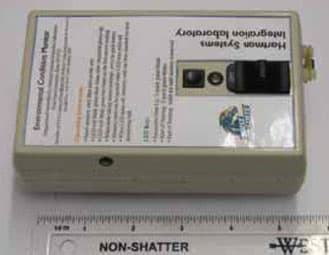
During ASCENT 1000 sensing operations, the system periodically (at a user-adjustable sensing frequency) polls the onboard sensors to accumulate data on the surrounding environment. After collecting data from the sensors, the microcontroller writes this time-stamped data to a secure digital memory card (a commercial product). Analysis of data may be carried out by accessing the sensor data file on the memory card.
Although single units are useful in some situations, many environments require more than one data collection point. This is due to the tendency of some cabin parameters being measured (e.g. temperature, carbon dioxide concentration, and noise) to exhibit spatial variation within the cabin. Therefore, each ASCENT 1000 can be outfitted with an antenna to function as a sensor node in a wireless sensor network. This provides comprehensive collection of data on the environment in question. The units perform their operations independently (or cooperatively with the use of a common clock or real-time clock), needing only to be powered before establishing communications with the network and initiating the data collection. Even though ASCENT 1000 has wireless networking capability, it has been used primarily as a standalone sensing unit with one sensor node per aircraft.
This work was done by Jean Watson of the Federal Aviation Administration; Sin Ming Loo, Michael Owen, Josh Keipert, Arlen Planting, Michael Pook, and Derek Klein of Boise State University; and Byron Jones and Jeremy Beneke of Kansas State University. For more information, download the Technical Support Package (free white paper) at www.defensetechbriefs.com/tsp under the Physical Sciences category. FAA-0001
This Brief includes a Technical Support Package (TSP).
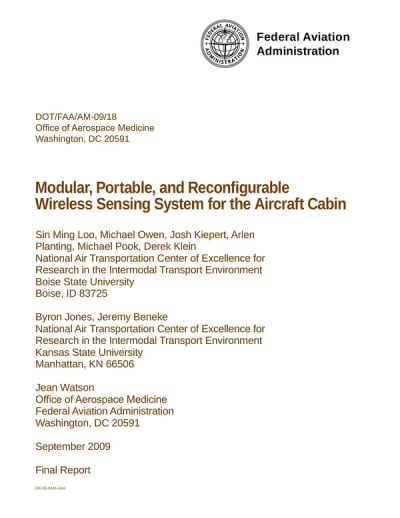
Modular, Portable, and Reconfigurable Wireless Sensing System
(reference FAA-0001) is currently available for download from the TSP library.
Don't have an account?
More From SAE Media Group
Photonics & Imaging Technology
New Frequency Comb Can Identify Molecules in 20-Nanosecond Snapshots


Motion Design
Flexible Conductive Skin Gives Robots the Human Touch
Electronics & Sensors INSIDER
Self-Powered Sensor Automatically Harvests Magnetic Energy
Photonics Tech Briefs
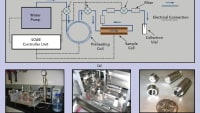
Portable Dew Point Mass Spectrometry System for Real-Time Gas and Moisture Analysis

Aerospace & Defense Tech Briefs
GigE Advanced Imaging Sensor
Tech Briefs
Small CO₂ Sensors Operate at Lower Temperature
Aerospace & Defense Tech Briefs
Fiber-Optic Seismic Sensor for Unattended Ground Sensing

Aerospace & Defense Tech Briefs
Gesture-Directed Sensor-Information Fusion Gloves
Aerospace & Defense Tech Briefs
Robust Quantum Sensors Program
Software Tech Briefs
WGM Temperature Tracker
Aerospace & Defense Tech Briefs
Distributed Fiber Optic Sensing for Homeland Security
Aerospace & Defense Tech Briefs
Distributed, Collaborative Human- Robotic Networks for Search, Identify, and Track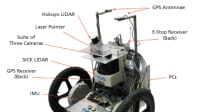
Aerospace & Defense Tech Briefs
Time-Coding of Asynchronous Data Transmissions
Tech Briefs
Microparticle Flow Sensor
Tech Briefs
New on the Market
Aerospace & Defense Tech Briefs
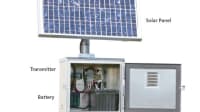
Target Detection and Classification Using Seismic and PIR Sensors


Tech Briefs
Champagne Heat Pump
Tech Briefs
Measurements of Radiation in the Atmosphere
Tech Briefs
Automatic Thermal Switches With No Moving Parts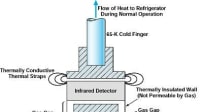
Overview
The document titled "Modular, Portable, and Reconfigurable Wireless Sensing System for the Aircraft Cabin" presents a comprehensive overview of the design and prototyping of an innovative sensor system aimed at monitoring environmental conditions within aircraft cabins. Conducted by researchers from Boise State University, Kansas State University, and the FAA Office of Aerospace Medicine, the project addresses the need for effective environmental sensing in aviation.
The primary objective of the sensor system, referred to as ASCENT 1000, is to record various cabin conditions during flights to create a substantial database that can help determine normal environmental parameters. This portable and modular system is designed to be easily reconfigured, allowing it to accommodate different sensors based on specific research requirements. The flexibility of the system is achieved through a generalized signal interface and a hierarchical code structure, enabling researchers to adapt the setup for various environmental measurements.
The current configuration of the sensor system includes sensors for temperature, humidity, sound level, carbon dioxide, and pressure. The system has been calibrated in a laboratory setting, and data from six flights have been collected and analyzed. This data is crucial for understanding the environmental dynamics within aircraft cabins, which can significantly impact passenger comfort and health.
The document outlines the design considerations that contribute to the system's effectiveness, including its portability, ease of use, and the ability to perform sensing tasks without cumbersome equipment. The ASCENT 1000 can be conveniently transported as part of carry-on luggage, making it practical for researchers conducting in-flight studies.
In conclusion, the report emphasizes the importance of developing a versatile and efficient sensing system for aircraft cabins. By providing a means to gather and analyze environmental data, the ASCENT 1000 aims to enhance the understanding of cabin conditions, ultimately contributing to improved passenger safety and comfort. The findings and methodologies presented in this report are expected to serve as a valuable resource for future research in aviation environmental monitoring.
Top Stories
INSIDERRF & Microwave Electronics
 FAA to Replace Aging Network of Ground-Based Radars
NewsManufacturing & Prototyping
 Rewriting the Engineer’s Playbook: What OEMs Must Do to Spin the AI Flywheel
Road ReadyTransportation
 2026 Toyota RAV4 Review: All Hybrid, All the Time
NewsDesign
 CES 2026: Bosch is Ready to Bring AI to Your (Likely ICE-powered) Vehicle
INSIDERManned Systems
 F-22 Pilot Controls Drone With Tablet
EditorialLighting Technology

Webcasts
Energy
 Powering America’s EV Future: Connect, Collaborate, Innovate
Power
 E/E Architecture Redefined: Building Smarter, Safer, and Scalable...
Power
 Hydrogen Engines Are Heating Up for Heavy Duty
Electronics & Computers
 Advantages of Smart Power Distribution Unit Design for Automotive...
Transportation
 Quiet, Please: NVH Improvement Opportunities in the Early Design...
