




Autonomous Vehicle Engineering - March 2018
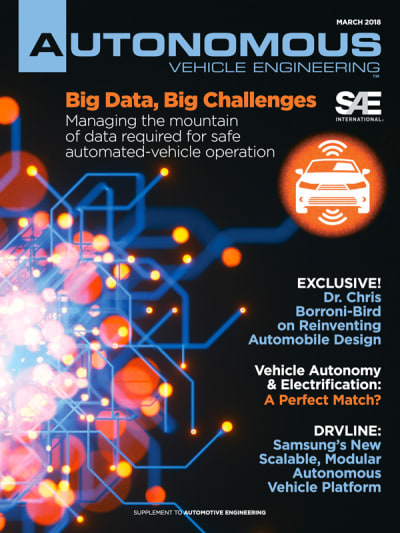
Inside this issue
Overview
The March 2018 supplement of Automotive Engineering delves into the transformative landscape of the automotive industry, focusing on vehicle autonomy, electrification, and the integration of advanced technologies. This issue highlights the critical role of data management, partnerships, and innovative design in shaping the future of mobility.
Key Themes and Innovations:
-
Vehicle Autonomy and Electrification: The magazine explores the synergy between vehicle autonomy and electrification, emphasizing how these two trends are interconnected. The rise of autonomous vehicles (AVs) is not only about self-driving technology but also about the electrification of vehicles, which enhances efficiency and reduces emissions. The integration of electric powertrains with autonomous systems is seen as a pivotal development in the automotive sector.
-
Big Data Challenges: A significant focus is placed on the challenges associated with managing the vast amounts of data generated by automated vehicles. The safe operation of AVs requires real-time data processing and analysis, which presents both technical and logistical hurdles. The industry is urged to develop robust data management strategies to ensure the reliability and safety of autonomous systems.
-
Ecosystem Partnerships: The issue discusses the importance of collaboration among various stakeholders in the automotive ecosystem. As companies strive to turn data into actionable insights, the need for a unified technical platform becomes paramount. Mamatha Chamarthi, ZF’s Chief Digital Officer, emphasizes the necessity of standardization to facilitate effective partnerships across different sectors, including banking and technology.
Innovative Platforms: The magazine introduces Samsung’s DRVLINE, a scalable and modular autonomous vehicle platform designed to support the development of AVs. This platform exemplifies the trend towards modularity in vehicle design, allowing manufacturers to adapt and innovate more rapidly in response to changing market demands.
-
5G Technology and Road Safety: The potential of 5G technology to enhance roadway safety is a prominent topic. The magazine discusses how faster and more reliable communication networks can support vehicle-to-everything (V2X) communication, enabling vehicles to interact with each other and their environment. This connectivity is crucial for the safe operation of autonomous vehicles and can significantly reduce accidents.
-
Regulatory Frameworks: The issue highlights the need for clear regulatory frameworks to support the deployment of connected and autonomous vehicles. CTIA advocates for policies that promote innovation while ensuring safety and security. The magazine stresses the importance of collaboration between industry stakeholders and regulators to create an environment conducive to technological advancement.
-
Design Innovations: Dr. Chris Borroni-Bird shares insights on reinventing automobile design to accommodate the needs of autonomous vehicles. The design process must evolve to prioritize user experience, safety, and functionality in a world where traditional driving roles are diminished. This shift in design philosophy is essential for creating vehicles that are not only technologically advanced but also user-friendly.
-
Future of Mobility: The supplement concludes with a forward-looking perspective on the future of mobility. It emphasizes the importance of embracing change and innovation in the automotive industry. As companies navigate the complexities of electrification, autonomy, and data management, the focus must remain on creating safer, more efficient, and sustainable transportation solutions.
Conclusion: The March 2018 issue of Automotive Engineering serves as a comprehensive resource for understanding the current trends and challenges in the automotive industry. With a strong emphasis on collaboration, innovation, and the integration of advanced technologies, the magazine provides valuable insights into the future of vehicle design and operation. As the industry continues to evolve, staying informed and adaptable will be crucial for stakeholders at all levels.
Articles
-
Features
Bioprivacy: Designing for a Moving Target
Reinventing the Automobile’s Design
When Steering Isn’t Steering Anymore
Autonomy and Electrification: A Perfect Match?
Who’s Ahead in the Automated-Driving Race?
GM’s Self-Driving Car Strategy: Vertical Integration
Top Stories
INSIDERAerospace
 How Airbus is Using w-DED to 3D Print Larger Titanium Airplane Parts
NewsAutomotive
 Microvision Aquires Luminar, Plans Relationship Restoration, Multi-industry Push
INSIDERManufacturing & Prototyping
 A Next Generation Helmet System for Navy Pilots
INSIDERDefense
 New Raytheon and Lockheed Martin Agreements Expand Missile Defense Production
ArticlesAR/AI
 Accelerating Down the Road to Autonomy
Road ReadyDesign

Webcasts
Automotive
 Advantages of Smart Power Distribution Unit Design for Automotive...
Unmanned Systems
 Quiet, Please: NVH Improvement Opportunities in the Early Design...
Defense
 Cooling a New Generation of Aerospace and Defense Embedded...
Power
 Battery Abuse Testing: Pushing to Failure
Power
 A FREE Two-Day Event Dedicated to Connected Mobility
