




Big Data, Big Challenges
Cloud services and multiple partnerships are issues the mobility industry grapples with as it expands outside the vehicle.

Connectivity lets automakers and service providers collect tons of valuable data from vehicles and their operators, but it also brings the challenge of finding ways to glean useful information from huge databases. After controlling everything built into cars and trucks for more than a century, OEMs are moving outward to a murky world with multiple partners and ‘cloud-computing’ networks that are spread across the planet.
Companies throughout the automotive supply base—which now includes a growing number of startups and new players—are rushing to build profitable models based on data from vehicles. The OEMs who decide when and where to market connected cars will be able to quickly justify their investments.

“Companies can do a lot to drive new services,” said Scott Frank, an executive at Airbiquity. “OEMs can understand the condition of the vehicle and how particular parts are performing. If there’s a new part on a vehicle, they may check its performance data every minute. If they see an issue, they can go to the supplier and set up steps to resolve the issue.”
OEMs aren’t the only ones planning to make use of vehicle data. Service providers and app developers are racing to help end users take advantage of all the data that’s available. Retailers want to connect with drivers in search of food and fuel, roadway managers want information on traffic flow, and drivers want infotainment such as real-time maps and navigation services.
Map maker Here is busily creating maps that include updates as detailed as where road signs have been knocked down. The company already has hundreds of cars collecting geospatial information, with lidar, high resolution cameras and other sensors. Although data transmission is limited to roadway traits that have changed, these specialized vehicles are collectively sending tons of data.
“We’re collecting petabytes of data on a monthly basis,” explained Sanjay Sood, Vice President of Highly Automated Driving at Here. “It’s processed with machine learning algorithms.”
Transmitting this data efficiently requires a well-planned architecture. The easy part is sending data to vehicles. Map updates and other data sent down to vehicles are small compared to the volumes being uploaded to the cloud.
Data overload
Cameras and other elements of the vehicle’s fused-sensor array will generate large volumes of data that OEMs and Tier 1s can use to analyze usage and provide predictive diagnostics. However, input from large vehicle fleets can challenge the data ‘pipes’ that send bits and bytes to the cloud. Intel estimates that a single autonomous vehicle will generate 4 terabytes of data every 90 minutes.
Though connected vehicles won’t reach such levels for a few years, the data volumes sent by thousands of vehicles operating in a big city during rush hour quickly add up. Many techniques can help make data collection and analysis more manageable. Data compression is an obvious choice.
Overhead can also be reduced by using on-vehicle systems that decide what’s essential and useful. For example, cameras collect lots of information that isn’t needed for real time mapping.
“We want vehicles to do a lot of the computing, so they only send important data,” Sood told SAE’s Autonomous Vehicle Engineering. “When the safety and driving systems process the scene, they can pick out the important elements, things that have changed. That doesn’t require a lot of overhead, and the OEMs get better maps as a result, so they’re open to collecting the data and sending it to us.”
Automakers aren’t interested in collecting and storing all this data by themselves. The industry is moving quickly to devise strategies for working with huge databases. Last year Toyota, Intel, Ericsson, Denso, and telecommunications firm NTT DoCoMo formed the Automotive Edge Computing Consortium.
The companies estimate that data sent to the cloud will reach 10 exabytes per month by 2025 — 10,000 times what’s being collected in early 2018.
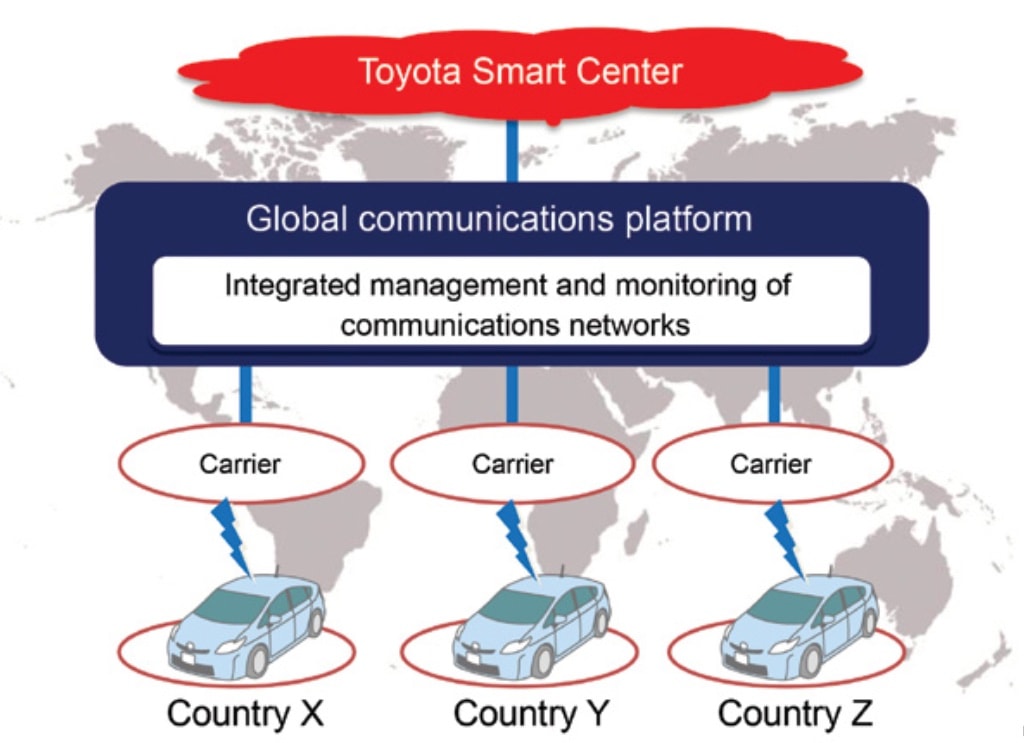
Toyota also partnered with Microsoft, which handles cloud computing for Toyota Connected. Microsoft is making a strong push in automotive, teaming up with Baidu, BMW, Ford, Renault-Nissan, Toyota, ZF, Harman, IAV and Volvo. Existing cloud service providers like Microsoft and Amazon are expected to handle most auto industry programs, since the far-flung nature of global cloud coverage brings many vagaries.
“Automakers now have to deal with large amounts of data and work with a lot of partners,” said Sanjay Ravi, Managing Director Automotive at Microsoft. “They also need to deal with varied data collection and usage in many different countries, where privacy and other regulations are very different.”
Partners galore
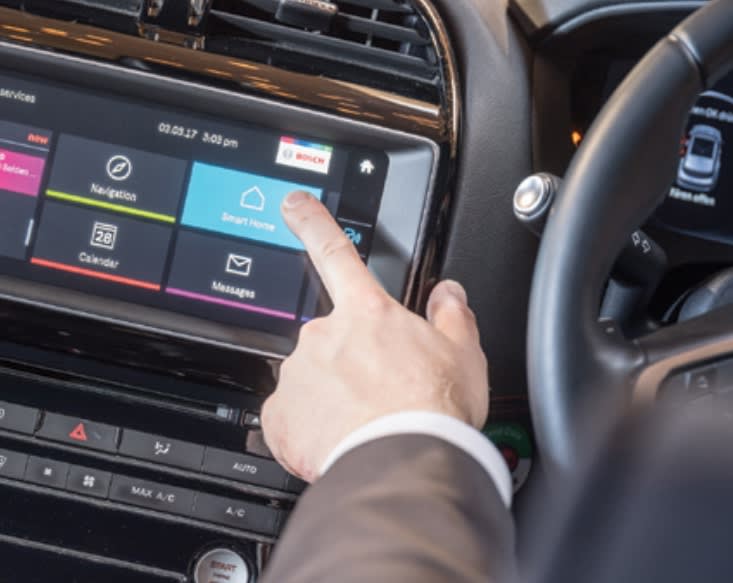
The industry’s focus on collecting and sharing data has made “ecosystem” an industry buzz word. Many different entities play a role in helping companies turn data into useful information. These partners need a common technical base if they’re going to work together efficiently. These relationships can extend into areas like banking, so there’s little chance that different partnership groups will be able to use proprietary versions of standards.
“We want to have a unified platform,” said Mamatha Chamarthi, ZF’s Chief Digital Officer. “That will let us harvest what we have from existing programs and innovate with new things like Car eWallet, which lets vehicles pay for electric charging, parking and tolls without human interaction.”
Such developments give rise to considerable security and privacy concerns. The incentive to manage anxieties over these issues will come not only from a desire to fulfill customer expectations. There’s also the potential for regulators to step in and establish minimum requirements.
“The industry needs to create standards, or we will be legislated by people who do not understand our challenges,” observed Chris Moyer, CTO at DXC.
Public trust takes other forms. When people give corporations access to some of their data, many will want to know what’s being done with that information and how it is being shared.
“One factor that may impact success is how many people and organizations trust those who collect data,” said Steve Crumb, Executive Director, GENIVI Alliance. “People need to feel that data collectors will keep it safe and many will want to know how they’re using it.”
Growing challenges
If the challenges of handling data related to vehicles seem simple, automakers can also look at their role in the many ‘smart city’ programs advancing around the globe. Integral to these programs is keeping commuters informed, in real time, about the best combination of transportation options for reaching their destinations.
That requires combining information on traffic volumes, impending congestion, driving (and walking) times, public transportation schedules and access to bikes, taxis and ridesharing Those who drive the first portion of their travel routes will also want to know about parking availability and cost. Many executives feel that this type of data sharing is mandatory as more people migrate to large cities.
“We need a new conception of the city,” said Bosch management board member Stefan Hartung. “One key factor here is technologies that make cities smart and worth living in. In the long run, cities without intelligence will not survive, but succumb to gridlock.”
More From SAE Media Group

Automotive Engineering
Manufacturers Must Take the Wheel to Scale SDV Success

Motion Design INSIDER
Autonomous Bus Sounds: It’s All About When, Not How


Automotive Engineering
AVSC Develops Best Practices for Traceable AV Safety Inspection Protocols
Tech Briefs
Autonomous Vehicles and the Burden of Testing
Photonics & Imaging Technology
Challenges for Lidar Software
Motion Design INSIDER
Improving Traffic Signal Timing with a Handful of Connected Vehicles

Sensor Technology
Driverless Forklifts
Aerospace & Defense Tech Briefs
The CAN Bus: Driving the Future of Autonomous Military Vehicles
Autonomous Vehicle Engineering
Standards Play a Vital Role
Autonomous Vehicle Engineering
AV Powers Bring May Flowers
Automotive Engineering
Shifting Sands in the AV Landscape
Autonomous Vehicle Engineering
We Finally Have Some Data on ADAS!
Autonomous Vehicle Engineering
Lockered and Loaded
Off-Highway Engineering
Realizing Software-Defined Commercial Vehicles
Automotive Engineering
Accelerating Down the Road to Autonomy
Automotive Engineering
Outlook for Autonomous Driving Includes Cloud
Podcasts
Car Hacking


Sensor Technology
What Will 5G Do for the IoT/IIoT?


Automotive Engineering
Autonomy and Operating Systems
Top Stories
INSIDERManufacturing & Prototyping
 How Airbus is Using w-DED to 3D Print Larger Titanium Airplane Parts
INSIDERManned Systems
 FAA to Replace Aging Network of Ground-Based Radars
NewsTransportation
 CES 2026: Bosch is Ready to Bring AI to Your (Likely ICE-powered) Vehicle
NewsSoftware
 Accelerating Down the Road to Autonomy
EditorialDesign
 DarkSky One Wants to Make the World a Darker Place
INSIDERMaterials
 Can This Self-Healing Composite Make Airplane and Spacecraft Components Last...
Webcasts
Defense
 How Sift's Unified Observability Platform Accelerates Drone Innovation
Automotive
 E/E Architecture Redefined: Building Smarter, Safer, and Scalable...
Power
 Hydrogen Engines Are Heating Up for Heavy Duty
Electronics & Computers
 Advantages of Smart Power Distribution Unit Design for Automotive...
Unmanned Systems
 Quiet, Please: NVH Improvement Opportunities in the Early Design...
