




Flight Simulators Help Train Unmanned Aircraft Crews
Predator Mission Aircrew Training Systems (PMATS)
L-3 Link Simulation & Training
Arlington, TX
817-619-2000
www.L-3com.com
L-3 Link Simulation & Training (L-3 Link) recently delivered six additional Predator Mission Aircrew Training Systems (PMATS) and associated support equipment to two U.S. Air Force installations and one Air National Guard site. Four units were delivered to Holloman Air Force Base, N.M.; one was delivered to Cannon Air Force Base, N.M.; and one was delivered to the Syracuse Air National Guard at Hancock Field, N.Y. The systems support high-fidelity modeling of the Predator MQ-1 and Reaper MQ-9 unmanned aircraft.
 L-3 Link has fielded a combined total of 23 PMATS units to the U.S. Air Force and Air National Guard. Eighteen systems have been delivered to the U.S. Air Force and five are installed at Air National Guard bases. In addition, two systems are housed in L-3 Link’s Binghamton, N.Y., facility to support system development.
PMATS replicates the mission environment that aircrews experience during real-world operations. Each PMATS unit integrates ground control station hardware with L-3 Link’s simulation software and geo-specific visual system databases to provide a fully immersive training system. The synthetic environment simulates time of day, winds, adverse weather and thermal effects that can impact operations. All Predator MQ-1 and Reaper MQ-9 aircraft platforms, sensors and weapons are modeled.
PMATS units are integrated with L-3 Link’s Physics Based Environment Generator™ HD, which supports simulation of complex urban environments, intelligent human behaviors and interactions between entities in the virtual world.
Each PMATS unit is also integrated with an instructor operator station (IOS). The IOS enables operators to set exercise conditions, insert malfunctions, communicate with the aircrew and modify and control all aspects of the simulation. The IOS also provides a role play capability for the mission coordinator, ground crew and ground control approach operator. In supporting mission brief and debrief capabilities, the IOS enables crews to observe the simulated exercise they have flown and determine what areas need to be corrected to enhance performance.
For Free Info Click Here
More From SAE Media Group
Aerospace & Defense Tech Briefs
Predator Mission Aircrew Training Systems
Aerospace & Defense Tech Briefs
Militaries Choose Marvin Test Solutions MTS-3060A with Enhanced Flight-Line Test Capabilities, Cybersecurity
Aerospace & Defense Tech Briefs
Autonomous Collaborative Platform
Aerospace & Defense Tech Briefs
Flight Computer
Aerospace & Defense Tech Briefs
F-16 Full Mission Trainers
Aerospace & Defense Tech Briefs
Industry Invited to Participate in AeroTech Aerospace and Defense Technical Program
Aerospace & Defense Tech Briefs
UAV Ground Control Station
Aerospace & Defense Tech Briefs
Tactical Fighting System Simulator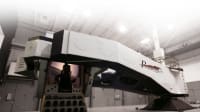
Aerospace & Defense Tech Briefs
Remotely Piloted Air Systems
Aerospace & Defense Tech Briefs
Sonobuoy Dispensing & Remote Processing System
Aerospace & Defense Tech Briefs
L3 Technologies Expands Training Facility in Response to Pilot Shortage

Aerospace & Defense Tech Briefs
Boeing Wins $9.2B U.S. Air Force Contract for T-X Advanced Military Pilot Training Jets, Simulators, Ground Equipment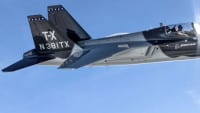
Aerospace & Defense Tech Briefs
Autonomous Air Defense Production
Aerospace & Defense Tech Briefs
Lockheed Martin Announces Latest Hypersonic Progress at Le Bourget
Aerospace & Defense Tech Briefs
Electronic Warfare Combat Training Pod
Aerospace & Defense Tech Briefs
Advanced Simulation Technology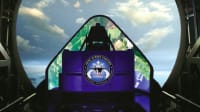
Aerospace & Defense Tech Briefs
Projectors Enhance US Army Flight Simulations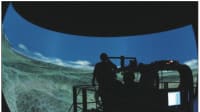
Aerospace & Defense Tech Briefs
Textron Systems, Textron Aviation Defense Demonstrate Simulated Manned-Unmanned Teaming Capability
Aerospace & Defense Tech Briefs
Enabling Off-the-Shelf Autonomous Naval Warfare
Aerospace & Defense Tech Briefs
When It Comes to Fifth-Generation Assets, Air Force Values Virtual Training over Live Flying
Aerospace & Defense Tech Briefs
Abaco’s FORCE2 Flight Computer Enables National and International Ground Control Station Certification
Aerospace & Defense Tech Briefs
Unmanned Aircraft Training Materials
Aerospace & Defense Tech Briefs
Vertical Takeoff and Landing Drone
Aerospace & Defense Tech Briefs
Advances in Multi-UAV Operations

Tech Briefs
POTION Can Reduce Aircraft Fuel Consumption
Aerospace & Defense Tech Briefs
Foreign Counter-Unmanned Aerial Systems: Developments in the International Arms Markets
Aerospace & Defense Tech Briefs
General Atomics Moves Toward Global RPA Flight Certification for MQ-9B SkyGuardian
Aerospace & Defense Tech Briefs
Explainable-AI Image Recognition Is the Next Step for U.S. Air Force Unmanned Aircraft
Top Stories
INSIDERManufacturing & Prototyping
 How Airbus is Using w-DED to 3D Print Larger Titanium Airplane Parts
INSIDERManned Systems
 FAA to Replace Aging Network of Ground-Based Radars
NewsTransportation
 CES 2026: Bosch is Ready to Bring AI to Your (Likely ICE-powered) Vehicle
NewsSoftware
 Accelerating Down the Road to Autonomy
EditorialDesign
 DarkSky One Wants to Make the World a Darker Place
INSIDERMaterials
 Can This Self-Healing Composite Make Airplane and Spacecraft Components Last...
Webcasts
Defense
 How Sift's Unified Observability Platform Accelerates Drone Innovation
Automotive
 E/E Architecture Redefined: Building Smarter, Safer, and Scalable...
Power
 Hydrogen Engines Are Heating Up for Heavy Duty
Electronics & Computers
 Advantages of Smart Power Distribution Unit Design for Automotive...
Unmanned Systems
 Quiet, Please: NVH Improvement Opportunities in the Early Design...
