




Rolls-Royce Pursues Pure Methanol for Marine Engines
Rolls-Royce claims it has successfully tested the world’s first high-speed, single-fuel methanol engine for ships

Rolls-Royce has successfully tested the world’s first high-speed marine engine powered exclusively by methanol on its test bench in Friedrichshafen, Germany.
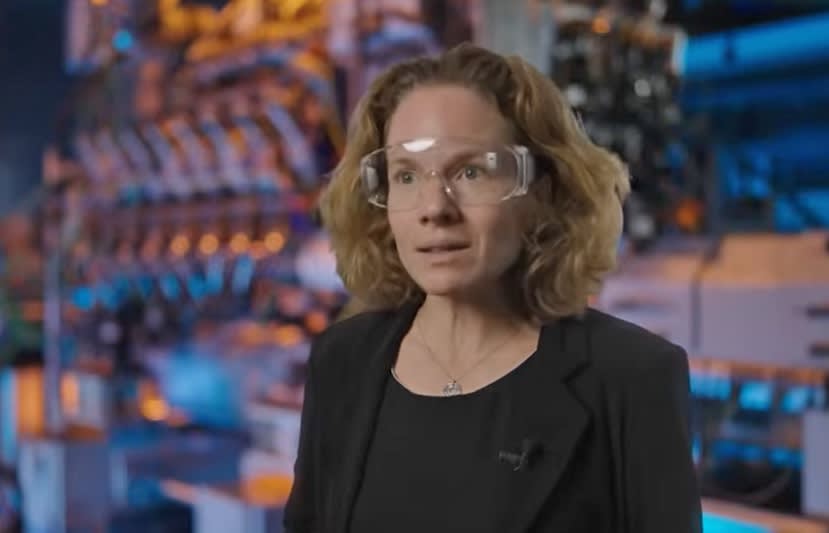
The company began this engine-development journey six years ago when it gathered experts to determine what the future fuel of the maritime industry should be, according to Denise Kurtulus, senior vice president of global marine at Rolls-Royce. “For us, it’s clear. It’s methanol,” she said.
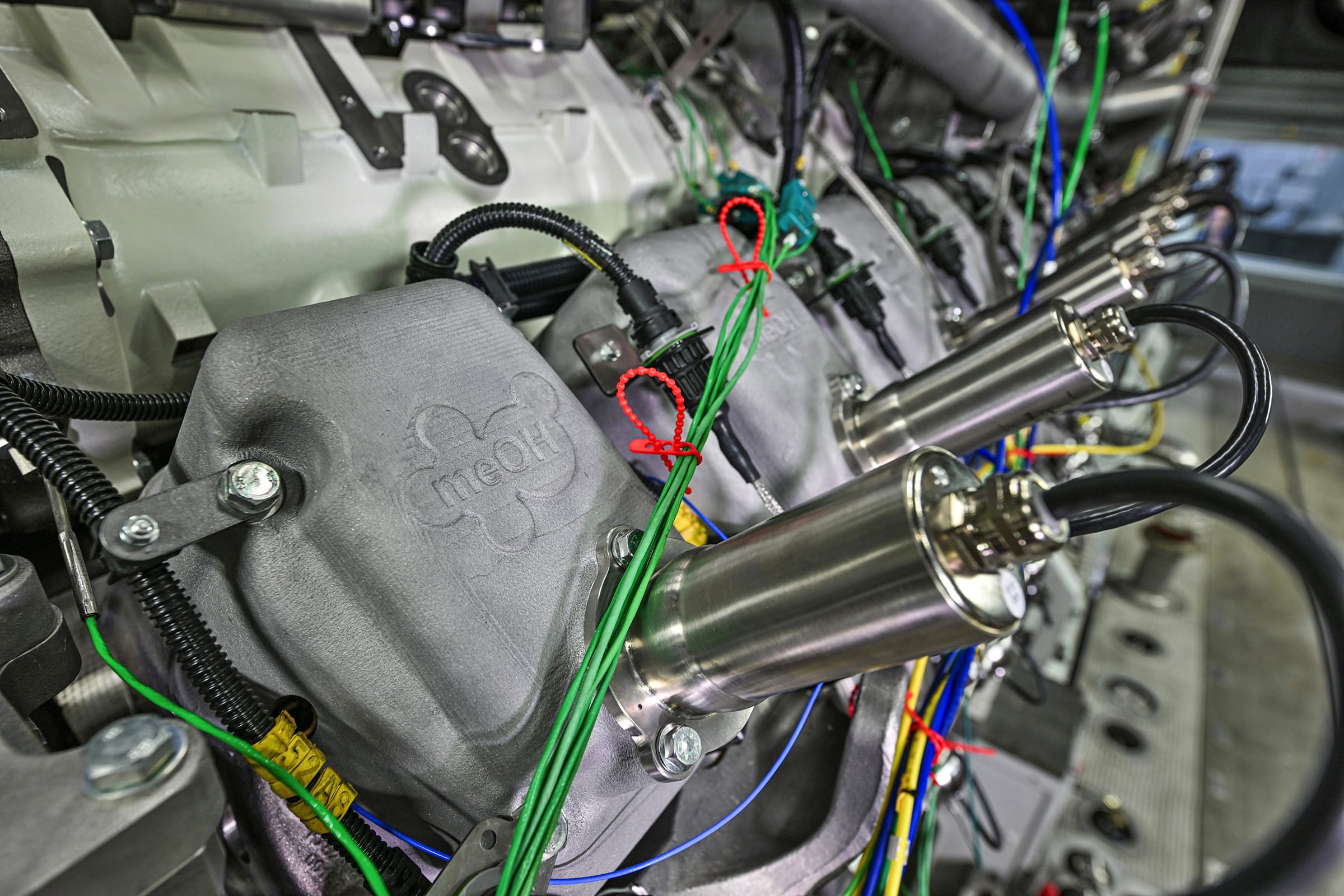
Rolls-Royce worked with industry partners as part of the joint project meOHmare, which is funded by the German Federal Ministry for Economic Affairs and Energy. Injection system specialist Woodward L’Orange and the WTZ Roßlau technology and research center contributed their expertise. Their goal was to not only develop a comprehensive concept for a CO2-neutral marine engine based on green methanol, but also to run it on the test bench by the end of 2025.
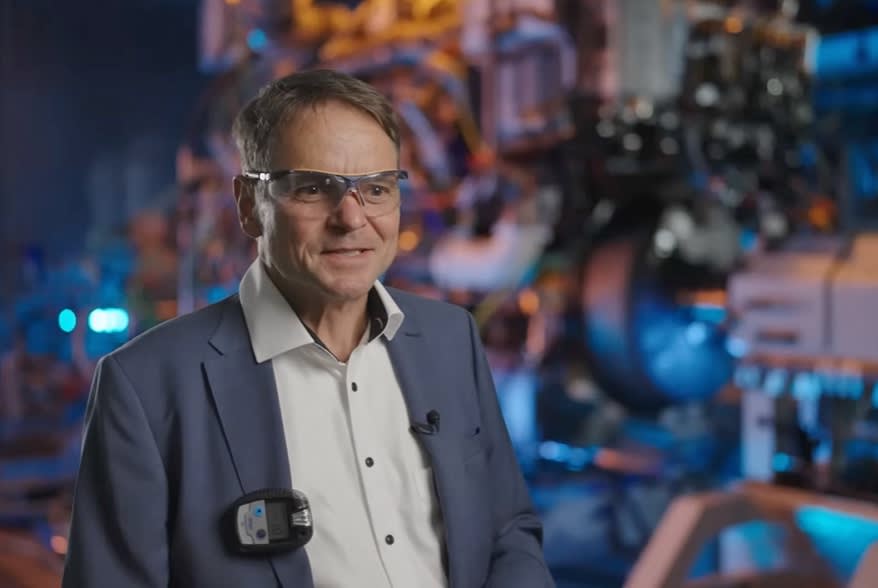
“This is a genuine world first,” said Dr. Jörg Stratmann, CEO of Rolls-Royce Power Systems AG. “To date, there is no other high-speed engine in this performance class that runs purely on methanol. We are investing specifically in future technologies in order to open up efficient ways for our customers to reduce CO2 emissions and further expand our leading role in sustainable propulsion systems.”
Rolls-Royce’s goal is to offer customers efficient ways to reduce their CO2 emissions, in line with the “lower carbon” strategic pillar of its multi-year transformation program. The project also aligns with the strategic initiative in Power Systems to grow its marine business.
Unique engineering challenges
Methanol provides new engineering challenges. Unlike diesel, liquid alcohol does not ignite spontaneously and requires a completely new injection technology. There were no off-the-shelf methanol injectors for this performance class, the company stated. Rolls-Royce engineers and their partners are developing hardware that is precisely metered and durable enough for the application.
“We have fundamentally redesigned the combustion process, the turbocharging and the engine control system – and even adapted our test bench infrastructure,” explained Dr. Johannes Kech, head of methanol engine development in the Power Systems division at Rolls-Royce.

“When you look at the challenges we had to overcome here, two things are particularly important to consider,” Kech said. “One is the development of the injection system. Methanol has absolutely no lubricity, so it was a particular challenge to work with suppliers to develop an injection system that forms the basis for this engine.”
Since methanol does not lubricate as well as diesel, extreme pressures cannot be generated, which makes the necessary fine atomization more difficult. The aim for the project’s engineers was to achieve a homogeneous, ignitable air-fuel mixture that burns cleanly and immediately at the spark plug.
“The second step we built on was the development of a combustion process for a single cylinder, which has now been transferred to this V16 engine, capable of producing 2,000 kilowatts at 1,800 revolutions,” Kech said. The combustion process is tailored to the specially designed turbocharging system for clean combustion, fast revving and high efficiency across the entire operating range.
Initial tests show that the engine is running smoothly, according to Kech. “Now, it’s time for fine-tuning.” The next project phases will focus on system integration and fine-tuning for real-world application profiles.
Rolls-Royce is simultaneously working on dual-fuel engines as a bridge technology until green methanol is widely available. The engines can run solely on diesel or a “flexible proportion” of methanol.
Green methanol the goal
Green methanol is considered one of the most promising alternative fuels for shipping. Rolls-Royce states that if it is produced using electricity from renewable energies in a power-to-X process, its operation is CO2-neutral.
“For us, methanol is the fuel of the future in shipping – clean, efficient and climate-friendly. It burns with significantly lower emissions than fossil fuels and has a high energy density compared to other sustainable energy sources,” Kurtulus said.
No sulfur and significantly lower nitrogen oxides and particles than in diesel fuel reduce the effort required for exhaust gas aftertreatment. Additional benefits of methanol compared to other sustainable fuels are ease of storage and biodegradability.
Methanol only has about half the energy density of diesel, meaning tanks need to be twice as large to achieve the same range. However, compared to other green fuels such as hydrogen or ammonia, methanol is more space-efficient, according to Rolls-Royce.
Kurtulus said that methanol is the “best sustainable fuel” in the maritime segment because it is liquid. “You can bunker it almost everywhere and you don’t need any special treatment like pressurized tanks like you would need for hydrogen, for example. All in all, it’s the best compromise of the diesel in order to move into a more sustainable future.”
“With this successful test run, we are sending a clear signal: green methanol is a future-oriented fuel – and the technology for it is here,” Kurtulus said, adding that the single-fuel methanol engine is an “attractive solution” for operators of ferries, yachts or supply vessels who want to reduce their carbon footprint. “The task now is to create the framework conditions for wider use.”
Incentives and infrastructure needed
“The biggest question the industry is asking these days is when is green methanol available in any place of the world, and the answer is not easy to be answered,” Kurtulus said. “Because to produce green methanol we need green energy. In order to bunker it, we need the infrastructure, and in order to incentivize it, we need politicians and regulations to be in place.”
The technology is rapidly maturing, Kurtulus said, but production incentives and infrastructure are now needed to take the next steps. “It’s really unbelievable to see how interested the customer base is in this technology,” she said. “Of course, it is a matter connected to the infrastructure and the availability of the fuel, but in general, the ecosystem and the industry are really of the mind that methanol makes a lot of sense in the maritime sector. So, I’m more than positive that this is not a question of ‘if,’ it’s a question of ‘when.’ ”
More From SAE Media Group
Automotive Engineering
Innovating the Methanol Fuel Cell
Automotive Engineering
The Electrofuels That Reduce Amazon’s Fleet Emissions
Off-Highway Engineering
SAE WCX 2022: All Transportation Modes Targeting Alternative Fuels
Off-Highway Engineering
New Biodiesel Strains Offer Measurable Gains
Off-Highway Engineering
Combustion Engines Carry on in Construction
Automotive Engineering
WCX 2025: Dumarey Launches U.S. Subsidiary for Better ICEs
Automotive Engineering
Improving the Ageless ICE
Automotive Engineering
SwRI Launches Two Powertain-Related Consortia
Off-Highway Engineering
Zeroing in on Zero-Carbon Fuels
Off-Highway Engineering
Mahle, Liebherr Develop Active Pre-Chamber for Hydrogen ICE
Off-Highway Engineering
Kubota Engine High on HVO, Hydrogen and Hybrids
Tech Briefs
Making Hydrogen Power a Practical Proposition
Automotive Engineering
The International Fight over EFuels, Internal Combustion’s Would-Be Savior
Automotive Engineering
Injecting a Sense of Urgency to Clean up Diesels
Automotive Engineering
New Aramco Research Center in Detroit to Advance Fuels and Engine Development
Off-Highway Engineering
Bringing the Heat on Cooling Technologies
Off-Highway Engineering
Deere Bullish on Biodiesel, Renewable Diesel
Off-Highway Engineering
Clearing The Air

Off-Highway Engineering
Renewable Diesel Offers Drop-In Solution for Decarbonization
Off-Highway Engineering
Next Reman Up: The Role of Engine Remanufacturing

Automotive Engineering
Not dead yet: The resilient ICE looks to 2050
Off-Highway Engineering
Natural Gas Infrastructure Is Scaling Fast for HD Fleets
Automotive Engineering
RCCI Engine Begins In-Vehicle Demonstration Testing
Motion Design INSIDER
Tractor Efficiency Increased, Thanks to Hydraulics Research
Off-Highway Engineering
SwRI Rolls out Hydrogen Demonstration Truck
Off-Highway Engineering
Hexagon Bullish on CNG for Long-Haul Trucks
Off-Highway Engineering
Tailoring Fuel Injection to Control NOx
Automotive Engineering
CAE Mastery Helped Achates Power Create Its New Engine
Top Stories
NewsRF & Microwave Electronics
 Microvision Aquires Luminar, Plans Relationship Restoration, Multi-industry Push
INSIDERAerospace
 A Next Generation Helmet System for Navy Pilots
INSIDERDesign
 New Raytheon and Lockheed Martin Agreements Expand Missile Defense Production
INSIDERMaterials
 How Airbus is Using w-DED to 3D Print Larger Titanium Airplane Parts
NewsPower
 Ford Announces 48-Volt Architecture for Future Electric Truck
ArticlesAR/AI

Webcasts
Electronics & Computers
 Cooling a New Generation of Aerospace and Defense Embedded...
Automotive
 Battery Abuse Testing: Pushing to Failure
Power
 A FREE Two-Day Event Dedicated to Connected Mobility
Unmanned Systems
 Quiet, Please: NVH Improvement Opportunities in the Early Design Cycle
Automotive
 Advantages of Smart Power Distribution Unit Design for Automotive &...
Energy
 Sesame Solar's Nanogrid Tech Promises Major Gains in Drone Endurance