




WCX 2025: Dumarey Launches U.S. Subsidiary for Better ICEs
With continued expansion, Dumarey is helping internal combustion engines expand their diet to include hydrogen, methanol and more.
The Dumarey Group used WCX 2025 as the launching point for its new U.S. subsidiary, Dumarey USA. Dumarey, a Belgian family-owned company, announced the acquisition of Mahle Powertrain LLC in January and said in Detroit that the transition to Dumarey’s new North American engineering and testing hub is now complete.
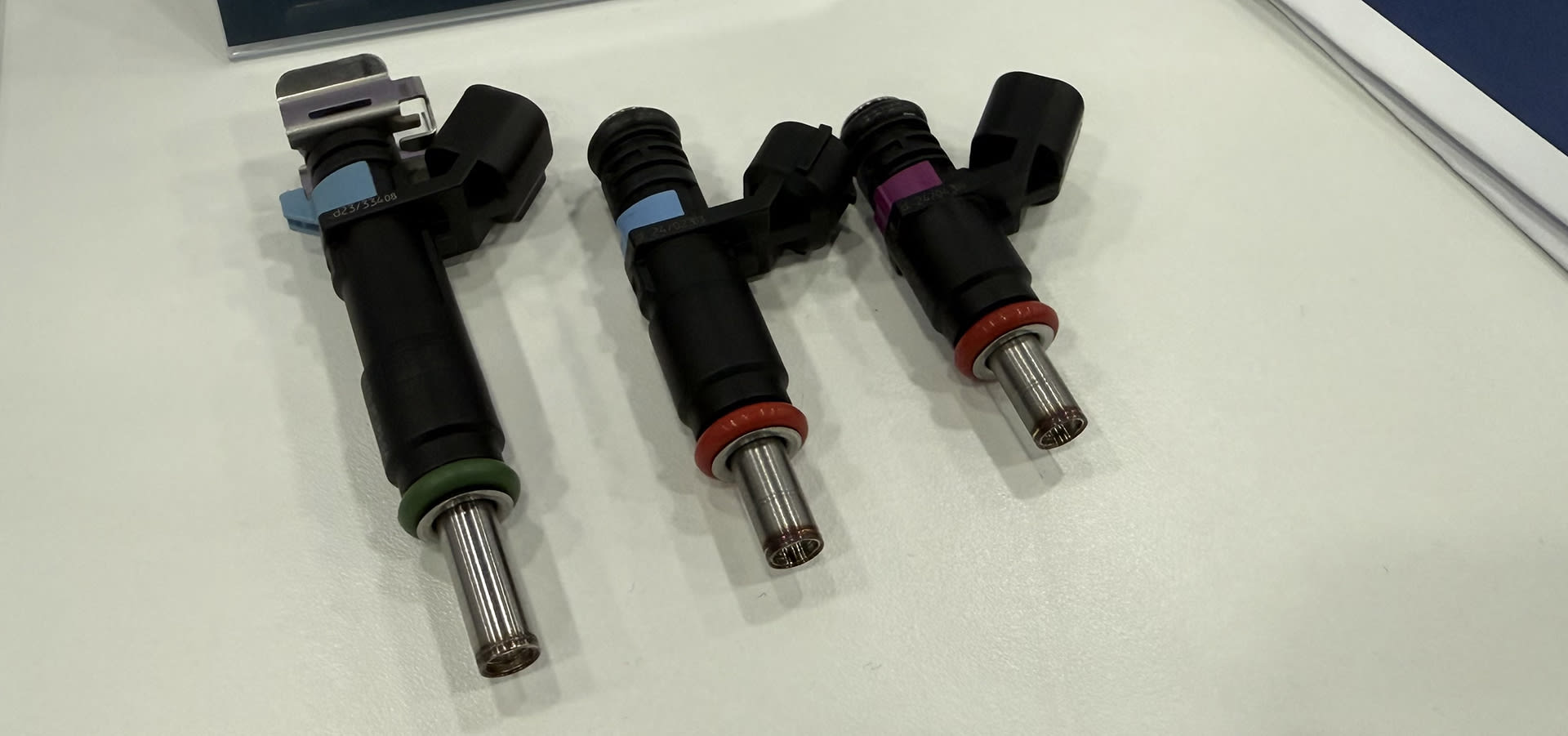
Expanding its North American footprint is the latest way the Dumarey Group is focusing on its main mission: preparing internal combustion engines for their last hurrah. In early 2024, for example, Dumarey acquired Vitesco Technologies Italy because of its experience with various injectors, bringing more injector engineers and product teams on board. The previous Vitesco plants are now producing gasoline urea injectors for Dumarey and, in the future, they will build injectors for hydrogen engines, according to Vincenzo De Carlo, Dumarey senior program manager and chief engineer. It’s all part of the plan, even Dumarey isn’t betting everything on H2.
“The target is to create what our boss is calling ‘the product,’” De Carlo told SAE Media at WCX. “In his mind, the product is a final engine. All the acquisitions we are doing are linked with the product. In this moment, the main product is the hydrogen engine and, later, the fuel cell. The acquisition of Vitesco was to develop a hydrogen injector. The acquisition of Dumarey USA was to develop in the U.S. this kind of mentality. In general, we are working on all kinds of eFuels in general. Methanol, ammonia, hydrogen, whatever is coming, we are in a development phase for all of it.”
De Carlo said Dumarey’s target is to be producing nitrogen injectors by 2030, but that’s only part of the challenge.
“It was difficult to develop the software that would allow us to manage all the different fuels because each different fuel has to be driven by specific software,” De Carlo said.
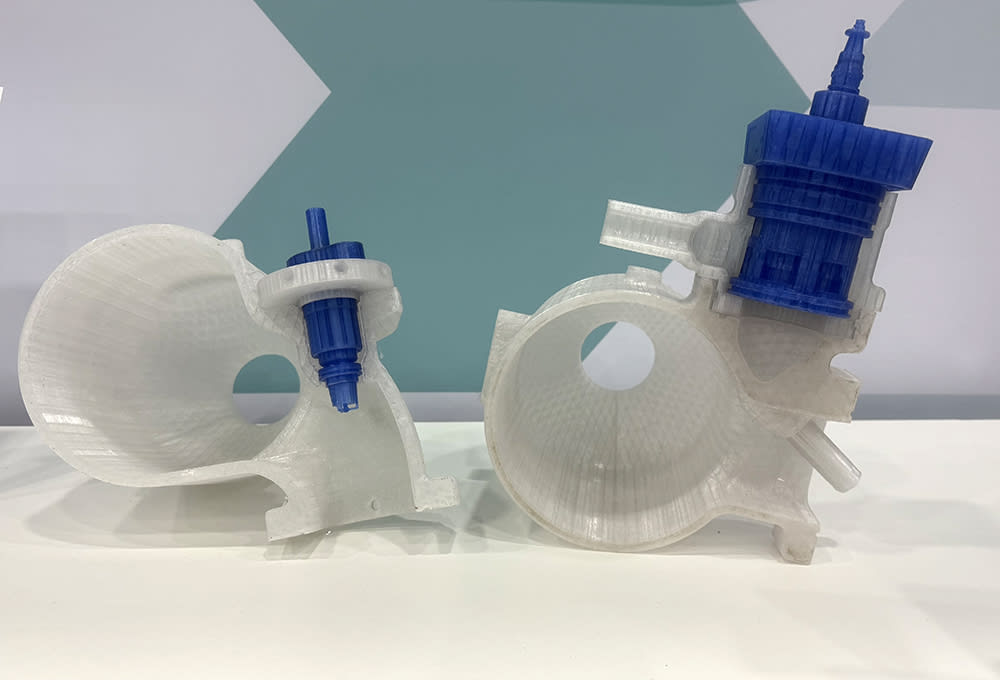
For example, when used with hydrogen, the injectors need to deliver H2 at low pressure, not more than 40 bar, De Carlo said. That’s less pressure than gasoline injectors use and much less than the fuel storage tank. “The starting point is the 700 bar in the tank and then we reduce this in the line to achieve 40 bar, not more, because this is the market request,” he said.
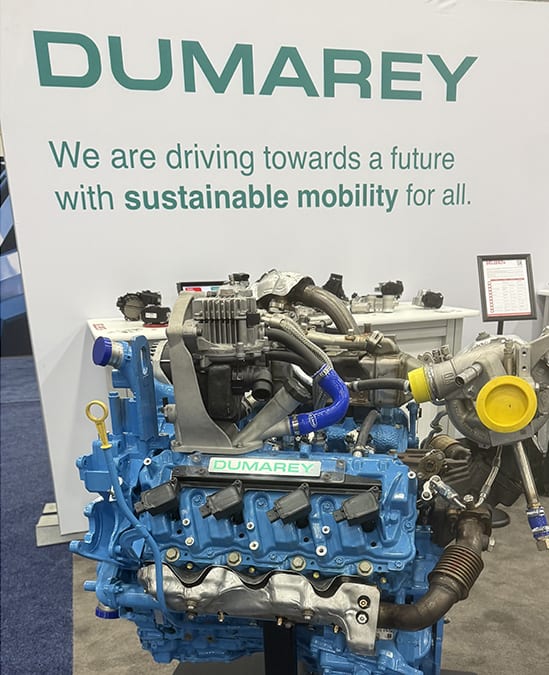
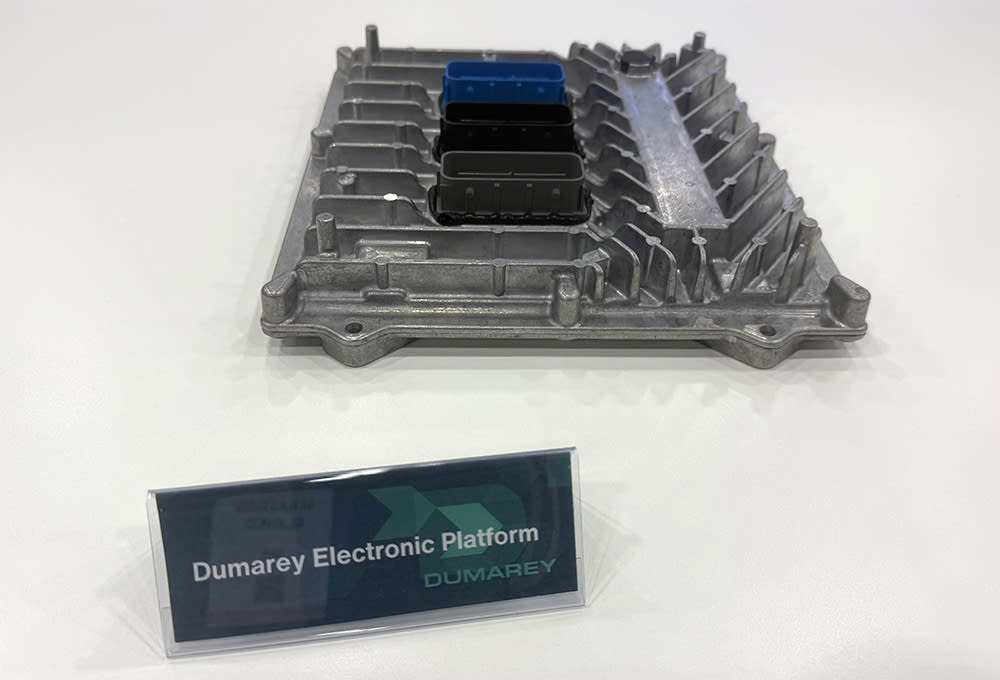
At WCX, Dumarey displayed its 250-kW, hydrogen V8 6.6-L port fuel injection engine alongside next-generation hydrocarbon injectors and liquid-cooled heavy-duty urea injectors that have been developed to address new EU7 emissions regulations. The Dumarey electronic platform, for example, is a scalable, multi-purpose 12-24V-capable controller for spark or compression ICEs as well as for alternative fuels like hydrogen.
More From SAE Media Group
Off-Highway Engineering
Zeroing in on Zero-Carbon Fuels
Off-Highway Engineering
Liebherr Goes All in on Hydrogen Fuel
Off-Highway Engineering
New Biodiesel Strains Offer Measurable Gains
Off-Highway Engineering
Kohler Doubles down on ICE Development
Automotive Engineering
Extending the ICE Age: Hyundai Optimizing Engines and Fuels
Off-Highway Engineering
Kubota Engine High on HVO, Hydrogen and Hybrids
Automotive Engineering
The Electrofuels That Reduce Amazon’s Fleet Emissions
Off-Highway Engineering
Renewable Propane, Ultra-Low NOx Engines Set Standards for Propane Autogas Innovations
Off-Highway Engineering
Hydrogen’s Humming in Power Generation
Off-Highway Engineering
JCB Debuts Clean-Sheet Hydrogen Combustion Engine
Automotive Engineering
Innovating the Methanol Fuel Cell
Off-Highway Engineering
Developments in Engine-Based Gensets
Automotive Engineering
Keeping Combustion in the Conversation
Off-Highway Engineering
Propane Powers Ahead for Medium Duty Sector
Off-Highway Engineering
Allison’s Now Open for Hydrogen Testing
Automotive Engineering
Fuels to Transition the Global Legacy Fleet
Automotive Engineering
Charting the ICE Future with Mahle’s Martin Berger
Off-Highway Engineering
Bosch Sees Two Paths Forward for On-Road Hydrogen Trucks
Off-Highway Engineering
Bosch Begins Production of Fuel-Cell Power Modules for Nikola
Automotive Engineering
SAE Updates Gasoline Fuel-Injection Standards, Additions Expected
Off-Highway Engineering
The Future of Carbon-Neutral Fuels for Heavy-Duty Machines
Automotive Engineering
E-Fueling for the Future
Automotive Engineering
Stanadyne Pumps up the Volume
Off-Highway Engineering
Mahle’s Hydrogen Focus Spans Fuel Cells, ICEs
Off-Highway Engineering
Diesel in Distress
Off-Highway Engineering
Westport Awarded LNG Development Program
Automotive Engineering
How Higher-Quality Gasoline Keeps Modern Engines Clean and Efficient
Off-Highway Engineering
Renewable Diesel Offers Drop-In Solution for Decarbonization
Off-Highway Engineering
Shell Details Upcoming Engine-Oil Developments
Off-Highway Engineering
Developing an Alternative Engine Concept
Top Stories
NewsSensors/Data Acquisition
 Microvision Aquires Luminar, Plans Relationship Restoration, Multi-industry Push
INSIDERRF & Microwave Electronics
 A Next Generation Helmet System for Navy Pilots
INSIDERWeapons Systems
 New Raytheon and Lockheed Martin Agreements Expand Missile Defense Production
NewsAutomotive
 Ford Announces 48-Volt Architecture for Future Electric Truck
INSIDERAerospace
 Active Strake System Cuts Cruise Drag, Boosts Flight Efficiency
ArticlesTransportation

Webcasts
Aerospace
 Cooling a New Generation of Aerospace and Defense Embedded...
Energy
 Battery Abuse Testing: Pushing to Failure
Power
 A FREE Two-Day Event Dedicated to Connected Mobility
Automotive
 Quiet, Please: NVH Improvement Opportunities in the Early Design Cycle
Electronics & Computers
 Advantages of Smart Power Distribution Unit Design for Automotive &...
Unmanned Systems
 Sesame Solar's Nanogrid Tech Promises Major Gains in Drone Endurance