




Redefining Modern US Navy Shipbuilding with Additive Manufacturing
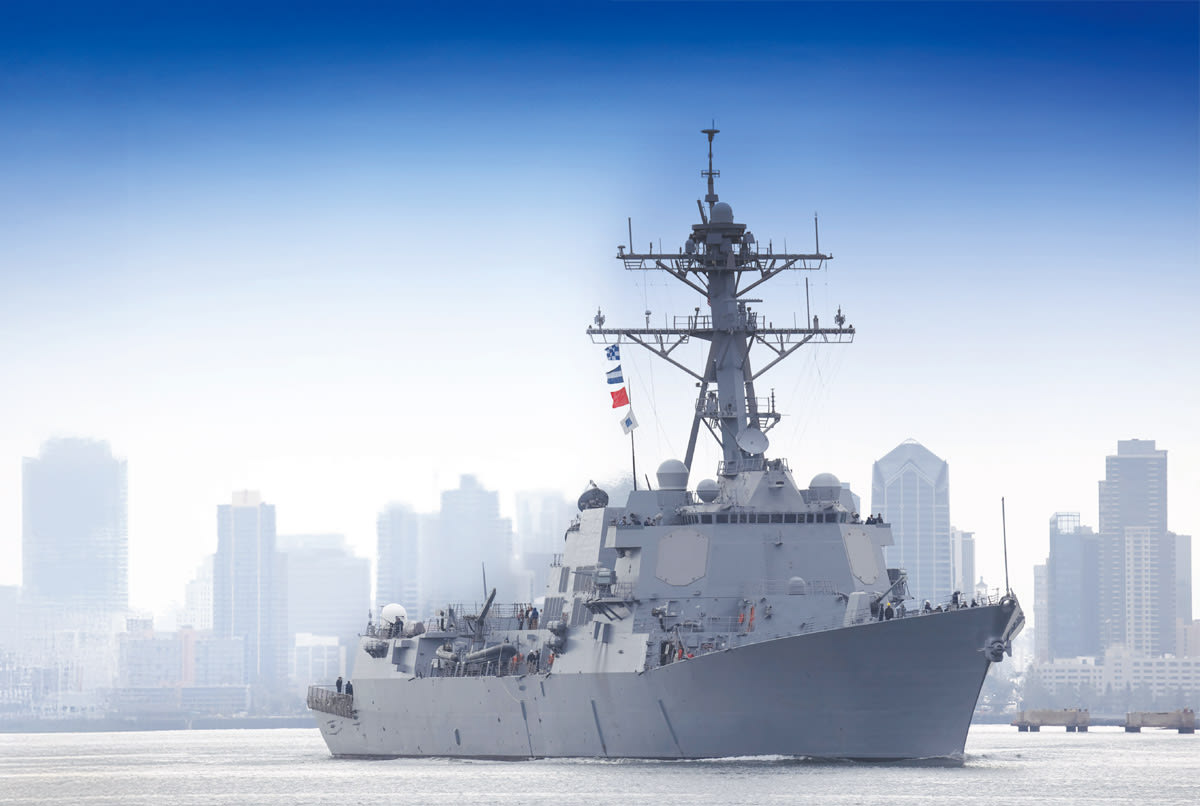
Additive manufacturing (AM) is no longer just an alternative to traditional manufacturing methods; it’s a transformative shift in how parts are designed, built, and qualified. With AM, engineers can create complex internal geometries, lattice structures, and multi-functional components that simply were not possible with traditional manufacturing methods. The design freedom unlocked by AM is advantageous in the next generation of naval innovation, particularly as shipbuilding programs push to meet ambitious construction goals and improve warship readiness.
For suppliers, embracing AM isn’t just about swapping out tools; it’s about rethinking the entire design process. Working to understand and prepare for AM-driven design and qualification changes is necessary to remain competitive in future U.S. Navy shipbuilding programs. This article will explain how new standards are driving qualification, supporting U.S. Navy construction goals and fleet readiness.
What is Driving Navy Interest in AM?

A few key factors are driving the Navy’s growing interest in AM. Primarily, fostering a resilient supply chain is essential to the Navy’s ambitious construction goals, which include building two Virginia- and one Columbia-class submarines annually.
As the U.S. Navy shipboard construction and maintenance demand increases to support the building of submarines annually, the additional strain on the U.S. Navy’s supply chain creates frequent issues. Supply chain issues have challenged the U.S. Navy for well over a decade, but they’ve become significantly more acute and visible in the past 5 to 7 years, due to a combination of structural and global factors. An aging fleet and its deferred maintenance started to expose supply chain vulnerabilities, made more challenging by under-resourced and understaffed shipyards.
The Covid pandemic increased disruption by delaying availability of raw materials, electronics, and specialized components. Today’s geopolitical tensions, inflation, and workforce shortages tighten supply chains even more. Currently, supply chain fragility remains one of the top barriers to maintaining readiness, with some repair parts taking 6–18 months to arrive, according to recent Navy briefings. The Navy continues to push for domestic sourcing, modernization of supply logistics, and advanced manufacturing as long-term solutions.
An emerging benefit of AM is that it can step into supply chain challenges to accelerate maintenance and reduce downtime with on-demand production of replacement parts faster than traditional means. By decentralizing production, AM aligns with the Navy’s goals by reducing dependency on traditional suppliers and tools for hard-to-source or obsolete components, especially for aging ships with legacy systems.
Shipboard integration continues as more AM components are now qualified for naval use. As the number of approved parts increases, the risks of adopting AM are better understood and addressed. Today, the U.S. Navy’s adoption of AM is laying the foundation for optimized designs and enhanced capabilities in future generations of surface combatants and submarines. Ultimately, additive manufacturing is not just a new production method. It is a force multiplier for readiness and innovation, helping the Navy keep ships mission-ready, faster and more efficiently.
New Design Capabilities Paving Future Innovations
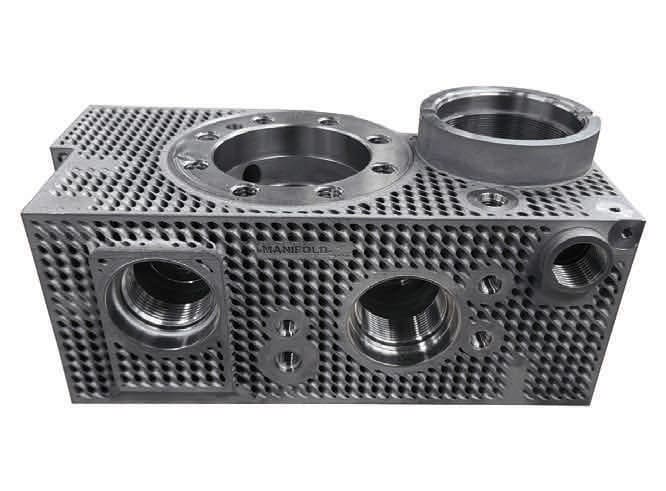
Additive manufacturing makes it possible to design parts in ways that traditional methods are unable to match. One major advantage is the ability to create complex internal geometries. For example, AM can provide flow diffusing capability to enable precise control of fluid flow through valves—a characteristic that is nearly impossible to achieve with machining.

Another breakthrough is the ability to integrate lattice structures with ease, which have unique performance capabilities. For instance, lattice structures can be used to improve performance under impact-loading, optimize thermal management, or significantly reduce weight while maintaining strength.
Critically, AM also allows for integrated functionality. Designers can combine multiple features into a single part, such as combining stacks of flow control devices into a single, monolithic component. This decreases the number of assembly steps, improves performance, and minimizes the number of possible failure points. Overall, AM enables design innovation as additive techniques support the creation of lighter, more efficient, and multi-functional parts. This aligns closely with the Navy’s goals to modernize future shipboard systems and improve ship capabilities without lengthy overhauls.
Despite the value proposition with design innovations and on-demand production, AM still faces a few major challenges in naval applications. The U.S. Navy is a risk-conscious entity where sailor safety is the top priority. Therefore, quality assurance documentation and thorough inspections are requirements which pose a unique set of challenges for complex AM components. The first major hurdle is qualification, with extensive (and time-consuming) testing and documentation necessary for part approval.
Nondestructive Testing (NDT) is another roadblock. Fundamentally, NDT is designed to inspect what cannot be seen externally and to reject materials which have defects that could be detrimental to safety or performance. The success of NDT methods is based on a knowledge base of critical defect sizes and the methods that are capable of identifying those defects.
Traditional NDT methods, like Ultrasonic Testing (UT), are not well suited to inspect the complex shapes and internal features of AM parts. For example, UT is a widely used NDT method in traditional naval manufacturing, especially for piping and structural components. However, AM parts with complex internal geometries can scatter ultrasonic waves, diminishing the value of standard UT techniques for AM flaw detection.
Overall, NDT needs to evolve to keep up with the complexity of AM parts, which often have internal channels, lattices, or cavities that aren’t accessible with traditional inspection methods. For example, to develop a path forward, ongoing UT equivalency studies are aiming to develop modified and more advanced ultrasonic approaches that can be reliably used with more complex AM parts and features in existing Navy inspection protocols.
Computed Tomography (CT) scanning is becoming critical in this effort as well, enabling inspection by compiling thousands of x-ray images of the part from different angles. CT scanning provides a 3D image of an AM part’s internal structure, revealing voids, cracks, or deformations that could compromise performance. This same level of visibility helps validate whether the printed part meets the nominal design, ensuring dimensional accuracy and consistency. That said, CT is costly and slow, which undermines the value of AM’s speed and flexibility. It also may still face technical barriers related to the complexity, size, and materials used in certain AM parts. Large, dense parts with both large and small feature sizes likely present a challenge that only in-situ monitoring can address.
AM parts push the boundaries of what’s possible in design, but they also require new ways to ensure quality and safety. Traditional inspection techniques weren’t built for this level of complexity, which is why new testing methods and standards are essential for widespread AM adoption in critical naval applications.
Moving from the Lab to the Fleet
The Navy is steadily learning and adapting based on recent AM qualification efforts, with signs of meaningful progress.
Until recently, organizations were reluctant to share AM data because of the time and cost invested in qualification. This close-to-the-vest approach with data slowed down standard development and created silos across the industry. Alternatively, open collaboration — through programs like America Makes—leads to better, faster, and more consistent standards. It also helps avoid duplicate efforts. The Navy, along with top private sector players, is now participating in collaborative review teams to revise standards like NAVSEA S9074-A2-GIB-010/AM-PBF. These groups include Marotta Controls, U.S Navy major defense contractors, subcontractors and suppliers, showing a shift toward greater transparency and joint problem-solving.
One of the slowest parts of AM qualification is the material approval process. Each AM powder and process combination must meet rigid process and material qualification requirements, and each separate AM machine must be qualified separately.
To accelerate this process, the Navy needs to define practical, AM-specific material specifications that are still rigorous but don’t overburden manufacturers. Demonstrating progress, NAVSEA has released a new revision of its AM technical publication, incorporating lessons from field testing and qualification pilots.
These lessons have been well received by the engineering and R&D community, especially those that have struggled with outdated standards. However, change is still gradual. The Navy’s natural caution around mission-critical applications means that trust in AM requires time to build. Momentum is growing as the Navy steps back to critically assess risk when considering AM as a potential tool.
To date, the Navy qualification approach for AM involved qualifying each part individually; however, this approach is costly and time consuming. That model doesn’t scale with AM nor compare to the traditional approach of qualification through inspection and component-level testing. Considering each AM component has an additional, independent qualification, the process is too time-consuming and costly when attempting to scale AM.

Qualification should instead be based on part families or categories, i.e., qualifying a group of flow components made with the same material, machine, and process. It’s an idea that has started to gain traction. For instance, teams like Marotta and Electric Boat are now helping shape frameworks that apply to classes of parts rather than just single designs. NAVSEA has even begun releasing updated guidelines that reflect these changes.
Additive manufacturing holds immense potential for reshaping naval ship design, enabling capabilities that go far beyond simply replacing traditionally manufactured parts. But to realize its full value, the industry must continue pushing for stronger qualification frameworks, broader data-sharing practices, and greater alignment between design innovation and inspection methods. As qualification standards evolve and collaboration grows, additive manufacturing will increasingly become a strategic enabler of shipbuilding performance, agility, and readiness.
Getting to Know AM
The defense and commercial space industries initially embraced AM technology to reduce weight and improve efficiency in designing complex parts. As a late adopter, the U.S. Navy is now also leveraging AM processes to address critical challenges in shipbuilding, including the replacement of legacy parts, part consolidation, and performance optimization for mission-critical components. Naval applications prioritize strength and durability as ships must survive harsh conditions, such as shock from underwater explosions and long-term exposure to corrosive marine environments. AM’s mandate is to improve functionality, sourcing lead times, or both for mission-critical parts with manufacturing or supply chain challenges. It is imperative that these parts meet or exceed the performance of the legacy components and survive in harsh operating conditions throughout the multi-decade life of U.S. Navy ships.
Despite its benefits, widespread AM adoption has been hindered by complex qualification standards, high initial costs, and the limitations of NDT. Today the U.S. Navy is actively working to streamline certification processes and develop AM-specific standards which enable the supply base to reduce lead times without sacrificing part quality. Broader naval AM integration is the objective, and it’s being fostered by government-backed initiatives like AM Forward and America Makes to accelerate research and standardization.
This article was written by Anthony Basenese, Engineering Manager, Naval Systems and Ross Brown, Senior Engineer, Additive Manufacturing, Marotta Controls (Montville, NJ). For more information, visit here .
More From SAE Media Group
Aerospace Manufacturing and Machining INSIDER
Meeting the Demands of Defense Production and Sustainment Through Additive Manufacturing

Automotive Engineering
Optimizing Design for Additive Manufacturing
Aerospace & Defense Tech Briefs
Unlocking the Potential of 3D-Printed Polymers in Aerospace and Defense
Aerospace Manufacturing and Machining INSIDER
US Navy Taps Hunt Valve for First 3D-Printed Submarine Assemblies
Aerospace Manufacturing and Fabrication
Quality Control for Additive Manufacturing Parts Using Non-Destructive Testing
Tech Briefs
Single-Step 3D-Printing Process to Build Robots


Medical Design Briefs
Winter 2022 Resource Guide
Off-Highway Engineering
Additive Manufacturing Is Transforming Mobility Engineering, Driving the Factory of the Future
Aerospace Manufacturing and Machining INSIDER
Navy Uses Stratasys F-900 to 3D Print F/A-18 Jet’s Button Plug
Aerospace & Defense Tech Briefs
Aitiip Integrates Freeform Injection Molding to Lower Weight and Reduce Production Costs
Medical Design Briefs
Summer 2023 Resource Guide

Tech Briefs
Using Ultrasound to Detect Battery Flaws

Aerospace INSIDER
Boeing's New Approach to 3D Printing Solar Arrays for Satellites
Tech Briefs
New High-Speed Microscale 3D-Printing Technique

Automotive Engineering
The Transformative Power of Large-Format Additive Manufacturing for Automotive
Tech Briefs
Integral Tuned Mass Absorber for Turbine Blades
Tech Briefs
Calibration System for Automated Fiber Placement



Aerospace & Defense Tech Briefs
3D Printing Metal Parts on a Ship

Aerospace Manufacturing and Machining INSIDER
RAMFIRE Project Develops, Tests 3D-Printed Aluminum Rocket Engine Nozzle
Medical Design Briefs
New Products & Services
Top Stories
NewsRF & Microwave Electronics
 Microvision Aquires Luminar, Plans Relationship Restoration, Multi-industry Push
INSIDERAerospace
 A Next Generation Helmet System for Navy Pilots
INSIDERDesign
 New Raytheon and Lockheed Martin Agreements Expand Missile Defense Production
INSIDERMaterials
 How Airbus is Using w-DED to 3D Print Larger Titanium Airplane Parts
NewsPower
 Ford Announces 48-Volt Architecture for Future Electric Truck
ArticlesAR/AI

Webcasts
Electronics & Computers
 Cooling a New Generation of Aerospace and Defense Embedded...
Automotive
 Battery Abuse Testing: Pushing to Failure
Power
 A FREE Two-Day Event Dedicated to Connected Mobility
Unmanned Systems
 Quiet, Please: NVH Improvement Opportunities in the Early Design Cycle
Automotive
 Advantages of Smart Power Distribution Unit Design for Automotive &...
Energy
 Sesame Solar's Nanogrid Tech Promises Major Gains in Drone Endurance