




The Transformative Power of Large-Format Additive Manufacturing for Automotive
As automakers strive for sustainability and accelerated innovation cycles, LFAM emerges as a transformative technology.
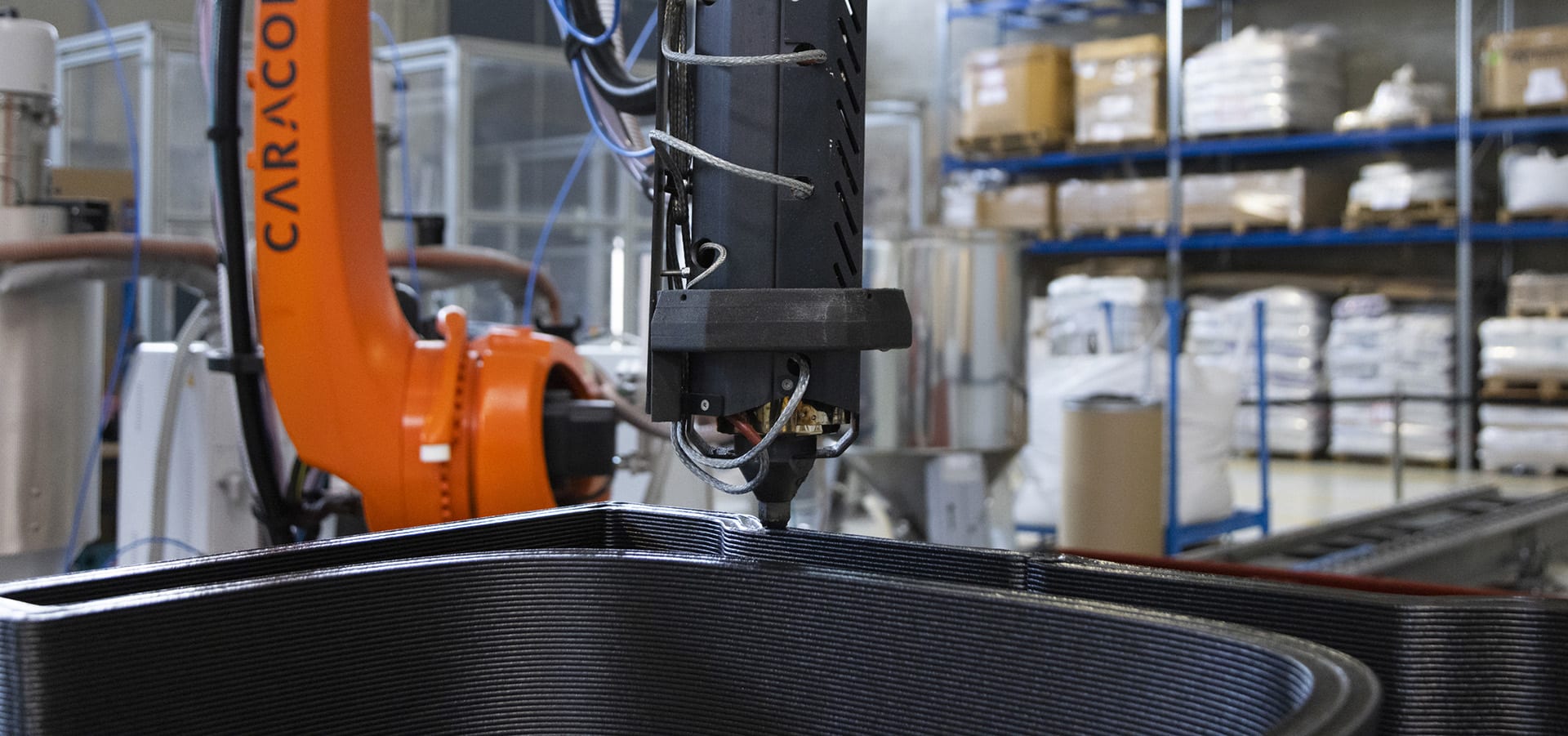
In the dynamic landscape of automotive manufacturing, innovation has focused mostly on delivering greater efficiency, automation, sustainability and flexibility. An innovation contributing to this transformation is large-format additive manufacturing (LFAM), which promises to revolutionize vehicle prototyping, manufacturing and customization. There are five advantages and five primary applications of LFAM within the automotive industry.
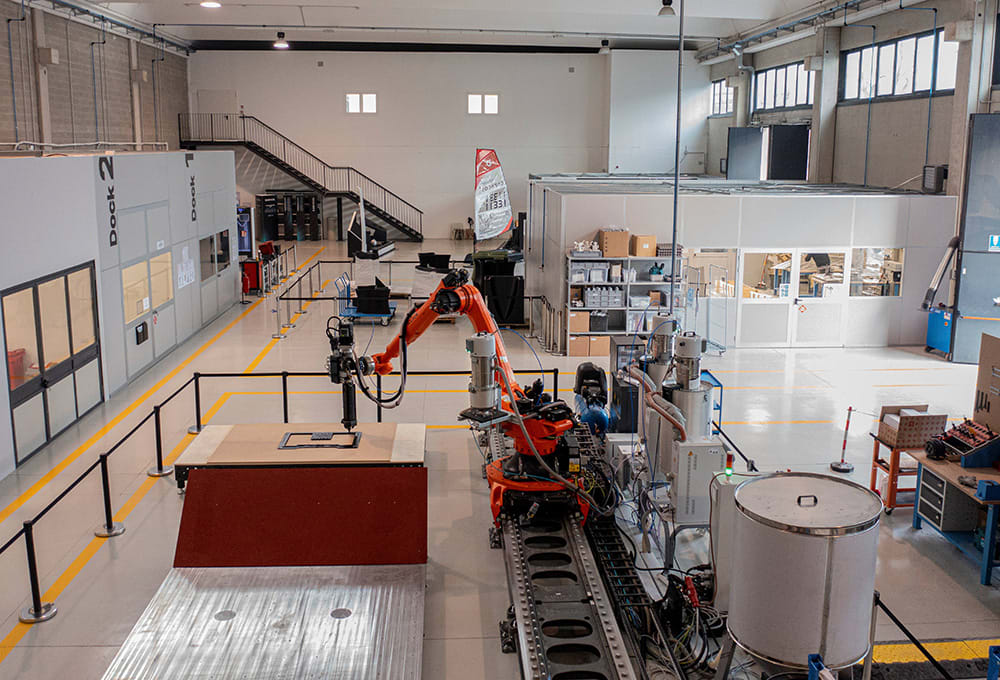
Scale and size capability: LFAM enables the creation of large-scale automotive components that were challenging to produce using traditional methods. Industrial LFAM technology can produce large-scale monolithic automotive components starting from 1m³, including complex geometries. The platform can 3D print automotive parts on a scale that can go beyond 10 to 15 meters in length as a single, monolithic piece. This eliminates the need for part assemblies, reducing manual operations and lead times while enhancing performance by minimizing weak points.
Speed and efficiency: LFAM significantly accelerates the production cycle and overall project lead times, cutting lead times by 50% to 70%, on average. By directly translating digital designs into physical parts – without the need for multiple assembly steps, molds, or tooling – manufacturers can rapidly iterate prototypes and produce final parts in a matter of hours, compared to the weeks sometimes required in conventional manufacturing.
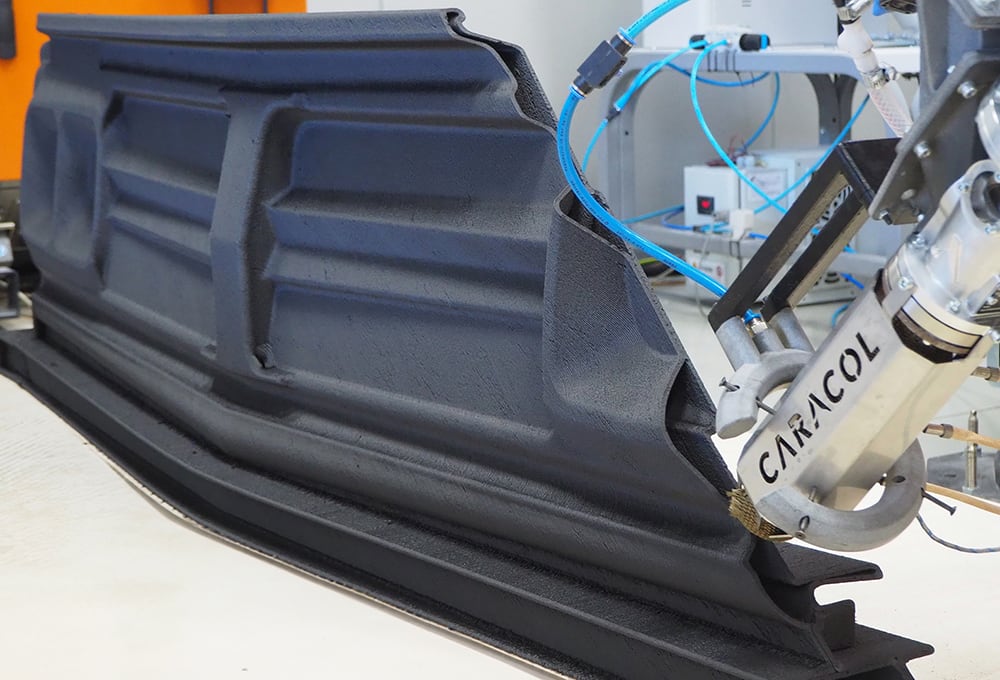
Cost-effectiveness: LFAM technology often requires a large initial capital equipment investment compared to traditional manufacturing machines. Over time, it guarantees increased efficiencies by reducing material used and waste, tooling requirements and streamlined production workflows contributing to lower operational costs. There are also initial investments needed for training to build the required knowledge on process and engineering for these technologies, changing the approach to traditional engineering.
Design flexibility and complexity: LFAM, particularly robotic LFAM, enables the creation of intricate geometries and designs that are otherwise difficult or impossible to produce with traditional methods. This flexibility allows automotive engineers to optimize parts for strength, weight reduction, and performance while also reducing material usage and Material variety: LFAM supports manufacturing with a wide range of materials for automotive applications, including high-performance polymers, composites and several metals.This versatility enables the production of functional mock-ups, tools, jigs and fixtures, as well as end-use parts.
Five LFAM applications in the automotive industry

Prototyping and tooling: LFAM expedites the prototyping phase, allowing automotive engineers to quickly test and refine designs before committing to costly tooling. Additionally, LFAM produces durable, customized composite tooling such as jigs, fixtures, autoclave cure tools and molds, enhancing manufacturing efficiency.
Customized components: Automotive manufacturers increasingly use LFAM to produce bespoke and low-volume parts tailored to customer preferences. This LFAM is employed in manufacturing large and precise body parts and custom components like body panels, bumpers and fenders and custom car interiors. By leveraging lightweight materials and optimized designs, automakerg a vast stockpile of spare parts and ensures timely availability for customers through enabling localized, on-demand production.
Innovative vehicle concepts: LFAM opens avenues for revolutionary vehicle designs, including electric and autonomous vehicles. Its ability to fabricate complex shapes and integrate functional features directly into components facilitates the realization of next-generation automotive concepts.
Large-format additive manufacturing represents a paradigm shift in automotive manufacturing, offering unmatched design freedom, production agility, and material versatility. As automakers strive for sustainable practices and accelerated innovation cycles, LFAM emerges as a transformative technology poised to shape the future of mobility.
By harnessing the full potential of LFAM, automotive manufacturers can expedite time-to-market, reduce costs, and unlock unprecedented opportunities for vehicle design and performance. Robotic LFAM platforms can be used to realize automotive composites applications, including autoclave tools, functional and aesthetic mock-ups, car’s prototypes and customized finished parts.
Mattia De Santis is the application engineering director at Caracoll.
More From SAE Media Group
Off-Highway Engineering
Additive Manufacturing Is Transforming Mobility Engineering, Driving the Factory of the Future
Automotive Engineering
Directing GM’s 3D-Printed Future
Off-Highway Engineering
Adding 3D Printing to Design, Manufacturing Processes
Aerospace & Defense Tech Briefs
Unlocking the Potential of 3D-Printed Polymers in Aerospace and Defense
Aerospace & Defense Tech Briefs
Portable 3D Printing Factory
Off-Highway Engineering
3DEO Launches New Metal 3D-Printing Platform
Aerospace & Defense Tech Briefs
Stratasys Unveils High-Production Additive Manufacturing Spin-Off
Automotive Engineering
Additive Manufacturing Startup Added to Ford’s Research Roster
Aerospace & Defense Tech Briefs
Northrop Grumman Opens Innovation Lab

Tech Briefs
Why Hasn’t 3D Printing Caught On in Automotive?


Off-Highway Engineering
3D Printing Machines Can't Be Built Fast Enough, ORNL Expert Says
Aerospace & Defense Tech Briefs
EOS and MTU Advance Quality Measures for Metal-Based Additive Manufacturing

Automotive Engineering
Design for Additive Manufacturing with New Book from SAE International
Automotive Engineering
BAAM Gets Bigger
Aerospace & Defense Tech Briefs
Next Generation Carbon Fiber Composites 3D Printer for Hypersonic Research
Aerospace & Defense Tech Briefs
SAE International Extends Call for Abstracts, Seeks Submissions for AeroTech Conference
Aerospace & Defense Tech Briefs
SAE International Issues First Technical Standards for Aerospace Additive Manufacturing
Tech Briefs
Executive Roundtable: 3D Printing
Medical Design Briefs INSIDER
MD&M South Debuts in Charlotte, NC
Aerospace INSIDER
A New Approach to 3D Printing Tool Recycling for Aerospace Manufacturers
Automotive Engineering
Mass-Reducing Innovations Honored by Altair

Automotive Engineering
German OEMs Flex 3D Manufacturing Muscle
Top Stories
NewsSensors/Data Acquisition
 Microvision Aquires Luminar, Plans Relationship Restoration, Multi-industry Push
INSIDERRF & Microwave Electronics
 A Next Generation Helmet System for Navy Pilots
INSIDERWeapons Systems
 New Raytheon and Lockheed Martin Agreements Expand Missile Defense Production
NewsAutomotive
 Ford Announces 48-Volt Architecture for Future Electric Truck
INSIDERAerospace
 Active Strake System Cuts Cruise Drag, Boosts Flight Efficiency
ArticlesTransportation

Webcasts
Aerospace
 Cooling a New Generation of Aerospace and Defense Embedded...
Energy
 Battery Abuse Testing: Pushing to Failure
Power
 A FREE Two-Day Event Dedicated to Connected Mobility
Automotive
 Quiet, Please: NVH Improvement Opportunities in the Early Design Cycle
Electronics & Computers
 Advantages of Smart Power Distribution Unit Design for Automotive &...
Unmanned Systems
 Sesame Solar's Nanogrid Tech Promises Major Gains in Drone Endurance