




101st Combat Aviation Brigade Makes History with First MUOS Connectivity in a Helicopter
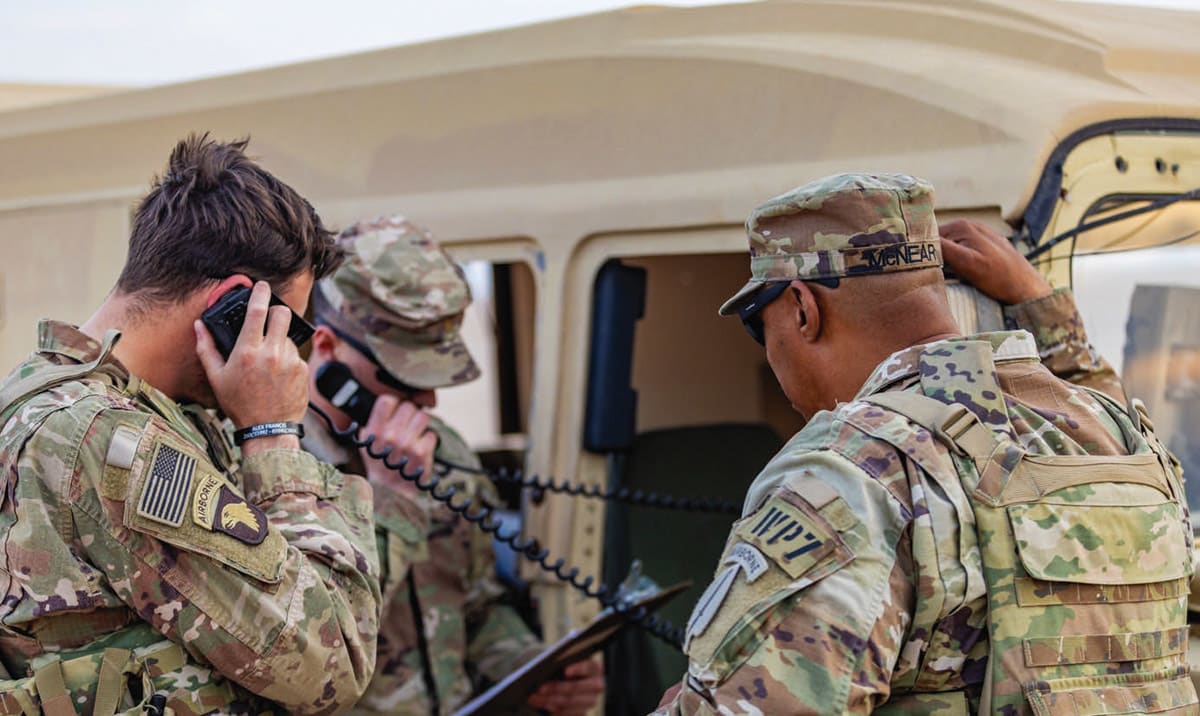
In a groundbreaking achievement, the 101st Combat Aviation Brigade, 101st Airborne Division (Air Assault) earlier this year became the first unit to successfully use the Mobile User Objective System (MUOS) function of the Army/Navy Portable Radio Communications (AN/PRC) 158 and 162 radios for conventional rotary wing operations. The trailblazing accomplishment occurred as the brigade continued its mission of providing support to ground forces, April 9, 2025.
The MUOS function, of the AN/PRC-158 and 162 radios, operates by transmitting ultra-high frequency radio waves through a constellation of satellites to create a steady communications network. MUOS is a component of a bigger Integrated Tactical Network (ITN).
According to the U.S. Army Program Executive Office for Command, Control, Communications, and Network, ITN is an older concept that combines commercial and military communications equipment to allow troops to talk in areas of limited bandwidth.
“MUOS provides us another mean of reliable communications,” said Sgt. Malachi Manis, a Signal Support System Specialist. “It differs from older Tactical Satellite systems because there is less static interference. I take pride in the fact that I was a part of the team that brought the capability to Army aviation.”
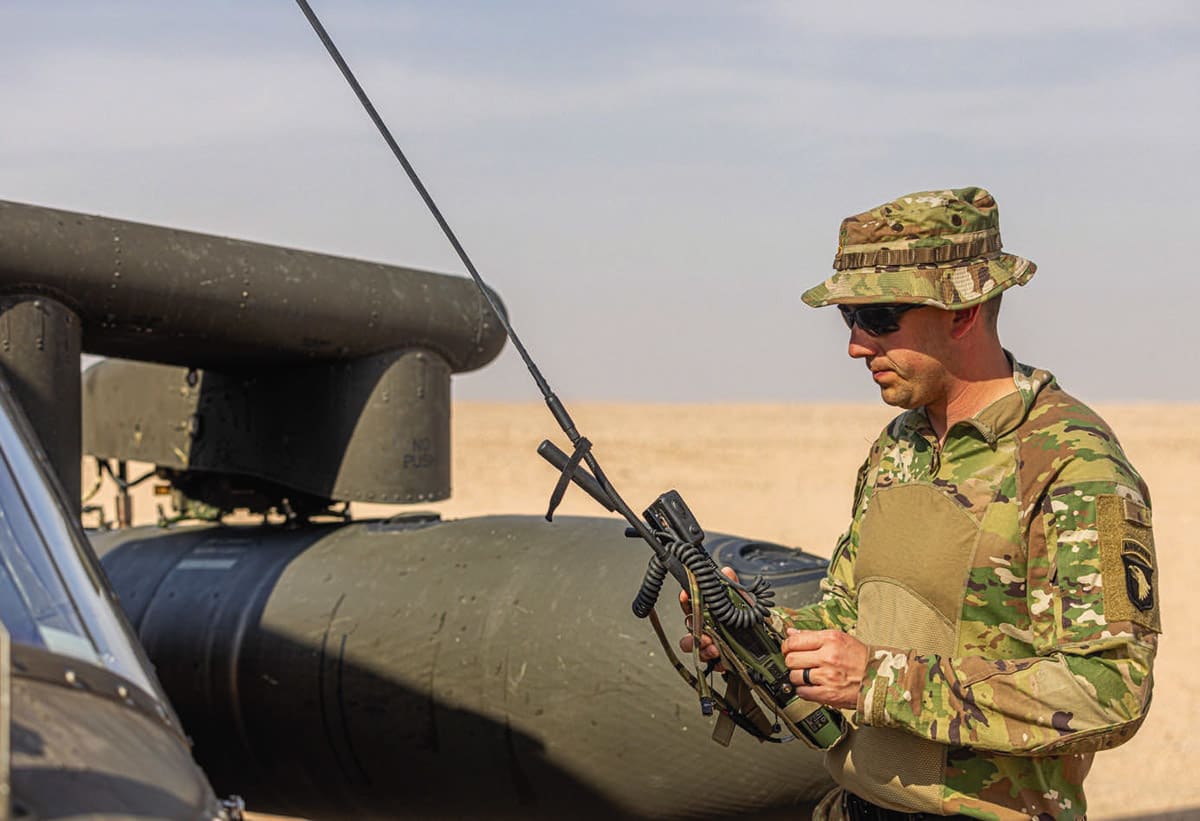
The MUOS capability has been critical to have onboard aircraft to ensure connectivity. The structured use of ITN systems affords air commanders the opportunity to get a quicker analysis of missions as they occur and the ability to share information with air crews instantaneously
“The ability to access MUOS through the AN/PRC-162 has enabled our widely dispersed units to funnel pertinent information back to the headquarters in a timely manner. Timely and accurate information is key to maintaining a common operating picture the commander requires to make informed decisions,” said Maj. Rodney Lee, the 101st CAB Signal Officer. “This capability is not going away and will continue to help future units.”
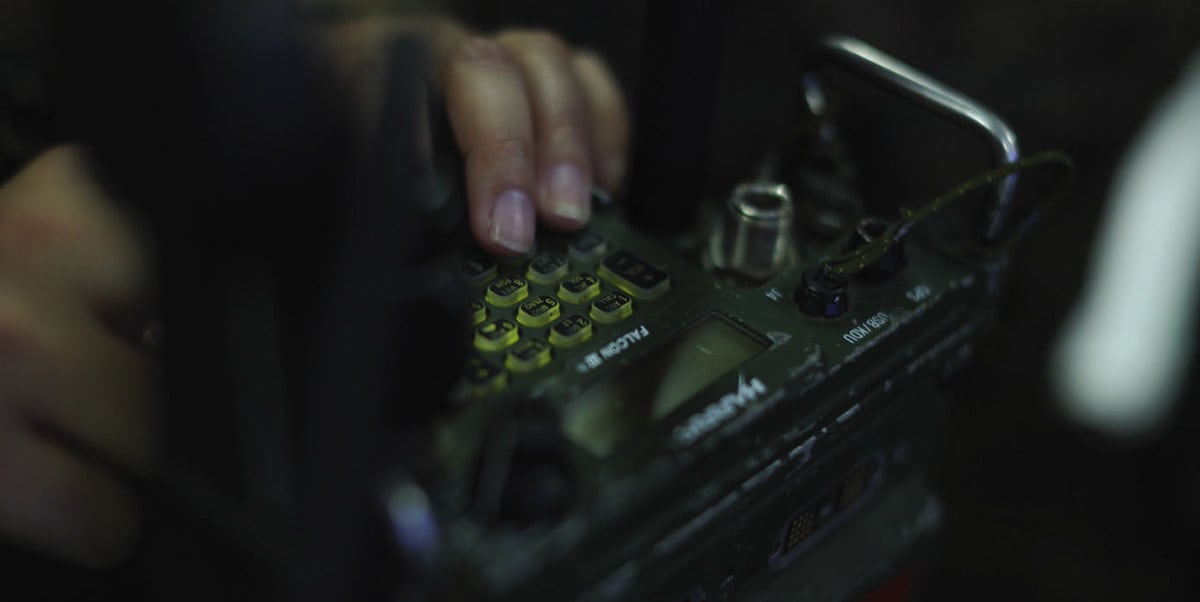
The use of MUOS is the latest example of the brigade being the first to transform its capabilities to stay ahead of adversarial threats regionally and globally.
Over the past year, the unit has continued to embrace opportunities for innovation, conducted multiple large-scale, long range air assaults (L2A2) and announced plans to stand up 7-101 Heavy Lift Battalion, a new battalion of CH-47 Chinook Helicopters.
“We continue to push the boundaries of innovation and operational excellence,” said Col. Tyler Partridge, the Commander of the 101st CAB. “The integration of MUOS capabilities is a testament to our brigade’s commitment to staying ahead of our ever-evolving adversaries. We will fight tomorrow’s fight today, by leveraging cutting-edge technology to ensure our Soldiers are equipped to dominate the battlefield of the future and protect our nation’s interests.”
This article was written by Capt. Andrew Lightsey IV for the U.S. Army’s 101st Combat Aviation Brigade (Camp Buehring, Kuwait). For more information, visit here .
More From SAE Media Group
Defense INSIDER
Army Begins Satcom as a Service Evaluation

Defense INSIDER
MQ-25, H-1 Test Next-Gen Satellite Communications
Aerospace Manufacturing and Machining INSIDER
Airbus Developing New Laser Communication Terminal for Military Aircraft
Defense INSIDER
Army Aviation Team Achieves Software Success in Live Fire Test
Defense INSIDER
Electronic Warfare Creates Battlefield on a Different Wavelength
Aerospace INSIDER
LEO Satellites Complete First Ever Link 16 Broadcast From Space


Aerospace INSIDER
EA-37B Compass Call: The US Air Force's New Electronic Attack Aircraft
Aerospace & Defense Tech Briefs
Persistent Systems Auto-Tracking Antenna Adds Aircraft to Network, Enhances Data Sharing


Defense INSIDER
Army Equips Stryker Unit With New Communications Technology
Defense INSIDER
In-Flight 3D Printing of Drone Parts on a Black Hawk Helicopter

Aerospace & Defense Tech Briefs
Are Defense Satellites Ready for Space-Based Laser Communications?

Defense INSIDER
Satellite Communications for the Army’s NGC2 Pilot
Aerospace & Defense Tech Briefs
Using an Open Architecture Approach to Military Avionics

Defense INSIDER
Army Partners with Marine Corps on 3-D Printed Drones
Defense INSIDER
High-Tech UAV Performs Recon, Defends Brigade
Aerospace & Defense Tech Briefs
Network Keeps Line of Communication Open to Convoys
Aerospace & Defense Tech Briefs
FLYHT and Spectralux Avionics Integrate Systems to Deliver FANS-Over-Iridium Satellite Communications to Airlines

Aerospace & Defense Tech Briefs
JADC2: Building the U.S. Military’s Internet of Things
Aerospace & Defense Tech Briefs
Raytheon Looks to Upgrade Carrier Landing System for Ground Use
Top Stories
NewsSensors/Data Acquisition
 Microvision Aquires Luminar, Plans Relationship Restoration, Multi-industry Push
INSIDERRF & Microwave Electronics
 A Next Generation Helmet System for Navy Pilots
INSIDERWeapons Systems
 New Raytheon and Lockheed Martin Agreements Expand Missile Defense Production
NewsAutomotive
 Ford Announces 48-Volt Architecture for Future Electric Truck
INSIDERAerospace
 Active Strake System Cuts Cruise Drag, Boosts Flight Efficiency
ArticlesTransportation

Webcasts
Aerospace
 Cooling a New Generation of Aerospace and Defense Embedded...
Energy
 Battery Abuse Testing: Pushing to Failure
Power
 A FREE Two-Day Event Dedicated to Connected Mobility
Automotive
 Quiet, Please: NVH Improvement Opportunities in the Early Design Cycle
Electronics & Computers
 Advantages of Smart Power Distribution Unit Design for Automotive &...
Unmanned Systems
 Sesame Solar's Nanogrid Tech Promises Major Gains in Drone Endurance