




Raytheon Looks to Upgrade Carrier Landing System for Ground Use
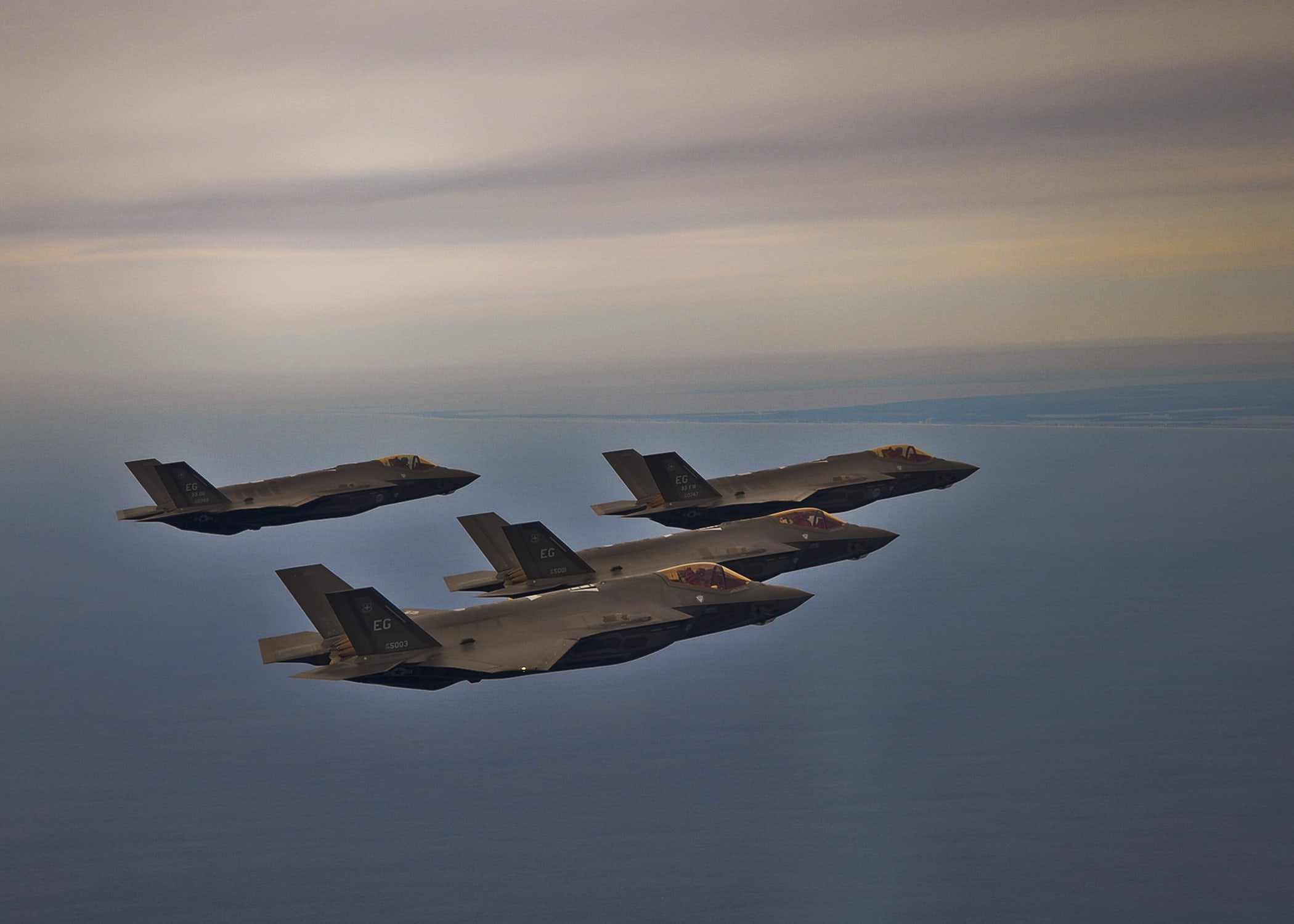
The Raytheon Company (Raytheon), based out of Waltham, Massachusetts, is currently paying for a Joint Precision Approach and Landing Systems (JPALS) software upgrade with independent research and development funds. The company hopes to convince the U.S. Air Force to use JPALS – a system used to help aircraft land on aircraft carrier decks – in its expeditionary land operations.
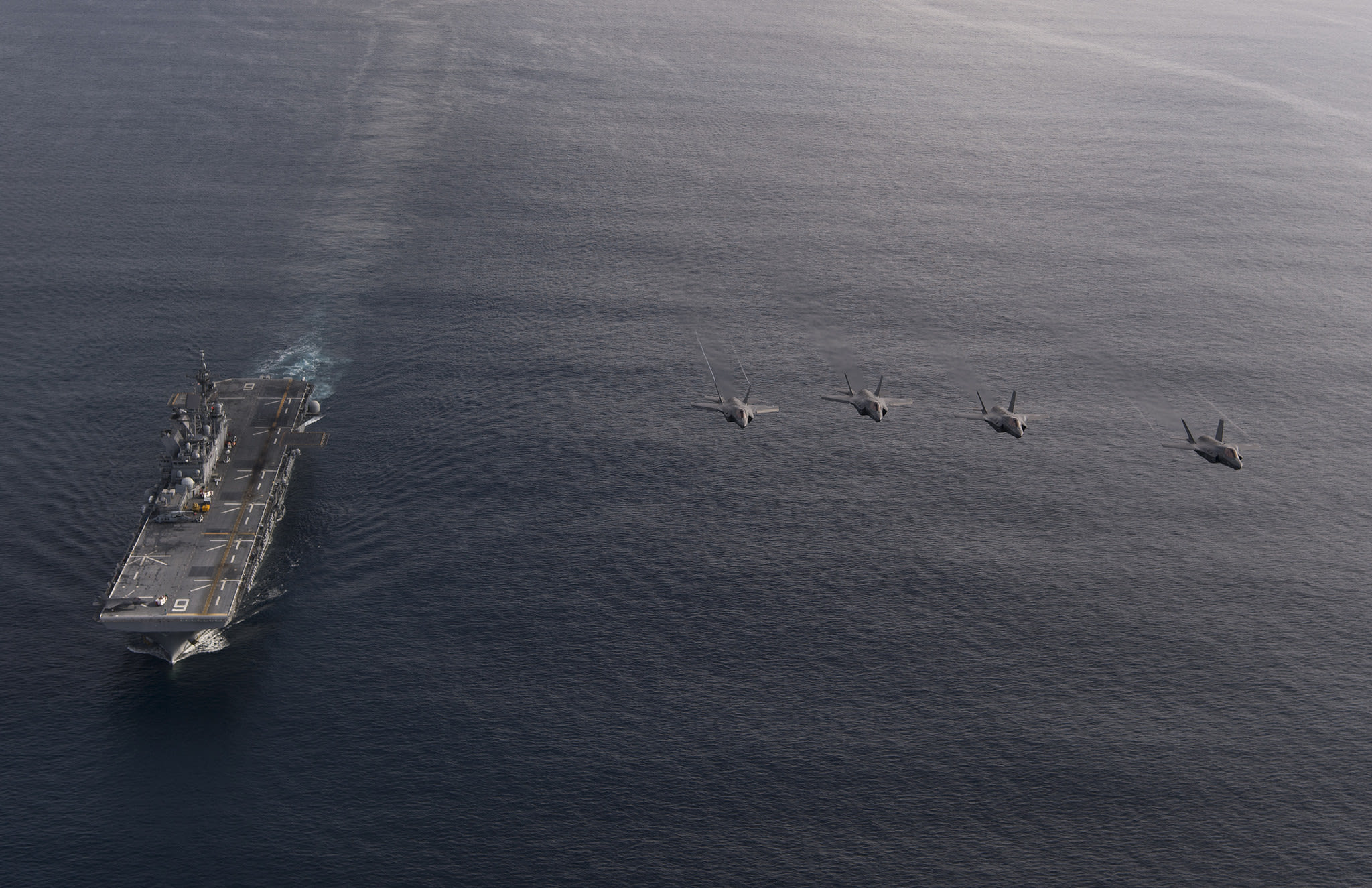
JPALS is a differential precision landing system that global positioning system (GPS) data to guide aircraft onto aircraft carriers and amphibious assault ships in all weather and sea surface conditions up to the rough waters – or four-meter waves – of “Sea State 5.” The system uses an encrypted, jam-proof data link to connect to software and receiver hardware on the aircraft and an array of GPS sensors, mast-mounted antennas, and equipment on the ship.
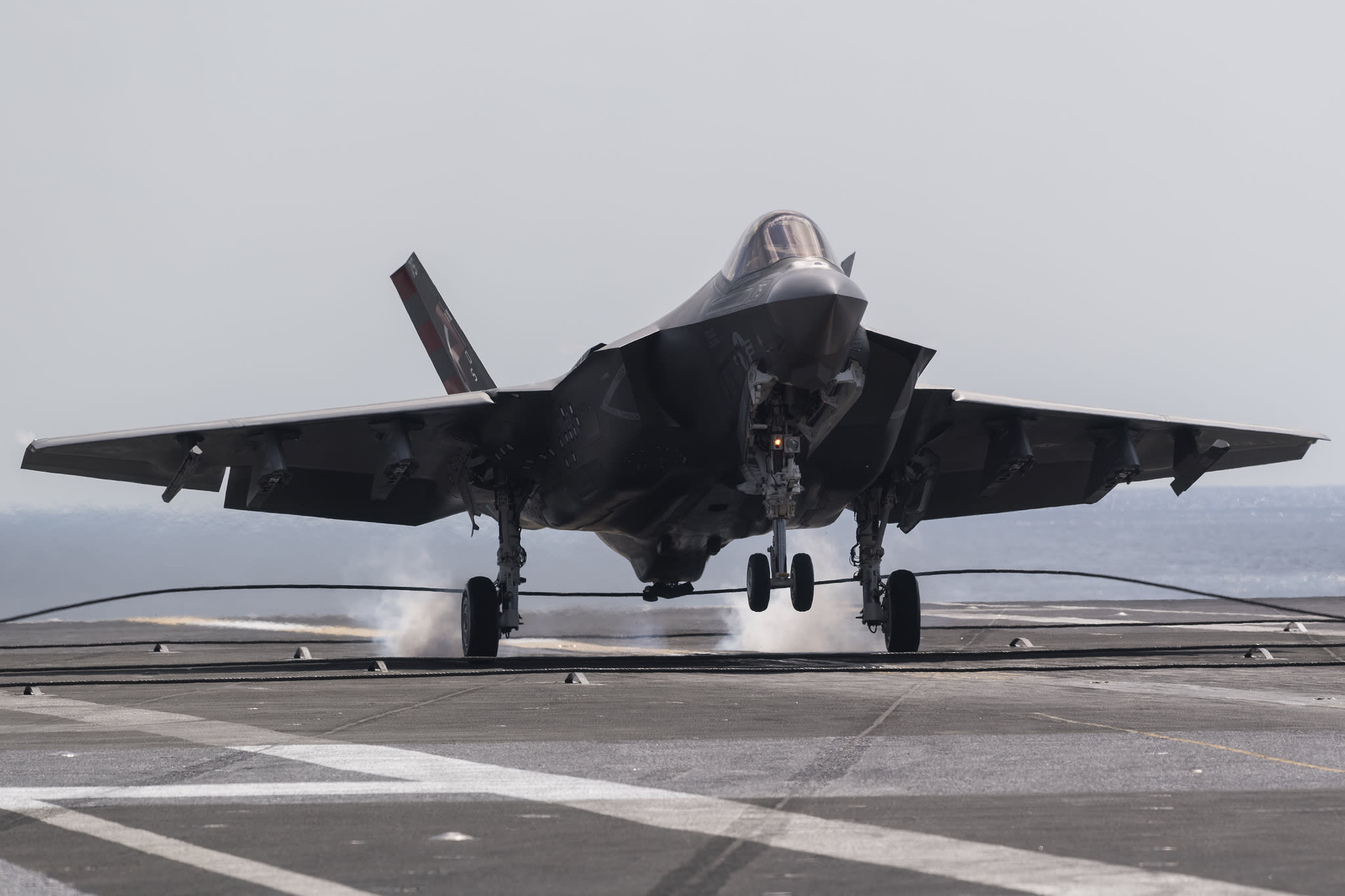
The system enhances operations in harsh environments, giving aircraft that capability to perform precision landings in challenging terrain conditions. Raytheon believes the U.S Air Force could benefit from using JPALS to support expeditionary operations, specifically those conducted by U.S. Air Forces in Europe (USAFE) and Pacific Air Forces (PACAF).
For USAFE, Raytheon hopes for JPALS adoption for dispersed operations and – for PACAF – that JPALS becomes incorporated into its adaptive basing strategy, which is an approach to deploying and maneuvering assets in highly contested environments.
Raytheon is currently in talks with U.S. Air Force officials concerning a possible F-35A JPALS landing test at Edwards Air Force Base in California later this year. The F-35A – the U.S. Air Force variant of the fifth-generation Lockheed Martin F-35 Lighting II multirole fighter – is already JPALS-capable like the carrier-friendly U.S. Marine Corps F-35B and U.S. Navy F-35C variants.
JPALS can support up to 50 different straight, curved, and multi-segmented precision approaches that range from 20 nautical miles to carrier deck touchdown.
It “mirrors the ship system, which is single-runway, single-approach,” explained U.S. Navy Rear Admiral C.J. Jaynes according to reporting by Air Force Magazine. “We want to make […] that one a multiple-runway, multiple-approach system.”
Jaynes is executive technical advisor for precision landing systems at Raytheon Intelligence, Information, and Services.
Raytheon’s end goal is to further develop JPALS to aid aircraft approaching 20 nautical miles from a ground station.
The Air Force Magazine source article was authored by Jennifer-Leigh Oprihory.
William Kucinski is content editor at SAE International, Aerospace Products Group in Warrendale, Pa. Previously, he worked as a writer at the NASA Safety Center in Cleveland, Ohio and was responsible for writing the agency’s System Failure Case Studies. His interests include literally anything that has to do with space, past and present military aircraft, and propulsion technology.
Contact him regarding any article or collaboration ideas by e-mail at
More From SAE Media Group
Aerospace & Defense Tech Briefs
Lockheed Martin’s Next-Gen, 360-Degree Vision System Flies on the Bell V-280 Valor
Aerospace & Defense Tech Briefs
When It Comes to Fifth-Generation Assets, Air Force Values Virtual Training over Live Flying
Aerospace & Defense Tech Briefs
Insitu ScanEagle SUAS Boosts Coast Guard Mission Effectiveness
Aerospace & Defense Tech Briefs
Boeing’s Next EcoDemonstrator Test Bed Will Be a 777

Aerospace & Defense Tech Briefs
FLYHT and Spectralux Avionics Integrate Systems to Deliver FANS-Over-Iridium Satellite Communications to Airlines
Aerospace & Defense Tech Briefs
Collins Aerospace Provides Avionics for C-130H Modernization Program
Aerospace & Defense Tech Briefs
Curtiss-Wright Will Provide Data Technology Support for Boeing’s MQ-25 Unmanned Air Refueling Platform
Aerospace & Defense Tech Briefs
U.S. DoD Orders 255 Lockheed Martin F-35 Military Combat Aircraft in $22.7B Deal
Aerospace & Defense Tech Briefs
Iridium, Aireon, SpaceX Celebrate Satellite Launch, System Deployment
Aerospace & Defense Tech Briefs
Industry Invited to Participate in AeroTech Aerospace and Defense Technical Program
Aerospace & Defense Tech Briefs
Aitech Defense Will Provide Data Interface Technology for Boeing’s Unmanned MQ-25 Refueling Platform
Automotive Engineering
Airbus’ Connected Cabin Concept Is Materializing with First Round of Partnerships
Aerospace & Defense Tech Briefs
First F-35 Crash; Pilot Safe
Aerospace & Defense Tech Briefs
Aireon to Launch Free, Real-Time Emergency Aircraft Location Service
Aerospace & Defense Tech Briefs
EU to Deploy UAV Traffic Management System by 2019
Aerospace & Defense Tech Briefs
Quality Management Experts Provide Guidance on AS9100 Standard, Equipment Calibration
Off-Highway Engineering
Addressing Electromagnetic Compatibility in the Context of Aircraft Electrification
Aerospace & Defense Tech Briefs
New Zealand and LeoLabs Establish the First Low-Earth Orbit Regulatory Platform
Aerospace & Defense Tech Briefs
Curtiss-Wright Black Boxes Receive European Approval
Aerospace & Defense Tech Briefs
Boeing Wins MQ-25 Contract
Automotive Engineering
Nvidia Partners with AdaCore to Secure Self-Driving Firmware
Aerospace & Defense Tech Briefs
Astronautics to Upgrade Cockpit Displays on U.S. Customs and Border Protection P-3 Orions
Aerospace & Defense Tech Briefs
Airbus and Dassault Aviation Will Start Development of the “New Generation Fighter” for European FCAS Program
Aerospace & Defense Tech Briefs
OA-X Phase Two Kicks Off
Aerospace & Defense Tech Briefs
Artificial Intelligence Could Reduce CV-22 Osprey Maintenance
Aerospace & Defense Tech Briefs
South Africa’s Paramount Group Will Provide New Mission System for Combat Version of the Aermacchi M-345 Jet Trainer
Aerospace & Defense Tech Briefs
High-Speed Data Cables for Fighter Aircraft
Aerospace & Defense Tech Briefs
SAE International Extends Call for Abstracts, Seeks Submissions for AeroTech Conference
Top Stories
NewsSensors/Data Acquisition
 Microvision Aquires Luminar, Plans Relationship Restoration, Multi-industry Push
INSIDERRF & Microwave Electronics
 A Next Generation Helmet System for Navy Pilots
INSIDERWeapons Systems
 New Raytheon and Lockheed Martin Agreements Expand Missile Defense Production
NewsAutomotive
 Ford Announces 48-Volt Architecture for Future Electric Truck
INSIDERAerospace
 Active Strake System Cuts Cruise Drag, Boosts Flight Efficiency
ArticlesTransportation

Webcasts
Aerospace
 Cooling a New Generation of Aerospace and Defense Embedded...
Energy
 Battery Abuse Testing: Pushing to Failure
Power
 A FREE Two-Day Event Dedicated to Connected Mobility
Automotive
 Quiet, Please: NVH Improvement Opportunities in the Early Design Cycle
Electronics & Computers
 Advantages of Smart Power Distribution Unit Design for Automotive &...
Unmanned Systems
 Sesame Solar's Nanogrid Tech Promises Major Gains in Drone Endurance