




Unifying Design and Multiphysics Simulation for Electric Drive Development
Detailed, physically accurate simulations and virtual twins let engineers evaluate more options for sustainable propulsion systems.
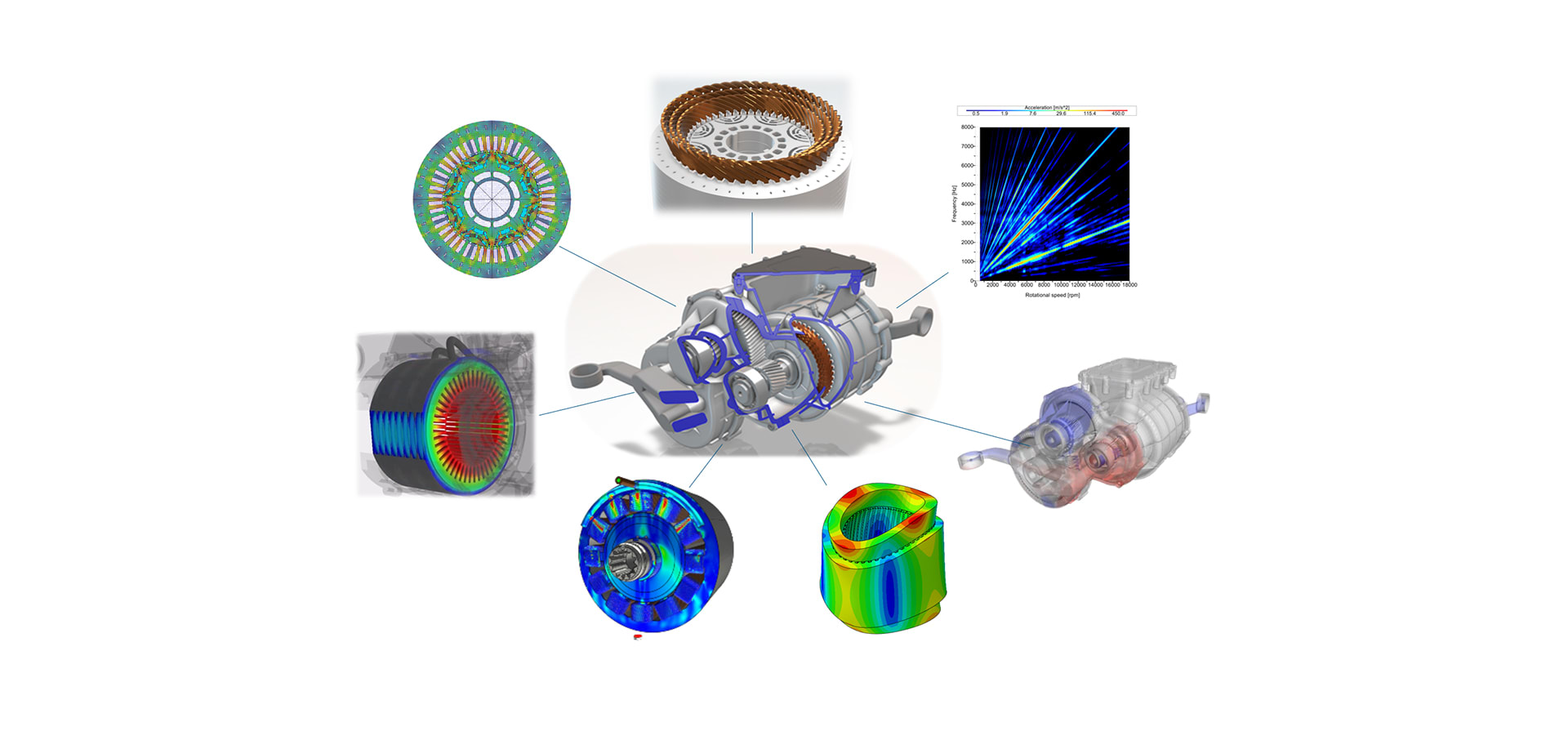
Electric drive systems are central to the efficient and clean use of energy for electric and hybrid vehicles. They need to efficiently convert electrical energy into mechanical motion, but coupling mechanical and electrical components into a highly compact system requires a range of complex design and engineering tradeoffs.
One challenge is that automotive companies typically use a wide range of design and simulation technologies from different suppliers. This has resulted in multiple iterations of model and data transfers between the design and simulation software, which is inefficient, error-prone, and results in a lack of decision traceability.
A more efficient, accurate, and collaborative approach is the use of unified modeling and simulation within a data-managed platform. This enables development teams to create a virtual twin of the system, providing a consistent reference from functional requirements to concept designs to simulation validations throughout the development process. Examples of connected workflows include:
Electric drive design
Electric drive systems typically include one or more electric machines, gear reducers, and a housing, often with integrated power electronics components. To harmonize component and system-level requirements for optimal performance, modular component design with flexible parametrization is essential. These capabilities, within a unified platform, ensure modeling and simulation continuity across all design stages.
Electric machine design optimizationTo achieve the desired power output while minimizing side effects, such as thermal losses, vibration, and the risk of mechanical failure due to motion and thermal stress, electromagnetic and structural analyses are critical during the initial design stage. Optimizing 2D rotor and stator designs is also essential for subsequent thermal and NVH (noise, vibration, and harshness) analyses and further design refinement.
Electric machine thermal management
Cooling efficiency and auxiliary power for coolant circulation are highly sensitive to the type and design of the cooling system. Effective cooling of electric machines under demanding power conditions is needed to maintain overall efficiency and extend life. Simulation during the design stage helps designers identify and correct problematic hot spots around temperature-sensitive components, reducing problems that could arise during the physical testing stage.
Electric drive NVH
Data connectivity on the platform enables the use of a single source of model data to drive simulations at multiple levels of fidelity. Noise sources originating from electric machines, mechanical components and manufacturing processes can be ID'd earlier in the process, allowing targeted mitigation measures to be applied consistently throughout the development cycle.
Achieving a validated virtual twin
Unified modeling and simulation on a data-managed platform is transforming electric drive system development by providing a seamless, collaborative design and engineering approach. The unified technology provides visualization of the relationship between the system aspects, including requirements, the 3D Model, simulations, and corresponding reports. This approach ensures traceability from top-level requirements, such as vehicle speed and charging time, to specific e-drive technical specifications, such as magnet slot height and angle. By creating a virtual twin and simulating physically accurate performance during the design stage, electric drive developers are able to evaluate more design options to deliver more efficient, reliable and sustainable propulsion systems to the market.
Young-Chang Cho is SIMULIA Industry Process Expert at Dassault Systèmes and wrote this article for SAE Media.
More From SAE Media Group
Automotive Engineering
Engineering at the New NVH Frontier
Off-Highway Engineering
Upswing in Outsourced EV Testing
Automotive Engineering
FEV and the Art of EV Testing
Automotive Engineering
Intertek Rethinks the EV Test Facility
Automotive Engineering
Engineering Flexibility into EV Powertrains
Automotive Engineering
BMW Takes Multi-Modal Route to Manufacturing
Automotive Engineering
ACeDrive Consortium Plans More Efficient EV Powertrain
Automotive Engineering
Addressing Thermal Management for EVs
Off-Highway Engineering
Overcoming EV Drivetrain Testing Challenges
Automotive Engineering
EV Energy-Management Powers-Up
Automotive Engineering
Driving Electrified Powertrain Systems Design
Automotive Engineering
ZF Introduces Complete E-Drive System for Passenger, Commercial Vehicles
Automotive Engineering
Protean Electric Aims for Pirouetting Autonomous EVs
Automotive Engineering
Orbis Says HaloDrive Axial-Flux Motor Available for In-Wheel, Other Uses
Battery & Electrification Technology
How Battery Simulation Is Taking High-Performance EV Development to New Heights
Automotive Engineering
BorgWarner Integrated Drive Module in Testing Phase

Automotive Engineering
Wheel-Hub-Motor Innovations in Flux
Off-Highway Engineering
Electric Mobile Machines Won’t Abandon Hydraulics
Autonomous Vehicle Engineering
Speeding Thermal Analysis for Autonomous EVs
Off-Highway Engineering
Yanmar, ELEO Announce Electrification Strategy for Off-Highway Sector
Automotive Engineering
Suppliers Prepare for a Drop in EV Market Share
Automotive Engineering
Battery Show Teems with All Things Rechargeable
Automotive Engineering
Tremec-Trification
Automotive Engineering
ZF CubiX Lays out One Future for Chassis Design
Automotive Engineering
Are EV Tires a Thing?
Automotive Engineering
ZF Meets Changing EV Market with Suite of Improved Components
Automotive Engineering
Mercedes Proposes “In-Drive Brakes” for Better EVs
Automotive Engineering
Hitachi-Astemo and the Electrified Future
Off-Highway Engineering
REE Unveils P7-C Chassis Cab at ACT Expo
Top Stories
NewsSensors/Data Acquisition
 Microvision Aquires Luminar, Plans Relationship Restoration, Multi-industry Push
INSIDERRF & Microwave Electronics
 A Next Generation Helmet System for Navy Pilots
INSIDERWeapons Systems
 New Raytheon and Lockheed Martin Agreements Expand Missile Defense Production
NewsAutomotive
 Ford Announces 48-Volt Architecture for Future Electric Truck
INSIDERAerospace
 Active Strake System Cuts Cruise Drag, Boosts Flight Efficiency
ArticlesTransportation

Webcasts
Aerospace
 Cooling a New Generation of Aerospace and Defense Embedded...
Energy
 Battery Abuse Testing: Pushing to Failure
Power
 A FREE Two-Day Event Dedicated to Connected Mobility
Automotive
 Quiet, Please: NVH Improvement Opportunities in the Early Design Cycle
Electronics & Computers
 Advantages of Smart Power Distribution Unit Design for Automotive &...
Unmanned Systems
 Sesame Solar's Nanogrid Tech Promises Major Gains in Drone Endurance