




Mercedes Proposes “In-Drive Brakes” for Better EVs
Still untested, Mercedes wants to integrate in-drive brakes into the motor-transmission unit, replacing conventional brakes.
From humble Chevy Bolts to six-figure Lucid Airs, every EV can reverse its electric motors to slow the vehicle while harvesting energy for the battery, the efficient tag-team process known as regenerative braking.

Today’s EVs do this so well that traditional friction brakes, which clamp onto a spinning wheel rotor or drum, can seem an afterthought. Witness Volkswagen’s decision to equip its ID.4 with old-fashioned rear drum brakes, with VW claiming drums reduce EV rolling resistance and offer superior performance after long periods of disuse.
At Mercedes-Benz, engineers say their regenerative brakes already slow the company’s EVs on their own in 98% of driving situations. Its upcoming CLA electric sedan – a critical model in the wake of the EQS sedan’s sales flop – can generate up to 200 kW under braking. With friction brakes twiddling their metallic thumbs, the German automaker is questioning why they’re even taking up space within a car’s wheels.
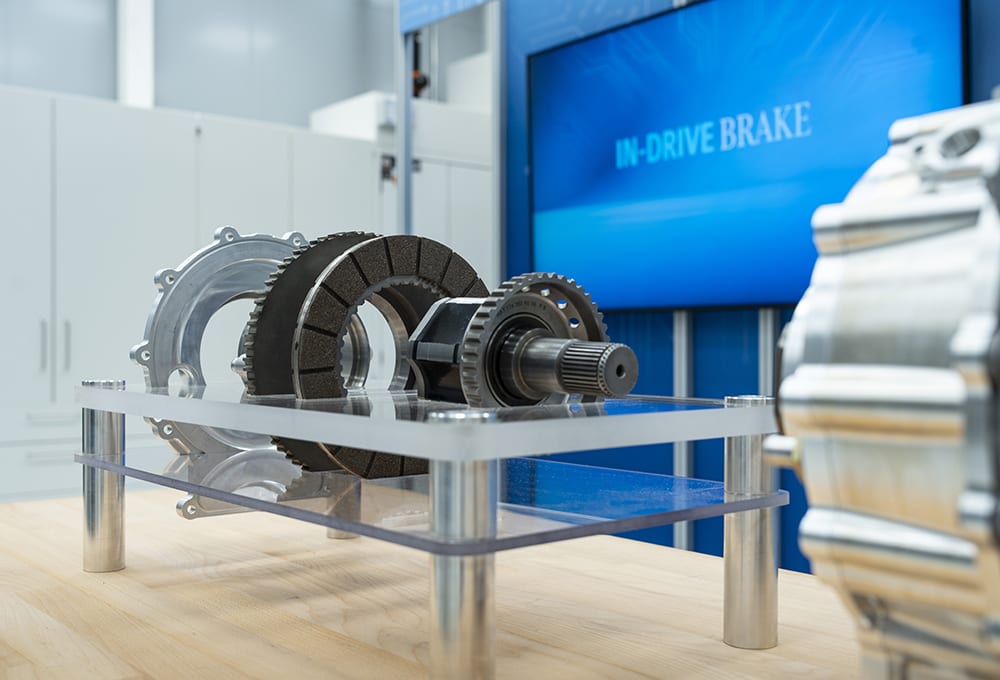
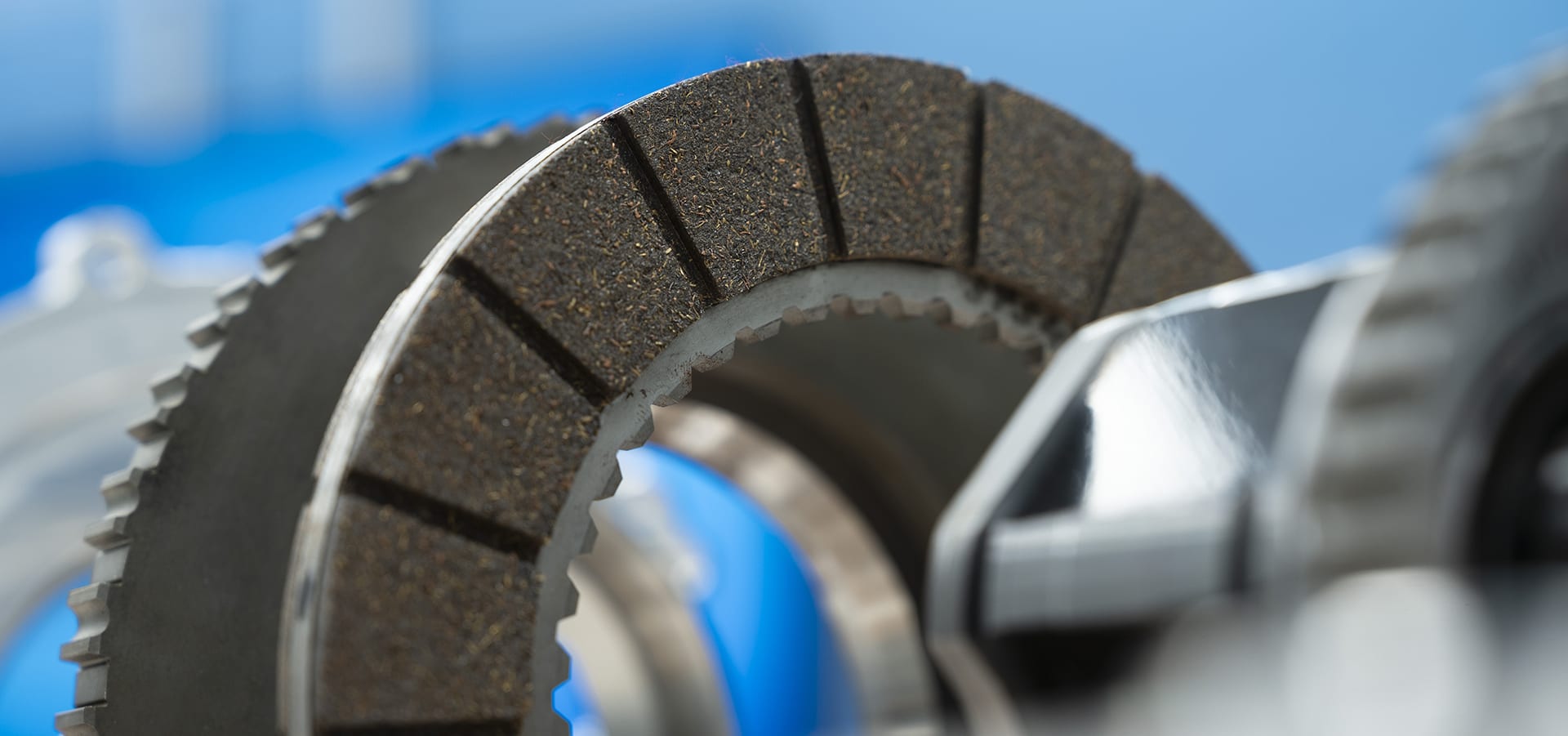
Mercedes’ solution is called “in-drive brakes,” which it showed off recently at its R&D center in Sindelfingen, Germany. These innovative stoppers are integrated directly in electric drive units, sharing space with a motor, transmission and differential. The system switches up the usual role of brake pads and a spinning rotor. A pair of stationary brake discs, to the left and right of the motor/transmission unit, squeeze against a spinning, two-sided circular brake pad that’s connected to the driveshaft.
Mercedes cites several advantages. The system would divert about 200 lbs (91 kg) of unsprung mass from a car’s corners to the inboard side of its suspension. That would improve wheel control and ride quality. Mercedes claims squeaky discs and other brake noise would be eliminated, with reduced wear and virtually no maintenance. With no need for outboard brake cooling, designers could improve aerodynamics with fully enclosed wheel designs, in any imaginable style. (Though something tells us that fake five-spoke classics would quickly join today’s pretend EV grilles).
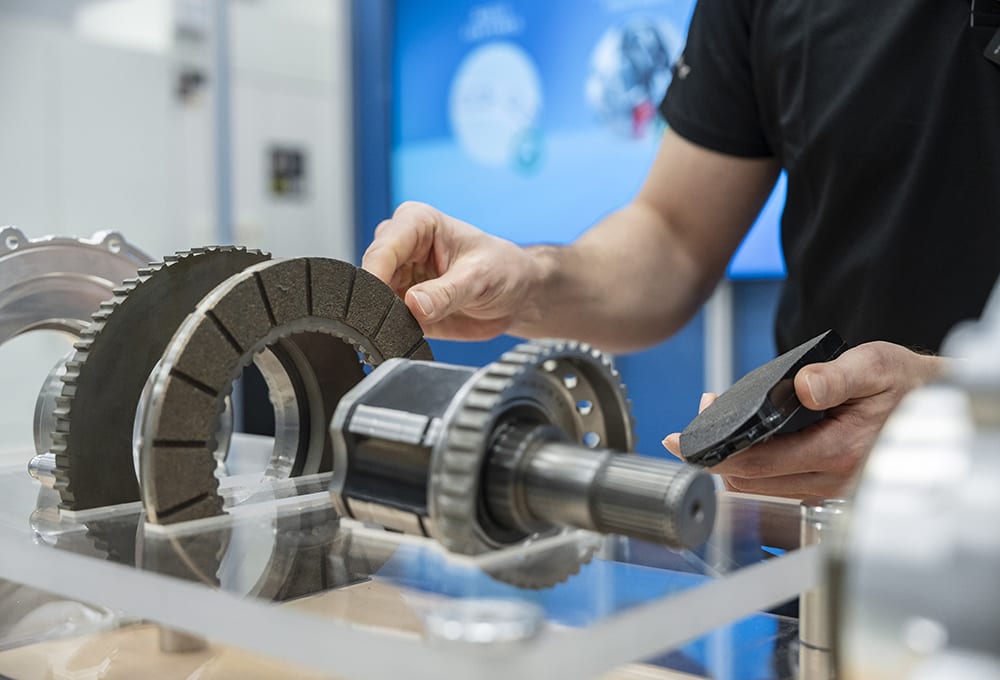
With the brakes moved to an aluminum housing, drivers could say goodbye to unsightly brake dust on those precious alloy wheels, and their associated emissions. A pan below the motor housing captures that nasty particulate for the life of the vehicle, again with no maintenance. As for two-wheel-drive EVs, the all-in-one drive units can pair with conventional brakes on the non-driven wheels.
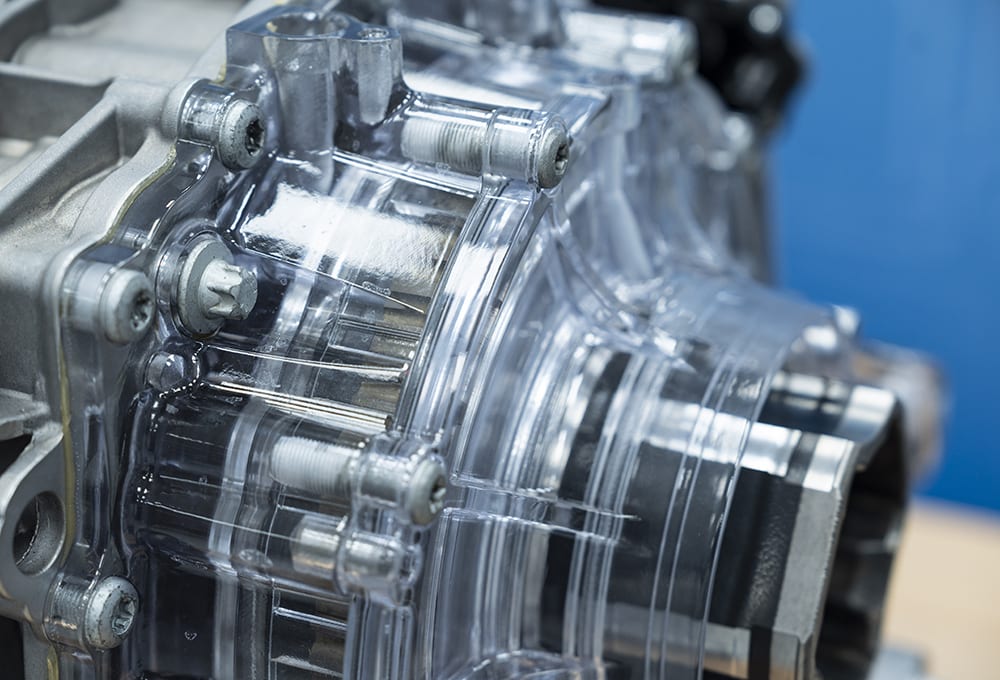
Cooling the system remains a key engineering challenge. Even if regen handles 98% of stops, the other two percent – think hard stops in heavy traffic – can generate copious heat, above 300 F (149 C). Mercedes can run coolant through the motor unit’s brake discs. Ideally, the brakes would be plumbed into the same cooling circuit that soothes the motor and battery. Therein lies the problem: With a lithium-ion battery preferring a comfy 60-85 F (16-29 C), and spinning electric motors running at 180 F (82 C), putting friction brakes on the same cooling circuit could push the battery and motor beyond optimal temperatures. Mercedes is working in its labs to overcome that issue, and has yet to test the system in roadgoing prototypes.
Add it to Mercedes’ to-do list, along with fixing the jellybean blahs of its EQ-branded sedans.
More From SAE Media Group
Automotive Engineering
Tuning the 2024 Corvette E-Ray for Exceptional Drivability
Automotive Engineering
Mercedes-Benz Product Boss: Europe, North America EVs, EV Charging to Rapidly Get Better
Automotive Engineering
Active Roll Stabilization Introduced for Audi’s Large Crossovers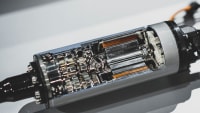
Automotive Engineering
Tremec-Trification
Automotive Engineering
Elaphe Readies In-Wheel Motors for OEM EVs After 2030
Off-Highway Engineering
JLG Reveals New Electric Telehandler
Automotive Engineering
Hub-Motoring in Lordstown’s Novel Endurance
Automotive Engineering
Jaguar Unveils Twin-Motor I-Pace Battery-Electric Crossover
Automotive Engineering
Mercedes-Benz EQS Concept: The S-Class of Electric Vehicles?
Automotive Engineering
Jaguar’s New EV Pacesetter
Automotive Engineering
BMW Engineers for the EV-Transition Reality
Automotive Engineering
Kia’s 2024 EV9 Stands as First Mainstream 3-Row EV
Automotive Engineering
Converting Classic Cars Is Just Step One of This Mission
Automotive Engineering
2019 Nissan Leaf plus Nets Extended EV Range
Automotive Engineering
Mercedes Doubles down on Electric Vans, Considers Fuel Cells
Automotive Engineering
Cadillac Lyriq Spearheads GM’s EV Assault
Automotive Engineering
2019 E-Tron SUV: Audi Goes Electric
Off-Highway Engineering
EV Startup Prepares to Enter Commercial Market with Novel EAxle
Automotive Engineering
2025 Hyundai Ioniq 5 N Makes E-Shift Feel Real
Automotive Engineering
Jeep Engineers a Wrangler EV with Manual Gearbox
Automotive Engineering
Schaeffler Heads Back to CES with New Acquisition, Capabilities
Off-Highway Engineering
Bollinger Expanding Planned EV Lineup with the Deliver-E Commercial Van
Automotive Engineering
Hyundai Engineers a Multi-Modal Electrified Mobility Future
Automotive Engineering
Mahle Shows Urban Mobility Concept
Automotive Engineering
VW's MEB Platform: A Modularity Enabler
Automotive Engineering
Honda E Prototype Makes It Simple, Again
Off-Highway Engineering
Mercedes-Benz Details All-New Platform for EV Vans
Automotive Engineering
Hyundai Details First EV-Dedicated Vehicle Architecture
Automotive Engineering
Horsepower and Kilowatts Compete at 2019 Geneva Motor Show
Automotive Engineering
NAIAS 2019: Nissan Debuts IMs EV Sport-Sedan Concept
Top Stories
NewsRF & Microwave Electronics
 Microvision Aquires Luminar, Plans Relationship Restoration, Multi-industry Push
INSIDERAerospace
 A Next Generation Helmet System for Navy Pilots
INSIDERDesign
 New Raytheon and Lockheed Martin Agreements Expand Missile Defense Production
INSIDERMaterials
 How Airbus is Using w-DED to 3D Print Larger Titanium Airplane Parts
NewsPower
 Ford Announces 48-Volt Architecture for Future Electric Truck
ArticlesAR/AI

Webcasts
Electronics & Computers
 Cooling a New Generation of Aerospace and Defense Embedded...
Automotive
 Battery Abuse Testing: Pushing to Failure
Power
 A FREE Two-Day Event Dedicated to Connected Mobility
Unmanned Systems
 Quiet, Please: NVH Improvement Opportunities in the Early Design Cycle
Automotive
 Advantages of Smart Power Distribution Unit Design for Automotive &...
Energy
 Sesame Solar's Nanogrid Tech Promises Major Gains in Drone Endurance