




MOIA’s L4 ID. Buzz AVs Starting Service Next Year
Volkswagen’s mobility arm will help put production AVs onto roads in Europe and the U.S. in 2026. Partner Mobileye thinks it could be the start of something big.
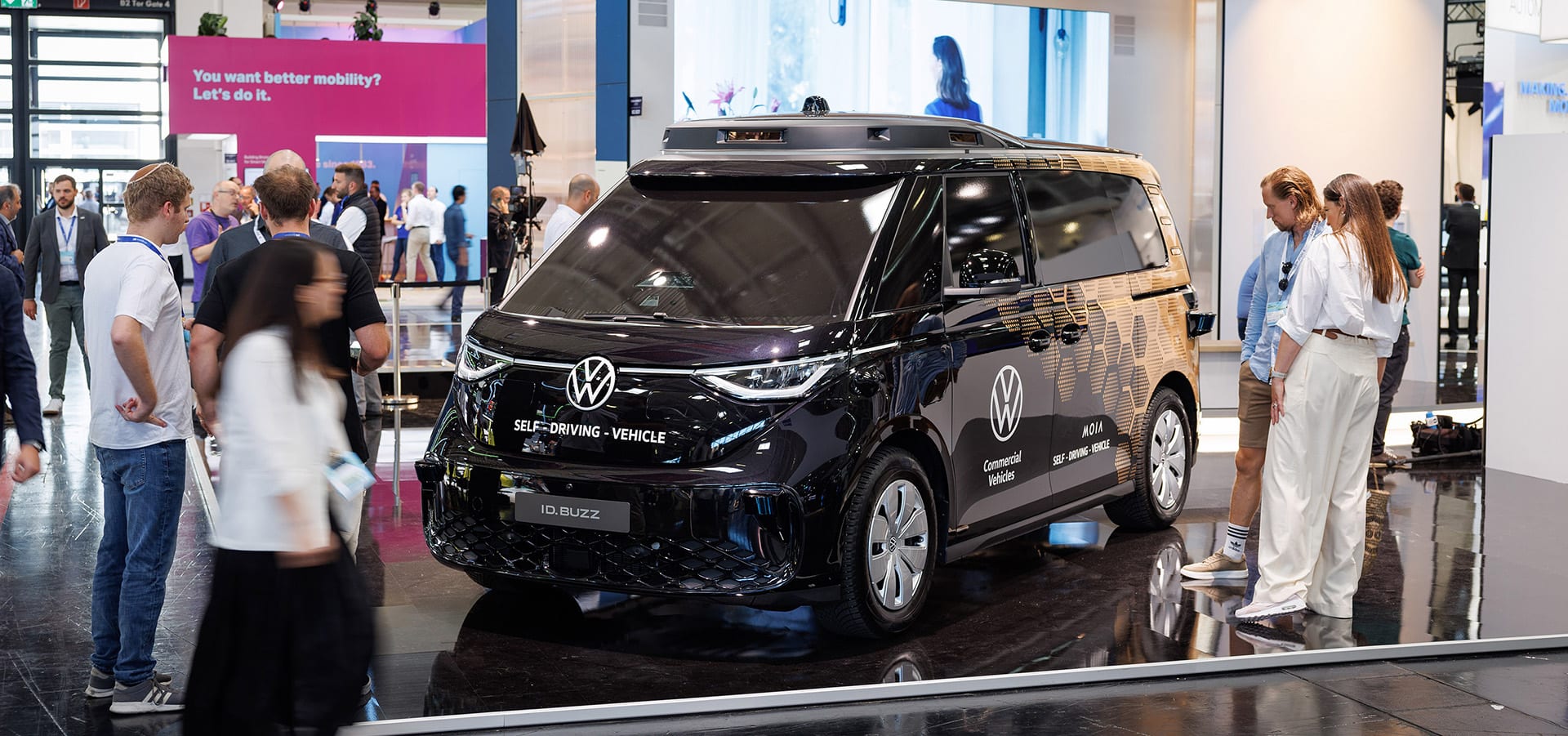
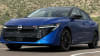
Mobileye announced in June that its ongoing work with Volkswagen will deliver the automaker’s first production SAE Level 4 autonomous vehicles sometime in 2026. The first of these vehicles will be the Volkswagen ID. Buzz AV, which will use the Mobileye Drive autonomous platform and will most likely deploy first in the U.S next year.
The ID. Buzz AV is one of four programs Mobileye is working on with VW, Dan Galves, chief communications officer at Mobileye, told SAE Media, and the variety and size of the programs will be key to making AVs scale. The vehicles in each of these programs use the same Mobileye core, with similar cameras and sensors and the same system on chip (SOC), even as the details differ.
“That means that even if you have a robotaxi program that is doing tens of 1,000s of units, you’ve got components that are doing hundreds of 1,000s or millions of units, [VW] can really get supply chain synergies out of this,” Galves said. “We’re developing a portfolio of products from the same technology backbone using very similar sensors, and that really helps with scale.”
Sweet sensor suite
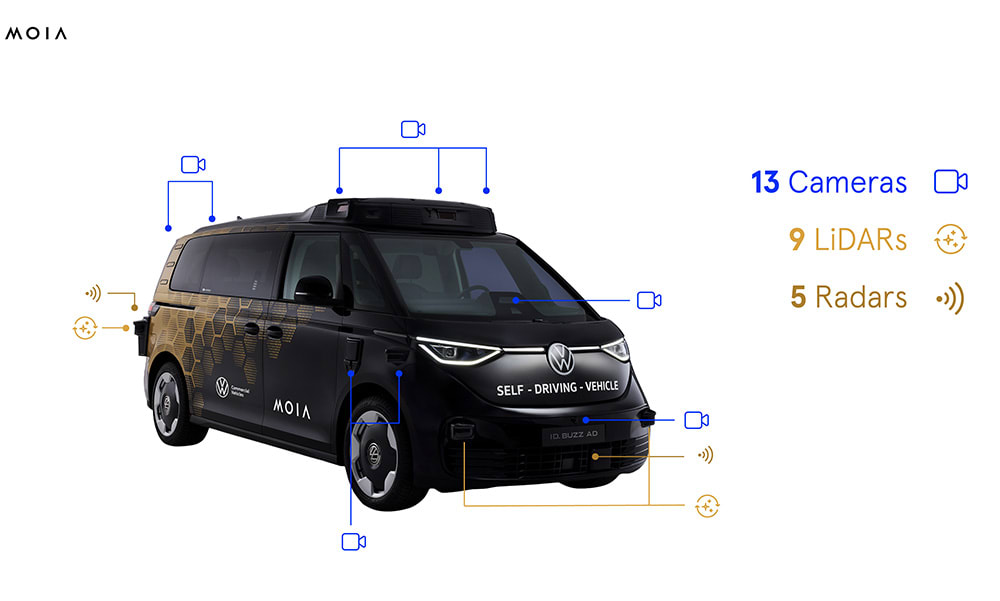
The production Buzz AVs will come from MOIA, VW’s mobility arm, and will be the first fully autonomous production vehicle from Volkswagen. The technical details regarding the sensors and other components have changed a bit since Mobileye displayed a prototype ID. Buzz AV at IAA in 2023. The production vehicles will use 13 cameras, including seven long-range cameras (two in the front, one in the rear and two on each side) and four wide-angle, parking cameras. One supplemental camera is used to help identify traffic lights. The ID. Buzz AV also uses five imaging radars – one long-range sensor in front and short-range units on each corner and nine lidar sensors – three long-range Innoviz units on the roof and six short-range, less expensive units positioned around the rim of the vehicle.
“The imaging radar is critical here because lidar and cameras actually have some of the same kinds of failure modes, so radar and camera are more independent,” Galves said. “The other thing is, this imaging radar that we’ve developed in-house has extremely good resolution versus legacy radar or other imaging radars, and really good long-distance performance. This is more for high-speed on highways. If there’s a pallet or a small piece of metal on the road and you’re going 75 mph, you need really early warning on that, and the imaging radar helps us get that.”
Sensor information on the Buzz AV is processed by four Mobileye EyeQ6 High systems-on-chips, and if that seems like two too many, Galves said it’s for safety’s sake.
“Those four EyeQ6 Highs are on two ECUs, so you basically have a fail operational situation there where if one ECU burns out, you know you can get safely to the side of the road, or drive in limp mode for long enough to keep everyone safe,” he said.
While the many cameras in the Mobileye Drive AV system aren’t used for ranging, the system does use vision-based lidar, or vidar, where multiple cameras create a three-dimensional view of the road.
“Let’s say it’s a truck that is towing another truck, and that truck is facing backwards,” he said. “You could easily think that car is coming towards you instead of away from you or misidentify what it is. The vidar would give you a signal that says there’s something with a lot of mass and a lot of height at this position, and you should avoid it. That’s another redundancy.”
First LA and Dallas, then Europe
Mobileye Drive - and thus the Buzz AV - uses the company’s True Redundancy sensing systems, the REM crowdsourced AV maps and Mobileye’s RSS-based driving policy. Volkswagen Commercial Vehicles tested the ID. Buzz AV in Munich, Germany, while Volkswagen Group of America tested it in Austin, Texas. While MOIA has not yet revealed its precise rollout plans for the Buzz AV, Uber has announced it will use the vehicles in Los Angeles starting in 2026. Galves said Lyft will start using the AVs in Dallas in 2026. Mobileye is also testing in Germany (in Hamburg and Munich) and Norway (Oslo), Glaves said. The fact that the vehicles will most likely be used commercially in the U.S. before Europe due to regulations.
“We haven’t disclosed where [the safety driver, will be removed first], but we expect that in 2026 and we expect that to be in the U.S.,” he said. “In Europe, it’s a little bit different, because Volkswagen is going to be going through a homologation process for these vehicles that probably takes most of 2026 and until that kind of type certification is achieved, we can’t remove the safety drivers and commercialize.”
Mobileye’s various VW projects include adding its SuperVision, Chauffeur and Drive technologies to VW vehicles. Galves said this will be key to mass production of AVs. An imaging radar used in Chauffeur and Drive, for example, could mean producing hundreds of thousands of units. The EyeQ6 High SOCs, too, will be used in multiple products – “some of which are going to be very high volume,” Galves said – and that will also provide scale benefits. Mobileye’s Road Experience Management (REM) mapping technology is another tool the company can use to speed up production roll-out. With the crowd-sourced, regularly updated REM database, Mobileye can start running its AVs in a new location in a matter of weeks.
“We’ve always described REM as a map, but it’s really about driving intelligence,” he said. “You do have a very accurate view of the road boundaries and the structure of the road, but you also have typical speed versus the speed limit, so you understand what the flow of traffic is. You understand the relevance of traffic lights. You know which one is for a left-hand turn, which one is for a straight. You can understand where people typically stop in front of a stop sign, instead of looking for the line. That allows us to really get up to speed very quickly in different cities. We just did a demonstration for executives from a big automaker in Austin with their vehicle, and it took two engineers two weeks to prepare for that when the vehicles had never been there before. We really feel like we have a generalizable system that can move from city to city very quickly.”
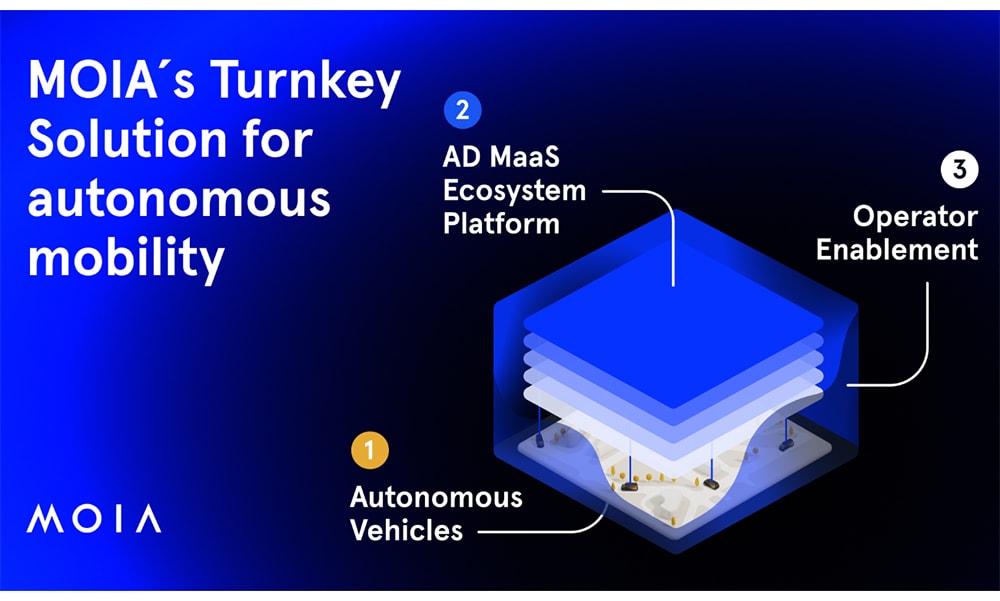
Given the chaotic economic turmoil caused by the Trump administration this year, there remain plenty of uncertainties surrounding autonomous vehicles. Galves said MOIA, VW and Mobileye aren’t as worried about these forces because they have – and all want to have – skin in the game, both through monetary investments and a “comprehensive business model where MOIA can own and operate vehicles, can tie in to demand generators like public transit operators in Europe or Uber and Lyft in the U.S.,” he said. “The reason is because they feel like [autonomous] vehicles, and they’ve been clear about this, can generate a lot bigger margins than normal consumer-owned vehicles.”
To help do that, Mobileye and VW have created a manufacturing process that will see VW integrate Mobileye technology into ID. Buzz AVs on the same line as it builds the non-autonomous Buzz EVs.
“That way, if you have demand for more scale or less, you can adjust that pretty quickly, Galves said. By comparison, companies like Waymo are “talking about sub-production facilities to upfit a couple thousand vehicles that they’re getting from automakers,” he said.
More From SAE Media Group
ADAS & Autonomous Vehicle Engineering
AV Life After Argo AI
ADAS & Autonomous Vehicle Engineering
Volkswagen Plants Autonomous-Testing Flag in Austin
Autonomous Vehicle Engineering
The ‘Buzz’ in Driverless Shuttling
Automotive Engineering
Inside Tesla's Cybercab Future
Autonomous Vehicle Engineering
The Navigator: Mapping the Way to Safe Automated Driving
Off-Highway Engineering
ZF Advancing ADAS, Autonomy with Next-Gen Sensors
Automotive Engineering
Autonomous Transit Bus Nears Its First Year of Operation
Autonomous Vehicle Engineering
Building Geofences to Speed AV Adoption
Off-Highway Engineering
WABCO Adds Autonomous Driving 'Building Blocks' to 2019 Portfolio
Off-Highway Engineering
Autonomous Trucking Hits Rocky Road
Off-Highway Engineering
Automating Machines for Off-Highway Environs Is Simple, Yet Difficult
Autonomous Vehicle Engineering
'Level 2+': Making Automated Driving Profitable, Mainstream
Automotive Engineering
Taking ‘Eyes-Off’ the ADAS Future
Autonomous Vehicle Engineering
May Mobility Starts ADA-Compliant AV Transit for Rural Area
Off-Highway Engineering
Rearview Cameras for CVs Edge Closer to Regulatory Approval
Automotive Engineering
CES 2020: VW Creates New Autonomous Subsidiary
Automotive Engineering
Focus for 2017: Cyber, Connected-Car, EV Charging, Vehicle Autonomy
Autonomous Vehicle Engineering
C-2VX Is Finally Gaining Momentum in the U.S.

Autonomous Vehicle Engineering
Mapping Canada — Centimeter by Centimeter
Autonomous Vehicle Engineering
Platform-Agnostic Interface Aims to Accelerate Truck Autonomy
Autonomous Vehicle Engineering
Purpose, Perceptions for Driver-Assist Tech Solidify
Automotive Engineering
New R&D Boss Details RoboSense’s LiDAR Strategy
Autonomous Vehicle Engineering
Making Safety Standard
Off-Highway Engineering
Peloton CEO Talks Level 4 ‘Automated Following’
Automotive Engineering
Auto, Tech Industries Launch PAVE Coalition for Autonomous-Vehicle Education
Autonomous Vehicle Engineering
Predicting the Road to Efficiency
Automotive Engineering
Thermal Imaging Makes Its Case for ADAS, AVs
Off-Highway Engineering
Knorr-Bremse Puts the Brakes on Automated Driving
Automotive Engineering
New Osram IREDs Enhance Vehicle Vision, less Harmful to Human Eyes
Top Stories
INSIDERDefense
 New Raytheon and Lockheed Martin Agreements Expand Missile Defense Production
NewsAutomotive
 Ford Announces 48-Volt Architecture for Future Electric Truck
INSIDERManufacturing & Prototyping
 Active Strake System Cuts Cruise Drag, Boosts Flight Efficiency
ArticlesTransportation
 Accelerating Down the Road to Autonomy
INSIDERMaterials
 How Airbus is Using w-DED to 3D Print Larger Titanium Airplane Parts
Road ReadyTransportation
Webcasts
Electronics & Computers
 Cooling a New Generation of Aerospace and Defense Embedded...
Power
 Battery Abuse Testing: Pushing to Failure
Connectivity
 A FREE Two-Day Event Dedicated to Connected Mobility
Automotive
 Quiet, Please: NVH Improvement Opportunities in the Early Design Cycle
Transportation
 Advantages of Smart Power Distribution Unit Design for Automotive &...
Aerospace
 Sesame Solar's Nanogrid Tech Promises Major Gains in Drone Endurance