




Lyten Says 3D Graphene Could Disrupt Racing, Automotive and Space
The accidental discovery of three-dimensional graphene is giving the materials science company the opportunity to find new uses for the strong, lightweight substance.

Lyten is best-known as the developer of next-gen lithium-sulfur (Li-S) battery technology. But new work on 3D Graphene means Lyten is branching out into motorsports with Lyten Advanced Motorsports Parts (AMP). SAE Media spoke with Keith Norman, Lyten’s chief sustainability officer, about the material and why it matters.
What is 3D Graphene? It’s ten times stronger than steel, but how else is it different from the materials it might replace?

We describe 3D Graphene as a supermaterial, as it is able to achieve performance across multiple parameters that traditional materials are not able to achieve. That includes parameters like high strength, light weight, conductivity, selective permeability, and many more parameters.
The Nobel Prize was awarded in 2010 for the discovery of two-dimensional graphene due to its potential as a materials breakthrough. But, 2D Graphene has struggled to have a big commercial impact, as it’s expensive to manufacture and difficult to work with.
We have created a three-dimensional material that provides the unique traits of graphene, but can be mass-produced cost-effectively and, most importantly, can be tuned into thousands of different materials and properties. This tunability is the differentiator. Now, instead of designing a product around the 2D Graphene, we can tune our 3D Graphene material to exactly what the application requires, making it infinitely easier to build products with disruptive materials performance.
How did Lyten develop 3D Graphene? Was it a mission or was it more of a “happy accident”?
Like many great discoveries, it was an accident. We were on a mission to create clean hydrogen from methane using semiconductor technology. The by-product of this process is carbon black. When we put our carbon under the microscope, we saw something we had never seen before. For the next seven years, Lyten worked in stealth to characterize and scale 3D Graphene production and to identify the initial products we would build with the material. Lithium-sulfur batteries and light-weight composites for drones, automotive and satellites are the first products, but there are many more in the pipeline.
Lyten said it is already supplying parts for some racing teams. How many teams are you connected to, and what parts are you supplying? Are these just being tested for now, or are they already being used in competitive races?
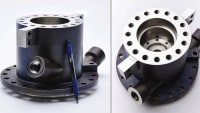
We have been working with INDYCAR Experience for two years, testing the integration of 3D Graphene into a number of different use cases in motorsports, including having our 3D Graphene-enhanced parts on the vehicle. The launch of Lyten Motorsports is to begin commercial production. We are in early works with multiple racing series on where we can best reduce weight in their vehicles without sacrificing performance and strength, and will begin parts delivery soon.
The release says that 3D graphene is “made with zero emissions.” Can you explain what this means?
Our 3D Graphene material is actually made from a carbon capture process. We utilize methane, which is a potent greenhouse gas. Instead of methane being released to the air or burned for energy, which releases CO2, we have developed a reactor technology that captures the carbon in the form of 3D Graphene, creating a by-product of clean hydrogen. Essentially, we turn what would be a greenhouse gas into a high-value product.
How did Lyten expand into next-gen materials from your lithium-sulfur battery mission? Did researching new chemistries lead to R&D discoveries about graphene?
Lyten, at its core, is a materials science company, but instead of selling materials, which we do not do, we identify products that we can disrupt with the benefit of a breakthrough in materials science. Our definition of disrupt is to deliver a clearly better performing product, at an equal or lower cost, and create an environmental or social impact. When you can do all three, you have a great product.
In batteries, the use of 3D Graphene enables a lithium-sulfur battery that reduces the weight of batteries by 50%, eliminates 85% of the mined mineral required, and enables the battery to be built with a local supply chain of abundant, low-cost materials. We are building the first scaled lithium-sulfur factories in the world because our 3D Graphene was able to solve a materials science challenge holding the technology back. Lyten Motorsports is bringing to market 3D Printed materials that are lighter weight, stronger and able to be quickly sourced and manufactured in the U.S. We have a long pipeline of products that we are confident 3D Graphene will be able to disrupt and will be bringing them to the market over time.
Has Lyten started producing its battery-grade lithium-metal in the U.S. yet? If not, when is this scheduled to happen?
Lithium processing capability is critical for the U.S. to build a supply chain-independent battery industry. Today, the U.S. only produces a couple of percent. We have been investing in building out the U.S. lithium-processing supply chain for the last two years. We currently source our raw lithium metal from a company manufacturing it on the East Coast of the U.S., then we take the process from there. We have built manufacturing equipment in Pennsylvania to create lithium-metal alloys, where we can infuse additional materials into the lithium to enhance performance. We have a facility in San Jose to press the lithium-metal alloys into lithium-metal foils. That is the battery grade form factor needed to go into the battery. Those lithium-metal foils go directly into our batteries, which we currently manufacture in San Jose, CA. We are commercially selling lithium-sulfur today for use in drones and are working with NASA to launch our batteries onto the International Space Station in the coming months to demonstrate for satellite and space applications.
More From SAE Media Group
Aerospace & Defense Tech Briefs
SAE International Issues First Technical Standards for Aerospace Additive Manufacturing
Automotive Engineering
Tata Steel Europe Innovates to Retain the Automotive Materials Lead
Tech Briefs
3D Printing Stronger Carbon Nanotubes
Tech Briefs
3D Printing Creates High-Performance Metal Alloy
Aerospace & Defense Tech Briefs
Lockheed Martin and Arconic Collaborate on 3D Printing and Advanced Aerospace Materials
Automotive Engineering
Ford’s Mielewski Envisions Broad Portfolio of Renewable Materials
Automotive Engineering
Made in Space to Increase Material Portfolio After Two Years of Printing in Space

Aerospace & Defense Tech Briefs
Additive Manufacturing Adoption Up, Growing Rapidly in Aerospace
Automotive Engineering
Demand up for Composite-Grade, High-Performance Plastics Across Aerospace, Automotive
Aerospace & Defense Tech Briefs
Modeling and Experimenting with 2D Materials for CMOS Type Devices and Digital Integrated Circuits
Tech Briefs
Copper Strengthens 3D-Printed Titanium
Aerospace & Defense Tech Briefs
Equispheres Accelerates Additive Manufacturing Innovation with $5M from Lockheed Martin


Aerospace & Defense Tech Briefs
Metal-Plated, High-Temperature Plastics
Tech Briefs
Liquid Metal Lattice
Tech Briefs
Solid-State Carbon Dioxide Sensor
Off-Highway Engineering
NASA Highlights Material and Coating Technology Ready for Commercial Applications
Aerospace & Defense Tech Briefs
‘First of Its Kind’ Composite Material to Help Space Vessels Travel Longer Distances
Aerospace & Defense Tech Briefs
Evaluation of Additively Manufactured Ultrahard Steels
Aerospace & Defense Tech Briefs
3D Printable Superalloy
Tech Briefs
Turning Carbon Emissions into Rocks
Tech Briefs
Using 3D Printing to Strengthen Jet Engines
Aerospace & Defense Tech Briefs
SAE International Extends Call for Abstracts, Seeks Submissions for AeroTech Conference
Top Stories
NewsRF & Microwave Electronics
 Microvision Aquires Luminar, Plans Relationship Restoration, Multi-industry Push
INSIDERAerospace
 A Next Generation Helmet System for Navy Pilots
INSIDERDesign
 New Raytheon and Lockheed Martin Agreements Expand Missile Defense Production
INSIDERMaterials
 How Airbus is Using w-DED to 3D Print Larger Titanium Airplane Parts
NewsPower
 Ford Announces 48-Volt Architecture for Future Electric Truck
ArticlesAR/AI

Webcasts
Electronics & Computers
 Cooling a New Generation of Aerospace and Defense Embedded...
Automotive
 Battery Abuse Testing: Pushing to Failure
Power
 A FREE Two-Day Event Dedicated to Connected Mobility
Unmanned Systems
 Quiet, Please: NVH Improvement Opportunities in the Early Design Cycle
Automotive
 Advantages of Smart Power Distribution Unit Design for Automotive &...
Energy
 Sesame Solar's Nanogrid Tech Promises Major Gains in Drone Endurance