




Toyota’s Multi-Pathway Future on Full Display
The automaker’s showcase HQC event highlights engineering efforts to bring PHEV, EV, H2 powertrains to more people.
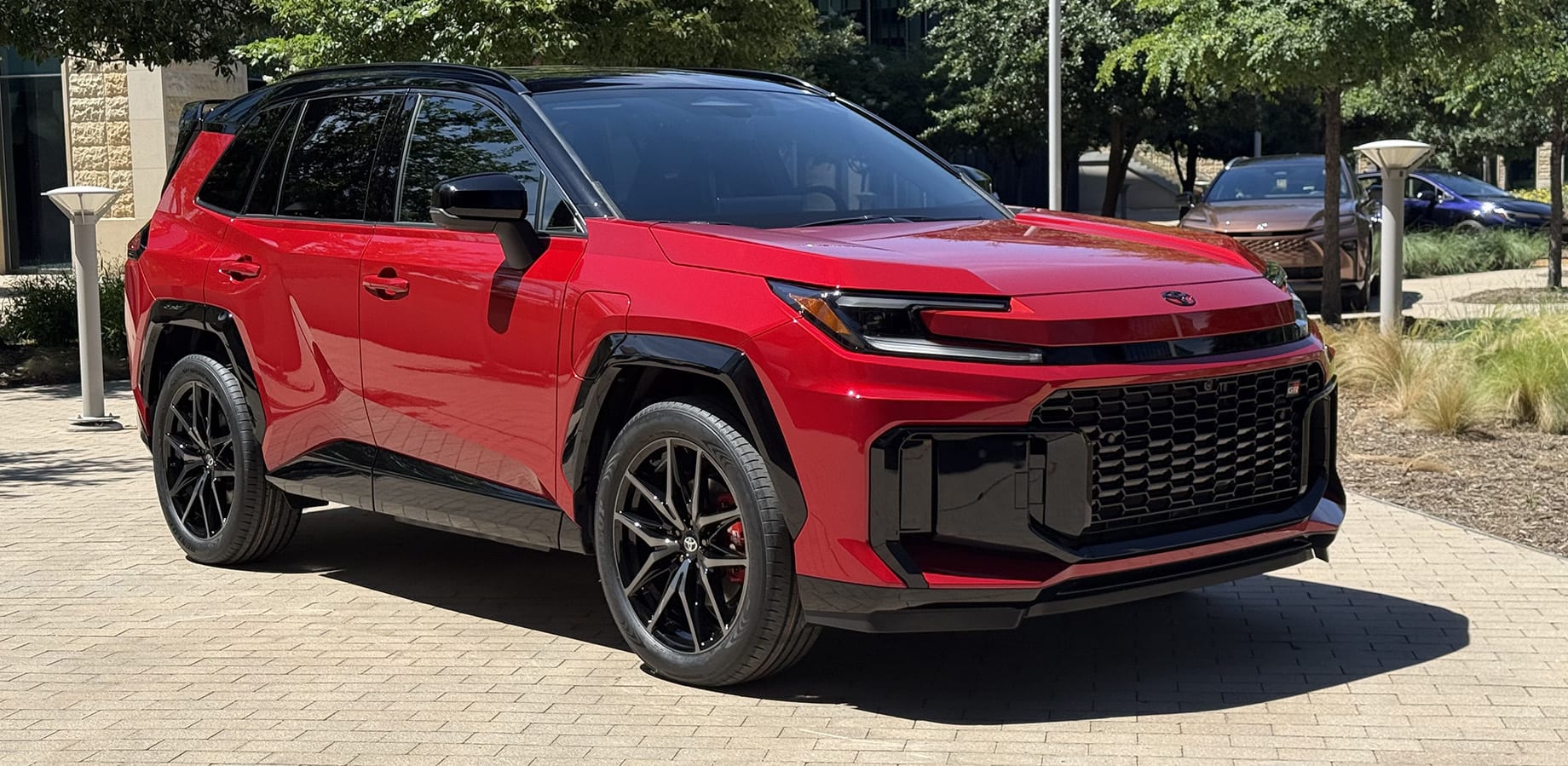
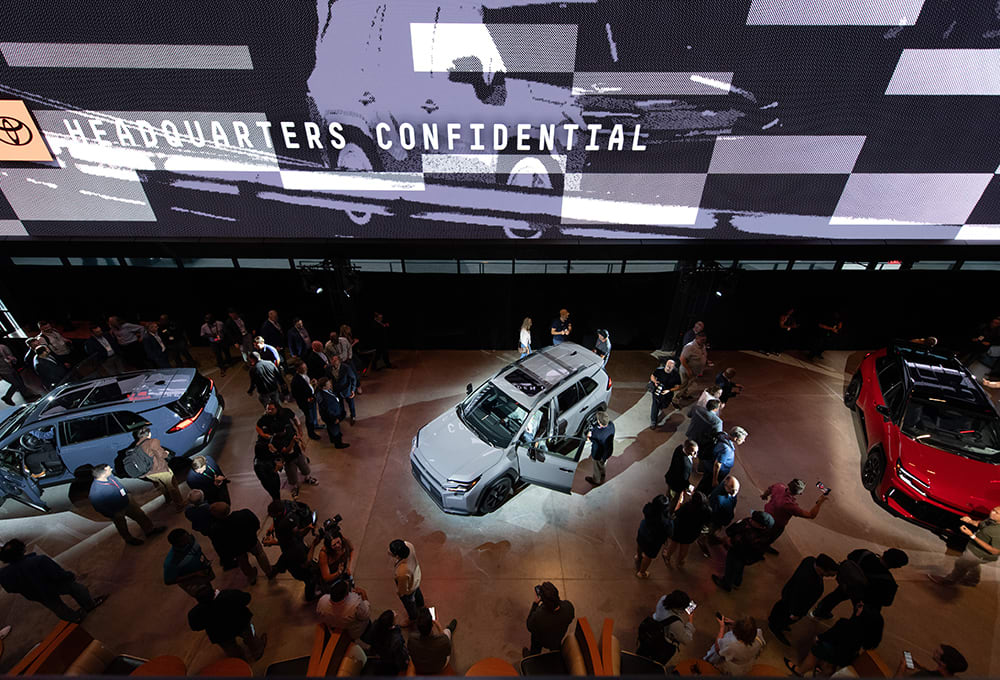
Toyota’s 2025 Headquarters Confidential (HQC) event in Plano, Texas, was, as in past years, a broad glimpse into what the Toyota and Lexus brands are planning for North America in the coming years. Toyota invited SAE Media and others to see the new vehicles that make up its multi-pathway powertrain approach. The 2026 RAV4, for example, will no longer be available without some sort of electrified powertrain, for example, while the bZ finally gets some of the updates it has long deserved.
2026 Toyota RAV4
In 2024, electrified powertrains — that is, an EV, PHEV or hybrid — made up more than 43% of Toyota’s total U.S. sales volume. This number will only increase in the coming years as Toyota continues to eliminate the ICE-only versions of its passenger vehicles. The new RAV4 will now join the Camry in no longer offering a gasoline-only powertrain, with all versions having some sort of electrified option. The PHEV, with a 2.5-L, 4-cylinder engine, is the sixth generation of Toyota’s plug-in hybrid powertrain, while the hybrid system in the RAV4 is the 5th generation and uses a 2.5-L, 4-cylinder engine. The PHEV has a total output of 320 hp (239 kW), while the hybrid versions will produce up to 236 hp (176 kW) with AWD or 226 hp (169 kW) in the FWD model.
Toyota also made interesting changes to the charge ports in the new RAV4 line-up. The SE and GR-sport PHEV models will have a J1772 port, just as previous RAV4 PHEVs did, but now with an available 11-kW AC onboard charger. But for 2026, the XSE and Woodland grades will have a CCS port for DC fast charging the vehicle’s “high-capacity” battery. Toyota said the new RAV4 PHEV will now offer an electric drive range of up to 50 miles (80 km), up from 42 miles (68 km) previously.
2026 Toyota bZ
Toyota’s all-electric model got the most attention at HQC, debuting a new name (shortening the unfortunate bZ4x moniker this model year) and adding a host of improvements to the electrical powertrain. The bZ now comes with a J3400 NACS port, an 11 kW on-board charger (the previous model had a 7 kW unit) and Plug & Charge capability. Toyota’s Daisuke Ido, chief engineer of the bZ Woodland trim and the new C-HR, told SAE Media that changes were made to improve the main issues that had bedeviled customers of the current bZ4x, the EV’s range and charging speed. One solution was to use a slightly larger, 74.7 kWh battery, compared to 71.4 kWh in the 2024 model. A 57.7-kWh pack is available in the XLE FWD trim. Ido said Toyota engineers slightly also made updates to the motor, improved the electrical systems with silicon carbide to distribute the power to the e-axle and found a little more room thanks to some computer calculations.
“Because the potential performance of the previous platform was so good, we [knew we] could achieve this kind of thing,” he said. “Our strategy is to avoid battery damage from a collision with energy absorption in the sides of the body. But, actually, our platform is very, very good, so we don’t need as much thickness, so we can make [the frames] thinner, then we had some space, so we put in one more cell.”
Ido said he didn’t need customers to request improvements to the bZ’s charging system. He discovered that for himself.
“We went for a test drive with the previous model, the bZ4X, and it was a rainy day,” he said. “We put in the [charging] gun and pressed the monitor many times and operated the apps and then it failed. So, yeah, that happened and I was there, so I know what the issues are. Once we knew that NACS was the standard, we needed Plug & Charge as well.”
Read more on the new bZ, including why Toyota decided against offering a one-pedal driving mode, in our upcoming review.
2026 Lexus ES, RZ
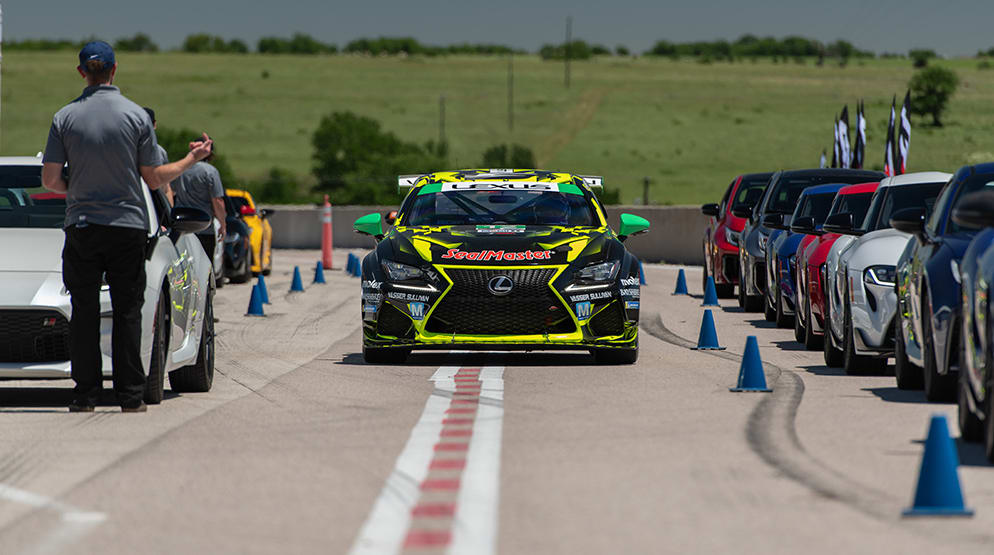
Lexus had its own vehicles on display at HQC, including the recently unveiled 2026 ES and RZ models. The new RZ updates the look and power of the brand’s first globally available, purpose-built all-electric vehicle that was launched in 2023 on the dedicated E-TNGA BEV platform. The 2026 RZ will come with three powertrain options: the RZ 350e FWD, the RZ 450e AWD and the all-new RZ 550e F Sport AWD. The F Sport model uses higher-output front and rear motors and produces up to 402 hp (300 kW). The 350e produces up to 221 hp (165 kW) while the 450e produces 308 hp (230 kW). The SUV has a redesigned battery electric system and a 74.69 kWh battery (76.96 kWh in the RZ 550e F SPORT AWD trim) for a Lexus-estimated range of 300 miles (483 km) for the RZ 350e when equipped with 18-inch wheels. The RZ also offers M mode, a Lexus first, which allows drivers to manually control power output using steering wheel-mounted paddle shifters that control eight programmed electronic gears. Drivers will see a rev meter and hear simulated engine sounds to help them know when to time their shifts.
The 2026 ES brings the all-electric LF-ZC concept from the 2023 Japan Mobility Show to production. But, as befitting a world where all-electric plans change with time, Lexus said at HQC that the all-new, eighth-generation ES was designed to be offered as both an EV and a hybrid, the first of Lexus’ core models to be re-imagined as a multi-pathway vehicle. Riding on a redesigned TNGA GA-K platform, the new ES is longer, wider and taller than the previous generation and, for the first time, the ES gets a multi-link rear suspension. The new ES will also come with multiple powertrain options, from the ES 350h with a 2.5-L in-line, four-cylinder hybrid system (available as FWD or AWD), the ES 350e FWD and the ES 500e AWD.
The constant evolution of hydrogen racing

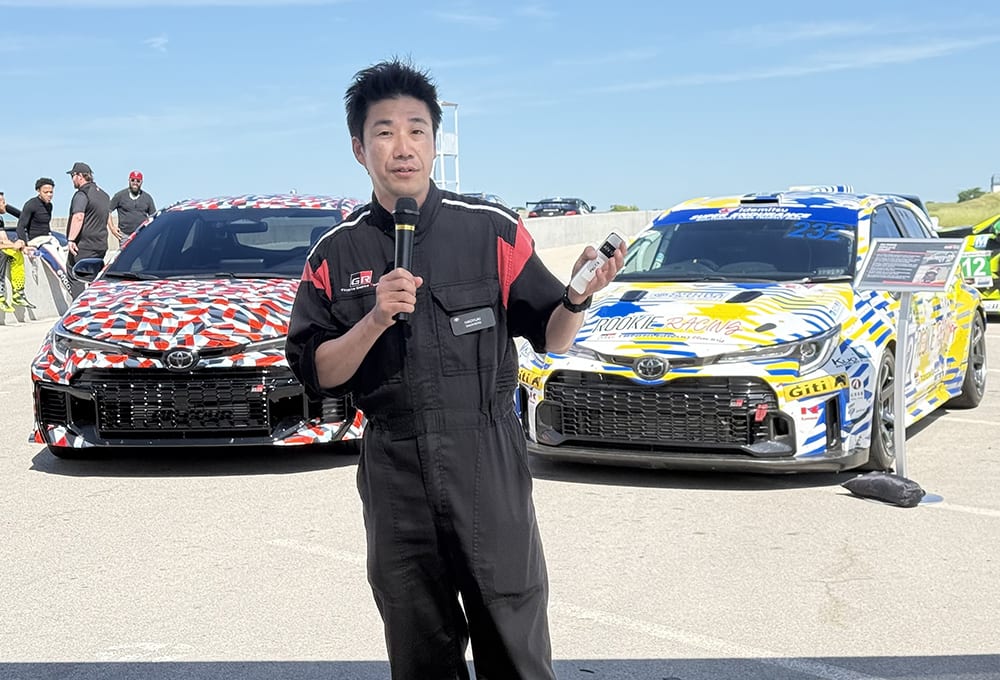
HQC also featured an on-track portion with dirt trails and ride-alongs with professional Toyota racers. But it was GR Corolla Chief Engineer Naoyuki Sakamoto’s trackside discussion of hydrogen racing that most drew my interest.
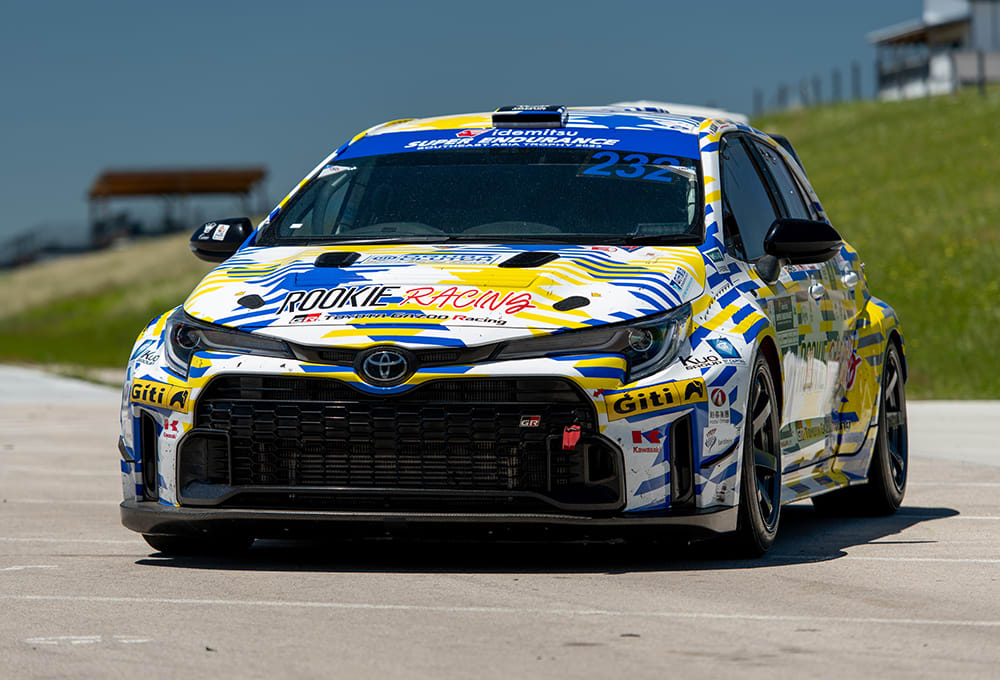
Toyota has been combusting H2 on the race track with its GR Corolla H2 Concept, a hydrogen-powered version of the GR Corolla, since 2021. The GR Corolla H2 at HQC was the first-generation model that burned gaseous hydrogen stored in a repurposed hydrogen tank and delivery system from the Mirai fuel cell sedan. Instead of a fuel cell, though, the hydrogen in the GR Corolla H2 was fed directly into the combustion chambers of a G16E engine, the same kind the gasoline-powered GR Corolla uses.
“We only changed the injector and the spark plug [to those] specified for hydrogen combustion [and some other] small modifications, but just small,” Sakamoto told SAE Media. “The main purpose was to use existing technology and engines, then make them carbon neutral.”
Sakamato said one factor that set this leg of Toyota’s combustion hydrogen engine project apart from similar efforts conducted by BMW and Mazda, for example, was that Toyota was using a direct injection system while the others used a kind of port injection.
“We can generate more power,” he said. “If we put the gas hydrogen into the port intake manifold, it’s difficult to put in more fuel and more air because it’s gas. But we can directly inject into the combustion chamber, so we can add pressure, then more hydrogen, already air is existing, so we can put more fuel, then generate more power, combined with turbocharger technology. This kind of technology is helping us improve the hydrogen combustion engine with high power, same as the gasoline engine.”
Toyota has shifted to a liquid hydrogen system in the GR Corolla H2s currently used in competition. The evidence is clear that the change has delivered. Shortly after HQC, the new GR Corolla H2 outperformed the marks set by first-gen models at the Super Taikyu Fuji 24 Hours Race. The improved results didn’t surprise Sakamoto.
“Liquid is more energy dense, right? So we can bring more [on board],” he said. “The next challenge to using liquid hydrogen is that to store it, we need to keep it to less than -253 º C (-423 º F). That’s a big challenge.”
The team likes the challenge, though. Sakamoto said Toyota’s drivers have said the H2 racers are more responsive thanks to hydrogen’s fast burning speed. In return, the engineers keep working on cold storage issues, hydrogen’s pre-ignition challenges and other quests on the multi-pathway road.
“We need to take up many methods to find solutions, so we are looking at many options for the future,” Sakamoto said. “It’s harder to believe it’s practical with liquid hydrogen, but sometimes, if we find some new technology, it will be enabled. For now, we are testing, and that’s why we will find many issues to be fixed under the severe conditions of racing. One by one, we will fix them, and it’s gonna be a realistic solution for the future.”
More From SAE Media Group
Automotive Engineering
Williams Debuts New Flexible Platform for BEVs and FCVs
Automotive Engineering
Keeping Combustion in the Conversation
Automotive Engineering
Toyota Reveals RWD FCEV Mirai, Plug-In RAV4
Automotive Engineering
Stellantis Goes All-In on EVs
Automotive Engineering
Turbocharged Hybrid: 2021 Kia Sorento Revealed
Off-Highway Engineering
Truckin’ on Hydrogen
Automotive Engineering
Toyota to Add Battery Lab at Michigan R&D Campus
Automotive Engineering
Extending the ICE Age: Ford’s Dave Filipe Has Some Powerful Choices to Make
Automotive Engineering
BMW Engineers for the EV-Transition Reality
Automotive Engineering
Mazda’s 2024 CX-90 Offers Turbo I-6, PHEV Propulsion
Automotive Engineering
A Week with the Hyundai Way
Off-Highway Engineering
Deutz Takes Open Approach to Propulsion
Automotive Engineering
SAE WCX 2022: ICE Won’t Melt amid Shift to EVs
Automotive Engineering
Toyota Stretches SUV Line-Up with World Debut of Grand Highlander
Automotive Engineering
First Electrified Dodge Arrives for 2023 MY
Automotive Engineering
2019 S60 and V60 Volvo’s Newest Chips in the Transformation Game
Off-Highway Engineering
Hydrogen Shows Increased Commercial Interest
Automotive Engineering
2018 Toyota Prius Four Touring
Automotive Engineering
2026 Toyota RAV4 Review: All Hybrid, All the Time
Automotive Engineering
Volvo XC90 Line-Up Keeps Hybrid Futures Safe
Off-Highway Engineering
Hydrogen ‘Inevitable’ for Commercial Vehicles
Automotive Engineering
Powering Back to the Future
Off-Highway Engineering
Hydrogen’s Humming in Power Generation
Automotive Engineering
Toyota Tacoma TRD Pro
Automotive Engineering
High-Performance Hybrid Headlines Lexus’s Re-Engineered RX Lineup
Off-Highway Engineering
FPT Tech Day Reveals Cursor X Concept, Other 4.0 Innovations
Off-Highway Engineering
Hybrid Powertrains in the Product Mix
Automotive Engineering
ICE and Hybrid-Electric Propulsion Show Staying Power
Automotive Engineering
Toyota, Mazda, Subaru Agree Carbon Is ‘Enemy' with Internal Combustion Engine Announcement
Automotive Engineering
VinFast: Vietnam’s First Car Company Has Big Ambitions
Top Stories
NewsSensors/Data Acquisition
 Microvision Aquires Luminar, Plans Relationship Restoration, Multi-industry Push
INSIDERRF & Microwave Electronics
 A Next Generation Helmet System for Navy Pilots
INSIDERWeapons Systems
 New Raytheon and Lockheed Martin Agreements Expand Missile Defense Production
NewsAutomotive
 Ford Announces 48-Volt Architecture for Future Electric Truck
INSIDERAerospace
 Active Strake System Cuts Cruise Drag, Boosts Flight Efficiency
ArticlesTransportation

Webcasts
Aerospace
 Cooling a New Generation of Aerospace and Defense Embedded...
Energy
 Battery Abuse Testing: Pushing to Failure
Power
 A FREE Two-Day Event Dedicated to Connected Mobility
Automotive
 Quiet, Please: NVH Improvement Opportunities in the Early Design Cycle
Electronics & Computers
 Advantages of Smart Power Distribution Unit Design for Automotive &...
Unmanned Systems
 Sesame Solar's Nanogrid Tech Promises Major Gains in Drone Endurance