




2018 Toyota Prius Four Touring
"What we’re driving” is Automotive Engineering's series of quick-strike vehicle reviews.

Toyota’s seminal Prius and its twin-motor hybrid-electric drivetrain are largely unchanged this year except for the addition of an 11.6-in (295-mm) touchscreen display for the top Prius Four and Four Touring trims. The monster screen is oriented vertically in tablet-style layout that essentially replicates the gee-whiz effect of Tesla’s signature interior focal point. The Prius’ screen is a high-definition indicator of where dashboard design is heading and it’s quickly going to become a common sight, I think, in many all-new vehicles—and as a go-to lever to pull in mid-cycle refreshes. I wonder if interior-components suppliers are prepared for this shift – or perhaps they’re even helping to drive it.
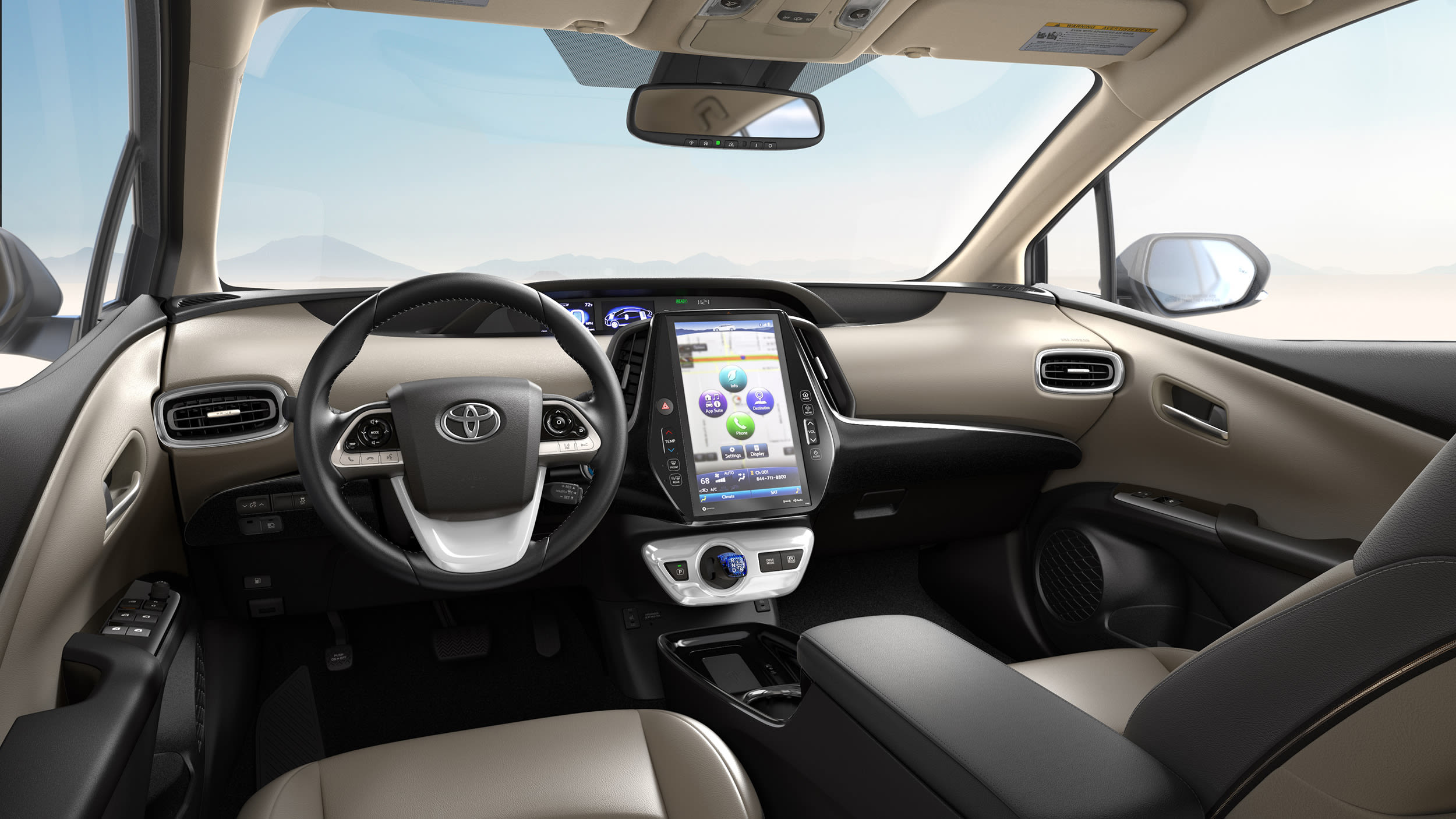
The big screen is a treat and show-stopper for uninitiated passengers and once you are accustomed with the options for portioning its acreage, it’s a definite aid in helping to keep eyes on the road. Its vertical orientation doesn’t do much for the rearview-camera image, which ends up being crunched into the bottom third of the screen because there’s not much sense in trying to adapt the camera’s intrinsically horizontal view of the world, I guess. These large vertical screens seem tailor-made for the birds-eye vision of multiple-camera systems, so don’t be surprised to see those two features become closely aligned.
Meanwhile, it’s always been fashionable to diss on the Prius as a weenie-mobile, but I’m gaining new respect. For around-town work, there’s hardly a better tool: the Prius electric-motor augmentation enhances standing-start acceleration in a fashion that conventional IC-only vehicles, regardless of engine size, have a hard time matching for the first 100 feet or so. So even fullsize pickups are left in the Prius’ wake when the light goes green—even if the drivers invariably insist on catching up, oxidizing the resources the Prius attempts to conserve.
And honestly, the Prius remains the case study for why every vehicle needs to have some kind of braking-energy or deceleration recuperation. In a week almost exclusively dedicated to urban errands and running about—all in the Prius Four’s “power” mode—the thing used an eighth of a tank of gasoline, a penny-pinching testimony to its 54-mpg city rating. Even the infamous drone from the continuously variable transmission (CVT) is muffled nearly to the point of inaudibility. The only thing I wished for with the drivetrain was a user-selectable option to amp up the regenerative-braking force, a feature common on many battery-electric vehicles.
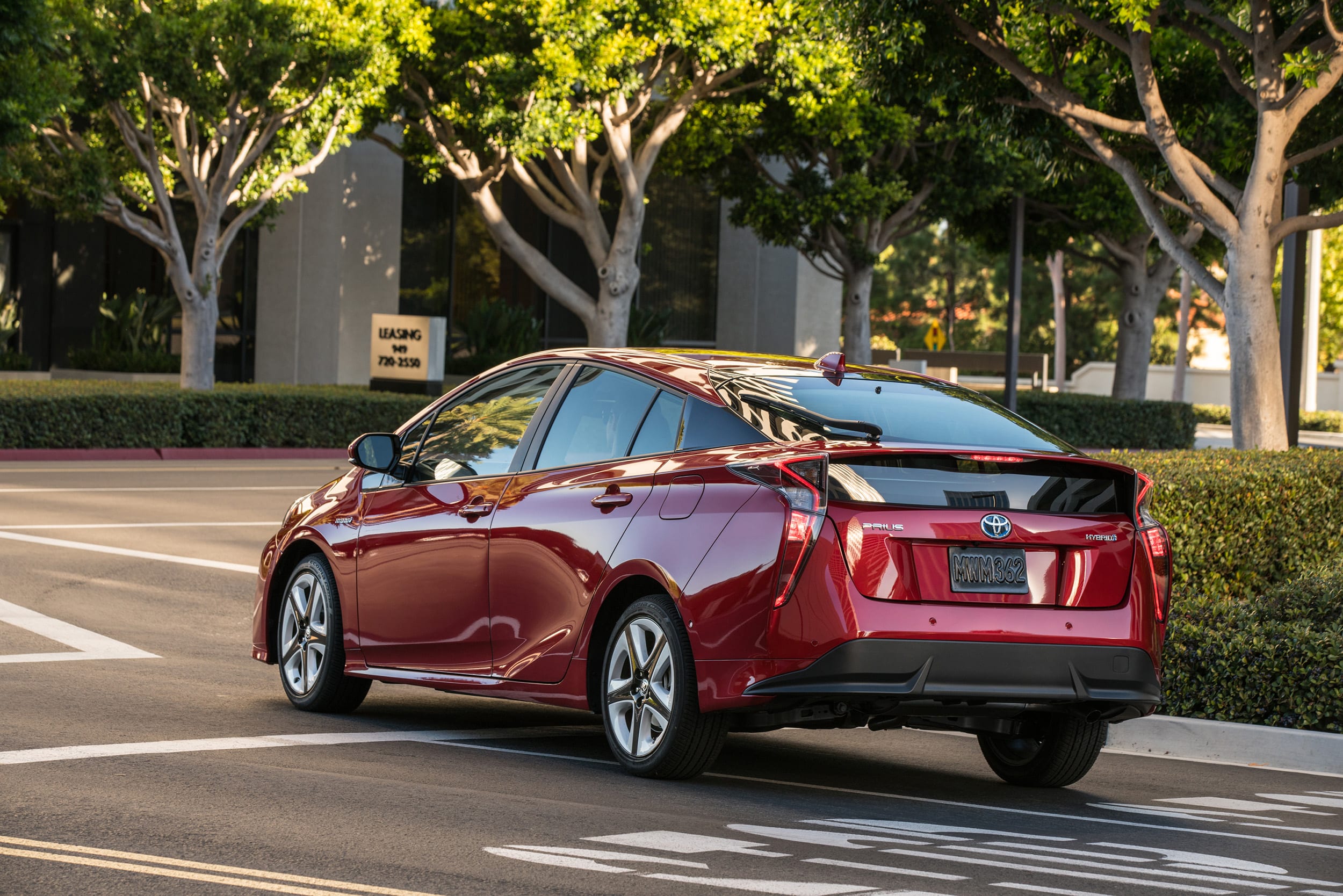
The signature funky look of the Prius remains polarizing, but many commented postively on the Four Touring’s optional ($1,540) Appearance Package, the central feature being blacked-out 17-in. alloy wheels and black-trimmed front and rear bumper areas, all imparting a bit of a customized look that helps mitigate the Prius “wonk” factor. At slightly more than $33,000, the Prius Four Touring is a particular shout-out to the smart-saver types who see it as a long-term investment of many dimensions.
2018 Toyota Prius Four Touring
Base price: $30,565
As tested: $33,248
Highs: Exceptional fuel economy; impressive large central HMI; great packaging
Lows: Lean on power; wonky stigma, oddball sheetmetal not everyone’s taste
Takeaway: Still the energy-efficiency standard
More From SAE Media Group
Automotive Engineering
Turbocharged Hybrid: 2021 Kia Sorento Revealed
Automotive Engineering
Toyota Punches up the Prius
Automotive Engineering
New Lexus SUVs: GX for Show, TX for Dough?
Automotive Engineering
2025 Kia Carnival MPV Hybrid Brings Unplugged PHEV Power
Automotive Engineering
All-New 2019 Ram 1500 Launches with a Bed-Load of Innovations
Automotive Engineering
Making over the World’s Leading Hybrid
Automotive Engineering
Mazda’s 2024 CX-90 Offers Turbo I-6, PHEV Propulsion
Automotive Engineering
2019 S60 and V60 Volvo’s Newest Chips in the Transformation Game
Automotive Engineering
Ford Amped for New Phase of Hybrid-Electric Offensive
Automotive Engineering
First Electrified Dodge Arrives for 2023 MY
Automotive Engineering
Ford Unveils All-New 2020 Escape, First SUV Application on New Global FWD Architecture
Automotive Engineering
Extending the ICE Age: FCA’s Micky Bly Is Amped on Electrification
Automotive Engineering
What We’re Driving: Toyota Land Cruiser
Automotive Engineering
Subaru 'Ascends' New Three-Row SUV on Global Platform
Automotive Engineering
2025 Nissan Murano: Variable Compression to the Mpg Rescue
Off-Highway Engineering
New Holland Extends Ag Lineup with CH7.70 Combine, T6 ‘Multitasker’ Tractor
Automotive Engineering
'Electrifying' New Range Rover Evoque
Automotive Engineering
Hyundai Reveals Market-Sized 2022 Tucson SUV
Automotive Engineering
Volvo XC90 Line-Up Keeps Hybrid Futures Safe
Automotive Engineering
Lincoln Aviator: New Rear-Drive Platform, Plug-In Option
Automotive Engineering
BorgWarner Demos Next-Step Electrification Components
Off-Highway Engineering
Freightliner Unveils Latest Cascadia Class 8 Truck
Automotive Engineering
Lincoln Unveils Redesigned 2024 Nautilus SUV
Automotive Engineering
Ferrari Reveals SF90, First-Ever Plug-In Hybrid
Automotive Engineering
Ford Engineers a Tech Barrage with 2020 Lincoln Aviator
Automotive Engineering
Toyota’s Multi-Pathway Future on Full Display
Off-Highway Engineering
Caterpillar Reveals Next-Gen Dozers, Excavators, Motor Graders
Automotive Engineering
Lexus Soups-Up Seventh-Generation ES Sedan
Automotive Engineering
2024 Lincoln Nautilus: The Brand’s First Global SUV
Automotive Engineering
What We’re Driving: 2020 Nissan Versa SR
Top Stories
NewsRF & Microwave Electronics
 Microvision Aquires Luminar, Plans Relationship Restoration, Multi-industry Push
INSIDERAerospace
 A Next Generation Helmet System for Navy Pilots
INSIDERDesign
 New Raytheon and Lockheed Martin Agreements Expand Missile Defense Production
INSIDERMaterials
 How Airbus is Using w-DED to 3D Print Larger Titanium Airplane Parts
NewsPower
 Ford Announces 48-Volt Architecture for Future Electric Truck
ArticlesAR/AI

Webcasts
Electronics & Computers
 Cooling a New Generation of Aerospace and Defense Embedded...
Automotive
 Battery Abuse Testing: Pushing to Failure
Power
 A FREE Two-Day Event Dedicated to Connected Mobility
Unmanned Systems
 Quiet, Please: NVH Improvement Opportunities in the Early Design Cycle
Automotive
 Advantages of Smart Power Distribution Unit Design for Automotive &...
Energy
 Sesame Solar's Nanogrid Tech Promises Major Gains in Drone Endurance