




Closing Gap to Leverage Enhanced Computational Power for SDV Advancement
Among the challenges is decoupling software from hardware.

Developing a standardized approach to harness the power of modern hardware accelerators in a safe and efficient way is essential in furthering the advancement of software-defined vehicles (SDV).

The need exists for a unified solution that remains independent of specific hardware vendors.
Modern vehicles increasingly rely on high-performance computing (HPC) systems, such as powerful systems-on-chip (SoCs) to manage complex applications like autonomous driving, advanced driver assistance systems (ADAS), in-vehicle infotainment (IVI) systems and connected vehicle services. These systems require immense computational power, which is often provided by specialized hardware accelerators such as GPUs, NPUs, and FPGAs.
The absence of a unified, safe solution represents a dual challenge:
- Decoupling software from hardware: While the industry strives to create software that can operate independently of the underlying hardware, current solutions often result in a tight coupling of the two, particularly when using proprietary technologies for hardware acceleration.
- Ensuring safety compliance: In critical applications like ADAS and autonomous driving – where failure could have dire consequences – an urgent need exists for hardware acceleration that adheres to strict safety standards.
In response, Intelias has developed a proof of concept that emphasizes the decoupling of software from hardware, thus promising to revolutionize how vehicles are developed, updated, and maintained. By enabling over-the-air updates and enhancing modularity, SDVs aim to create a flexible and future-proof vehicle architecture.
Striving for collaborative innovation
Through its collaboration with AUTOSAR, a leading OEM development partnership, we are pioneering the development of a standardized approach to safe hardware acceleration within the context of SDVs.
This initiative aims to create a software abstraction layer that allows full leverage of the computational power of modern SoCs while maintaining safety compliance. The goal: aset of standardized APIs that can be used across different hardware platforms.
Without such a solution, vehicles would either be unable to utilize the advanced computational capabilities of modern hardware or would do so at the risk of compromising safety. Our focus is to ensure that the promise of SDVs can be delivered without sacrificing the safety and reliability that drivers depend on.
The SDV Alliance unites the collaborative efforts of AUTOSAR, COVESA, Eclipse SDV, and SOAFEE to jointly establish industry standards for the future of the SDV ecosystem. Intellias is an integral part of this ecosystem as a member of COVESA and AUTOSAR and partners with other leading technology companies in the industry. We invite others in the industry to join us in this effort.
Adam Konopa is technology director at Intellias.
More From SAE Media Group
Automotive Engineering
NXP S32 CoreRide Platform Simplifies Development of Software-Defined Vehicles
Off-Highway Engineering
Continental, Aurora Finalize Design of Scalable Autonomous Trucking System
Automotive Engineering
Software Transforming Vehicle Development
Automotive Engineering
StreetDrone Proposes Top 10 Safety Rules for AV Developers
Aerospace & Defense Tech Briefs
Deterministic and Modular Architecture for Embedded Vehicle Systems
Embedded Technology
Multicores Affect Algorithm Choices
Off-Highway Engineering
Making Machines Software-Defined No Simple Task
Off-Highway Engineering
Design Tools Ensure Component Compatibility, Create Autonomous Driving Tests
Autonomous Vehicle Engineering
Autonomy’s Computing Edge
Automotive Engineering
DSpace Launches Simphera AV Development Simulator
Off-Highway Engineering
Making Software-Defined Vehicles Cyber-Secure
Embedded Technology
Graphics Performance vs. Power Consumption in Embedded Systems Design
Automotive Engineering
Sonatus Launches AI Director to Integrate More AI in More Vehicles
Automotive Engineering
From ADAS to SDVs with Plato Pathros
Off-Highway Engineering
Not Quite Your Father’s Cab

Automotive Engineering
Snapdragon Ride Flex Puts Safety, Infotainment onto Single Chip
Medical Design Briefs
Rapid Prototyping for High-Performance Medical Imaging Systems
Aerospace & Defense Tech Briefs
Inside Story: The Role of the SFFs in Rugged HPEC Computing
Automotive Engineering
CES 2021: Bosch Consolidates Computing Talent in New Mobility Division
Off-Highway Engineering
Increasing Connectivity in Construction
Aerospace & Defense Tech Briefs
Mil-Aero Design Embraces Intelligent Application-Ready ATCA Platforms
Autonomous Vehicle Engineering
Aptiv Centralizing Computing Power to Speed Autonomous Vehicle Development
Aerospace & Defense Tech Briefs
Adamant: A Soon-to-be Open Source, Mission-Critical Flight Software Framework Written in Ada
Embedded Technology
Embedded Databases: Data Management for Real-Time and Embedded Systems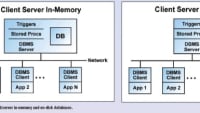
Off-Highway Engineering
Security, Bandwidth Drive Over-The-Air Development
Automotive Engineering
Building Resilient SDVs: Secure by Design in the Automotive Industry
Automotive Engineering
ZF Hikes Performance of ProAI Supercompute Platform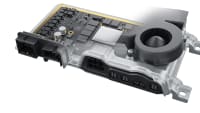
Aerospace & Defense Tech Briefs
MOSA Enclosure Design for Military Systems
Top Stories
INSIDERDefense
 New Raytheon and Lockheed Martin Agreements Expand Missile Defense Production
NewsAutomotive
 Ford Announces 48-Volt Architecture for Future Electric Truck
INSIDERAerospace
 Active Strake System Cuts Cruise Drag, Boosts Flight Efficiency
ArticlesAR/AI
 Accelerating Down the Road to Autonomy
INSIDERManned Systems
 How Airbus is Using w-DED to 3D Print Larger Titanium Airplane Parts
Road ReadyDesign

Webcasts
Power
 Battery Abuse Testing: Pushing to Failure
Power
 A FREE Two-Day Event Dedicated to Connected Mobility
Power
 2026 Battery & Electrification Summit (Online)
Software
 Smarter Aerospace Manufacturing & Design with Digital Twins and...
Aerospace
 Cooling a New Generation of Aerospace and Defense Embedded Computing...
Transportation
 Quiet, Please: NVH Improvement Opportunities in the Early Design Cycle