




From ADAS to SDVs with Plato Pathros
The author’s third book delves deeper into SDVs.

An experienced engineer with a history in software development and systems engineering, Plato Pathrose is turning from ADAS to SDVs with his latest work. Pathrose’s third book, Software Defined Vehicles, will be published in September 2025 with SAE International.

“This is both a technology and a business book,” Pathrose told SAE Media. “It aims to offer a comprehensive perspective on one of the most transformative trends in the automotive industry. Software Defined Vehicles explores how software is reshaping the design, function, and value of modern vehicles.” From concept, architecture, and connectivity to over-the-air updates and vehicle personalization, Pathrose’s latest book dives deep into the technologies driving this shift. It also addresses the business implications, including new revenue models, ecosystem strategies, and the changing role of OEMs and suppliers.
Pathrose has worked for or consulted for vehicle manufacturers like Jaguar Land Rover, McLaren Automotive Ltd, VinFast Automotive, as well as suppliers like Magna and Visteon. Most recently, he launched his own technology consulting and services firm, PTS Creative, based in Karlsruhe, Germany. Pathrose said the goal is to address engineering challenges and business strategies in the area of mobility and new technology areas such as digitalization, artificial intelligence, operational excellence and value engineering. Pathrose and PTS Creative have guided stakeholders through the complexities of digital transformation in transportation, especially as vehicles evolve from mechanical machines into highly intelligent, networked systems, Pathrose said.
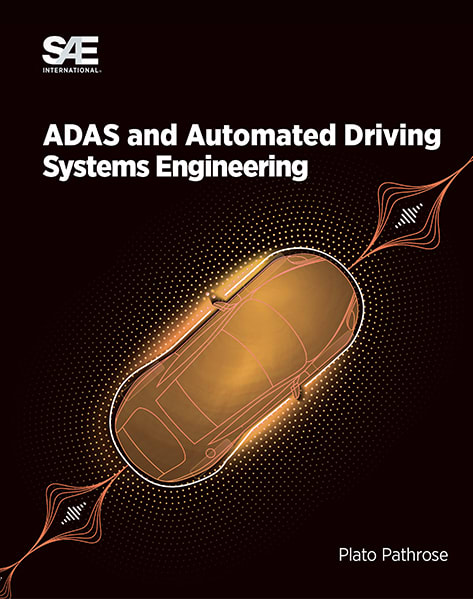
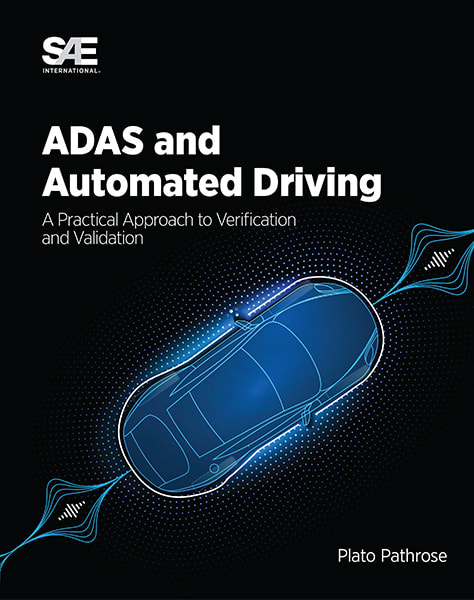
Pathrose's previous books were ADAS and Automated Driving: A Practical Approach to Verification and Validation (2022) and ADAS and Automated Driving Systems Engineering (2024). Throughout his 2024 book, Pathrose emphasized the importance of applying systems engineering to real-life processes and used next-generation technologies to exemplify this concept.
“In current markets, we are dealing with more complex cyber-physical systems. We have lot of AI components integrated into vehicle systems to increase the performance and response times of complex functions. Systems engineering identifies how AI and other new technologies can best be designed and deployed,” Pathrose said in 2024.
Pathrose took a people-first approach when writing ADAS and Automated Driving - Systems Engineering as a way to address the gaps he saw in how engineers are educated on systems engineering and applying lessons. “A lot of systems engineering materials we have in the market mostly align with the theoretical, and so I really wanted to get into more practical applications of it,” Pathrose said. “It is quite important for any engineer to understand what system engineering means and how to effectively apply it in real-life projects.”
Software Defined Vehicles will be Pathrose’s first book on SDVs and will cover the end-to-end development cycle, from the software-defined concept to the end of life of the vehicle. Pathrose said he often speaks at technology and mobility conferences on industry trends, technological disruptions, and innovation pathways. With the convergence of mobility and cloud computing, artificial intelligence, edge processing, and connected ecosystems, “Vehicles are not just transport tools but intelligent nodes in a broader digital network,” he said.
Since Pathrose’s professional knowledge was gained “purely by doing,” Pathrose said, he has a specific view on how best to talk about and work on future mobility.
“Earning a certificate does not make you a systems engineer,” he said. “What you do after that will add up to your experience, which will help you improve on what you are able to create. … I advocate for a world where transportation systems are sustainable, intelligent, and inclusive. In my talks, I emphasize the human and societal dimensions of mobility transformation, considering ethics, accessibility, and environmental sustainability alongside business profitability and efficiency in the industries.”
Pathrose said while the topics of his books are complex, his writing is meant for anyone interested in the topic.
“Understanding the larger benefit to users is critical,” he said. “I took a people-first approach when writing, and this can be seen across all my works, where [I present] complex concepts and technologies in a simple, easy-to-understand way, which makes it interesting and understandable for even non-engineers.”
More From SAE Media Group
Autonomous Vehicle Engineering
New Digital Tools Driving Restructuring for Autonomy
Automotive Engineering
Electrifying Opportunities at IAV
Aerospace & Defense Tech Briefs
Industry Invited to Participate in AeroTech Aerospace and Defense Technical Program
Automotive Engineering
Spelling Ford with an ‘E’
Autonomous Vehicle Engineering
Gathering Clouds Will Form Autonomy’s Computing Backbone
Aerospace & Defense Tech Briefs
AIA Predicts Flying Air Taxis, Supersonic Air Travel, and Space Industry for 2050
Tech Briefs
5 Emerging Technologies in Manufacturing
Automotive Engineering
Snapdragon Ride Flex Puts Safety, Infotainment onto Single Chip
Autonomous Vehicle Engineering
Speeding AV Testing with a Digital Twin
Aerospace & Defense Tech Briefs
SAE International Extends Call for Abstracts, Seeks Submissions for AeroTech Conference
Autonomous Vehicle Engineering
Data Drives Driverless Truck Launch

Automotive Engineering
Closing Gap to Leverage Enhanced Computational Power for SDV Advancement
Autonomous Vehicle Engineering
OTA and the End of Vehicle Ownership
Automotive Engineering
NXP Processors Evolve to Enable Software-Defined Vehicles
Off-Highway Engineering
Virtual Factories Accelerate Collaboration, Advance Technologies
Automotive Engineering
Talking SDVs and Zonal Architecture with TE Connectivity

Tech Briefs
SAE WCX: Bringing You the Future of Mobility
Automotive Engineering
Software Transforming Vehicle Development
Automotive Engineering
Volvo EX90 Uses AI, NVIDIA SoC to Make Automated Driving Safer
Off-Highway Engineering
COMVEC 2022: Hiring Talent to Meet High-Tech Demands
Off-Highway Engineering
DENSO Boosts Its Mobility-As-A-Service and Connected Technologies with New Seattle R&D Lab

Off-Highway Engineering
Big Data, Big Benefits for Big Machines
Automotive Engineering
Data Boom Drives Bosch to 10,000 Software Engineers in 2022
Automotive Engineering
NXP S32 CoreRide Platform Simplifies Development of Software-Defined Vehicles
ADAS & Autonomous Vehicle Engineering
Mercedes-Benz Architecting Its Own Operating System
Top Stories
NewsRF & Microwave Electronics
 Microvision Aquires Luminar, Plans Relationship Restoration, Multi-industry Push
INSIDERAerospace
 A Next Generation Helmet System for Navy Pilots
INSIDERDesign
 New Raytheon and Lockheed Martin Agreements Expand Missile Defense Production
INSIDERMaterials
 How Airbus is Using w-DED to 3D Print Larger Titanium Airplane Parts
NewsPower
 Ford Announces 48-Volt Architecture for Future Electric Truck
ArticlesAR/AI

Webcasts
Electronics & Computers
 Cooling a New Generation of Aerospace and Defense Embedded...
Automotive
 Battery Abuse Testing: Pushing to Failure
Power
 A FREE Two-Day Event Dedicated to Connected Mobility
Unmanned Systems
 Quiet, Please: NVH Improvement Opportunities in the Early Design Cycle
Automotive
 Advantages of Smart Power Distribution Unit Design for Automotive &...
Energy
 Sesame Solar's Nanogrid Tech Promises Major Gains in Drone Endurance