




Hard to Answer
Technical and personal issues make it challenging to link smartphones to vehicles.

Human-machine interfaces (HMIs) are quickly evolving as smartphones and apps enter vehicles. Developers are allowing multiple ways for drivers to interact with apps and phones, knowing that a well-designed HMI can be a significant differentiator while a problematic HMI can become fodder for highly-publicized criticism.
The tightening link between cars and consumer devices is challenging vehicle designers who must adopt consumer technologies for control. Most executives agree that a range of control and display technologies will be needed to manage apps and phones.
“We believe HMIs will follow a multi-modal approach,” said Nick Lontscharitsch, President of Preh Inc. “OEMs don’t know who’s going to be behind the steering wheel—someone who’s 18 or 80. Steering wheel switches, touch screens, and voice will all be in the mix.”
The challenge for design teams is that they need to mimic popular functions such as texting without endangering the public. Consumers focused on phones fall into fountains or crash into poles while walking, but they still want similar capabilities as they roll down roadways.
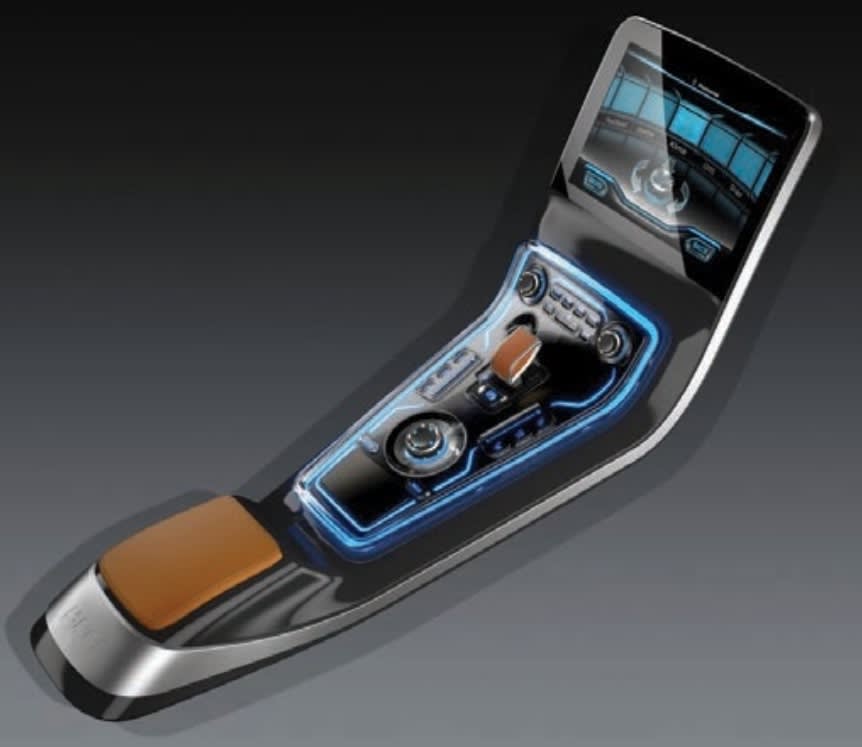
“A recent report suggested 80 percent of consumers expect the connected car of the future to provide the same connected experience that are used to at home, work, and via their mobile phone,” said Hans Roth, Director of Technology at harman Infotainment Division. “Accident numbers are rising in developed countries, and it is thought using smartphone devices is a likely factor.”
Psychological training
The vast differences in user preferences and technical skills require a wide-ranging approach to HMIs. Design teams are leaving no stone unturned in their attempts to meet these divergent demands.

‘We work with psychologists to help us determine how usable software is, whether it’s easy to handle or distracting,” said Ingo Krueger, Business Unit Director, Cockpit & Mobility Systems at IAV Automotive engineering. “We also run clinics with young and old people, males and females, in school and retired, to figure out what works and what doesn’t.”
The need for multiple input devices is highlighted by tasks such as controlling music. Voice works best for some tasks, while conventional knobs and buttons still work well for others.
“Voice recognition might be better suited for complex tasks like finding a particular song or contact in a large library or directory, while a mechanical button might be better suited to accomplish simple tasks like skipping to the next track on a playlist,” said Michael Tschirhart, Human Factors Technical Fellow at Visteon.
While engineers and marketers grapple with control challenges, they must also examine options for displaying information from phones. Some OEMs want a distinct look and feel for their HMI, but they must also show smartphone apps on in-vehicle displays.
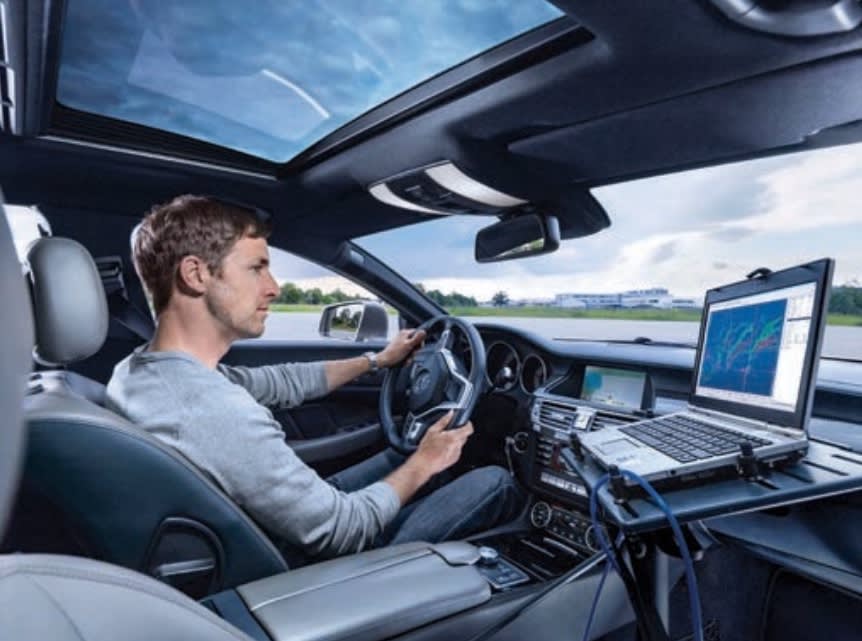
“Display sharing will be critical for all future vehicles,” said Richard Barrett, Broadcom’s Director of Wireless Connectivity. “The reasons are compelling. In higher-end vehicles, people will want to do things with their phones and have them linked to the vehicle display. In lower-end vehicles, this allows companies to offload a lot of technology that would otherwise have to be in the car—things like navigation and music.”
Ready to share?
There’s a strong push to link smartphone displays to center stack screens so phone users see an interface they’re familiar with. A number of techniques are vying for acceptance as OEMs quickly employ display sharing. ABI Research believes that smartphone integration using MirrorLink, Apple iOS, google Android, or another alternative will be in 30% of new vehicles by 2019.

System designers will generally be able to support multiple options for display sharing just as they support multiple smartphone operating systems. That’s because all the protocols have fairly small differences.
“All of the specifications are consolidating on similar hardware and software requirements,” said Andrew Poliak, Global Director, Business Development, for QnX Software Systems. “OEMs will be able to support several projection modes.”
While the technical challenge is fairly straightforward, myriad other issues will help determine how extensively display sharing will be deployed. Driver distraction is a dominant factor. Some observers feel that only a few apps should be shown on the vehicle’s displays.
“We think three to five functions can be mirrored safely without distraction,” Lontscharitsch said. “They should be freely programmable.”
Who’s in command?
OEMs are also reluctant to give up control functions. HMIs are seen as a critical differentiator, so automakers want to control these interactions, giving drivers a unified experience. Display sharing can help OEMs trim costs by offloading tasks to the phone, but that may not be a solid strategy in higher-end vehicles since the apps’ interface changes the HMI’s look and feel.
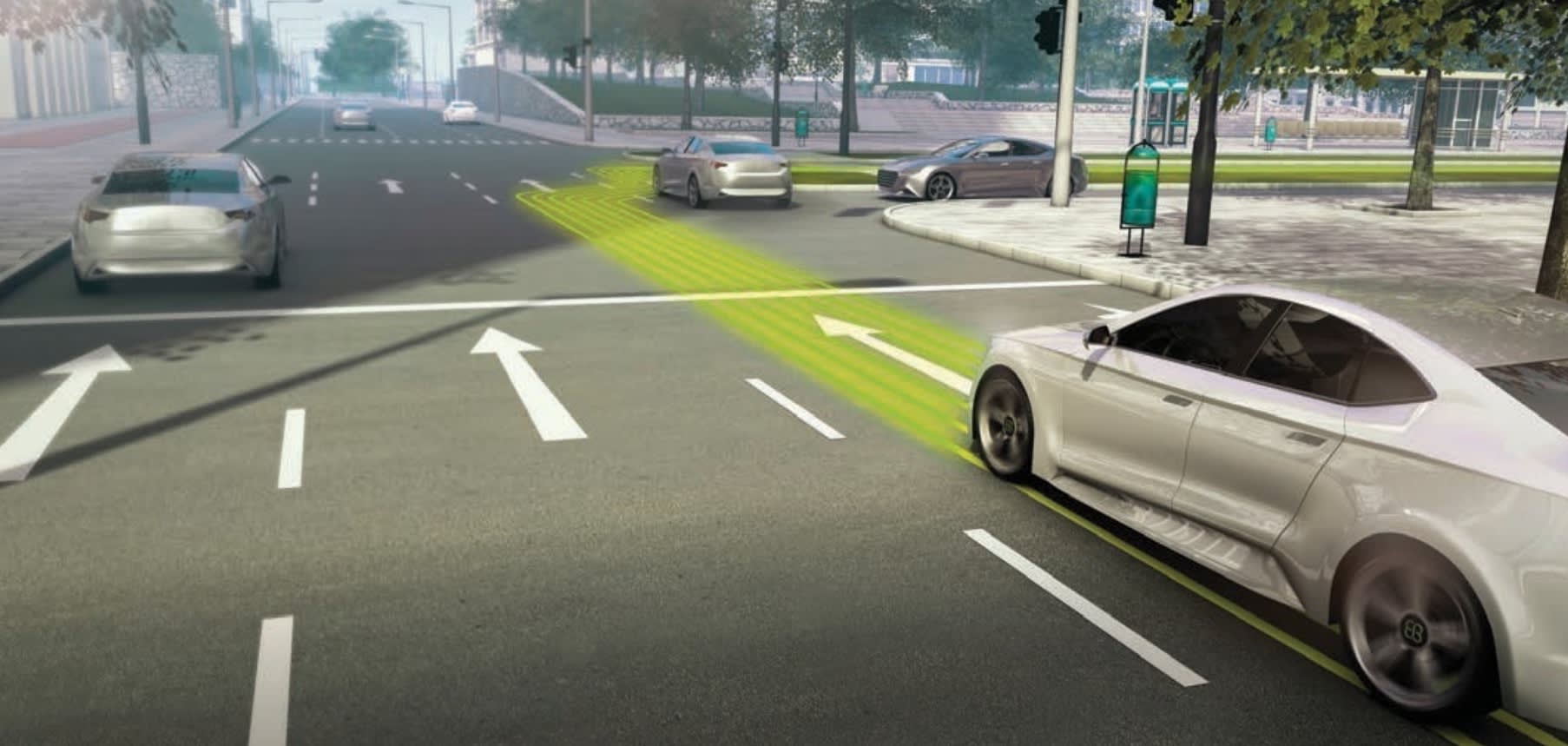
“While mirroring systems might be acceptable in entry-level vehicles, for mid- and high-level vehicles this is up to now not feasible,” Roth said. “OEMs want to provide their own look and feel also as a differentiator and are unlikely to accept mirroring systems. Solutions inspired by Apple’s iTunes and Google’s Play Store such as Ford’s Sync Applink, gm’s MyLink, or BmW’s Connected Drive communicate with the car’s infotainment system, allowing drivers to access limited online services such as making restaurant reservations.”
That’s a major challenge for automakers. “All OEMs are struggling with how much of the brand they want to give up,” Poliak said.
Compatibility is another challenge for automakers. Phones change continuously, while vehicle systems are fixed well before cars roll off the production line. The more phones interact with vehicle infotainment systems, the higher the likelihood of problems.
“A big issue for OEMs is that there are so many smartphones out there, and not all smartphone suppliers are careful about implementing standards,” Krueger said. “If someone buys a cheap smartphone that doesn’t completely fulfill the Bluetooth standard, specific functions may cause issues that are the fault of the phone, but the OEM is the one that has to deal with the complaint.”
Adding the ability to upgrade vehicle software is one way to reduce the number of issues related to connecting vehicles and rapidly-changing phones. Car buyers accustomed to getting new phones every couple years are going to want to link them to vehicles that they keep far longer. That’s prompting a lot of interest in firmware over the air updates.
“One thing that’s clear is that vehicles need to be upgradable,” Poliak said. “People expect to be able to add functions just like they can upgrade their smartphones.”
More From SAE Media Group
Automotive Engineering
Google, Apple Join Battle for Infotainment Management
Autonomous Vehicle Engineering
Software Rewrites the Rules
Off-Highway Engineering
Consumer Electronics Come on Board

Automotive Engineering
CES Rollouts Extend Connectivity, App Integration
Automotive Engineering
Ford's Sync 3 Is on the Way
Automotive Engineering
Lexus Goes All-Touch for New Infotainment System
Automotive Engineering
Ford Announces All-New SYNC 4 Connectivity Suite
Automotive Engineering
CES 2024: SDVs Redefine OEM and Supplier Relationships, Deliver New Features
Off-Highway Engineering
Security, Bandwidth Drive Over-The-Air Development
Automotive Engineering
Nvidia Partners with AdaCore to Secure Self-Driving Firmware
Automotive Engineering
Snapdragon Ride Flex Puts Safety, Infotainment onto Single Chip
Automotive Engineering
Built-In Google Vehicle Apps Arrive
Aerospace & Defense Tech Briefs
SAE International Extends Call for Abstracts, Seeks Submissions for AeroTech Conference
Automotive Engineering
No, Really, What’s an SDV?
Tech Briefs
Product of the Month
Automotive Engineering
Baking in Protection
Automotive Engineering
Mitsubishi Electric Shows New FLEXConnect Technologies

Robotics & Automation INSIDER
Product Focus: Olis Launches a Diagnostic Tool That Runs on Any Android Device
Off-Highway Engineering
Next-Gen HMI Crucial to Increasing ADAS Efficacy
Automotive Engineering
ZF Builds ‘Middleware’ to Address Vehicle Software Escalation

Off-Highway Engineering
Over-The-Air Affair

Tech Briefs
2025 Award Finalists
Automotive Engineering
Automotive HMIs Aren’t Just for Driving Any More
Automotive Engineering
Connectivity for Comfort
Off-Highway Engineering
Digitalizing Off-Highway Machines Delivers Actionable Data
Top Stories
INSIDERManufacturing & Prototyping
 How Airbus is Using w-DED to 3D Print Larger Titanium Airplane Parts
INSIDERManned Systems
 FAA to Replace Aging Network of Ground-Based Radars
NewsTransportation
 CES 2026: Bosch is Ready to Bring AI to Your (Likely ICE-powered) Vehicle
NewsSoftware
 Accelerating Down the Road to Autonomy
EditorialDesign
 DarkSky One Wants to Make the World a Darker Place
INSIDERMaterials
 Can This Self-Healing Composite Make Airplane and Spacecraft Components Last...
Webcasts
Defense
 How Sift's Unified Observability Platform Accelerates Drone Innovation
Automotive
 E/E Architecture Redefined: Building Smarter, Safer, and Scalable...
Power
 Hydrogen Engines Are Heating Up for Heavy Duty
Electronics & Computers
 Advantages of Smart Power Distribution Unit Design for Automotive...
Unmanned Systems
 Quiet, Please: NVH Improvement Opportunities in the Early Design...
