




Software Rewrites the Rules
Revenue streams and business models are changing as more vehicle functions move to software. Blackberry QNX’s John Wall explains.
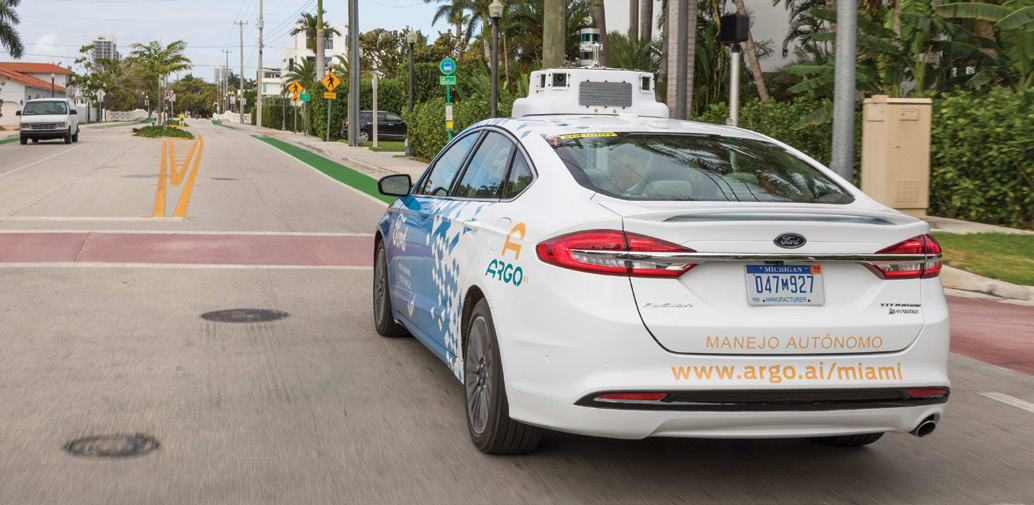
The auto industry’s evolution to a product differentiation based on services and software is prompting a transformation in areas as diverse as the structure of business relationships through cybersecurity for connected vehicles.
OEMs are embracing software, which now forms the basis for propulsion-system control, infotainment, safety and autonomy. For John Wall, the General Manager of Blackberry QNX and leader of the company’s automotive technology business, that’s a marked change from a little over a decade ago when Harman acquired QNX.
At that time, some automotive executives were unsure exactly what the QNX real-time operating system did.
“Harman managers joked that we were secondary to the golden engineers in chassis and powertrain!” noted Wall, who joined QNX in 1993 as a Carleton University engineering grad. He rose through the ranks to become VP Engineering before taking his current role.
Now, QNX software serves as the operating system (OS) on more than 60 million vehicles. Ford and Jaguar Land Rover both recently signed licensing agreements. Ford brought 450 Blackberry engineers and other staff into its development team. Changes like these highlight a major shift in business strategies.
“Ten years ago, there were clear lines — QNX supplied Tier 1s, Tier 1s supplied OEMs. If I spoke to an OEM, that was a no-no,” Wall recalled. “Now there’s a lot more talk of partnerships. As the world becomes more complex, for example with autonomous driving, there’s a realization by OEMs and Tier 1s that they can’t do this alone.”
Connectivity and software strategies

He said the old supplier-customer model has become more of a triangle. Now it’s common to have Tier 1s, OEMs and Tier 2s all in one meeting. Much of this impetus for change came from outsiders like Google/Waymo and Apple. Hype around their autonomous-driving programs “pushed the traditional OEMs into high gear,” Wall observed. “If carmakers don’t do their own software, other people will step in and do it for them.”
The tech industry’s impetus is driving OEMs to operate and innovate more like high-tech companies. But the speed that comes in industries that have fleeting product life cycles can be perilous, especially in the coming era when cars make life and death decisions on the roadways.
Unfortunately, fatalities caused by vehicle systems, both while testing on public roads and in customer use, have received far more attention than those caused by purely human operator error, putting them in the public spotlight. There’s some concern that government regulators may step in if autonomous-vehicle developers seem to be careless.
“Automakers will be very slow and incremental in their autonomous-driving rollouts,” Wall surmises. “Governments may step in if they see car companies being irresponsible. What I think the industry has to worry about is not the traditional car companies, who are used to being diligent and focusing on safety. We have to worry about non-traditional companies like Uber,” he said.
Before autonomy hits the roads, connectivity will be an essential element in near-term software strategies. Cellular fees, human-machine interfaces (HMI), safety and security are among the design challenges and cost factors associated with connectivity. Strategic planners need to figure out to use all the information created in cars to bring in revenue.
“Tons of data from all the sensors on a car can be very valuable. It will be a huge play for OEMs to monetize the data that’s on cars,” Wall noted.
Future role of the OS
Many of the features and functions on next-generation vehicles may be provided by add-on services. Companies large and small are trying to figure out how they can create apps and services that vehicle owners will pay for. Many believe that the cellphone industry may provide a model that can be adapted for autos.
Operating systems may become the lingua franca for vendors attempting to carve out a new market.
“The car is being extracted out to a number of high-level services, similar to how the cellphone industry emerged,” Wall said. “As cars become connected, OEMs want to monetize services. People will have to write apps for cars, so they’ll need a few OSes to standardize on, similar to what happened with iOS and Android in cell phones. Autonomous driving will be one of those apps.”
The push to add services and functions via apps will happen slowly because of the high reliability needed for autos, where software glitches can have severe consequences. Apps will follow the lead of vehicles themselves, with longer engineering cycles that help ensure that if failures occur, they won’t impact any safety-critical vehicle functions. The OS can help isolate infotainment apps from safety-critical software.
“Vehicle architectures will change; there’s a need to separate safety and non-safety functions. It’s a lot different than in cellphones; when they crash, who cares?” Wall opined. Virtualization provides a way to make sure that a problem in infotainment, which will handle apps and connections to the often-dangerous Worldwide Web, don’t impact mission-critical systems. Many infotainment systems use Android and Linux, which can operate in virtual areas that are isolated from vehicle electronics.
Blackberry QNX’s product plan includes Hypervisor, which supports guest operating systems, isolating them in a sandbox. The company is working with several automakers that run Android and Linux on top of Hypervisor, Wall said.
The consolidation of hardware, enabled by the emergence of powerful multicore processors, is also spurring the use of Hypervisor. In many vehicles, digital instrument clusters and infotainment systems are moving to a single computing platform instead of dedicated, discrete processors in today’s production vehicles.
“Clusters and infotainment systems are running on the same computer platform, using our Hypervisor to separate the environments. QNX is used for the cluster, Linux and Android are used for infotainment,” he explained. “Some companies are bringing Amazon’s Fire OS into the car for services. Those non-safety systems can be isolated so critical cluster software won’t be impacted by any issues.”
Deep-cyber defenses
Security is an underlying aspect of these safety-related design programs. Cybersecurity is of equal or greater importance. Keeping hackers at bay is another concern given the potential for serious repercussions from incidents.
Wall hopes to help the industry avoid problems. Blackberry focused on security from its inception, and QNX engineers worked closely with oil and gas customers experienced in dealing with threats to large infrastructure systems like the power grid.
“Security is not a bolt-on piece, you need defense in depth, like knowing that chips are authenticated so you can establish a root of trust. Even the best security can be breached, how will breaches be identified when they’re discovered,” Wall said.
More From SAE Media Group
Autonomous Vehicle Engineering
Rewriting the Code
Automotive Engineering
It’s ‘Do-or-Die Time’ to Plan for Open Platforms
Off-Highway Engineering
The Role of a Cloud-based Server in Service Workshops
Autonomous Vehicle Engineering
Lockered and Loaded
Automotive Engineering
CES 2026: Qualcomm Expands Partnerships For More Snapdragons
Automotive Engineering
CES 2024: SDVs Redefine OEM and Supplier Relationships, Deliver New Features

Automotive Engineering
Accelerating Down the Road to Autonomy

Photonics & Imaging Technology
Challenges for Lidar Software

Tech Briefs
Product of the Month
Automotive Engineering
Hard to Answer
Off-Highway Engineering
Making Software-Defined Vehicles Cyber-Secure
Autonomous Vehicle Engineering
The Building Blocks of Autonomous Tech

Tech Briefs
Vehicle Design with System-Level Modeling
Tech Briefs
Disrupting the Automobile Design Process
Off-Highway Engineering
Security, Bandwidth Drive Over-The-Air Development
Automotive Engineering
Defining the Software of ‘Software-Defined’ Vehicles
Tech Briefs
Executive Forum: Sensors & the IoT
Automotive Engineering
BlackBerry’s CTO Points to a Holistic and Standards-Based Future for Vehicle Cybersecurity



Off-Highway Engineering
Perkins Pursues Plug-and-play Connectivity
Automotive Engineering
Fusing Sensors for the Automated-Driving Future
Automotive Engineering
No Hands, Lots of Brains
Autonomous Vehicle Engineering
Software Building Blocks for AV Systems

Top Stories
INSIDERManufacturing & Prototyping
 How Airbus is Using w-DED to 3D Print Larger Titanium Airplane Parts
INSIDERManned Systems
 FAA to Replace Aging Network of Ground-Based Radars
NewsTransportation
 CES 2026: Bosch is Ready to Bring AI to Your (Likely ICE-powered) Vehicle
NewsSoftware
 Accelerating Down the Road to Autonomy
EditorialDesign
 DarkSky One Wants to Make the World a Darker Place
INSIDERMaterials
 Can This Self-Healing Composite Make Airplane and Spacecraft Components Last...
Webcasts
Defense
 How Sift's Unified Observability Platform Accelerates Drone Innovation
Automotive
 E/E Architecture Redefined: Building Smarter, Safer, and Scalable...
Power
 Hydrogen Engines Are Heating Up for Heavy Duty
Electronics & Computers
 Advantages of Smart Power Distribution Unit Design for Automotive...
Unmanned Systems
 Quiet, Please: NVH Improvement Opportunities in the Early Design...
