




It’s ‘Do-or-Die Time’ to Plan for Open Platforms
The auto industry needs to open its eyes to open-platform opportunities, warns a European information-systems academic — and the industry looks to respond.
Prof. Ola Henfridsson has a curt warning for the European motor industry: “It must accept that cars have to become open platforms for digital technology.”

Henfridsson is Professor of Information Systems and Management at U.K.’s University of Warwick Business School, a top provider of finance and business research and education. He believes that the open-platform car is coming: “Just as the smartphone has become a platform whereby users can download any apps they want and connect to the Cloud, so the car could become a giant mobile version of today’s phone capabilities. Non-automotive companies such as Google and Microsoft are increasingly taking parts of the market.”
In general, he says, there is a “huge” difference in the way the auto industry develops its products (particularly the time required from concept to production) compared to the electronics and mobile device industries: “Despite this, they are competing increasingly in the same market. The carmakers have to address that time difference. It isn’t optional; I believe it is a ‘do-or-die’ situation.”
Because the through-life span of a car is much longer than that of a mobile device, digital functionality, installed at model introduction, quickly ages in terms of capability; it needs to be rapidly and easily updated to meet the increasingly high digital enhancement expectations and requirements both of customers and legislation.
Flexibility of choice is a must, said Henfridsson, who has worked as an information systems consultant with GM Europe and Volvo: “There is no reason why automakers should define which functionality each car should have; that is the traditional way. They will be left behind if they continue to do so. Some way is needed to handle that functionality choice in order to keep the car owner happy with levels of existing and increasing functionality that compare to that of a smartphone.”
The carmakers are, of course, aware of this and try to address the problem by introducing some flexible technologies that they control, he said: “But despite their investments, I do not believe they have the necessary software skills to compete with the digital giants.”
Value creation
Software is taking an increasingly large portion of the value created in a car: “But instead of a threat, this can be an opportunity to change the business model; to find a way to allow other ‘actors’ that can respond more quickly to offer that value creation by opening up platforms in the car to bring new functionality — the sort of functionality that a carmaker might not even think of at the beginning of a model’s creation.”
Profits would be shared, although this is very much against the traditional way OEMs work because they are control-focused and there is a fear of losing control of their own products, he claimed.
They need to change their minds, cautioned Henfridsson, thus allowing more leeway between external software developers or suppliers that would be able to connect to their cars over time in a smart way: “Infotainment is just a starting point. There is also engine management and even active safety. Other aspects of functionality at the heart of automotive technology also need to be considered; just examine what Google does with its autonomous driving vehicle. Google has demonstrated its driverless cars because they are imagining a future where a car communicates with its environment. Suddenly, car-makers have competitors that in the past would never have been regarded as such.”
In fact, new aspects of car development could come from a range of sources instead of an automotive company’s very expensively funded R&D department, he believes.
However, there are signs that some companies are looking less nervously at the future: “Ford has launched its application developer program for its Sync infotainment system. Developers are encouraged to submit apps to Ford for review by its engineers. Once approved, those developers get a distribution license. The app can then be submitted to specific app stores.”
Software company cars?
Could the software giants produce, in high volume, their own badged cars? Henfridsson sees it as a possibility, perhaps using their vast financial resources to buy an established OEM that could provide vehicle design, development, testing, manufacturing, and even retail outlet facilities.

There are many possible changes in the medium to long term with regard to buyer profiles that could make the potential advances Henfridsson foresees become reality. He is in agreement with some industry commentators who see a shift away from the car as an image identifier, particularly among younger buyers; but what the car offers in terms of digital capability and flexibility would be.
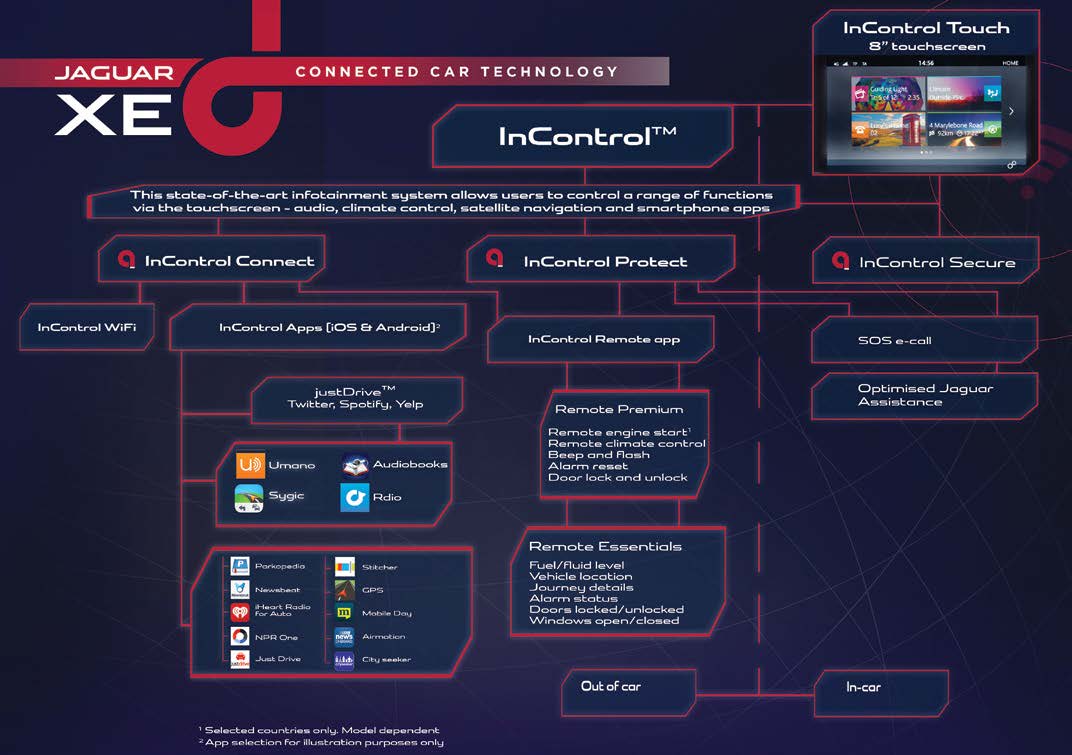
Views among OEMs and Tier 1 suppliers are generally positive on the open-platform question. Mark Stanton, Director of Vehicle Engineering at Jaguar Land Rover (JLR) foresees an increasingly open-platform philosophy emerging that would help achieve much reduced lead times (like those of the electronics and mobile device industries) for the acceptance of new digital systems during a model’s production run: “But only in certain areas. At JLR, our products’ ‘DNA’ must be retained, and that can only come from us. However, updating some systems is necessary, so that’s a definite for apps; we are talking with major software companies about this. So we do perceive some open platforms in the future, but I would feel uncomfortable about applying apps in safety areas; it’s a balance.”
As for one of the software giants becoming a vehicle manufacturer, Stanton said he could see why they would want to: “The car could become a mobile applications platform, and those companies might want to provide a vehicle into which they can sell applications, the car itself being less important. Apple is an example of that thinking. Such a car could definitely be updated throughout its life.”
There would be a sharp delineation between cars that would essentially be utility products, and those of “character” with that essential DNA.
Misconception

As a leading Tier 1 supplier, Continental’s views on open platforms are highly significant. Ralf Lenninger, its Head of Strategy, System Development and Innovation at its Interior Division, said: “It is generally a misconception that the automotive industry is a lot slower than consumer electronics in developing products and innovations. But there is one big difference in contrast to consumer electronics: automotive demands higher product quality in much more challenging environmental conditions and over a much longer period of time. Also, safety is central for our products.”
All this demands a longer and much more accurate testing phase, he underlined: “In automotive, we cannot afford to bring a ‘beta’ version to the market. Open platforms are exactly what automotive is practicing to create standards and allow for transparency also with a view towards testing and quality assurance. Examples are Autosar for software and architectures or Linux-based Genivi for infotainment.

“I also think that open platforms will play an ever more important role in the auto industry going forth — wherever they make sense.”
Collaboration with the digital giants is a key to success, he added: “We have already started to closely work together with companies like Here, IBM, and Google.”
Lenninger stated that he regards remote updates of vehicle software as “definitely” a solution to close the gap between the different life cycles in automotive and consumer electronics: “But we also need to be careful not to jeopardize safety, security, and quality of our vehicles.”
He believes that autonomous driving will push open-platform introduction.
Special automotive know-how

At Mercedes-Benz, Alexander Mankowsky, a specialist in Future Research, Culture and Mobility, regards open platform with some caution and sees it at present as a “philosophy, not as a practice.”
Questioned about the possibility of a car approaching the end of its production run (around seven years) having digital systems that by then may be outdated but that could have been updated via open-platform solutions, he said: “The challenge for us as an automotive manufacturer is pretty clear: to think of cars which will be state-of-the-art in seven years’ time.”

Asked if a major OEM’s in-house digital/software development capability could hope to match that of a giant such as Google, his answer was clear: “‘No’ in creating search engines, but ‘yes’ in creating high-quality, error-free, and useful car software that fits the customer’s needs as well as the guidelines on driver distraction. The E/E system of a car is very sophisticated, and all software must be perfectly integrated, which requires a special, automotive related know-how.”
Will the advent of autonomous driving dramatically speed and spread digital technology in cars and therefore enhance the push for more open-platform acceptance? “Our customers will have the ability to integrate their devices in their cars,” said Mankowsky. “But we would like to go much further. We will offer an intelligent connected car which has not only access to the Web, but is part of the Internet of Things.”
Who owns end-to-end solution?

Pietro Ottavis, Vice President, Infotainment & Driver Interface, at Delphi’s Wuppertal, Germany Technical Center, is cautious about achievement of common standards: “The philosophy for one [standardized] industry-wide open platform has not, and most likely will not, materialize for multiple reasons.”
These include conflicting interests of competitors in all segments of the value chain: “What will most likely happen is a consolidation of different platform approaches, reducing the amount of global variants, including an establishment of standardized or de facto standardized interfaces to provide access to the in-vehicle systems from the Cloud — e.g., for over-the-air updates or application download.”
He does see the car as the next mobile platform, but believes that automotive specific areas, such as chassis systems or engine controls, would most likely remain under the lead of traditional OEMs and suppliers.
“The key question will be: who owns the end-to-end solution,” he said. “In an initial phase, even a closed OEM system covering in-vehicle and off-board might be sufficient for the end user.”
Ottavis said that, given the life cycles (development and product) of automotive and consumer electronics industries, and the increasing expectation of customers to access the same features/applications inside and outside of the car, the ability of upgrading software and hardware throughout the lifetime of a vehicle will become increasingly important.
“The upgrading might result in additional automotive integration requirements,” he said. “Unlike the underlying smartphone hardware, the vehicle hardware will remain longer in use and could create conflicts regarding processor and memory performance.”
Pull of autonomous driving
What will be the effect of autonomous vehicle technologies? “We can expect a pull from the autonomous driving activities towards more and faster integration of digital technology in the vehicle, although autonomous driving is not a prerequisite or a sole purpose of this trend,” said Ottavis.

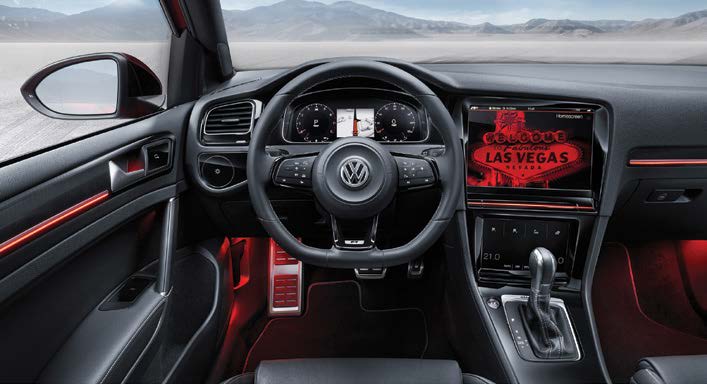
At Volkswagen, Dr. Volkmar Tanneberger, Head of Electrical and Electronic Development, said: “We have a goal to achieve a seamless integration and interface design, but we do not see immediate opportunities for an open platform.” However, VW’s MIB (modular infotainment platform) does facilitate updating of infotainment systems, independent of the vehicle’s technology. VW plans to integrate smartphone devices into the MIB with App-Connect, which includes Google Android Auto, Apple CarPlay, and MirrorLink.
Dr. Heinz-Jakob Neusser, VW’s Board Member for Development, sees digitalization as the greatest challenge for the company because infotainment, assistance systems, and networking are at least as important to many customers as the engine performance: “The Golf R Touch concept car has everything on board that characterizes the cockpit of the future: full connectivity thanks to the integration of apps, smartphones, tablets, and smart watches. Over and above this, we are also pushing the envelope when it comes to automatic or piloted driving and are working on new business models and a range of digital services relating to our cars.
“So I am sure that the car of the future will continue to fascinate people just as much as it ever has.”
More From SAE Media Group
Autonomous Vehicle Engineering
Software Rewrites the Rules
Autonomous Vehicle Engineering
Lockered and Loaded
Automotive Engineering
Accelerating Down the Road to Autonomy

Autonomous Vehicle Engineering
Rewriting the Code
Autonomous Vehicle Engineering
The Building Blocks of Autonomous Tech

Off-Highway Engineering
The Role of a Cloud-based Server in Service Workshops
Automotive Engineering
CES 2026: Qualcomm Expands Partnerships For More Snapdragons
Automotive Engineering
Engineering at the Crossroads
Tech Briefs
Disrupting the Automobile Design Process


Photonics & Imaging Technology
Challenges for Lidar Software
Automotive Engineering
Ford Refines Interior, Exterior on 2025 Explorer
Off-Highway Engineering
Connections Dig Deeper
Sensor Technology
What Will 5G Do for the IoT/IIoT?

Automotive Engineering
Manufacturers Must Take the Wheel to Scale SDV Success
Off-Highway Engineering
Not Quite Your Father’s Cab
Automotive Engineering
GM Announces SAE Level 3 Autonomy and SDV Technology
Motion Design
Algorithm Helps Swarming Robots Avoid Collisions
Automotive Engineering
Company Says Tiny Motions Can Predict Big Problem: Impaired Driving
Automotive Engineering
Jaguar Turns Marketing Speak into Engineering Reality for XE
Tech Briefs
Vehicle Design with System-Level Modeling
ADAS & Autonomous Vehicle Engineering
The Chaos of Automotive Data Privacy
Automotive Engineering
Defining the Software of ‘Software-Defined’ Vehicles
Off-Highway Engineering
Over-The-Air Affair
Automotive Engineering
2026 Nissan Leaf First Drive: Fun and More Efficient
Automotive Engineering
IAA 2025: Qualcomm’s Superbrains Are Here to Help With Automated Driving
Top Stories
INSIDERManufacturing & Prototyping
 How Airbus is Using w-DED to 3D Print Larger Titanium Airplane Parts
INSIDERManned Systems
 FAA to Replace Aging Network of Ground-Based Radars
NewsTransportation
 CES 2026: Bosch is Ready to Bring AI to Your (Likely ICE-powered) Vehicle
NewsSoftware
 Accelerating Down the Road to Autonomy
EditorialDesign
 DarkSky One Wants to Make the World a Darker Place
INSIDERMaterials
 Can This Self-Healing Composite Make Airplane and Spacecraft Components Last...
Webcasts
Defense
 How Sift's Unified Observability Platform Accelerates Drone Innovation
Automotive
 E/E Architecture Redefined: Building Smarter, Safer, and Scalable...
Power
 Hydrogen Engines Are Heating Up for Heavy Duty
Electronics & Computers
 Advantages of Smart Power Distribution Unit Design for Automotive...
Unmanned Systems
 Quiet, Please: NVH Improvement Opportunities in the Early Design...
