




Consumer Electronics Come on Board
Smartphones and tablets are likely to play a large role in HMIs for heavy vehicles — if productivity and safety are not compromised.
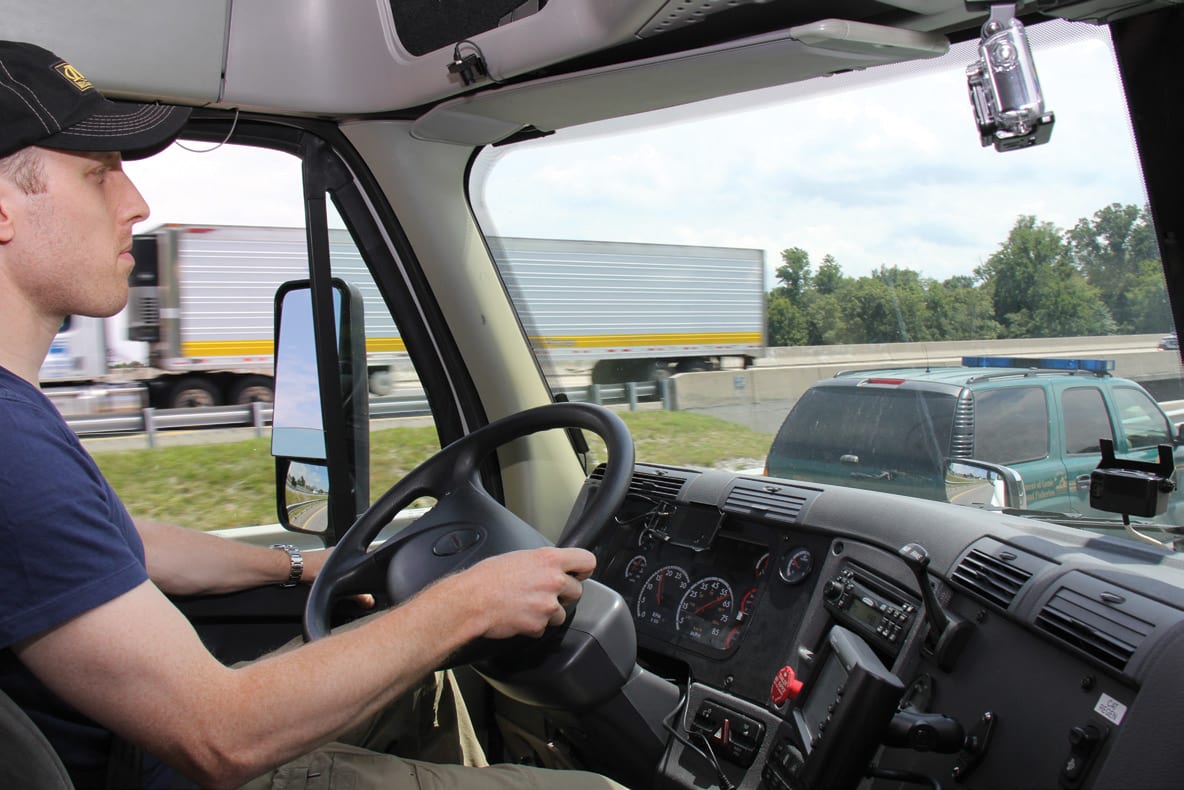
The tablets and smartphones that transformed consumer electronics are now poised to enter heavy-duty vehicle markets. They’re already becoming part of the maintenance and diagnostic world, while some developers are exploring ways to integrate them into human-machine interfaces (HMIs) for non-safety activities.
It’s almost a given that HMIs for off-highway vehicles and trucks will move closer to the management techniques used in tablets and smartphones. The question will be how to get the most from these systems without reducing productivity and safety. Developers are creating strategies and products that borrow from these devices and include them.
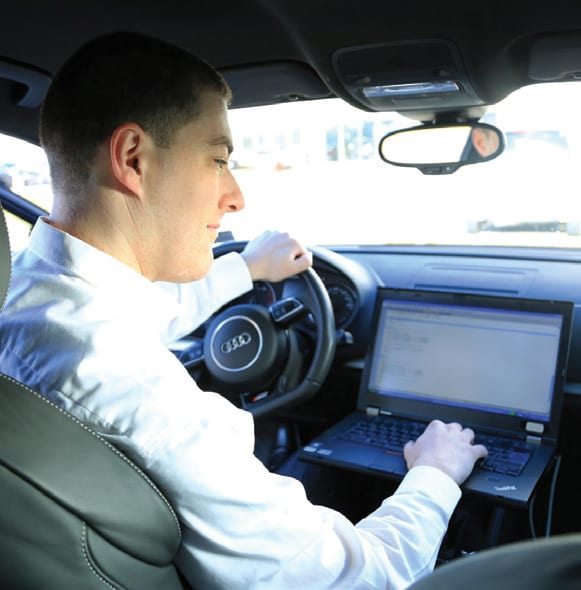
“The smartphone experience, including the adoption of touchscreens and like technologies, is affecting the in-vehicle experience,” said Christian Reinhard, head of HMI at Elektrobit, a Continental subsidiary that supplies HMI development software. “Smartphones and tablets are now being used for service/maintenance/system diagnosis. Phone and media integration is also gaining importance.”
Common interface for diverse fleets

The ubiquitous portable devices are already being used to help diagnose problems. In-cab displays provide a wealth of diagnostic information, but issues typically occur outside the cab. Many suppliers are adding Bluetooth or Wi-Fi capabilities to their systems so they can use tablets and phones wherever the problem is located. For example, Parker Hannifin uses a Bluetooth modem to communicate with apps that let technicians at the site contact maintenance facilities if they can’t resolve an issue.
“It is essential that a service technician be able to walk up to a machine and easily be able to hook into a diagnostic system and either diagnose issues on the spot, or have the ability to connect remotely to engineers at the OEM to resolve more complex issues,” said Kirk Lola, business development manager at Parker Hannifin’s Electronic Controls Division.
These handheld devices can provide a common interface for companies that have diverse vehicles in their fleets. Most drivers carry phones, so it’s sometimes easier to use phones for vehicle tracking and tasks that can be handled during stops than it is to install systems on a range of vehicles.
“Tablets are increasingly used as platforms and on-board user interfaces for less vehicle-dependent services such as fleet management, which usually have to be implemented in fleets with different makes and models,” said Johan Engstrom, group leader at the Virginia Tech Transportation Institute (VTTI). “Smaller devices such as phones and smart watches are used as a user interface while not driving, e.g., for fleet managers and drivers. This trend exists for both vehicle OEMs and third-parties.”

These displays can link on-vehicle screens and handheld displays using a number of mirroring and pairing programs that have been developed for cars. Apple CarPlay, Android Auto, MirrorLink and SmartDevice Link let users see the same imagery on portables and vehicle displays. Many OEMs have opted to offer multiple options instead of limiting customers. Though there are many options, fleet managers can leverage the versatility of phones and tablets to create a singular look and feel for equipment made by various manufacturers.
“Mirroring enables there to be one single interface — the user’s phone or tablet interface — instead of multiple conflicting versions,” said Eric Grange, C&K’s automotive industry market manager. “This is a great benefit, but the challenge is maintaining compatibility for years with the ever-changing technology standards in our devices — and in the way consumers regularly replace them every year or so.”
Pairing a safer option?
While several benefits can be gained by coupling vehicle displays and handhelds, there are also challenges. Perhaps the greatest comes in safety. Vehicle HMIs are designed to let operators observe information on displays without diverting their attention from the tasks of vehicle control. That’s not a consideration for most app developers.
“Currently, our customers are skeptical about mirroring because safety-relevant data is shown and should not be influenced by mirroring smartphone/ tablet HMIs,” Reinhard said.
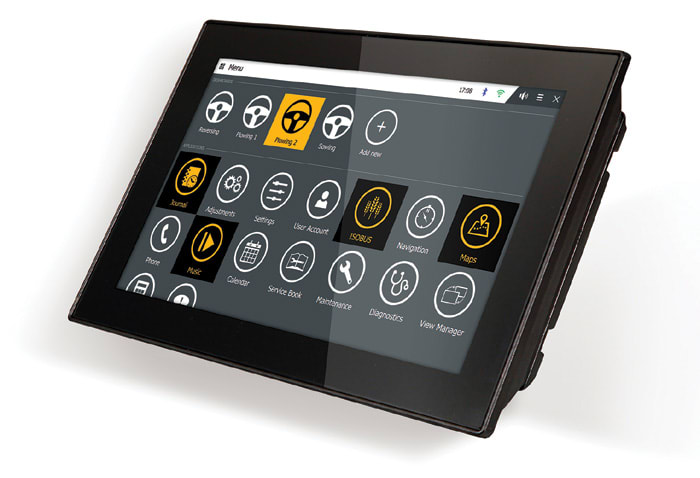
The National Highway Traffic Safety Administration (NHTSA) is attempting to help HMI developers resolve this problem. In November 2016, NHTSA proposed guidelines for developing a driver mode that’s simplified so it’s safer to display on vehicle screens. The program aims to reduce distraction without sacrificing the capabilities of phones and tablets.
“It may be more appropriate to talk about pairing, as the information displayed in the vehicle HMI usually does not exactly mirror that of the portable device,” Engstrom said. “The HMIs of the portable device and its applications are typically not designed for use while driving. Thus, a key benefit of pairing is improved usability while driving and reduced distraction potential. NHTSA recently released their Phase II Driver Distraction Guidelines for portable and after-market devices, where their key focus is on promoting pairing.”
Regardless of how these voluntary NHTSA guidelines impact HMIs, there are a number of mandatory requirements that will influence design programs. In commercial trucks, driver monitoring is a key regulation, while insurance requirements for monitoring impact some off-highway fleets. That’s forcing OEMs to devise strategies that give fleet owners the ability to implement programs that give them the best features of installed HMIs and handheld devices.
“Regulations on electronic logging devices and non-handheld device (Bluetooth) usage, which is much more strict for professional drivers than light-vehicle drivers as well as insurance incentives for in-vehicle monitoring systems, lead OEMs to want to provide very specific HMI tools for their customers/drivers,” said Andrew Krum, senior research associate at VTTI. “However, fleets and owner-operators also want the freedom to implement their own in-vehicle technology that is modular and aftermarket. Therefore, OEMs are focusing their interface development towards tools that support vehicle-centric functions like diagnostics and fuel efficiency. These are functions they know their customers need and functions no one knows better than themselves.”
More From SAE Media Group
Automotive Engineering
Lexus Goes All-Touch for New Infotainment System
Tech Briefs
Essential Control and Visualization, Combined
Automotive Engineering
Google, Apple Join Battle for Infotainment Management
Automotive Engineering
Hard to Answer
Tech Briefs
New on the Market
Automotive Engineering
CES Rollouts Extend Connectivity, App Integration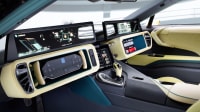
Tech Briefs
Hyper-Distributed RFID Antenna (HYDRA) System
Electronics & Sensors INSIDER
Opening Up the Potential of Thin-Film Electronics for Flexible Chip Design


NASA Spinoff
Flipping NASA Tech and Sticking the Landing
Battery Technology
Cloud-Connected, Battery-Based IoT Devices Last Years Longer
Aerospace & Defense Tech Briefs
New Products
Tech Briefs
Readers Select 2023 Products of the Year
Automotive Engineering
Two-Wheeled Tech: The Latest in Motorcycle Applications
Photonics & Imaging Technology
What's Ahead for Machine Vision Cameras?
Automotive Engineering
Infotainment at CES Shows Rapid Evolution
Tech Briefs
Product of the Month
Battery & Electrification Technology
Advanced Electrical Architectures Demand New Developmental Strategies
Off-Highway Engineering
Touch Takes Hold, Switches Lend a Hand

Sensor Technology
Energy Harvesting for Smart Home Sensing
Off-Highway Engineering
Next-Gen HMI Crucial to Increasing ADAS Efficacy
Off-Highway Engineering
CES 2021: Deere Highlights Digital Technology Via Virtual Reality
Automotive Engineering
Ford's Sync 3 Is on the Way

Automotive Engineering
Expanding ADAS Roles for Radar and Cameras

Tech Briefs
Magazine Archives
Top Stories
INSIDERManufacturing & Prototyping
 How Airbus is Using w-DED to 3D Print Larger Titanium Airplane Parts
INSIDERManned Systems
 FAA to Replace Aging Network of Ground-Based Radars
NewsTransportation
 CES 2026: Bosch is Ready to Bring AI to Your (Likely ICE-powered) Vehicle
NewsSoftware
 Accelerating Down the Road to Autonomy
EditorialDesign
 DarkSky One Wants to Make the World a Darker Place
INSIDERMaterials
 Can This Self-Healing Composite Make Airplane and Spacecraft Components Last...
Webcasts
Defense
 How Sift's Unified Observability Platform Accelerates Drone Innovation
Automotive
 E/E Architecture Redefined: Building Smarter, Safer, and Scalable...
Power
 Hydrogen Engines Are Heating Up for Heavy Duty
Electronics & Computers
 Advantages of Smart Power Distribution Unit Design for Automotive...
Unmanned Systems
 Quiet, Please: NVH Improvement Opportunities in the Early Design...
