




CES 2021: Deere Highlights Digital Technology Via Virtual Reality
Deere’s tractor, high-precision planter operate at 10 mph, double the rate possible with earlier generations.
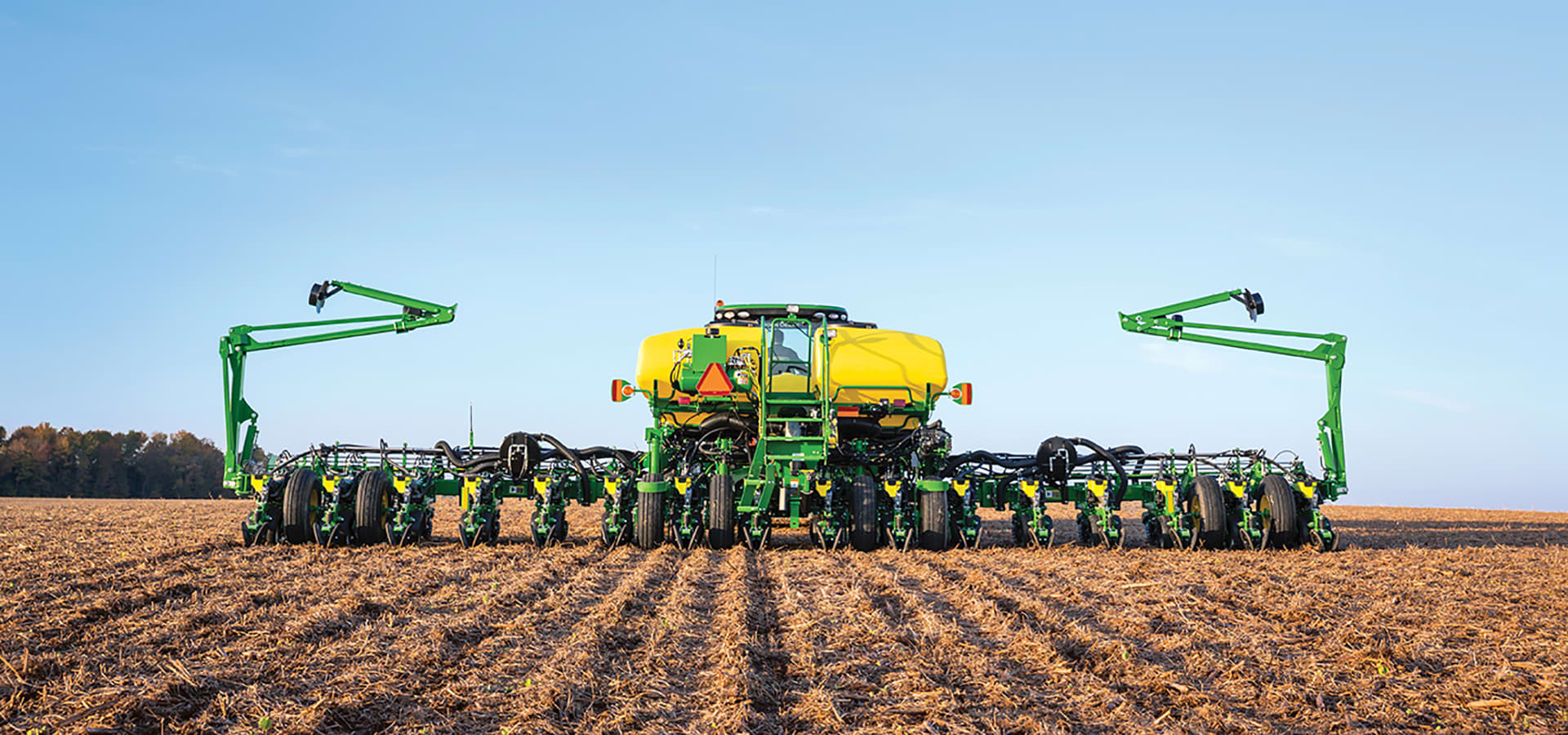
Digital technology is rapidly transforming off-highway equipment, giving users more functionality and higher precision than is possible with human operators. John Deere highlighted its advanced electronic skills during the virtual CES 2021 conference in January by giving remote booth attendees virtual reality (VR) headsets that demonstrated its technical prowess.

Deere highlighted its ExactEmerge planter technology and its 8RX track-type tractor during the virtual trade show. The two can be paired to boost yields, letting operators plant seeds with high precision even while running at 10 mph (16 km/h), double the rate possible with earlier generations.
Using VR headsets mailed to selected users, Deere provided a virtual look at the ways technology is transforming agricultural equipment. In a memorable segment, Deere placed spectators in a trench so they could see the significant differences between tractors driving 5 mph and 10 mph. That segment of the demonstration, which was somewhat reminiscent of the movie scene where a boulder rolls towards Indiana Jones, also showed viewers the precision of the planting depth of seeds.
ExactEmerge uses more than 300 sensors and 140 processors to increase planting speed so farmers can more closely hit the optimal time for planting. Some estimates say that every day missed from the 10 or so prime planting days reduces yield by 1%. The planter also uses precise depth and spacing requirements to maximize crop yields.
“The row unit in combination with the tractor is like a robot; there are 16 robots (the ExactEmerge planting arms) working together,” said Nancy Post, director of embedded software and solutions at John Deere’s Intelligent Solutions Group. “They have electrified motors that plant corn at 700 kernels per second or 2,800 soybeans per second. Within milliseconds, each row unit has to open up and place the seed and nutrient, then cover it up.”
GPS augmentation
While electronics on the planter manage this accuracy, driving systems on the tractor utilize GPS signals to provide precision well beyond commercial accuracy, handling speed and steering so operators can focus on other tasks. Automated driving has been upgraded to make turns at the end of rows, even lifting equipment like planters to conserve materials and lessen drag. Deere’s Starfire GPS augmentation system lets the tractor drive precisely so all tasks performed during the growing season are managed efficiently.

“We have our own satellite correction system that makes sure GPS systems are very precise,” said Deanna Kovar, vice president of Precision Ag at Deere. “Our augmented GPS technologies get to within 2.5 centimeters, compared to cell phones which are around 5 meters. Operators can get within 2.5 cm and come back months later and get to exactly the same spot when they’re applying fertilizer or weed control.”
Post noted that communications is a critical aspect of system technology. The tractor and planter communicate using CAN buses and wireless, and the tractor transmits a wealth of data to remote sites – either the cloud or the farmer’s system. Deere tractors now use 4G modems. Forthcoming 5G systems will give farmers far more capability to gather and analyze data to further improve efficiency.
“The bandwidth capability of 5G lets us explore computing at the edge,” said Jahmy Hindman, Deere & Co.’s chief technology officer. “Now, most of our computations are done on the machine. Increased bandwidth lets us compute off-board at the edge. That opens up a world of computing possibilities.”
He noted that artificial intelligence (AI) is a closely related tool. AI lets Deere work with operators to analyze huge volumes of data to gain more insight on vehicle performance and yield enhancement. Increased computing power makes it easier to take advantage of rapidly advancing AI algorithms, he added.
More From SAE Media Group
Autonomous Vehicle Engineering
Deere Touts Software, AI Tech at CES
Off-Highway Engineering
COMVEC 2022: Hiring Talent to Meet High-Tech Demands
Off-Highway Engineering
Deere Advances In-Field Autonomy
Autonomous Vehicle Engineering
5G Cellular-Enabled Test Infrastructure for Autonomous Vehicles Launched at U.K.’s Millbrook
Automotive Engineering
CES 2020: Cartica AI’s Simpler Solution for Autonomous Vision
Autonomous Vehicle Engineering
Sony Jumps into AV Sensors, Software
Automotive Engineering
Software Transforming Vehicle Development
Automotive Engineering
Nvidia Partners with AdaCore to Secure Self-Driving Firmware

Autonomous Vehicle Engineering
Data Drives Driverless Truck Launch
Off-Highway Engineering
Digitalizing Off-Highway Machines Delivers Actionable Data
Off-Highway Engineering
CES 2025: Deere Advances Off-Highway Autonomy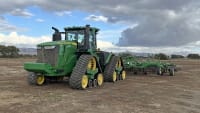
Off-Highway Engineering
Precision Ag Aids Sustainability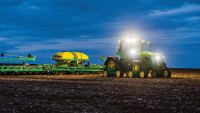
Automotive Engineering
When Will AVs Become Reality? Answer: When Safety Science Catches Up.
Aerospace & Defense Tech Briefs
Industry Invited to Participate in AeroTech Aerospace and Defense Technical Program
Off-Highway Engineering
Scalable Hardware-Software Interface Answers Overlooked AV Testing Need
Sensor Technology
Edge Processing with Embedded Artificial Intelligence
Automotive Engineering
Volvo EX90 Uses AI, NVIDIA SoC to Make Automated Driving Safer
ADAS & Autonomous Vehicle Engineering
Lidar Vs. Everybody in the Onboard Sensor Race
Automotive Engineering
Processing Capability TOPs-Out to Expand Vehicle Automation
Sensor Technology
What Will 5G Do for the IoT/IIoT?
Off-Highway Engineering
Big Data and Next-Gen Prognostics for Heavy-Duty Vehicles
Autonomous Vehicle Engineering
Continental's Lidar in a Flash
Automotive Engineering
Full Speed Ahead for Second-Generation Indy Autonomous Racers
Autonomous Vehicle Engineering
Smart Tech Revolutionizing the Traffic Light
ADAS & Autonomous Vehicle Engineering
Mercedes-Benz Architecting Its Own Operating System
Off-Highway Engineering
Precision Tech the ‘Backbone’ to CNH’s Digital Strategy
Off-Highway Engineering
Deere’s Ingredients for Innovation
Off-Highway Engineering
Over-The-Air Affair
Off-Highway Engineering
Increasing Connectivity in Construction
Top Stories
NewsRF & Microwave Electronics
 Microvision Aquires Luminar, Plans Relationship Restoration, Multi-industry Push
INSIDERAerospace
 A Next Generation Helmet System for Navy Pilots
INSIDERDesign
 New Raytheon and Lockheed Martin Agreements Expand Missile Defense Production
INSIDERMaterials
 How Airbus is Using w-DED to 3D Print Larger Titanium Airplane Parts
NewsPower
 Ford Announces 48-Volt Architecture for Future Electric Truck
ArticlesAR/AI

Webcasts
Electronics & Computers
 Cooling a New Generation of Aerospace and Defense Embedded...
Automotive
 Battery Abuse Testing: Pushing to Failure
Power
 A FREE Two-Day Event Dedicated to Connected Mobility
Unmanned Systems
 Quiet, Please: NVH Improvement Opportunities in the Early Design Cycle
Automotive
 Advantages of Smart Power Distribution Unit Design for Automotive &...
Energy
 Sesame Solar's Nanogrid Tech Promises Major Gains in Drone Endurance