




Automated Data Translation in THE HOT SEAT
Seating giant Adient has built a modular and integrated process approach to validate modeling data across its global enterprise.

Seating development and manufacturing are full of variables that need to be streamlined and made manageable to accommodate a complex array of customers, partners, product variants and end missions. Design, test, production and review must all be on the same page, experts say.
And like a thread loose in stitching or a small vibration traveling through a ventilation system, data itself has anomalies and “flavors” that can make the mathematics behind product definition uneven or dissonant.

Data accuracy and reliability are underlying requirements for the just-in-time rigor that is integral to global automotive seat supply. Out-of-sync data handicaps quality, speed, and cost goals related to automation, experts assert. What happens at the front-end in design will affect lean efforts at administration and manufacturing, they note.
Reconciling the geometric differences, manufacturing instructions and bills-of-material (BOM) associated with many different OEM customers — and in the case of Tier-1 seating giant Adient, collaborating among 12 core development centers connected to more than 230 plants across 32 countries — demands a robust process based on accurate and reliable data. Adient calls this Integrated Model Creation.
Tackling customer complexity
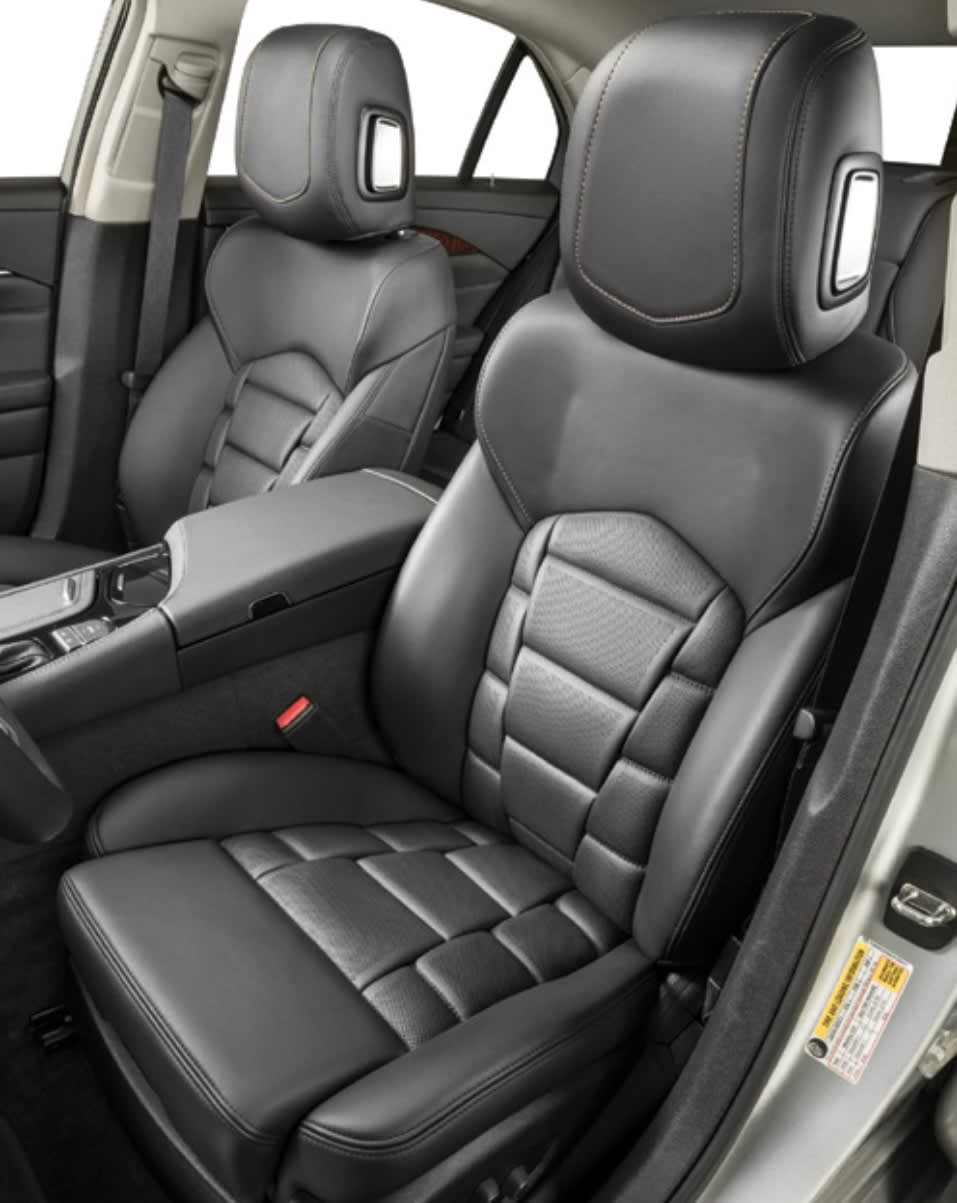
Those challenges are multiplied by the different CAD systems, and versions within them, employed throughout the customer base, explained Ram Pentakota, Adient’s Global Director of IP, Technical Services and Operations. The OEMs also have “their own type of certifications, specifications, and how they want to fit this or that annotation on what data layer,” he noted.
Some of Adient’s customers want drawings while some want 3D, he said. Some require fully parametric models; some want just the envelope geometry. And some customers have specific quality-checking tools. Besides the variations across OEMs that can impact production and product development, generally there are no uniform standards across the seating supply chains either, “because OEMs follow their own standards, which suppliers must then adapt,” Pentakota said.
“We try to standardize on a single CAD platform in-house, specialize in two more, and then faithfully recognize the original data from another 25-30 different CAD and analysis environments that send information to us,” he said.
In 2013 Adient engaged Elysium, specialists in ensuring data quality of 3D CAD/CAM and CAE models, to provide the software tools needed to translate and package all the data for their different OEMs and suppliers. “The validated modeling data that Elysium facilitates is a key part of our integrated process approach to Model-Based Definition (MBD) and a Model-Based Enterprise (MBE),” noted Pentakota.

Adient approaches complexity through its own standardization, modularization and simplification of products and processes. One form of standardization is the use of Elysium software for implementing modeling best practices and checking those models to ensure that the outputs meet the exact deliverables asked for by customers. So, if the deliverable is in NX with a specific set of manufacturing annotations, then that can be written into the program configuration and translation and be automatically validated.
Around 2015, Pentakota and his team had in place the foundation of what they felt was needed for geometric healing and repair, FEA analysis, manufacturability, modeling-and-process best practices, reporting, translation, validation, migration and storage. A suite of software tools provided this in a package that included CADdoctor, CADfeature and ASFALIS, among other elements such as CADValidator and V5-JT DirectTranslator.
With centralization in mind but ease-of-use for its global locations, Adient used its existing web portal to distribute the Elysium validation and full product quality system to its stakeholders worldwide.
“We already had our internal web portals,” said Pentakota. “So from the web portals we integrated Elysium’s tools and deployed globally distributed translators. If a translation is only done centrally, then the challenge is in shipping large files around. The customer may be in Europe and the source data in the U.S.”
Adient distributes the whole translation service across its major tech centers and uses their front end to figure out where the source data’s coming from in order to pick up the translation at that location. The files are then stored in a predetermined folder by seating program.
That program can automatically go in and check the validated data before it ships out. Based on the OEM or the supplier, the recipient, the translation and settings will be triggered.
“But all the definitions are controlled centrally,” Pentakota explained. “This is a very fast method.”
Accuracy via APIs
In the field of data translation and validation, accuracy is speed. Accuracy prevents rework in the models that pass between geometry creation and analysis. It prevents wasteful reconciliation of the digital design to the “as manufactured” model. It allows for team collaboration around innovation in each phase, he noted, rather than unnecessary forensic debates about the model itself.
Fundamental to accuracy in a world that is moving toward MBD and MBE is the use of original vendor Application Programming Interfaces. APIs ensure that geometry and product intelligence in translations are not simply interpretations or flavors of the source data. Industry is insisting more on use of APIs and CAD/PLM vendors are encouraging the API effort as part of their open-platform strategy and focus on customer-success.
“Side-by-side with STEP [Standard for Product Model Data; ISO 10303], we have had much better success with Elysium tools for high-quality data translations — and the actual translation itself is fast,” claimed Pentakota. “Because of the APIs, people who submit the jobs can also look at the source and the destination formats and do a comparison based upon the Elysium reports. This creates a lot of confidence for our OEMs and supply partners.”
Adient produces whole seating systems from fabrics to frames and tracks. Automotive OEMs often choose to divide components between one or more seating suppliers (and in some cases, produce them in house) to diversify their supply base. To lower costs and promote part interchangeability, Adient practices a high degree of standardization and modularity, which also fits into OEMs’ global vehicle platform strategies.
For example, Automaker A may specify a system used by Automaker B. There may also be several suppliers of seating fabrics and foams that need to integrate their products with Adientmade structures. Here, the complexity — minimized for the seating products thanks to standardization — traditionally surfaces in the exchange of data. Issues of Geometric Dimensions & Tolerances (GD&T) and assembly fit come into play.
European Company A, for instance, has source data and requires deliverables in [Siemens] NX, while its neighboring Company B in [Dassault Systemes’] CATIA and the Asian assembly plants for each OEM work in three different versions of CATIA.
Producing an API-based Master Model via Elysium in both NX and CATIA allows the original geometry and manufacturing instructions to be preserved as intended. It also enables the Asian versions of CATIA to be validated to their NX and CATIA masters, Pentakota explained.
This has the practical effect of standardizing resources in hardware, software, skilled designers, best practices, and methodology, primarily in a single system, while still achieving deliverables in multiple other systems and flavors.
Annalise Suzuki is Director of Technology and Engagement at Elysium, Inc.
More From SAE Media Group
Tech Briefs
Disrupting the Automobile Design Process
Tech Briefs
Rising Star Awards 2025 Judges
Off-Highway Engineering
Monarch Unveils AI-Powered Autonomous Platform
Autonomous Vehicle Engineering
Wired for Autonomy




Off-Highway Engineering
Intelligent Machine Control the Focus for Doosan, Komatsu Equipment


Automotive Engineering
Volvo’s Rapid Strategy Aims at 20-Month Vehicle Development

Automotive Engineering
Manufacturers Must Take the Wheel to Scale SDV Success

Tech Briefs
Executive Forum: Sensors & the IoT
Automotive Engineering
Electronic Stability Control Builds the Foundation for Safer Roads
Off-Highway Engineering
Off-highway Innovators to Demo Digital Prowess at CES 2026
Automotive Engineering
Rewriting the Engineer’s Playbook: What OEMs Must Do to Spin the AI Flywheel
Aerospace & Defense Tech Briefs
Quality and Validation of Digital Designs for Aerospace and Defense
Automotive Engineering
OEM Growth in China
Autonomous Vehicle Engineering
Lockered and Loaded
Motion Design
High-Throughput Battery Cell Production
Automotive Engineering
Ford Demos Latest Digital Tools at Flagship Transmission Plant



Automotive Engineering
Taiwan Suppliers Look Around the World for Solutions
Automotive Engineering
Wrecking Ball

Top Stories
INSIDERManufacturing & Prototyping
 How Airbus is Using w-DED to 3D Print Larger Titanium Airplane Parts
INSIDERManned Systems
 FAA to Replace Aging Network of Ground-Based Radars
NewsTransportation
 CES 2026: Bosch is Ready to Bring AI to Your (Likely ICE-powered) Vehicle
NewsSoftware
 Accelerating Down the Road to Autonomy
EditorialDesign
 DarkSky One Wants to Make the World a Darker Place
INSIDERMaterials
 Can This Self-Healing Composite Make Airplane and Spacecraft Components Last...
Webcasts
Defense
 How Sift's Unified Observability Platform Accelerates Drone Innovation
Automotive
 E/E Architecture Redefined: Building Smarter, Safer, and Scalable...
Power
 Hydrogen Engines Are Heating Up for Heavy Duty
Electronics & Computers
 Advantages of Smart Power Distribution Unit Design for Automotive...
Unmanned Systems
 Quiet, Please: NVH Improvement Opportunities in the Early Design...
