AV Regulations: Feds Ready to Get Their Claws Back?
The new AV 3.0 federal guidelines for autonomous-vehicle development drew criticism for having no legal teeth. But they may only be the beginning.
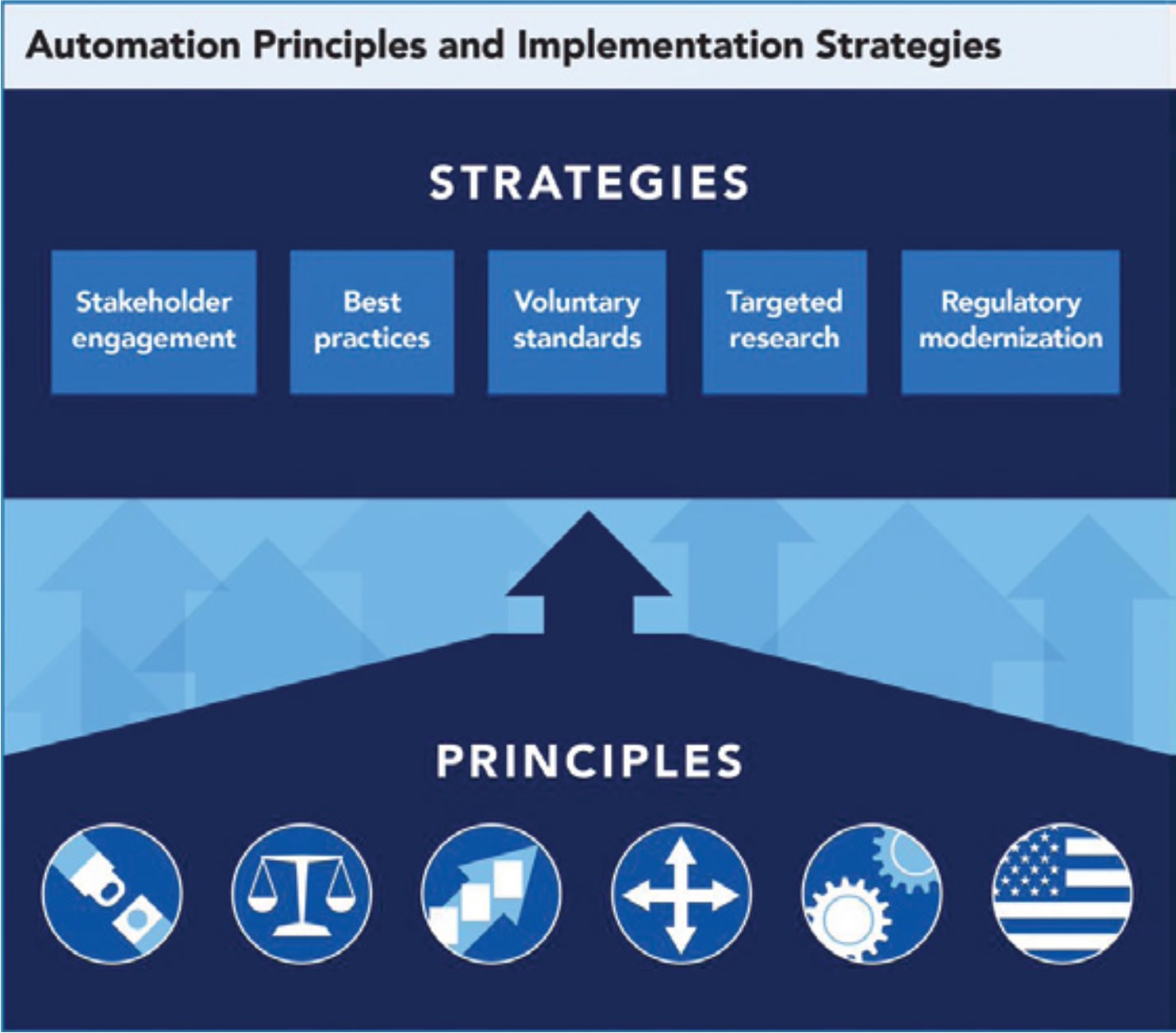
On October 4, 2018, the U.S. Department of Transportation released the long-awaited “Autonomous Vehicles 3.0: Preparing for the Future of Transportation” guidelines—otherwise known as AV 3.0.
These guidelines build upon the voluntary guidance issued in the DOT’s 2017 “Automated Driving Systems 2.0: A Vision for Safety” and incorporate comments from autonomy stakeholders that include auto manufacturers, suppliers, state and local governments and infrastructure owners and operators.
These federal guidelines create a conceptual challenge, as they remind states of the limits of their power while being — controversially — non-binding on automotive manufacturers and suppliers.
Potentially restrictive, yet simultaneously optional. How can the industry navigate this recent DOT release?
It’s not a rule; it’s a guideline
Unlike the Federal Motor Vehicle Safety Standards (FMVSS), the AV 3.0 guidelines are just that: guidelines. All of the AV-related guidelines issued by the National Highway Traffic Safety Administration to date are voluntary and serve to encourage state governments, local governments and private industry to adopt the principles to promote the development of autonomous technology. They do not hold the regulatory weight of actual rules or safety standards.
And there’s a reason for that. Consider a brief history of NHTSA’s enactment and enforcement authority:
The origins of NHTSA (part of the DOT), the FMVSS and the related automotive regulatory framework are found in the National Traffic and Motor Vehicle Safety Act of 1966. The goal of the Safety Act was to “reduce traffic accidents” through the regulation of safety elements. This rulemaking strategy, where NHTSA would create the framework for safer vehicles, was even hailed as one of the “greatest inventions of modern government.” This approach to auto-industry regulation would lead to three key objectives: (1) compel the industry to strive for innovation; (2) ensure that drivers and passengers would be reasonably safe in their vehicles and (3) elevate safety above cost.
Along with this rulemaking authority, NHTSA was granted the legal rights to oversee recalls.
The agency immediately went to work and issued many of the safety standards we have come to know today. Yet in the decade-plus from 1974 to 1986, there were no major FMVSS issued. After the initial push, companies pushed back, claiming that many of the agency’s rules were not reasonable, practical, objective, or safety-oriented.
Industry won the first battles. During the first 10 years of its existence, NHTSA lost six of its ten major rulemaking cases including cases addressing passive restraints and antilock brakes. At the same time, NHTSA received far more favorable outcomes from cases addressing its recall-enforcement mandate.
Following these significant rulemaking losses, NHTSA acted in only minor ways until compelled by Congress. In 1991, Congress passed ISTEA, a bill requiring rulemaking to address rollover prevention, side impact protection, booster-seat design improvements and related standards. In 2000, President Bill Clinton signed the Transportation Recall Enhancement, Accountability, and Documentation Act (TREAD) which focused predominantly on tire issues. Absent Congressional action, history suggests that NHTSA will tend to remain silent on FMVSS and related regulation. This was true of AV 1.0 and AV 2.0 and, to a degree, AV 3.0.
The only difference is that AV 3.0 suggests NHTSA has its eye on reentering the rulemaking arena after these many years.
Will NHTSA seek to remove an “unintended regulatory barrier?”
The new AV 3.0 guidelines recognize that the current FMVSS may be a barrier to innovation.
Autonomous vehicles designed for SAE Level 4 and 5 performance may not be equipped with steering wheels, control pedals, mirrors or other components that are currently required for on-road vehicles. The NHTSA will, in an upcoming rulemaking, seek comment on changes to relevant safety standards; judging by the agency’s response to Google’s November 12, 2015 letter requesting interpretation of the FMVSS as applied to a driverless vehicle operated by a “Self-Driving System,” it is likely a review of any number of existing FMVSS.
In addition to new rulemaking, NHTSA will make FMVSS more flexible, responsive, technology-neutral and performance-oriented. AV 3.0 suggests that new-age FMVSS may “incorporate simpler and more general requirements to validate” autonomous systems in a world where unpredictable obstacles, vehicles and pedestrians dot the landscape.
These recommendations foreshadow a departure from the recent historical silence that has fallen over NTHSA rulemaking.
How to prevent a patchwork of state safety standards?

The guidelines continue to address the preemptive force of the FMVSS. Federal preemption occurs when a federal law “trumps” or preempts a state law that is inconsistent with the federal law. In 2000, the United States Supreme Court analyzed the issue of preemption in a lawsuit that asserted that a 1987 Honda had a design defect because it did not have airbags at a time when the FMVSS allowed manufacturers to choose one of three options (including airbags) to address passive restraints. Through this case and several that followed, courts determined that state, local and tribal governments cannot enforce laws on the safety performance of a vehicle in ways that differ from federal standards.
In all of the guidance issued on autonomous vehicles, NHTSA has been clear that it holds responsibility for establishing safety and performance-related standards, while the states retain four key areas: insurance, licensure, traffic safety laws, and liability (including product liability).
What will the future hold?
The only certainty given in AV 3.0 is that the regime for autonomous-vehicle development and deployment is still in the voluntary-compliance phase. It is clear from the significant research placed in AV 3.0’s appendices that NHTSA will continue to rely heavily on the work performed by standards organizations such as SAE International while they hope to return to the rulemaking function that inspired their creation. Perhaps legislation will speed that effort, just as the TREAD Act did for tire-related defects.
But in the event the current divided Congress fails to act, it is plausible that NHTSA will once again test the rulemaking waters. The only question that will remain is whether the industry will support those efforts or, as it did from 1968-1974, challenge the authority and the scope of any newly drafted rules. Perhaps with the existing uncertainty and limits in exemptions, the choice may be different this time.
More From SAE Media Group
Automotive Engineering
NHTSA Moves on Driver-Impairment Regulation
Automotive Engineering
Department of Transportation Asks for Public Input Regarding Relaxing AV Regulations
Automotive Engineering
SAE WCX 2022: OEM Learnings from Level 2 ADAS
Automotive Engineering
SAE Rolls out Introduction to Automated Vehicle Safety in Shanghai
Autonomous Vehicle Engineering
Purpose, Perceptions for Driver-Assist Tech Solidify
Automotive Engineering
Mobileye Ready to Meet FMVSS 127 with Vision-Only System
Off-Highway Engineering
ADAS Features Expand Role, V2V Looms
Automotive Engineering
Hands Off, Eyes Off, Brain Off
Automotive Engineering
Setting Hyundai’s Safety Strategy

Autonomous Vehicle Engineering
We Finally Have Some Data on ADAS!
Automotive Engineering
Automated Driving Meets Regulation NHTSA and the Next 50 Years
Automotive Engineering
Seeking a Common Language for Vehicle Automation
Autonomous Vehicle Engineering
AV and ADAS Testing from out of the Box
Tech Briefs
How Mercedes and NVIDIA Handle City Driving
Automotive Engineering
Regulatory Framework Emerging as Autonomy Becomes Reality
Automotive Engineering
AVSC Develops Best Practices for Traceable AV Safety Inspection Protocols
Automotive Engineering
Riding Along With Mercedes and Its in-city Driver Assistance System
Automotive Engineering
AV Testing is for DUMMIES
Automotive Engineering
Uber, Toyota Suspend AV Testing After Arizona Fatality
Automotive Engineering
Mercedes Reveals Its Experimental Safety Vehicle 2019 – Mobile Robot Included
Automotive Engineering
WCX 2025: Nira Dynamics’ Sensor-Free Tire Pressure Tech Eyes New Opportunities

Off-Highway Engineering
Fiat-Chrysler Will Deploy Aurora Self-Driving Technology on It Commercial Vehicles
Off-Highway Engineering
Bosch Quantifies Cost Savings for ADAS-Equipped Trucks
Autonomous Vehicle Engineering
Hopeful but Closer Scrutiny for SAE Level 4 Automation
Automotive Engineering
Nvidia’s New Level 2+ Autonomy Platform Is Making Cars Safer Today
Autonomous Vehicle Engineering
Reconstructing Accidents in the ADAS Age

Off-Highway Engineering
USPS Tests Autonomous Semi-Trailers for Long-Haul Mail Logistics
Top Stories
NewsRF & Microwave Electronics
 Microvision Aquires Luminar, Plans Relationship Restoration, Multi-industry Push
INSIDERAerospace
 A Next Generation Helmet System for Navy Pilots
INSIDERDesign
 New Raytheon and Lockheed Martin Agreements Expand Missile Defense Production
INSIDERMaterials
 How Airbus is Using w-DED to 3D Print Larger Titanium Airplane Parts
NewsPower
 Ford Announces 48-Volt Architecture for Future Electric Truck
ArticlesAR/AI

Webcasts
Electronics & Computers
 Cooling a New Generation of Aerospace and Defense Embedded...
Automotive
 Battery Abuse Testing: Pushing to Failure
Power
 A FREE Two-Day Event Dedicated to Connected Mobility
Unmanned Systems
 Quiet, Please: NVH Improvement Opportunities in the Early Design Cycle
Automotive
 Advantages of Smart Power Distribution Unit Design for Automotive &...
Energy
 Sesame Solar's Nanogrid Tech Promises Major Gains in Drone Endurance
Similar Stories
NewsTransportation
 Mobileye Ready to Meet FMVSS 127 with Vision-Only System
ArticlesRegulations/Standards
 Hands Off, Eyes Off, Brain Off
Technology ReportSensors/Data Acquisition
 WCX 2025: Nira Dynamics’ Sensor-Free Tire Pressure Tech Eyes New Opportunities
NewsGovernment
 NHTSA Moves on Driver-Impairment Regulation