




Mixing and Combustion in Turbulent, High-Speed Flows
A collection of reports presents a detailed description of a research program that focused on fundamental investigations of mixing and combustion in turbulent subsonic and supersonic flows like those encountered in high-speed air-breathing aircraft engines. The research included close coordination of effort between experiments and numerical simulations. Recent advances in instrumentation, including some made as part of this program, were utilized in the experiments. The research has been responsible for significant progress in the understanding of molecular mixing in high-speed flows in complicated geometries relevant to scramjet combustors and to high-speed aircraft engines in general. The research included a study oriented toward improving predictions of hydrocarbon flames in such flows and understanding the requirements for combustion of hydrocarbons and holding flames. The study involved comparisons of detailed experiments and detailed predictions of phenomena in stagnation-flame environments that replicate the fundamental effects that influence the stability and extinction of flames. An investigation of the three-dimensional structure of scalar dispersion, with a focus on grid turbulence, has been started and already has yielded new information with relevance to applications of turbulent mixing, including non-premixed combustion and dispersion of pollutants.
This work was done by Paul Dimotakis, Laurent Benezech, Jeffrey Bergthorson, Aristides Bonanos, Earl Dahl, Michael Johnson, Garrett Katzenstein, Daniel Lang, George Matheou, Christina Mojahedi, Carlos Pantano, Kazuo Sone, Bahram Valiferdowsi, D. G. Goodwin, S. Lombeyda, and D. I. Meiron of California Institute of Technology; and J. W. Shan of Rutgers University for the Air Force Research Laboratory.
AFRL-0045
This Brief includes a Technical Support Package (TSP).
Mixing and Combustion in Turbulent, High-Speed Flows
(reference AFRL-0045) is currently available for download from the TSP library.
Don't have an account?
More From SAE Media Group
Aerospace & Defense Tech Briefs
Performance and Operability of a Dual-Cavity Flame Holder in a Supersonic Combustor
Aerospace & Defense Tech Briefs
System for Imaging Turbulent Combustion Flows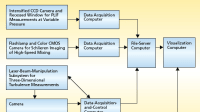

Tech Briefs
Simplified Modeling of Oxidation of Hydrocarbons

Aerospace & Defense Tech Briefs
Diode Laser Sensor for Scramjet Inlets
Tech Briefs
Device Eliminates Vortices and Vibration
Aerospace & Defense Tech Briefs
A New Look at Ignition: Refining Our Understanding of Combustion Dynamics in Gun Chambers
Motion Design INSIDER
Dragonfly Wings Used to Study Motion

Tech Briefs
Acoustical-Sensor Assemblies for Use in Flows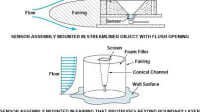
Tech Briefs
Fighting Fire with Electrically Assisted Wind

Tech Briefs
AI Helps UAVs Predict Oncoming Turbulence
Tech Briefs
A Robot with the ‘Brains’ to Morph Mid-Air
Motion Design INSIDER
Nimble Dimples: Agile Underwater Vehicles Inspired by Golf Balls

Aerospace & Defense Tech Briefs
Thermal Mechanical Fatigue Crack Growth Testing
Battery & Electrification Technology
Examining EV Battery Thermal Management
Aerospace & Defense Tech Briefs
Scaling of Flight Tests of Unmanned Air Vehicles


Tech Briefs
Ultrasonic Intake Airflow Meter for Testbeds
Aerospace & Defense Tech Briefs
Measuring Skin Friction in Complex Flows That Include Shocks


Overview
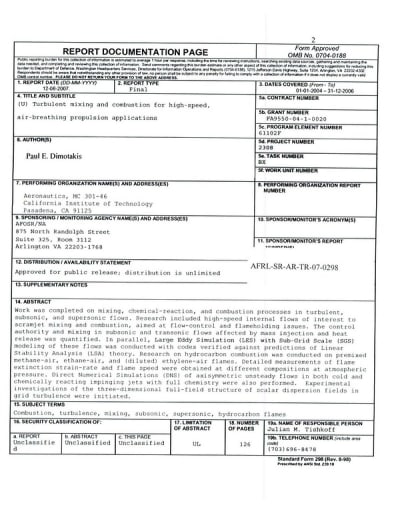
The document titled "Turbulent Mixing and Combustion for High-Speed, Air-Breathing Propulsion Applications" presents research focused on the complex processes of mixing, chemical reactions, and combustion in turbulent flows, particularly in the context of high-speed air-breathing propulsion systems such as scramjets. The report covers work conducted from January 1, 2004, to December 31, 2006, and was finalized on August 12, 2007.
The research addresses critical challenges in the field of propulsion, specifically the issues of flow control and flameholding in both subsonic and supersonic flows. These challenges are essential for the efficient operation of scramjets, which rely on rapid air intake and combustion to generate thrust at high speeds. The document highlights the importance of understanding turbulent mixing and combustion dynamics to improve the performance and reliability of these advanced propulsion systems.
The authors, P.E. Dimotakis and J.W. Shan, reference extensive literature on the subject, indicating a well-researched foundation for their findings. The report is supported by various organizations, including the California Institute of Technology and the Air Force Office of Scientific Research (AFOSR), which underscores its significance in the field of aeronautics.
The abstract of the report summarizes the key objectives and outcomes of the research, emphasizing the completion of work related to turbulent mixing and combustion processes. The findings are expected to contribute to advancements in flow control techniques and enhance the understanding of flameholding mechanisms, which are crucial for the development of efficient scramjet engines.
Overall, this document serves as a comprehensive resource for researchers and engineers in the field of propulsion, providing insights into the complexities of turbulent flows and their implications for high-speed air-breathing engines. The research findings aim to pave the way for future innovations in propulsion technology, ultimately enhancing the performance of air-breathing engines in various aerospace applications.
Top Stories
INSIDERDesign
 How Airbus is Using w-DED to 3D Print Larger Titanium Airplane Parts
NewsSensors/Data Acquisition
 Microvision Aquires Luminar, Plans Relationship Restoration, Multi-industry Push
INSIDERManned Systems
 A Next Generation Helmet System for Navy Pilots
NewsAR/AI
 Accelerating Down the Road to Autonomy
INSIDERDefense
 New Raytheon and Lockheed Martin Agreements Expand Missile Defense Production
ArticlesAR/AI
 CES 2026: Bosch is Ready to Bring AI to Your (Likely ICE-powered) Vehicle
Webcasts
Semiconductors & ICs
 Advantages of Smart Power Distribution Unit Design for Automotive...
Unmanned Systems
 Quiet, Please: NVH Improvement Opportunities in the Early Design...
Electronics & Computers
 Cooling a New Generation of Aerospace and Defense Embedded...
Automotive
 Battery Abuse Testing: Pushing to Failure
Transportation
 A FREE Two-Day Event Dedicated to Connected Mobility
