




Improved Dielectric-Breakdown Property of POSS-Filled Epoxy
Well-dispersed POSS nanoparticles increase dielectricbreakdown potential.
A n experimental study has shown that the AC short-term dielectric breakdown potential of material specimens consisting of polyhedral oligomeric silsesquioxane (POSS) nanoparticles dispersed within an epoxy matrix exceeds the AC short-term dielectric breakdown potential of equal-thickness specimens of the neat epoxy. This finding is consistent with results of prior studies in which it was found that inorganic nanoparticle fillings yielded improvements in electrical, mechanical, or thermal properties.
The epoxy matrix resin (Epon 828 resin) in this study was used with an aliphatic diamine curing agent (Jeffamine D400). Specimens consisting, variously, of the neat epoxy or the epoxy filled with 5 weight percent of nanoparticles of trisilanolphenyl- POSS were fabricated by use of a fixture designed specifically for this purpose. In order to make the dispersion of the nanoparticles in the epoxy as nearly uniform as possible, it was necessary to employ a combination of thermal and mechanical agitation techniques during the blending of the nanoparticles into the epoxy. All specimens were cured by heating for two hours at a temperature of 80 ºC, then three hours at 120 ºC. The specimens had an average thickness of 0.17 mm.
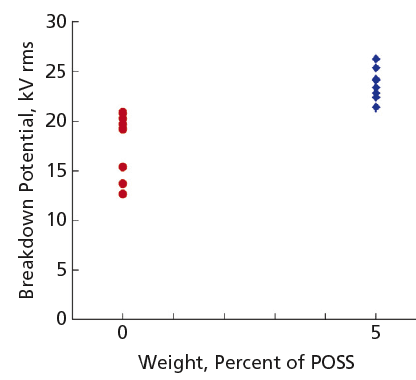
High-resolution scanning electron microscopy of fracture surfaces of randomly selected POSS-containing specimens showed that the POSS nanoparticles were well dispersed, down to a length scale between 10 and 100 nm, limited by agglomeration of the nanoparticles into clumps 10 to 20 nm wide. The high degree of uniformity of dispersion appeared to be critical to the increase in the dielectric-breakdown potential.
This work was done by John C. Horwath, Daniel L. Schweickart, and Guido Garcia of the Air Force Research Laboratory; Donald Klosterman, Mary Galaska, and Amanda Schrand of the University of Dayton Research Institute; and Lawrence C. Walko of Innovative Scientific Solutions, Inc.
This Brief includes a Technical Support Package (TSP).
Improved Dielectric-Breakdown Property of POSS-Filled Epoxy
(reference AFRL-0034) is currently available for download from the TSP library.
Don't have an account?
More From SAE Media Group
Tech Briefs
Evaluating Electrically Insulating Epoxies
Tech Briefs
Glue Activated by Magnetic Field
Aerospace & Defense Tech Briefs
Continuous Carbon Nanofibers for Structural Composites
Photonics & Imaging Technology
New Electron Microscopy Technique Offers First Look at Previously Hidden Processes
Medical Design Briefs
3D Printable Polymer Nanocomposite Ink
Aerospace & Defense Tech Briefs
Design of New Piezoelectric Composites Using Nanocellulose
Tech Briefs
Precision CNT Cutting Mechanism
Medical Design Briefs
Inkjet Printing Shows Promise for Making E-Textiles
Medical Design Briefs
Nontoxic, Flexible Energy Converters Could Power Wearable Devices
Tech Briefs
Conductive Carbon Fiber Polymer Composite

Battery & Electrification Technology
Emerging Plasma FIB-SEM Techniques Advancing Battery Innovation
Photonics & Imaging Technology
Manufacturing Wafer-Level Optics Using UV Adhesives and Polymers
Aerospace & Defense Tech Briefs
Abrasion Testing of Products Containing Nanomaterials
Tech Briefs
A Novel Way to Convert Heat to Electricity
Tech Briefs
Synthesizing Complex Optical Materials
Photonics & Imaging Technology
Deformation Fingerprints Will Help Researchers Identify, Design Better Metallic Materials


Aerospace & Defense Tech Briefs
Solving Signal Interference Challenges in Aerospace and Defense Electronics
Aerospace & Defense Tech Briefs
Aligned MWCNTs as Thermal Conductors in Adhesive Joints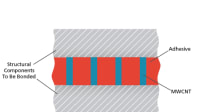
Tech Briefs
Scaling Up Nano for Sustainable Manufacturing
Tech Briefs
Advanced Carbon Aerogels for Energy Applications
Aerospace & Defense Tech Briefs
Cluster-Assembled Soft Magnets for Power Electronics Applications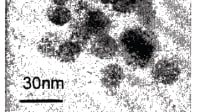
Tech Briefs
Multifunctional, High-Temperature Nanocomposites
Medical Design Briefs
Sticking Sensors to Skin Without Adhesives
Overview
The document titled "Improved Electrical Properties of Epoxy Resin with Nanometer-Sized Inorganic Fillers" presents research conducted by a team from the Air Force Research Laboratory and the University of Dayton Research Institute. The study focuses on enhancing the electrical properties of epoxy resins by incorporating nanometer-sized inorganic fillers, specifically polyhedral oligomeric silsesquioxane (POSS).
Epoxy resins are widely used in high-voltage applications, such as potting materials in power supplies and insulation systems for mobile communications and aerospace vehicles. The research highlights that while these fillers are commonly known for improving mechanical and thermal properties, they can also significantly enhance electrical properties, including dielectric breakdown voltage and corona endurance.
The study investigates the effects of a 5% by weight POSS loading in epoxy resin, specifically using EPON 828 as the base resin and an aliphatic diamine (Jeffamine D400) as the curing agent. The samples were cured under controlled conditions to ensure uniformity and consistency. The research employed various testing methods, including short-term dielectric withstand tests, to evaluate the performance of the POSS-loaded epoxy compared to a control epoxy without fillers.
Key findings indicate that the incorporation of POSS resulted in a 34% increase in the average dielectric breakdown voltage compared to the unfilled epoxy. Scanning electron microscopy revealed a uniform dispersion of the POSS filler at the nanoscale, which is critical for achieving the desired enhancements in electrical properties. Additionally, surface analysis through infrared spectroscopy confirmed the formation of a silicon-rich layer on the surface of the POSS-epoxy samples after corona exposure, suggesting a mechanism for improved performance.
The document emphasizes the importance of filler dispersion uniformity in achieving property enhancements and discusses the implications of these findings for the design of robust insulation systems in high-voltage applications. The research contributes valuable insights into the development of advanced epoxy materials that can withstand harsh electrical environments, thereby enhancing the reliability and performance of electronic devices and systems.
In conclusion, this study provides a significant advancement in the understanding of how nanometer-sized inorganic fillers can improve the electrical properties of epoxy resins, paving the way for future innovations in material science and engineering applications.
Top Stories
INSIDERDefense
 New Raytheon and Lockheed Martin Agreements Expand Missile Defense Production
NewsAutomotive
 Ford Announces 48-Volt Architecture for Future Electric Truck
INSIDERManufacturing & Prototyping
 Active Strake System Cuts Cruise Drag, Boosts Flight Efficiency
ArticlesTransportation
 Accelerating Down the Road to Autonomy
INSIDERMaterials
 How Airbus is Using w-DED to 3D Print Larger Titanium Airplane Parts
Road ReadyTransportation

Webcasts
Electronics & Computers
 Cooling a New Generation of Aerospace and Defense Embedded...
Power
 Battery Abuse Testing: Pushing to Failure
Connectivity
 A FREE Two-Day Event Dedicated to Connected Mobility
Automotive
 Quiet, Please: NVH Improvement Opportunities in the Early Design Cycle
Transportation
 Advantages of Smart Power Distribution Unit Design for Automotive &...
Aerospace
 Sesame Solar's Nanogrid Tech Promises Major Gains in Drone Endurance