




MQ-9 Reapers Demonstrate New Capabilities

Air Force Special Operations Command’s Remotely Piloted Aircraft enterprise participated in an Emerald Flag exercise, using the large-force event to demonstrate the agile combat employment of MQ-9 Reaper aircraft anywhere in the world. Emerald Flag is a multi-domain exercise conducted on the Eglin Air Force Base test and training range allowing the Joint Force to connect air, land, sea, space and cyberspace for the advancement of complex weapons systems.
“One of the many benefits of our participation in Emerald Flag is that it provides established procedures for increased MQ-9 live training outside of the combat environment,” said Corey, a major in the 2nd Special Operations Squadron and MQ-9 pilot. Corey and other members of the 2nd SOS have a steady state commitment to support combat operations worldwide, which often limits stateside training.
In Emerald Flag, members of the Air Force Reserve’s 2nd SOS and their active-duty counterparts in the 65th SOS integrated with MC-130H Combat Talon II and leveraged the wide range of capabilities presented by Mission Support Team specialists, both from Hurlburt Field. The partnership focused largely on MQ-9 aircraft recovery operations. MST members set up security and provided a communications station on the “deployed” airfield in support of the Reaper for the exercise.
The MQ-9 currently employs a launch and recovery element consisting of infrastructure and ground crews at forward operating locations for takeoff and landing operations. Emerald Flag offered a venue for AFSOC’s RPA community to once again demonstrate its satellite communications launch and recovery capability.
“SATCOM Launch and Recovery allows the Mission Control Element to conduct ground operations, taxi, takeoff and land via satellite communications without the need for a launch and recovery element,” said Dakota, also a major in the 2nd SOS and MQ-9 pilot. “This capability significantly reduces logistics and airlift requirements when the asset is forward deployed.”
To demonstrate its enhanced range and reduced footprint, the MQ-9 performed SLR at four separate airfields within 28 hours to include Cannon AFB, New Mexico, and three bases in the Florida Panhandle to include Eglin AFB Field 6, Duke Field, and Hurlburt Field. Without SLR, this would not have been possible considering the infrastructure required when using a Launch and Recovery Element for MQ-9 operations.
The MQ-9s were teamed with an MC-130J Commando, a small maintenance team, the MST and a small element of special tactics squadron members to secure Field 6, which was simulated as being behind enemy lines. In doing so, the MQ-9s demonstrated their ability to forward arm and refuel as part of the exercise.
More From SAE Media Group
Aerospace INSIDER
Radar and Weapons Upgrades for Netherlands Air Force MQ-9A Reapers
Aerospace INSIDER
US Marine Corps to Get MQ-9A Extended Range Unmanned Aircraft Systems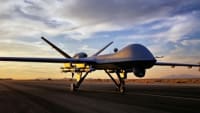
Aerospace & Defense Tech Briefs
A29N Super Tucano in NATO Configuration
Aerospace INSIDER
AI Algorithms Fly Uncrewed XQ-58A Valkyrie Drone for Three Hour Sortie
Aerospace INSIDER
First F-15Es Equipped With EPAWSS Ready for Flight
Aerospace Manufacturing and Machining INSIDER
A New AI-Piloted VTOL Fighter Jet for Contested Environments
Defense INSIDER
Conference to Focus on Counter-Drone Technology
Aerospace & Defense Tech Briefs
Multispectral Airborne Reconnaissance System
Aerospace INSIDER
Boeing to Develop Two New E-7 Variants for US Air Force
Aerospace INSIDER
Short-Takeoff & Landing Capability to be Added to MQ-9B Aircraft
Aerospace INSIDER
EA-37B Compass Call: The US Air Force's New Electronic Attack Aircraft
Aerospace Manufacturing and Machining INSIDER
Embraer Launches A-29N Super Tucano in NATO Configuration
Aerospace INSIDER
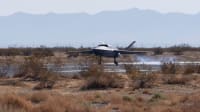
Osprey MK III Completes First Autonomous Flight
Aerospace INSIDER
Can Microvanes Improve Fuel Efficiency for Legacy Air Force Aircraft?

Defense INSIDER
How AI And Supervised Autonomy Will Change Combat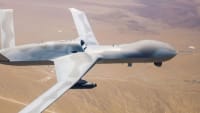
Aerospace INSIDER
GA-ASI Announces Gray Eagle 25M for Multi-Domain Operations
Aerospace INSIDER
Air Force Conducts Aircrew Chemical Weapon Protection Test
Aerospace Manufacturing and Machining INSIDER
GA-ASI Installs First V-Tail from GKN Aerospace onto MQ-9B RPA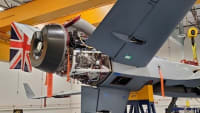
Aerospace INSIDER
Production Ready B-21 Bomber on Track for First Flight This Year
Aerospace INSIDER
AFMC Completes First Ever Flight of F-35 with F-22 Software
Aerospace & Defense Tech Briefs
Leveraging COTS Products for Maneuverable Aerial Identification
Aerospace Manufacturing and Machining INSIDER
3D-Printing Trainer Drones and Munitions Leads to Cost Savings for Misawa Exercise
Aerospace INSIDER
Key Production Milestones Achieved For F-35 Fighter
Aerospace INSIDER
KC-46A Pegasus Approved to Refuel 97% of Joint Force Receivers
Aerospace & Defense Tech Briefs
Remotely Piloted Air Systems
Aerospace INSIDER
Air Force Researchers Design, Build and Fly Drone in 24 Hours
Aerospace Manufacturing and Machining INSIDER
Counter UAS Systems Tested Against Swarms of 50 Drones in Latest Yuma Exercise
Top Stories
NewsRF & Microwave Electronics
 Microvision Aquires Luminar, Plans Relationship Restoration, Multi-industry Push
INSIDERAerospace
 A Next Generation Helmet System for Navy Pilots
INSIDERDesign
 New Raytheon and Lockheed Martin Agreements Expand Missile Defense Production
INSIDERMaterials
 How Airbus is Using w-DED to 3D Print Larger Titanium Airplane Parts
NewsPower
 Ford Announces 48-Volt Architecture for Future Electric Truck
ArticlesAR/AI

Webcasts
Electronics & Computers
 Cooling a New Generation of Aerospace and Defense Embedded...
Automotive
 Battery Abuse Testing: Pushing to Failure
Power
 A FREE Two-Day Event Dedicated to Connected Mobility
Unmanned Systems
 Quiet, Please: NVH Improvement Opportunities in the Early Design Cycle
Automotive
 Advantages of Smart Power Distribution Unit Design for Automotive &...
Energy
 Sesame Solar's Nanogrid Tech Promises Major Gains in Drone Endurance