




AFRL Proves Feasibility of Plasma Actuators
Wind tunnel test demonstrates the effects of plasma induced on an aerodynamic surface in a hypersonic flow field.
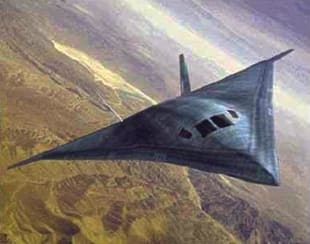
AFRL is laying the groundwork for the development of revolutionary hypersonic aerospace vehicles (see Figure 1). Accordingly, AFRL engineers are examining the feasibility of replacing an air vehicle's traditional, mechanically or electrically actuated flight control surfaces (e.g., wing flaps) with plasma actuators that require no moving parts and are therefore potentially less expensive and more reliable. As part of the laboratory's Boundary Layers and Hypersonics program, the engineers conducted a wind tunnel test to evaluate the feasibility of using plasma actuators for airframe flight control.
AFRL's Mach 5 plasma channel is a low-density flow channel designed for the study of plasma dynamics and magnetoaerodynamic phenomena (see Figure 2). It consists of a two-dimensional conical nozzle operating at a stagnation temperature of about 280 K, and it relies upon a vacuum system to generate low-density airflows. The research team performed these plasma studies at a stagnation pressure of 370 torr. The engineers fabricated the entire plasma channel from acrylic plastic and assembled it with nylon screws in order to avoid unintentional grounding. The facility includes a test cabin to house a model support and instrumentation probes. The model for this test consisted of a 660 mm long ceramic plate with two copper electrodes embedded in the surface 317 mm apart and three pressure taps mounted on the centerline between the electrodes.1


The Boundary Layers and Hypersonics program is focused on developing the knowledge of fluid physics needed to facilitate future revolutionary aerospace vehicle designs. The program strives to characterize, predict, and control high-speed fluid dynamics events, including boundary layer transition; shock/boundary layer and shock/shock interactions; and other airframe propulsion integration phenomena, such as real-gas effects, plasma aerodynamics, magnetohydrodynamics, and high-speed flow heat transfer. This test demonstrated that air diverted by plasma heating could successfully exert force on an aerodynamic surface in a hypersonic environment and, therefore, that the plasma actuator concept is a viable area for further study and development.
Ms. Melissa Withrow (Azimuth Corporation), formerly of the Air Force Research Laboratory's Air Vehicles Directorate, wrote this article. For more information, visit http://www.afrl.af.mil/techconn_index.asp . Reference document VA-H-06-05.
Reference
1 Kimmel, R. L., et al. "Effect of Surface Plasma Discharges on Boundary Layers at Mach 5." AIAA 2004-509, 42nd AIAA Aerospace Sciences Meeting and Exhibit, Jan 04.
More From SAE Media Group
Aerospace & Defense Tech Briefs
Approximating the Material Stresses and System Requirements for Hypersonic Flight
Aerospace & Defense Tech Briefs
Preventing Ice Buildup on Electric Aircraft

Tech Briefs
Supersonic Spike Diffuser
Motion Design INSIDER
Nimble Dimples: Agile Underwater Vehicles Inspired by Golf Balls
Motion Design
Giving Bug-Like Bots a Boost
Automotive Engineering
Getting a Grip on EV Fasteners
Photonics & Imaging Technology
Advanced Materials Help Lasers Beat the Heat
Tech Briefs
UCF’s Hypersonic Technology Advances
Aerospace & Defense Tech Briefs
SparkJet Actuators for Controlling Flows
Air Force Research Laboratory Technology Horizons
AFRL Finding Ways to Decrease Unmanned Air Vehicle Costs
Tech Briefs
Device Eliminates Vortices and Vibration

Aerospace & Defense Tech Briefs
Thermal Management Techniques in Avionics Cooling

Tech Briefs
Nano-Sized Actuator Lifts Many Times its Weight
Tech Briefs
Self-Sensing Electric Artificial Muscles
Tech Briefs
Bio-Inspired Wing Design for Small Drones


Aerospace & Defense Tech Briefs
Coating Technology Enables Effective Missile Countermeasures
Aerospace & Defense Tech Briefs
Simulations of Brush Contacts of Homopolar Motor/Generators
Tech Briefs
Soft Components for Soft Robotics
Tech Briefs
Flight Research on Supersonic Laminar Flow
Tech Briefs
Flipperons for Improved Aerodynamic Performance

Motion Design INSIDER
High-Power Electrostatic Actuators to Realize Artificial Muscles
Tech Briefs
Spanwise Adaptive Wing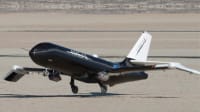
Top Stories
INSIDERManufacturing & Prototyping
 How Airbus is Using w-DED to 3D Print Larger Titanium Airplane Parts
INSIDERManned Systems
 FAA to Replace Aging Network of Ground-Based Radars
NewsTransportation
 CES 2026: Bosch is Ready to Bring AI to Your (Likely ICE-powered) Vehicle
NewsSoftware
 Accelerating Down the Road to Autonomy
EditorialDesign
 DarkSky One Wants to Make the World a Darker Place
INSIDERMaterials
 Can This Self-Healing Composite Make Airplane and Spacecraft Components Last...
Webcasts
Defense
 How Sift's Unified Observability Platform Accelerates Drone Innovation
Automotive
 E/E Architecture Redefined: Building Smarter, Safer, and Scalable...
Power
 Hydrogen Engines Are Heating Up for Heavy Duty
Electronics & Computers
 Advantages of Smart Power Distribution Unit Design for Automotive...
Unmanned Systems
 Quiet, Please: NVH Improvement Opportunities in the Early Design...
