




SparkJet Actuators for Controlling Flows
Supersonic and hypersonic flows would be controlled without moving parts.
SparkJet actuators are under investigation as means of controlling flows — especially supersonic and hypersonic flows. In one important class of potential applications, SparkJet actuators would be used to effect rapid and flexible steering of advanced aerospace vehicles. Effective manipulation of flow fields in aerospace systems could afford significant benefits, including increases in performance, maneuverability, payload, and range, as well as reductions in overall costs. These macro-scale benefits would be achieved through the use of SparkJet actuators to alter such phenomena as laminar-to-turbulent transition, turbulence, and flow separation on a micro scale.
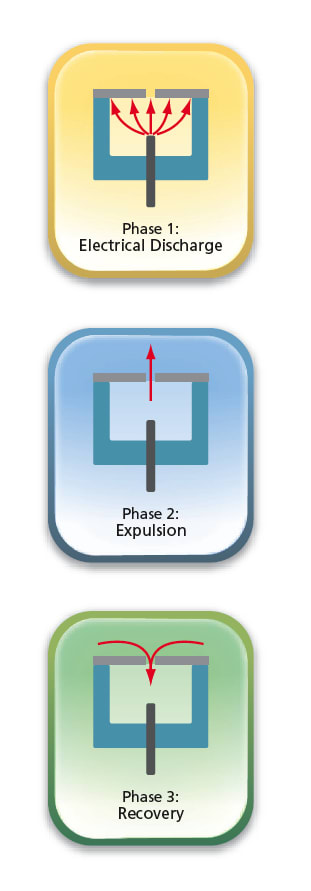
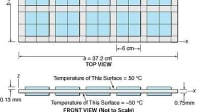
A cycle of operation is initiated by means of an electrical discharge between the electrodes. The energy deposited in the chamber by the discharge causes sudden heating and pressurization of the gas in the chamber. A significant portion of the pressurized gas is expelled through the orifice, giving rise to a rapid outgoing jet and a sudden reduction of pressure in the chamber. During the final recovery phase of the cycle, ambient gas flows back into the chamber, re-establishing equilibrium between the ambient and chamber gas pressures.
The jet transfers momentum to the ambient gas, even though there is no net mass flow into and out of the chamber over the complete cycle. The amount of mass expelled during the heating phase of the cycle is large in comparison with that expelled during the corresponding phase of the cycle of a piezoelectric flow-control device. Whereas piezoelectrically actuated flow-control devices can be effective for controlling flows at subsonic speeds but do not develop sufficient driving pressures for penetrating supersonic boundary layers, SparkJet actuators show promise for developing the higher pressures and jet velocities needed for controlling supersonic flows.
It is envisioned that in typical applications, SparkJet actuators would be energized with repeated discharges to create pulsed jets capable of exerting macro-scale effects. The actuators would be positioned and operated so that the flow disturbances associated with the jets would alter micro-scale flow phenomena (e.g., laminar-to-turbulent transition, turbulence, and/or flow separation as mentioned above) to obtain the desired macro-scale effects. Conversely, the disturbances could be used to study micro-scale flow phenomena.
Thus far, SparkJet actuators have been studied theoretically on the basis of a first-order energy-conservation mathematical model in simulations using commercial computational fluid dynamics software that solves the Navier-Stokes equations of time-dependent flow, and by experiments using a variety of diagnostic techniques. It is planned to utilize the knowledge gained from these studies to develop SparkJet-actuator flow-control systems to enhance the aerodynamic performances of high-speed aerospace vehicles.
This work was done by B. Z. Cybyk, D. H. Simon, H. B. Land III, and J. T. Wilkerson of the Johns Hopkins University Applied Physics Laboratory for the Air Force Office of Scientific Research.
AFRL-0091
More From SAE Media Group
Aerospace & Defense Tech Briefs
Some Advances in Reducing Drag and Suppressing Convection
Aerospace & Defense Tech Briefs
Approximating the Material Stresses and System Requirements for Hypersonic Flight
Tech Briefs
Soft Components for Soft Robotics
Aerospace & Defense Tech Briefs
Application of CFD to a Slender-Bodied, Finned Projectile

Tech Briefs
Vortobots
Air Force Research Laboratory Technology Horizons
Improved Accuracy of Computational Fluid Dynamics Calculations
Tech Briefs
Rocket Nozzle Side-Load Analysis Software
Aerospace & Defense Tech Briefs
Thermal Design and Analysis of a Rocket-Engine TAN Injector
Tech Briefs
Device Eliminates Vortices and Vibration


Aerospace & Defense Tech Briefs
Designing a Sensorless Torque Estimator for Direct Torque Control of an Induction Motor
Sensor Technology
Self-Powered Wireless Sensors in the Industrial Internet of Things

Tech Briefs
Engine Made as a Single Calcium Ion
Air Force Research Laboratory Technology Horizons
Unified Flow Solver
Tech Briefs
Q&A: Simple Solar-Powered Desalination

Aerospace & Defense Tech Briefs
Simulations of Stall and Stall Control in Turbocompressors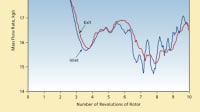
Motion Design
Inflatable Actuators Use Origami Principles to Deform
Top Stories
INSIDERDefense
 New Raytheon and Lockheed Martin Agreements Expand Missile Defense Production
NewsAutomotive
 Ford Announces 48-Volt Architecture for Future Electric Truck
INSIDERManufacturing & Prototyping
 Active Strake System Cuts Cruise Drag, Boosts Flight Efficiency
ArticlesTransportation
 Accelerating Down the Road to Autonomy
INSIDERMaterials
 How Airbus is Using w-DED to 3D Print Larger Titanium Airplane Parts
Road ReadyTransportation

Webcasts
Electronics & Computers
 Cooling a New Generation of Aerospace and Defense Embedded...
Power
 Battery Abuse Testing: Pushing to Failure
Connectivity
 A FREE Two-Day Event Dedicated to Connected Mobility
Automotive
 Quiet, Please: NVH Improvement Opportunities in the Early Design Cycle
Transportation
 Advantages of Smart Power Distribution Unit Design for Automotive &...
Aerospace
 Sesame Solar's Nanogrid Tech Promises Major Gains in Drone Endurance