




Getting a Grip on EV Fasteners
TR Fastenings thinks the industry needs innovative EV fasteners and coatings.
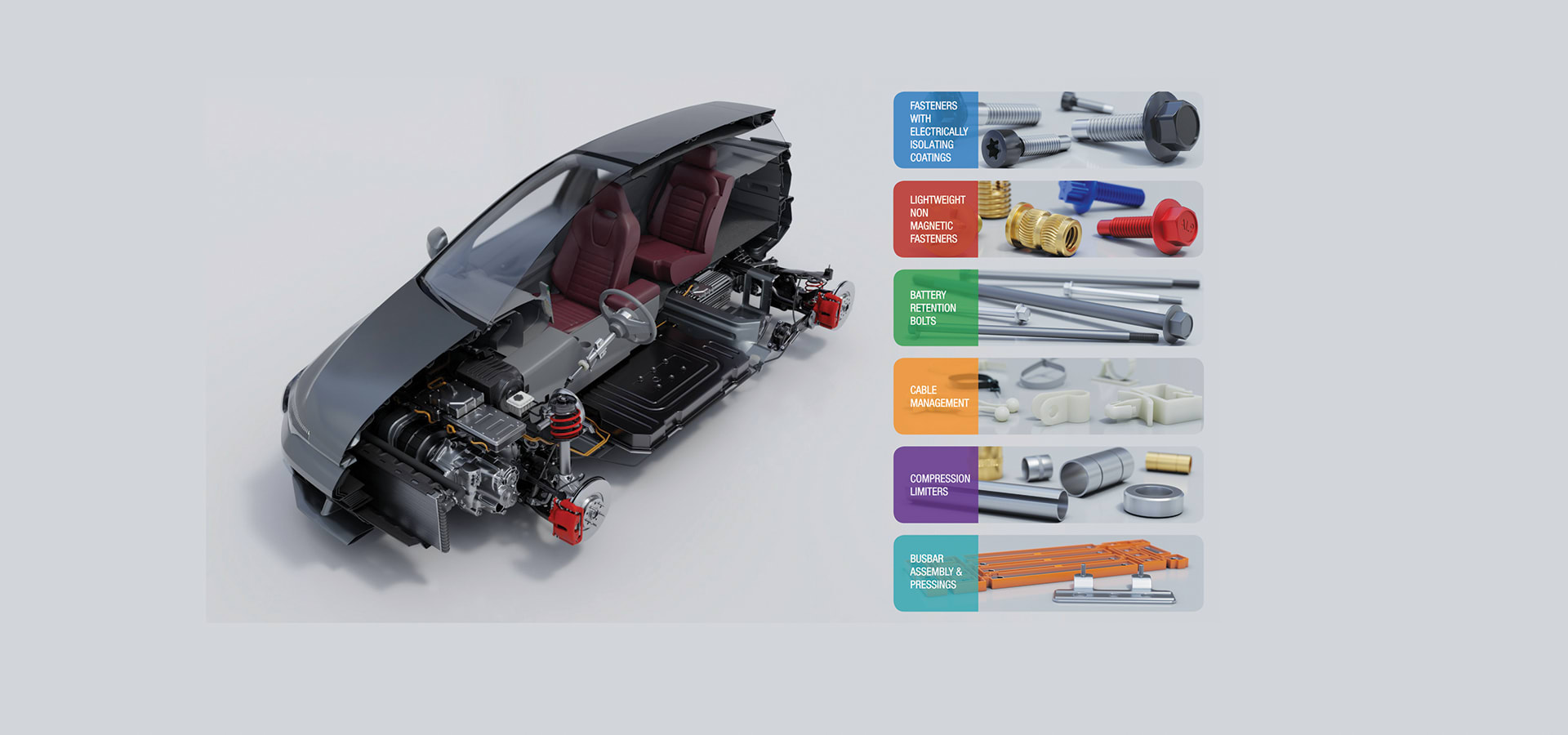
It may not get much R&D fanfare, but fastenings and their coatings will play an essential engineering role in electrified vehicles (EVs). There is an increasing demand from the auto industry for innovative fastener engineering techniques to be applied throughout the design and manufacturing process. “Fastening innovations are crucial for EV and EV battery (EVB) manufacturers,” said Sven Brehler, engineering project manager at TR Fastenings.

Particularly relevant for EVB assembly according to Brehler are fasteners with electrically isolating coatings; lightweight, non-magnetic fasteners; battery retention bolts; cable management hardware; and compression limiters. All require robust and secure settings for the costly battery. Fasteners are also essential in charging units, battery casings and general infrastructure equipment.
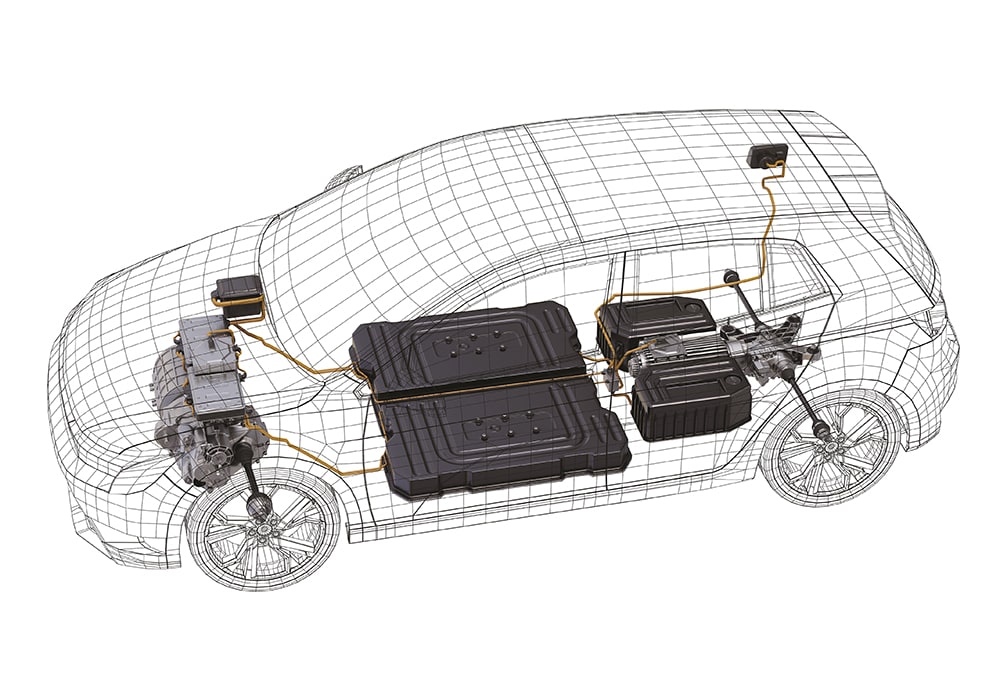
According to Brehler, an EV’s battery module can be secured with plastic inserts. Designed to incorporate various coatings, inserts are fitted into the plastic during the injection-molding process. “Component suppliers are beginning to work closely with battery module manufacturers,” Brehler explained, “to develop and apply coatings which protect the inserts from corrosion to maintain good electrical connectivity or retain isolation where needed to avoid unwanted electrical resistance or potential short circuits.”
Along with the materials used in battery casings and structures, varying conditions must be considered when applying coatings, and there’s no single solution. "Many coatings and parts need to act as conductors to move electricity and current around the battery to ensure it reaches the right destination,” Brehler said, “with minimum resistance causing potential hotspots."
Managing battery heat
Brehler explained that conductive coatings can be applied to materials such as plastic fasteners or fasteners prone to corrosion. An increase in resistance increases losses and generates heat. “EV batteries can generate high levels of heat, so it’s essential that it is distributed over the assembly to provide general cooling and avoid localized overheating,” Brehler noted. “Busbars can support the distribution of heat from local hotspots to heat sinks when correctly tightened to optimize heat transfer between the various elements. Using fasteners with thermally and electrically conductive coatings will aid an effective service life.”
Insulating coatings are used to stop electricity from going where it shouldn’t. Specific coatings include PTFE (polytetrafluoroethylene) because it is highly heat resistant, able to retain its properties across a temperature range from -200 to 260°C (-328 to 500°F). “It also has low predictable friction,” Brehler said, “which can help to create secure joints through torque control essential when assembling the battery module.”
Plasma spray or High Velocity Oxygen Fuel (HVOF) spray techniques used in the aerospace and defense industries (facilitating lightweight materials while still maintaining hard, heat resistant and easily polished surfaces), are now being adopted by engineers within the auto industry to help solve specific challenges. Particularly in application to fasteners, Brehler noted this is a demonstration of the use of “sophisticated and advanced solutions to deliver efficiency and safety.”
More From SAE Media Group
Automotive Engineering
Keeping Your Silicon Cool
Automotive Engineering
Constellium Develops New Alloys for EV Battery Enclosures
Automotive Engineering
NAWA Aims for 5-Minute EV Charge
Tech Briefs
New Fluids Coming for EV Thermal Management
Automotive Engineering
Balancing the ‘Dominos’ in EV Thermal Management
Automotive Engineering
Air- or Water-Cooling Resistors for EVs: The Case for H2O
Automotive Engineering
Toward an Electric Two-Wheeled Triumph
Automotive Engineering
Novelis Creates First Aluminum Sheet Battery Enclosure for Mass Electric Vehicle Production
Automotive Engineering
Venting for EV Battery Packs
Aerospace & Defense Tech Briefs
SAE International Extends Call for Abstracts, Seeks Submissions for AeroTech Conference
Automotive Engineering
Static Testing of EV Components
Off-Highway Engineering
Webasto Delivers Battery System for Zeus EV Chassis
Automotive Engineering
Addressing Thermal Management for EVs
Automotive Engineering
GM: Ultium Heat-Pump System Boosts EV Range, Reduces Charge Times
Automotive Engineering
Tariff Challenges, EV Advances at Mobility 360
Aerospace & Defense Tech Briefs
Considerations for Thermal Management of Printed Wiring Boards
Battery Technology
Venting for EV Battery Packs
Battery & Electrification Technology
EV Energy Management Powers Up
Battery & Electrification Technology
Next-Generation Binder for Lithium-ion Batteries
Automotive Engineering
Defrosting Tech Saves EV Battery Energy
Automotive Engineering
Launching Aerospace Battery Tech for EVs
Automotive Engineering
SAE J-3277 Covers Leak Testing for Every EV Battery
Battery Technology
An Immersive Solution for Thermally Safer EV Batteries
Off-Highway Engineering
Sinonus Carbon-Fiber Structural Batteries Would Reduce Weight While Adding Range

Automotive Engineering
EV Energy-Management Powers-Up
Off-Highway Engineering
Catering to Off-Highway EVs’ Unique Thermal Need
Automotive Engineering
Reducing the Weight of EV Batteries with Specialty Thermoplastics

Top Stories
NewsRF & Microwave Electronics
 Microvision Aquires Luminar, Plans Relationship Restoration, Multi-industry Push
INSIDERAerospace
 A Next Generation Helmet System for Navy Pilots
INSIDERDesign
 New Raytheon and Lockheed Martin Agreements Expand Missile Defense Production
INSIDERMaterials
 How Airbus is Using w-DED to 3D Print Larger Titanium Airplane Parts
NewsPower
 Ford Announces 48-Volt Architecture for Future Electric Truck
ArticlesAR/AI

Webcasts
Electronics & Computers
 Cooling a New Generation of Aerospace and Defense Embedded...
Automotive
 Battery Abuse Testing: Pushing to Failure
Power
 A FREE Two-Day Event Dedicated to Connected Mobility
Unmanned Systems
 Quiet, Please: NVH Improvement Opportunities in the Early Design Cycle
Automotive
 Advantages of Smart Power Distribution Unit Design for Automotive &...
Energy
 Sesame Solar's Nanogrid Tech Promises Major Gains in Drone Endurance