




Brembo Brake-By-Wire Will Be Production-Ready Before 2020

The potential market for an electric wheel-braking system is apparent to automotive engineers, but none is now in vehicle production. Such a system adds a level of precision to braking itself, but even more important, brake-by-wire fits into the engineering picture to meet the low-emissions/higher fuel economy mandates in government regulation. And it could be easier to integrate into semi-autonomous and autonomous operation.
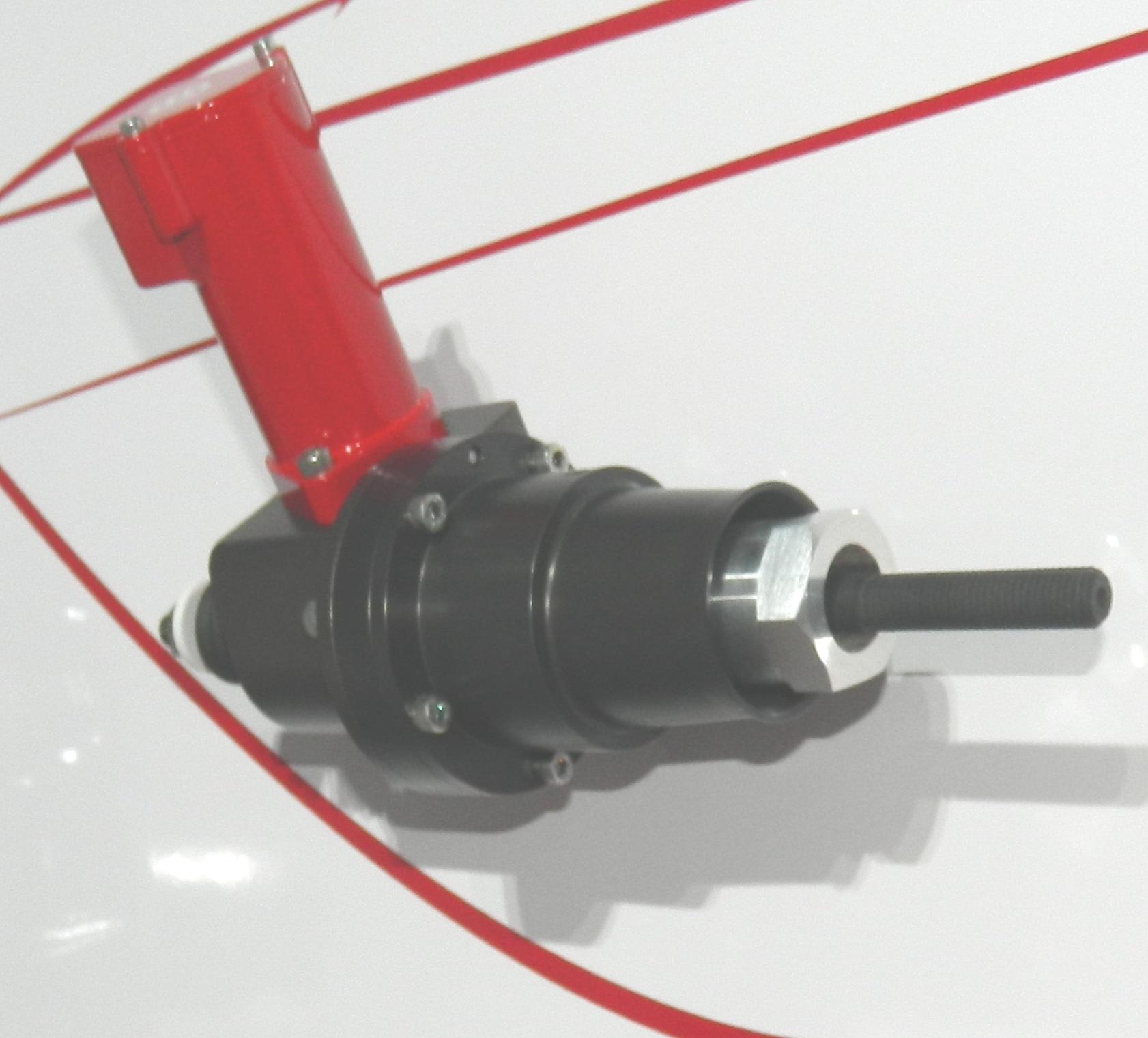
Premium braking system supplier Brembo, in a display at NAIAS, featured a system it already has shown to many car makers. Electric foundation braking has been in development at Brembo for some 15 years, and as Chief Technical Officer Georgio Ascanelli told Automotive Engineering, it has potential for considerable further development.
Other electric braking systems developed to date have posed durability/reliability questions, Ascanelli noted. For contrast, he pointed to the Brembo design's use of one central ECU and four corner modules.
"It could operate with a failure of the other four," he said, so there is coverage for even simultaneous multiple failures. Some separation of the battery supply system also would be needed to fit into this picture. With all the failure mode analysis normal for safety-related systems, there should be an overall confidence level even for autonomous driving.
The Brembo test system has accumulated over 500,000 km (300,000 mi) of safe operation on a sports car, Ascanelli said, and the company is completing a demonstrator to provide further evidence to vehicle OEMs. Technically, he expects the system to be ready for use well before 2020, while admitting that some OEMs consider such innovations to be risky.
Brake pedal just a sensor

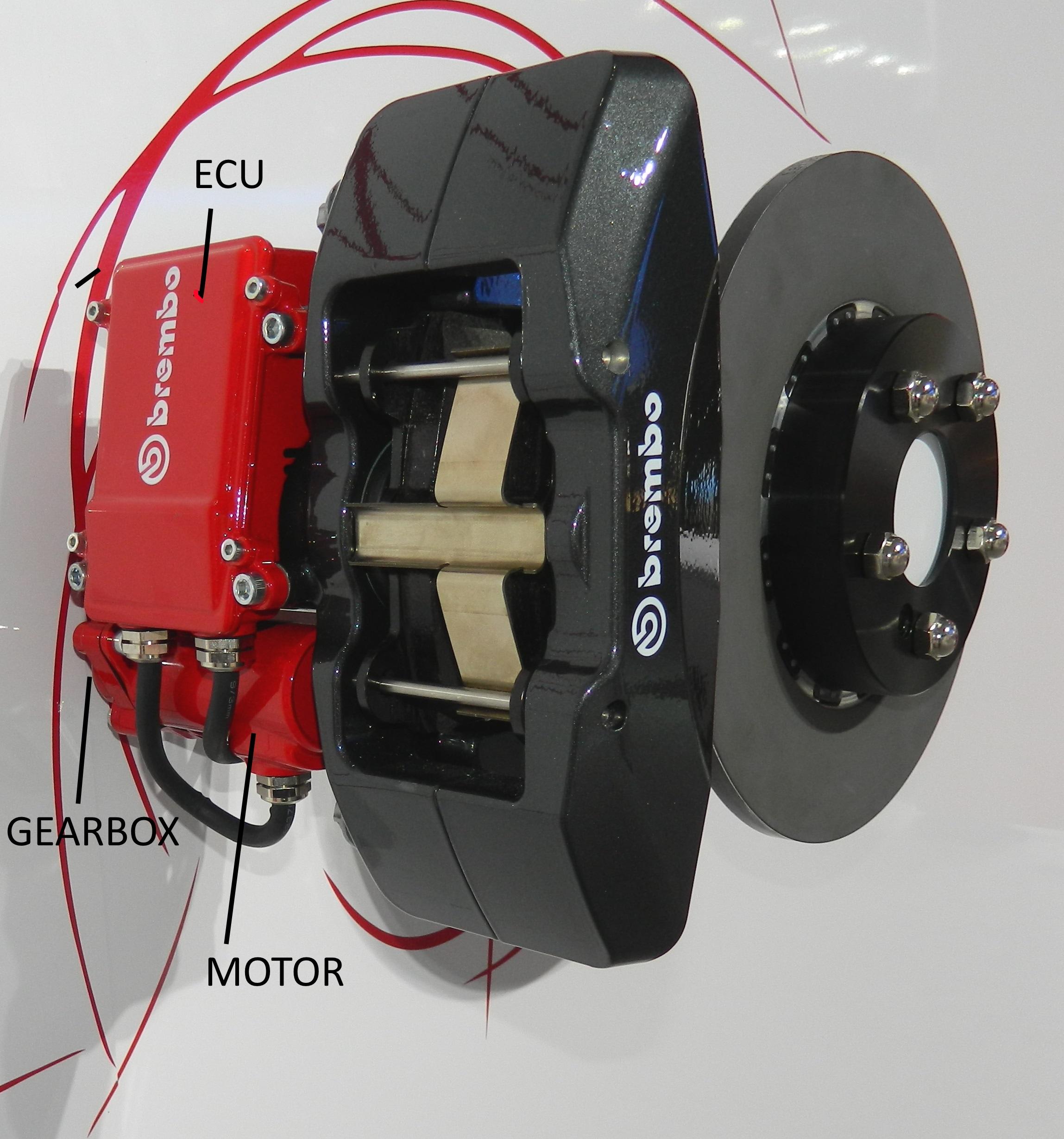

The system begins at the "brake pedal," in this case a spring-loaded electro-mechanical sensor (with potential for redesign/downsizing) that produces a proportional signal to the ECU. This module both confirms battery system state of charge and operates a pump/motor assembly to produce a hydraulic output to the front caliper, a six-piston unit. Doesn't this make it an electro-hydraulic system? For larger cars, yes, because the design of the present rotor and caliper do not provide the wheel space needed for a purely electrical system.
Using the basic architecture, an all-electric system could be produced for small cars, such as the Renault Twingo, Ascanelli explained. And with product redesign and continuous improvement, the potential of all-electric foundation brakes for larger models can be anticipated.
At its present state, the system response time is just 90 ms, vs. 300 ms on a conventional all-hydraulic braking system with booster and anti-lock braking actuator. The fast response time means the system can provide auto-braking improvements for both basic collision-mitigation systems and the more demanding requirements of autonomous driving, he noted.
Because the rear system is "dry" (i.e., fully electro-mechanical), using a motor and gearbox, it lends itself also to serving as the parking brake.
Pistons positively retracted
Although the system does use hydraulics for the front brakes, the overall electrical operation permits quickly and positively retracting pistons front and rear because the circuits are being controlled with motors and an ECU. The retracted piston clearance, 0.2 mm (.001-in) or more totally eliminates piston drag on the rotor friction surfaces, Ascanelli said, which he claims accounts for about 10% of fuel consumption in city operation with a gasoline engine.
The precise control of an electric braking system also permits calibration to improve the efficiency of regenerative braking on electric vehicles and hybrids, so it boosts fuel economy for these cars. Those two factors—no drag and improved regen braking—therefore lower carbon dioxide emissions, he added.
An electric braking system does add components, but in addition to a simpler parking brake it eliminates the brake booster and anti-lock brake actuator. So Ascanelli said he believes the overall system can be lighter than a conventional one. The initial selling price to OEMs would have to be competitive with the conventional systems in use, he admitted, even if it costs suppliers more.
However, he believes suppliers can "get to a comparable price" by increasing volume and using feedback from the market to correct the natural over-engineering that is typical of a new design, particularly one so safety-related.
More From SAE Media Group
Automotive Engineering
Brembo’s Sensify Aims to Revolutionize Braking
Automotive Engineering
Mercedes Proposes “In-Drive Brakes” for Better EVs
Off-Highway Engineering
Tevva & ZF Integrate Brake-By-Wire Regen System for Last Mile BEV
Automotive Engineering
Electronic Stability Control Builds the Foundation for Safer Roads
Off-Highway Engineering
REE’s P7 Brings Advanced Suspension Control to Medium-Duty Trucks
Automotive Engineering
Tuning the 2024 Corvette E-Ray for Exceptional Drivability
Off-Highway Engineering
WABCO Introduces New Compressors
Automotive Engineering
Chassis Brakes International Debuts First NA-Produced Products
Automotive Engineering
Bridging the Power Gap with 48 Volts
Tech Briefs
EV vs. ICE: How Does Wire Harness Design Differ?
Green Design & Manufacturing
Paving the Way for Electromobility
Automotive Engineering
The E-Up! Points Way to VW’s Electric Future
Off-Highway Engineering
JLG Reveals New Electric Telehandler
Automotive Engineering
E-Axles Speed Electrification
Automotive Engineering
Active Roll Stabilization Introduced for Audi’s Large Crossovers
Off-Highway Engineering
REE Unveils P7-C Chassis Cab at ACT Expo
Automotive Engineering
Europe’s Dust Buster
Automotive Engineering
Silent Timing Chain
Automotive Engineering
Conti Revives an Old Concept for Its New Wheel for EVs
Off-Highway Engineering
Israeli Startup REE Reinvents the Wheel with a Modular Approach to Future EV Design
Automotive Engineering
Shell Oil Unveils Radical City Car Concept
Automotive Engineering
BorgWarner Tech Center Adds Testing Muscle, Engineering Resources
Automotive Engineering
Inside Honda’s New Two-motor 50-mpg Accord Hybrid
Automotive Engineering
Converting Classic Cars Is Just Step One of This Mission
Off-Highway Engineering
Knorr-Bremse Puts the Brakes on Automated Driving
Off-Highway Engineering
Eaton and BAE Gear up a New Electrified Truck
Automotive Engineering
Actuating Hybrid and EV Efficiency
Automotive Engineering
Tremec-Trification
Automotive Engineering
Full Speed Ahead for Second-Generation Indy Autonomous Racers
Automotive Engineering
Brembo’s New Octyma Brakes Provide 8 Reasons for Better Deceleration
Top Stories
INSIDERManufacturing & Prototyping
 How Airbus is Using w-DED to 3D Print Larger Titanium Airplane Parts
INSIDERManned Systems
 FAA to Replace Aging Network of Ground-Based Radars
NewsTransportation
 CES 2026: Bosch is Ready to Bring AI to Your (Likely ICE-powered) Vehicle
NewsSoftware
 Accelerating Down the Road to Autonomy
EditorialDesign
 DarkSky One Wants to Make the World a Darker Place
INSIDERMaterials
 Can This Self-Healing Composite Make Airplane and Spacecraft Components Last...
Webcasts
Defense
 How Sift's Unified Observability Platform Accelerates Drone Innovation
Automotive
 E/E Architecture Redefined: Building Smarter, Safer, and Scalable...
Power
 Hydrogen Engines Are Heating Up for Heavy Duty
Electronics & Computers
 Advantages of Smart Power Distribution Unit Design for Automotive...
Unmanned Systems
 Quiet, Please: NVH Improvement Opportunities in the Early Design...
