




Shell Oil Unveils Radical City Car Concept

Oil companies typically don't announce concept city cars, but days ahead of the 2016 Beijing Motor Show, Shell did just that. A collaboration between Shell, Gordon Murray Design and Geo Technology, the Shell Concept Car is all about bespoke lubricants, engine friction reduction, radical downsizing and super efficiency.
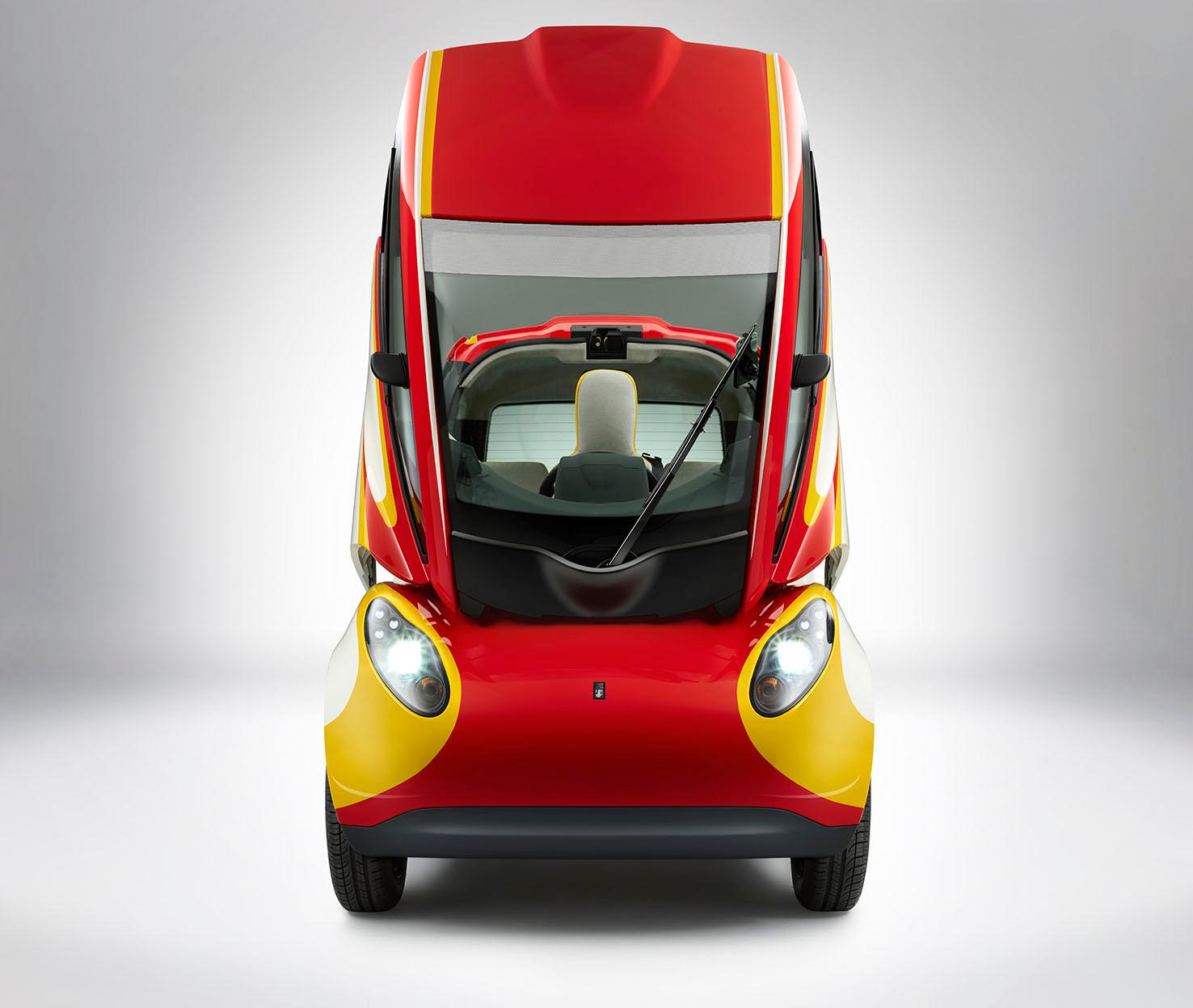
Described by Shell as a “total rethink” of Murray's T.25 city car shown in 2010, the Shell Concept Car has emerged from the Project M (for Mobility) previously revealed in Low-Friction Techniques Push Advanced City-Car Project Toward 84-Mpg Target, aimed at creating an extremely frugal 3-seat, single canopy access, ultra-compact city car.
A salient figure quoted in a statement by Shell is that “independent testing and a rigorous lifecycle study shows that Shell’s Concept Car would deliver a 34% reduction in primary energy use over its entire lifecycle when compared to a typical city car available in the U.K.”
Regarding the car's efficiency, Shell states that its gasoline consumption has been measured using a range of testing protocols. Sample test results issued so far include a steady state figure of 2.64 L/100 km [89.1 mpg U.S.] at 70 km/h from the use of bespoke lubricants, equivalent to a 5% improvement in fuel efficiency (and consequent improvement in emissions) compared to standard lubricants available in the U.K.


No urban or combined fuel consumption figure has been released but an aspirational Project M target was a combined figure of 2.8 L/100 km.
The Concept Car has been independently tested at a U.K. certified automotive facility, stated Shell. It is understood, but not confirmed, that this was Millbrook Proving Ground. Shell states that in the formal NEDC test it produced lower CO2 emissions than both a “typical” gasoline-powered city car (28%) and a hybrid car (32%). Neither vehicle was specifically identified.
Shell provided all the fluids for the car with reduction of friction being the principal aim. The bespoke engine oil was based on a Shell premium lubricant. And Geo Technology optimized engine components to reduce friction.
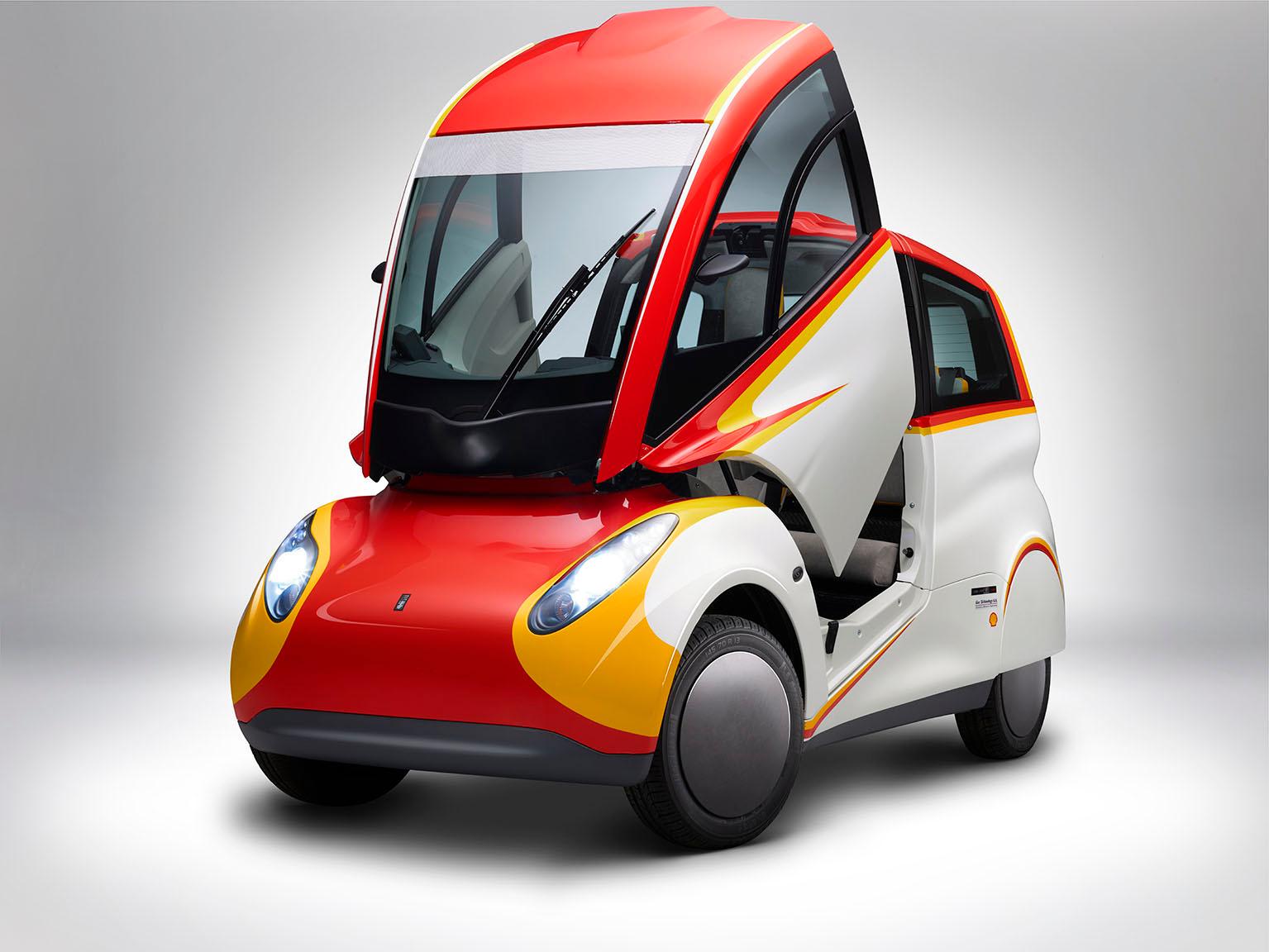


The 2.5-m-long (8.2-ft) Shell Concept has a potential top speed of 156 km/h (97 mph), higher than the anticipated speed of 130km/h/81 mph). Currently the design is restricted to 145 km/h (90 mph) and is claimed to reach 100km/h (62 mph) from standstill in 15.8 s. The engine is a Mitsubishi 660cc 3-cylinder, all-aluminum 4-valve unit with variable valve timing. Claimed power output and peak torque are 33 kW (44 hp) and 64 N·m (47 lb·ft), respectively. The engine drives through a 5-speed semi-automatic sequential gearbox.
The Concept Car weighs 550 kg (1213 lb) and makes extensive use of recycled carbon fiber.
Dr. Andrew Hepher, Vice President of Shell’s Lubricant Research Team, said: “In the coming weeks and months, we look forward to sharing our research insights from this project with engine designers, car manufacturers, academics and other experts across the automotive sector.”
Shell states that if their Concept Car reached production it could deliver “material reductions in energy use in the road transport sector”. And it sees “co-engineering” as a process via which vehicle body, engine design, and lubricants, would all be created together.
With regard to its aesthetics, Shell describes the Concept Car as being “a new take on ‘tall and narrow’.”
As always with such far reaching designs of ultra-small and radically designed city cars, only time, unit cost, economies of scale, and, most importantly, public acceptance, will demonstrate their practical credibility and efficacy. But the technology it is generating may have much wider, very significant applications.
Shell Global Lubricants’ Vice President, Mark Gainsborough, noted the project's value in energy saving R&D: “This is a significant automobile engineering milestone. Insights gained from this project could be transformed in terms of how we address energy use in the road transport sector," while noting "the powerful role that lubricants can potentially play in helping achieve CO2 reduction targets.”
More From SAE Media Group
Off-Highway Engineering
FEV Simplifies Off-Highway Electrification
Off-Highway Engineering
ZM Trucks Starts Production in Fontana, California
Automotive Engineering
Supercar Concept Previews Lamborghini Plug-In Possibilities

Automotive Engineering
Mercedes Doubles down on Electric Vans, Considers Fuel Cells
Off-Highway Engineering
Daimler Trucks' Lessons Learned from SuperTruck Program
Automotive Engineering
Inside Honda’s New Two-motor 50-mpg Accord Hybrid
Automotive Engineering
Proving Grounds Are the Hush-Hush Heroes of the Latest Automotive Test Technology
Automotive Engineering
Engineering ‘Electron Guzzlers’
Automotive Engineering
Ford to Make Pursuit-Rated HEV Police Car in 2018
Automotive Engineering
ZF Meets Changing EV Market with Suite of Improved Components
Automotive Engineering
VW’s New E-Golf May Lead the Way to Lithium-Air Power
Off-Highway Engineering
Mellor Bus Stresses Lightweight Construction for New Midsized Battery-Electric Buses
Automotive Engineering
Mercedes Board Member Demonstrates Upgrades for New C-Class
Automotive Engineering
Mercedes-Benz Debuts 'Car of the Future' at CES
Off-Highway Engineering
Kia Takes Aim at Commercial Vans with PBV Concepts
Off-Highway Engineering
REE Unveils P7-C Chassis Cab at ACT Expo
Automotive Engineering
Tension and the Electric Takeover

Automotive Engineering
Transforming Propulsion with Tula’s Digital-Control Magic
Automotive Engineering
Gearing Dana for the EV Future
Automotive Engineering
Executive Insights: BorgWarner VP and CTO Hakan Yilmaz
Automotive Engineering
Kia Reveals Electric AWD Trail'ster Concept
Automotive Engineering
New XC90 Burnishes Volvo's Safety Credentials
Automotive Engineering
TRD Spells Capability for Toyota’s Latest Tundra
Off-Highway Engineering
Math to Road Cycle Is Similar Yet Diverse for Trains, Trucks, and Tractors
Automotive Engineering
Flywheel Hybrids Offer New Efficiency Potential
Automotive Engineering
Tremec-Trification
Automotive Engineering
Preparing for a 48-volt Revival
Automotive Engineering
Extending the ICE Age: Ford’s Dave Filipe Has Some Powerful Choices to Make
Top Stories
INSIDERManufacturing & Prototyping
 How Airbus is Using w-DED to 3D Print Larger Titanium Airplane Parts
INSIDERManned Systems
 FAA to Replace Aging Network of Ground-Based Radars
NewsTransportation
 CES 2026: Bosch is Ready to Bring AI to Your (Likely ICE-powered) Vehicle
NewsSoftware
 Accelerating Down the Road to Autonomy
EditorialDesign
 DarkSky One Wants to Make the World a Darker Place
INSIDERMaterials
 Can This Self-Healing Composite Make Airplane and Spacecraft Components Last...
Webcasts
Defense
 How Sift's Unified Observability Platform Accelerates Drone Innovation
Automotive
 E/E Architecture Redefined: Building Smarter, Safer, and Scalable...
Power
 Hydrogen Engines Are Heating Up for Heavy Duty
Electronics & Computers
 Advantages of Smart Power Distribution Unit Design for Automotive...
Unmanned Systems
 Quiet, Please: NVH Improvement Opportunities in the Early Design...
