




Automotive Engineering - July 2016
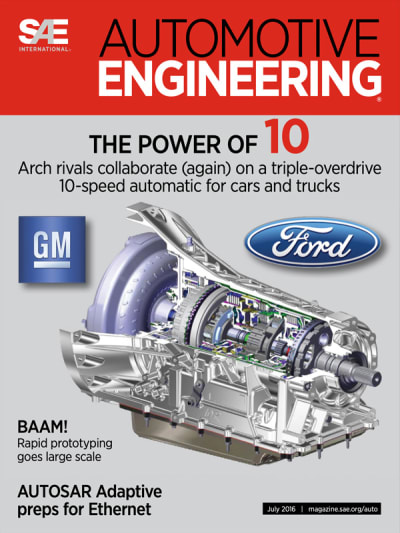
Inside this issue
Overview
The July 2016 issue of Automotive Engineering presents a comprehensive overview of the latest advancements and trends in the automotive industry, focusing on innovative technologies, collaborations, and manufacturing techniques that are shaping the future of vehicle design and production.
Key Highlights:
-
Collaboration on Transmission Technology: A significant feature of this issue is the partnership between Ford and General Motors (GM) to develop a new 10-speed automatic transmission. This collaboration builds on their previous success with 6-speed transaxles and aims to enhance vehicle performance and efficiency. The article delves into the technical aspects of the gearbox, highlighting how this new transmission can improve fuel economy and driving dynamics across a range of vehicles, from cars to trucks.
-
Additive Manufacturing: The magazine explores the growing role of large-scale additive manufacturing in the automotive sector, particularly through a case study from Oak Ridge National Laboratory. This section discusses the concept of "big area additive manufacturing" (BAAM), which bridges the gap between powertrain development and vehicle systems implementation. The technology allows for rapid prototyping and production of vehicle components, significantly reducing lead times and costs associated with traditional manufacturing methods.
-
Interior Materials and Design: Another intriguing article focuses on the quest for the ideal "new-car smell," which has become a critical factor in consumer satisfaction. The piece examines how automotive manufacturers are changing their interior materials to meet consumer preferences while also addressing environmental concerns. This includes the use of sustainable materials and innovative design approaches that enhance the sensory experience of new vehicles.
Advancements in Vehicle Electronics: The issue also covers the new AUTOSAR Adaptive platform, which is designed to provide greater flexibility for vehicle electrical architectures. This platform is crucial for the integration of advanced driver-assistance systems (ADAS) and other electronic features that are becoming standard in modern vehicles. The article discusses how this platform can facilitate the development of more sophisticated and interconnected vehicle systems.
-
Global Vehicle Innovations: The magazine features a section on global vehicles, highlighting notable innovations such as the steel-intensive Mazda CX-9, which sheds weight while debuting a novel turbocharged engine setup. Additionally, Shell Oil presents a radical city-car concept that emphasizes sustainability and efficiency, showcasing the industry's shift towards greener technologies.
-
Product Briefs and Industry Insights: The issue includes product briefs that spotlight advancements in composite materials, which are increasingly being used in automotive applications to reduce weight and improve performance. These materials are essential for meeting stringent fuel economy and emissions regulations while maintaining safety and durability.
-
Upcoming Issues and Advertisements: The magazine also provides a glimpse into upcoming issues and technology newsletters, including topics such as advanced emissions strategies, thermal management, and 3D printing in off-highway engineering. Advertisements from key industry players like Omega Engineering and Phillips Screw Company highlight the latest products and services available to automotive engineers.
-
Editorial and Online Resources: The editorial section reflects on the challenges and opportunities facing the automotive industry, particularly in light of recent disruptions and technological advancements. The magazine encourages readers to engage with its online resources, including digital editions and archives, to stay informed about the latest developments in automotive engineering.
Conclusion:
The July 2016 issue of Automotive Engineering serves as a vital resource for professionals in the automotive industry, offering insights into cutting-edge technologies, collaborative efforts, and innovative manufacturing processes. As the industry continues to evolve, this issue underscores the importance of adaptability and forward-thinking in addressing the challenges of modern vehicle design and production. With a focus on sustainability, efficiency, and consumer satisfaction, the articles in this issue provide a comprehensive overview of the current state and future direction of automotive engineering.
Features
-
Articles
Doing It Again — This Time With 10
Large-scale Additive Manufacturing for Rapid Vehicle Prototyping
Regulars
-
Editorial
-
Global Vehicles
Shell Oil Unveils Radical City Car Concept
New Steel-Intensive Mazda CX-9 Sheds Mass, Debuts New Turbo System
-
Technology Reports
That 'New Car Smell' Is Forcing Interior Materials Changes
New AUTOSAR Platform Offers More Freedom for Vehicle Electrical Architectures
-
Product Briefs
Lightweight Thermal Camera Core
Diesel Injector-Seat Cleaning Kit
Stories
Top Stories
INSIDERManufacturing & Prototyping
 How Airbus is Using w-DED to 3D Print Larger Titanium Airplane Parts
INSIDERManned Systems
 FAA to Replace Aging Network of Ground-Based Radars
NewsTransportation
 CES 2026: Bosch is Ready to Bring AI to Your (Likely ICE-powered) Vehicle
NewsSoftware
 Accelerating Down the Road to Autonomy
EditorialDesign
 DarkSky One Wants to Make the World a Darker Place
INSIDERMaterials
 Can This Self-Healing Composite Make Airplane and Spacecraft Components Last...
Webcasts
Defense
 How Sift's Unified Observability Platform Accelerates Drone Innovation
Automotive
 E/E Architecture Redefined: Building Smarter, Safer, and Scalable...
Power
 Hydrogen Engines Are Heating Up for Heavy Duty
Electronics & Computers
 Advantages of Smart Power Distribution Unit Design for Automotive...
Unmanned Systems
 Quiet, Please: NVH Improvement Opportunities in the Early Design...
