




Boeing Partners with Aerion to Speed Development and Testing of Next-Generation Supersonic Aircraft, Accelerate Supersonic Travel
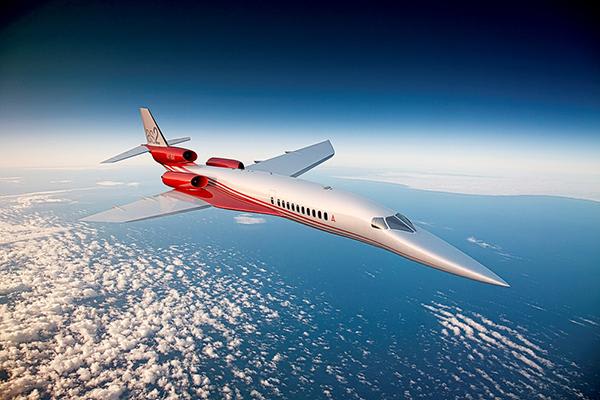
The AS2 from Aerion in Reno, Nevada, will be the first supersonic business jet to market, Boeing officials in Chicago predict. Boeing (NYSE:BA) is providing engineering, industrial, and financial resources in partnership with Aerion to accelerate technology development and aircraft design, with the goal of bringing supersonic air travel to new markets.
Boeing will provide engineering, manufacturing, and flight test resources, as well as strategic vertical content, to help bring Aerion's AS2 supersonic business jet to market. The aircraft is slated for first flight in 2023.

Aerion introduced its AS2 12-passenger business jet design in 2014 and unveiled the AS2's GE Affinity engine design in 2018. Aerion was founded in 2003 to develop new, more efficient aerodynamic technologies for supersonic aircraft.
Read: GE, Lockheed Martin commit to Aerion's supersonic bizjet
Aerion is mapping out a sustainable return to supersonic flight, explains Tom Vice, chairman, president, and chief executive officer of Aerion. “The AS2 is the launch point for the future of regulatory-compliant and efficient supersonic flight. Together with Boeing, we're creating a faster, more connected future with tremendous possibilities for enhancing humanity's productivity and potential.” Boeing officials are calling it a significant investment in Aerion, although terms of the deal were not disclosed. “This is a strategic and disciplined leading-edge investment in further maturing supersonic technology. Through this partnership that combines Aerion's supersonic expertise with Boeing's global industrial scale and commercial aviation experience, we have the right team to build the future of sustainable supersonic flight,” says Steve Nordlund, vice president and general manager of Boeing NeXt .
Read: Aerion and Honeywell collaborate on revolutionary flight deck for supersonic bizjet
“Boeing is leading a mobility transformation that will safely and efficiently connect the world faster than ever before," Nordlund adds. Boeing NeXt works with industry partners and regulatory agencies “to lead the responsible introduction of a new mobility ecosystem,” officials say. The division's portfolio includes prototyping activities and programs intended to shape the future of urban, regional, and global mobility, such as autonomous air vehicles and passenger-carrying hypersonic aircraft.
Courtney E. Howard is editorial director and content strategist at SAE International. Contact her by e-mail at
More From SAE Media Group
Aerospace & Defense Tech Briefs
Aerion AS2 Supersonic Bizjet on Track for Trans-Atlantic Crossing in 2023
Aerospace & Defense Tech Briefs
Lockheed Martin Skunk Works Begins Manufacturing X-59 Supersonic Aircraft Parts
Automotive Engineering
NASA Picks Lockheed to Build Low-Boom X-Plane
Aerospace & Defense Tech Briefs
Boeing Debuts First Hypersonic Passenger Aircraft Concept
Aerospace & Defense Tech Briefs
Boeing and NASA Unveil Lightweight, Ultra-Thin, More Aerodynamic Transonic Truss-Braced Wing Concept
Aerospace & Defense Tech Briefs
Aerion and Honeywell Collaborate on Revolutionary Flight Deck for Supersonic Bizjet
Aerospace & Defense Tech Briefs
Collins Aerospace Will Provide Avionics and Synthetic Vision for the Supersonic X-59 QueSST
Aerospace & Defense Tech Briefs
NASA to Test Quiet Thump Supersonic Propulsion Technique, Measure Sound Levels and Community Response
Aerospace & Defense Tech Briefs
Connected Aircraft Technologies Benefit Manufacturers, Airlines, and Travelers

Aerospace & Defense Tech Briefs
GE Aviation Debuts Affinity, First Civil Supersonic Engine in 55 Years
Aerospace & Defense Tech Briefs
NASA Partners with ONERA on Low-Boom Supersonic Flight
Aerospace & Defense Tech Briefs
Aerion Taps Siemens’ Xcelerator Portfolio to Enable Next-Generation Global Transportation Networks
Aerospace & Defense Tech Briefs
Rolls-Royce to Work with Airframe Manufacturers, Seek Partners for EVTOL Project
Aerospace & Defense Tech Briefs
Stratos Aircraft Evolves Carbon-Fiber Very Light Jet, Offers Limited Number of Kit Aircraft
Aerospace & Defense Tech Briefs
Air Mobility Innovations Take Center Stage at Aerospace Systems and Technology Conference
Aerospace & Defense Tech Briefs
First Airbus A330-800 Airliner Goes Airborne in Maiden Flight, Enters Flight Test Phase
Aerospace & Defense Tech Briefs
SAE International Launches Aerospace Technology Symposium at Japan Aerospace 2018
Aerospace & Defense Tech Briefs
SAE International Extends Call for Abstracts, Seeks Submissions for AeroTech Conference
Aerospace & Defense Tech Briefs
Personal Air Transport Drives Need for Advanced VTOL Technologies, Standards
Aerospace & Defense Tech Briefs
Collins Aerospace Taps Wind River Helix Virtualization Platform to Future-Proof Avionics
Aerospace & Defense Tech Briefs
NASA Crash Landing Is a Complete Success
Aerospace & Defense Tech Briefs
Boeing Completes Assembly of the First 777X
Aerospace & Defense Tech Briefs
General Atomics Moves Toward Global RPA Flight Certification for MQ-9B SkyGuardian
Aerospace & Defense Tech Briefs
Sikorsky, Boeing Debut Future Vertical Lift Dual-Rotor Design with SB>1 DEFIANT Helicopter
Aerospace & Defense Tech Briefs
SAE International Establishes a New AI Standards Committee at Le Bourget
Aerospace & Defense Tech Briefs
FAA, SAE International Focus on Engine Fire Protection System Standards for Aerospace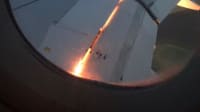
Aerospace & Defense Tech Briefs
GoFly Prize Invites Innovators to Shape Future of Flight, Compete for $1.8M in Prizes
Aerospace & Defense Tech Briefs
Curtiss-Wright and Honeywell Team to Develop Cloud-Enabled Flight Recorders of the Future
Aerospace & Defense Tech Briefs
Bell Nexus Full-Scale Air Taxi Design Debuts, Taps Novel VTOL, Hybrid Propulsion, Energy Storage, and Avionics Technologies
Top Stories
NewsRF & Microwave Electronics
 Microvision Aquires Luminar, Plans Relationship Restoration, Multi-industry Push
INSIDERAerospace
 A Next Generation Helmet System for Navy Pilots
INSIDERDesign
 New Raytheon and Lockheed Martin Agreements Expand Missile Defense Production
INSIDERMaterials
 How Airbus is Using w-DED to 3D Print Larger Titanium Airplane Parts
NewsPower
 Ford Announces 48-Volt Architecture for Future Electric Truck
ArticlesAR/AI

Webcasts
Electronics & Computers
 Cooling a New Generation of Aerospace and Defense Embedded...
Automotive
 Battery Abuse Testing: Pushing to Failure
Power
 A FREE Two-Day Event Dedicated to Connected Mobility
Unmanned Systems
 Quiet, Please: NVH Improvement Opportunities in the Early Design Cycle
Automotive
 Advantages of Smart Power Distribution Unit Design for Automotive &...
Energy
 Sesame Solar's Nanogrid Tech Promises Major Gains in Drone Endurance