




Audi Confirms E-Tron EV to Use Cameras Instead of Side Mirrors
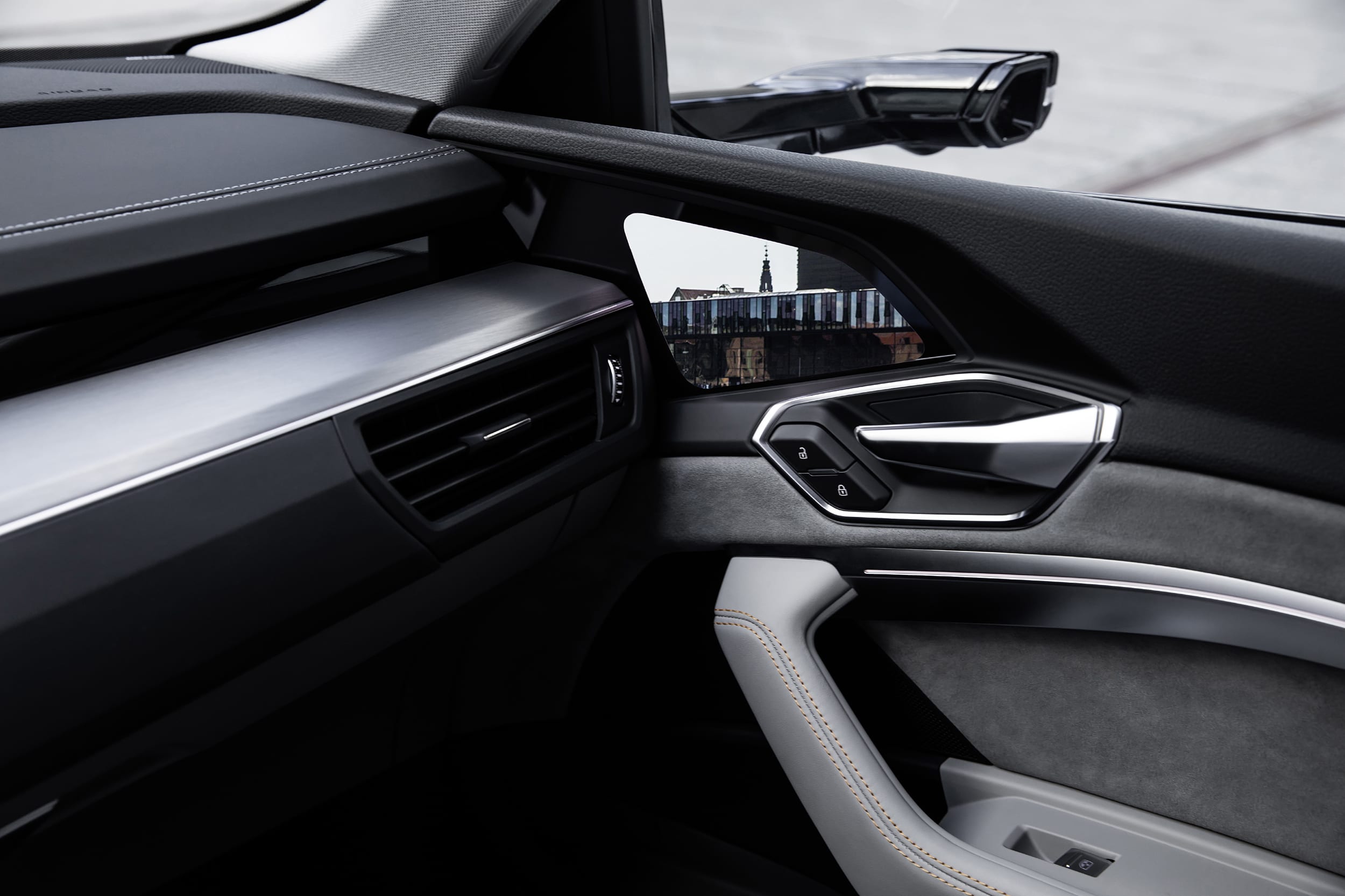
In what is claimed to be the world’s first series-production application of camera technology to replace exterior side-view mirrors, Audi announced that its upcoming e-tron electric vehicle (EV) will offer the aerodynamic drag-reducing camera mirrors for the 2019 e-tron when it launches later this year.
The optional side-view cameras will for now be available only in markets that have granted regulatory approval of the technology; the U.S., for one, has yet to approve side-view cameras for production vehicles. Japan in 2016 adopted new regulations to allow for use of side-view cameras and other “mirror-less” technology and in 2015 the United Nations World Forum for Harmonization of Vehicle Regulations approved side-view cameras that can comply with specific performance and placement standards.
What a drag (not)
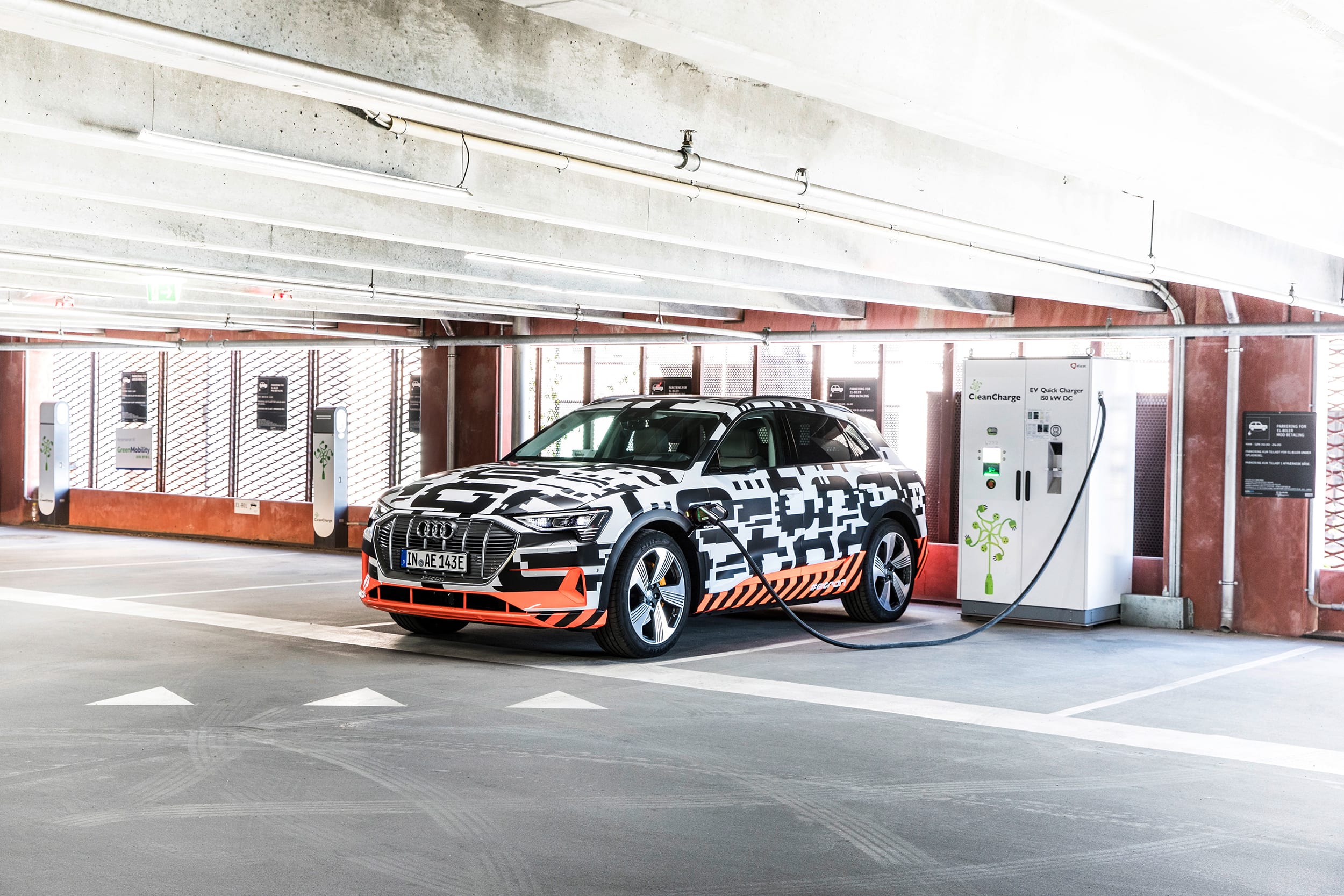
For the 2019 e-tron, Audi said in a release accompanying a preview of the production model’s interior that the new side-view cameras help contribute to the vehicle’s overall drag coefficient of 0.28, an impressively low drag figure for an SUV body shape. The company said the e-tron’s slippery form “contributes decisively” to the EV’s 400-km (249-mile) driving range that is based on the Worldwide Light-vehicle Test Procedure (WLTP) drive cycle.

“A hundredth of the drag-coefficient figure represents a range of around 5 km (3.1 miles) driving under everyday conditions,” Audi added. The company further said that the e-tron’s aerodynamic optimization equates to roughly 35 km (21.7 miles) of added driving range per full battery charge.

Audi also said the virtual mirrors reduce the e-tron’s overall width by a substantial 15 cm (5.9 in).
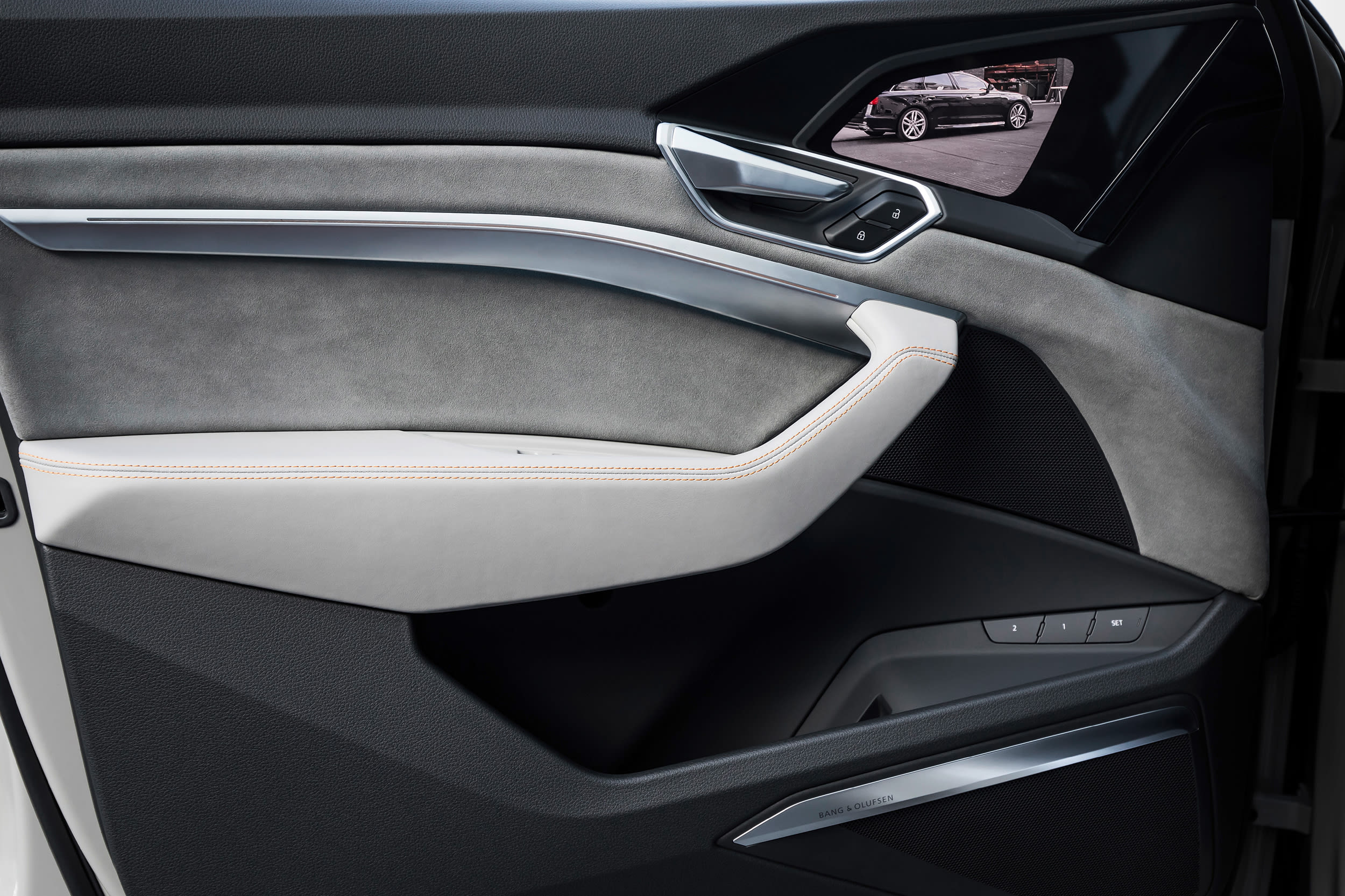
And the new camera-based technology offers other functional enhancements: the camera images are digitally processed and shown on high-contrast, 7-in. (178-mm) OLED displays near each door. The company said the driver can select various display settings and “the user can also zoom in and out of the image. The driver can choose from three views for different situations—for highway driving, for turning and for parking.”
Audi has yet to show the e-tron’s exterior in full-production guise, choosing to continue showing its first-ever battery-electric vehicle in camouflage until its official unveiling scheduled for the fall of this year. Audi has called the e-tron a fullsize SUV, although its 5-passenger footprint is likely to place it more in what the U.S. market might consider a midsize model segment.
More From SAE Media Group
Automotive Engineering
NAIAS 2019: Infiniti Debuts QX Inspiration SUV Concept
Automotive Engineering
2020 Range Rover Evoque
Automotive Engineering
2019 Nissan Leaf plus Nets Extended EV Range
Automotive Engineering
'Electrifying' New Range Rover Evoque
Automotive Engineering
2026 Toyota BZ: Improved, but Still Not a WheeeeeEV
Automotive Engineering
VW Introduces Singular ID.Buzz in Three-Row Layout
Autonomous Vehicle Engineering
Ford Gets in the ‘Hands-Free’ Game with BlueCruise
Off-Highway Engineering
CONEXPO 2023 Image Gallery
Automotive Engineering
Unreliable Electronics Are the New Prince of Darkness
Automotive Engineering
Hyundai Bears down on EV Charging, Sustainability
Automotive Engineering
2026 Escalade IQL Is Cadillac’s Biggest, Roomiest EV Yet
Automotive Engineering
CES: VinFast Previews Wild Concept Truck
Automotive Engineering
All-Electric Nissan Ariya Handles Ultra-Cold Temps on Pole to Pole Trek
Automotive Engineering
Mercedes-Benz Product Boss: Europe, North America EVs, EV Charging to Rapidly Get Better
Automotive Engineering
Illuminating New Roles for Vehicle Lighting
Automotive Engineering
Slate and SK Executives on Bringing the Inexpensive EV to Market
Automotive Engineering
Honda Pioneering New Manufacturing Tech for Zero Electrified Platform
Automotive Engineering
Volvo XC90 Line-Up Keeps Hybrid Futures Safe
Automotive Engineering
2024 Honda Prologue Is a Cautious Invitation to Drive Electric
Automotive Engineering
BMW Engineers for the EV-Transition Reality
Automotive Engineering
Airflow Concept Presents Chrysler EV Direction
Automotive Engineering
Cadillac Lyriq Spearheads GM’s EV Assault
Automotive Engineering
Stellantis Unveils STLA Large Platform for D, E Segments
Automotive Engineering
Honda E Prototype Makes It Simple, Again
Automotive Engineering
Engineering a ‘Beast’ of an Electric SUV

Automotive Engineering
Driving the New Nissan Leaf Prototype
Automotive Engineering
Nissan Leaf Gets Updates – and Stays the Same – Where It Matters Most
Automotive Engineering
2025 Hyundai Ioniq 5 Brings All the Right Updates
Automotive Engineering
Vinfast Needs to Stop Digging
Top Stories
NewsSensors/Data Acquisition
 Microvision Aquires Luminar, Plans Relationship Restoration, Multi-industry Push
INSIDERRF & Microwave Electronics
 A Next Generation Helmet System for Navy Pilots
INSIDERWeapons Systems
 New Raytheon and Lockheed Martin Agreements Expand Missile Defense Production
NewsAutomotive
 Ford Announces 48-Volt Architecture for Future Electric Truck
INSIDERAerospace
 Active Strake System Cuts Cruise Drag, Boosts Flight Efficiency
ArticlesTransportation

Webcasts
Aerospace
 Cooling a New Generation of Aerospace and Defense Embedded...
Energy
 Battery Abuse Testing: Pushing to Failure
Power
 A FREE Two-Day Event Dedicated to Connected Mobility
Automotive
 Quiet, Please: NVH Improvement Opportunities in the Early Design Cycle
Electronics & Computers
 Advantages of Smart Power Distribution Unit Design for Automotive &...
Unmanned Systems
 Sesame Solar's Nanogrid Tech Promises Major Gains in Drone Endurance