




Mercedes-Benz AMG GT R Wins German Engineers’ Lightweighting Award

Daimler’s Mercedes-Benz unit announced in mid-June that the Mercedes AMG GT R supercar is the winner of the Association of German Engineers’ (VDI) first-ever award for vehicle lightweight design.

The VDI co-sponsored the new award with the Carbon Composites technology network, Daimler said in a release. The award was presented at a new auto industry lightweighting congress also organized by VDI and Carbon Composites.
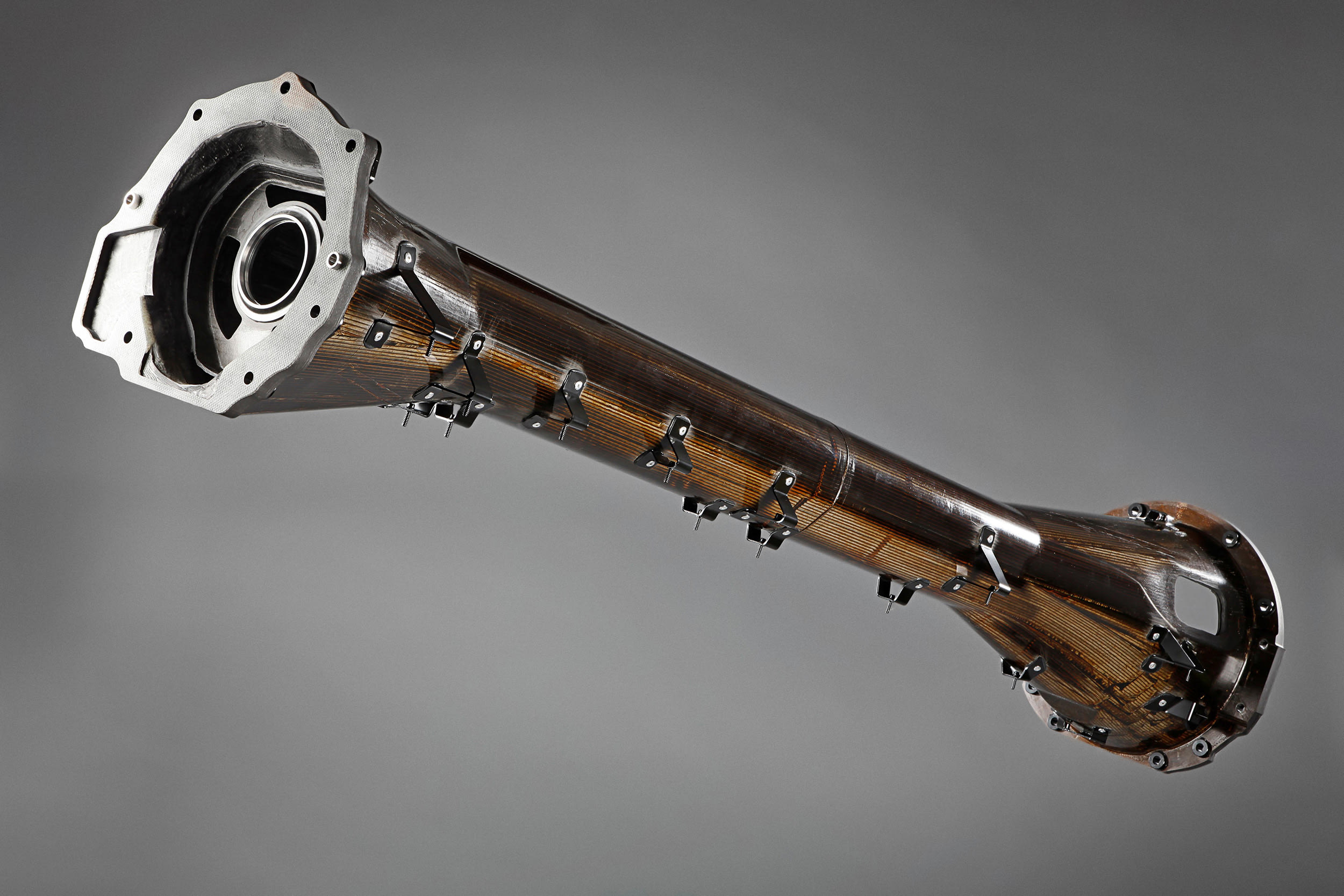
The AMG GT-R, which starts at $157,000 in the U.S. market, features a number of unique lightweight solutions, chief being a one-piece carbon-fiber torque tube that, at about 30.6 lb (13.9 kg), is approximately 40% lighter than its three-piece aluminum counterpart in the standard AMG GT. In addition to its weight reduction, the company said the carbon-fiber torque tube also increases torsional rigidity by roughly 7.5%. The car’s driveshaft also is constructed of carbon-fiber reinforced polymer (CFRP), which cuts weight yet still is able to handle the twist of 519 lb·ft (700 N·m) and 577 hp developed by the car’s twin-turbocharged 4.0-L V8.
The AMG GT-R also employs two diagonal braces in the engine bay to increase front-end stiffness. These also are carbon fiber and weight approximately 50% less than steel counterparts. The car, meant primarily for racetrack use, has composite wheel-catch struts to help to deflect the front wheels toward the frame side members as a deliberate function of crash kinematics; these composite struts also are about 50% lighter than equivalent steel components. The company said it chose composite material rather than carbon fiber for catch struts because the composite material has the advantage of being significantly more deformable while still providing good material strength.
Mercedes said in a release, “The performance-oriented mixture of materials made up of magnesium, aluminum and carbon-fiber in the Mercedes-AMG GT R body is an example of how the weight and vehicle function of the Mercedes-AMG GT's aluminum body structure can be significantly improved through the targeted development of key components such as the roof, wings and crash, stiffening and aerodynamic elements as well as the torque tube with a carbon-intensive design – following the strict principle of having the right material in the right place.”
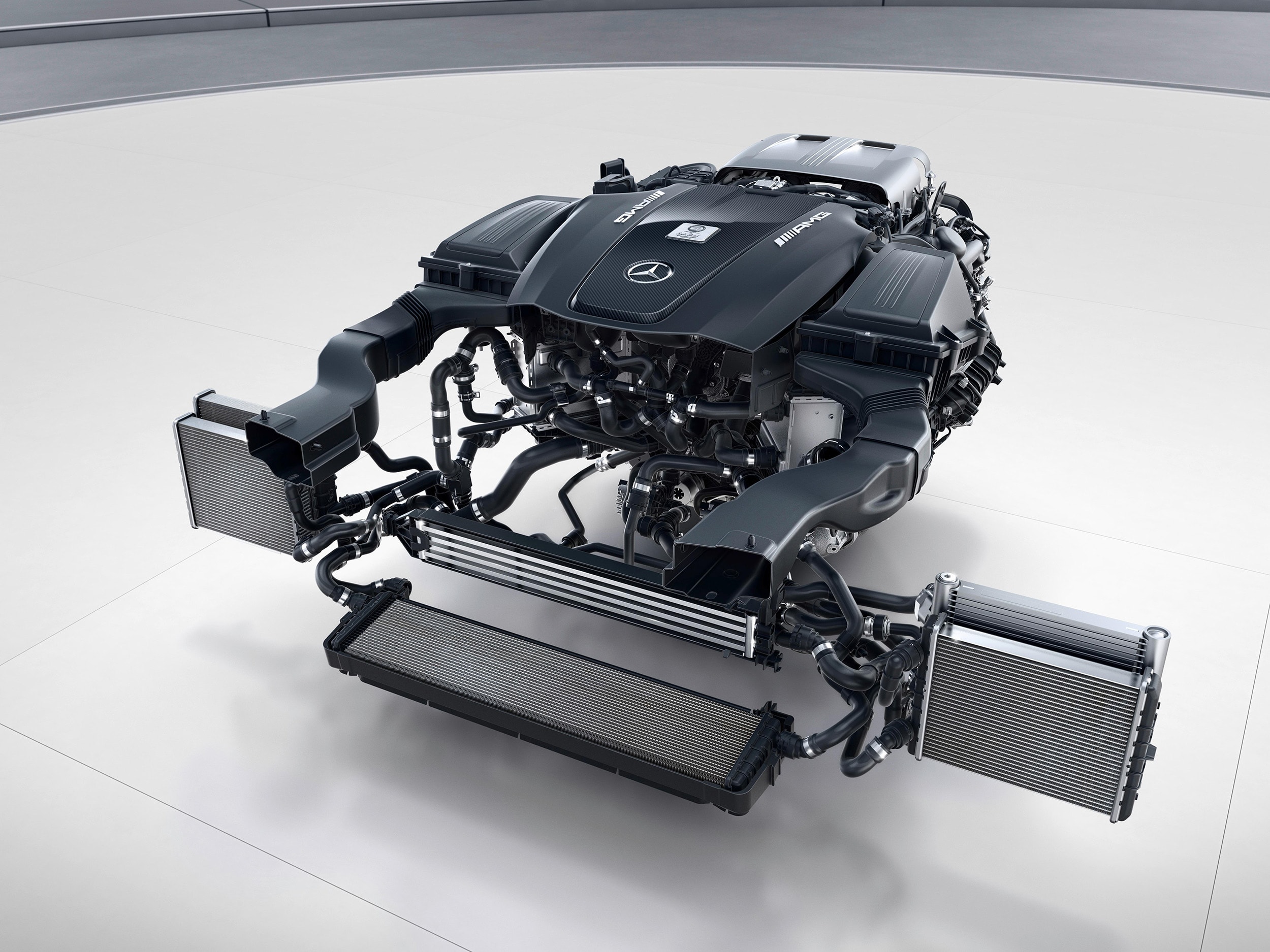
The company added that despite the GT R’s host of additional equipment, overall weight was reduced by nearly 28 lb (12.5 kg) compared with the standard AMG GT and “In addition, great importance was attached to the use of the latest technologies to prepare the cost-efficient use of carbon-fiber structures for larger volumes.”
More From SAE Media Group
Automotive Engineering
Mercedes-AMG’s SLS Departure Opens Door to New GT
Automotive Engineering
Aston Martin CEO Andy Palmer Maps out the Future
Automotive Engineering
Tested: 2025 Mercedes-Benz G 580 Spins up a Winner
Automotive Engineering
Lutz and Fisker Introduce New Viper-Powered Force 1 Supercar

Automotive Engineering
Jaguar Reveals Its 2040 Future and Electrifies the E-Type
Automotive Engineering
McLaren Upgrades 12C with 650S Performance Variant
Automotive Engineering
Engineering the 2022 Toyota Tundra
Automotive Engineering
Mercedes Boosts Off-Road Prowess of 2019 G-Wagen
Automotive Engineering
First Drive: 2027 Mercedes-Benz CLA Hybrid
Automotive Engineering
Mercedes EQ Concept Previews 2019 Electric SUV
Automotive Engineering
805-Hp Mercedes-AMG GT Concept Hybrid Heralds Production Model
Automotive Engineering
Volvo "Triple Boost" Engine Uses Twin Turbos plus E-Compressor
Automotive Engineering
M3 Sedan, M4 Coupé Benefit from BMW’s Racing, CFRP Experience
Automotive Engineering
Mercedes-Benz CL63 AMG Becomes S63 AMG for 2015
Automotive Engineering
Chevrolet Ups the Performance Ante with MY2015 Corvette Z06
Automotive Engineering
What We’re Driving: Mercedes-AMG E 53 4Matic+
Automotive Engineering
2018 Lexus LS500
Automotive Engineering
Cadillac Engineers a 'Bi-Modal' 200-Mph CTS-V
Off-Highway Engineering
Western Star Adds ‘Weight Sensitive’ 47X to Vocational Lineup
Automotive Engineering
Mercedes Unveils Tech-Heavy Electric G-Class
Automotive Engineering
Alfa Romeo's First SUV Shares New RWD Sedan Platform, Engines
Automotive Engineering
Dodge Debuts Charger Daytona SRT Concept Electric Musclecar
Automotive Engineering
Ford’s Max Mustang Brings ‘World Class’ into the Sports Coupe Conversation
Automotive Engineering
McLaren Faces the Electrified and Autonomous Future
Automotive Engineering
Audi TT Quattro Sport
Automotive Engineering
Alfa Romeo Finally Returns to U.S. with 4C
Automotive Engineering
With 2019 Sierra, GMC Puts Brand Differentiation Behind It—literally
Automotive Engineering
Supercar Concept Previews Lamborghini Plug-In Possibilities
Automotive Engineering
ZF's CEO Talks About Lightweight Vehicle Applications
Top Stories
INSIDERManufacturing & Prototyping
 How Airbus is Using w-DED to 3D Print Larger Titanium Airplane Parts
INSIDERManned Systems
 FAA to Replace Aging Network of Ground-Based Radars
NewsTransportation
 CES 2026: Bosch is Ready to Bring AI to Your (Likely ICE-powered) Vehicle
NewsSoftware
 Accelerating Down the Road to Autonomy
EditorialDesign
 DarkSky One Wants to Make the World a Darker Place
INSIDERMaterials
 Can This Self-Healing Composite Make Airplane and Spacecraft Components Last...
Webcasts
Defense
 How Sift's Unified Observability Platform Accelerates Drone Innovation
Automotive
 E/E Architecture Redefined: Building Smarter, Safer, and Scalable...
Power
 Hydrogen Engines Are Heating Up for Heavy Duty
Electronics & Computers
 Advantages of Smart Power Distribution Unit Design for Automotive...
Unmanned Systems
 Quiet, Please: NVH Improvement Opportunities in the Early Design...
