




Ford’s 1.0-L Triple Will Add Cylinder Deactivation in 2018
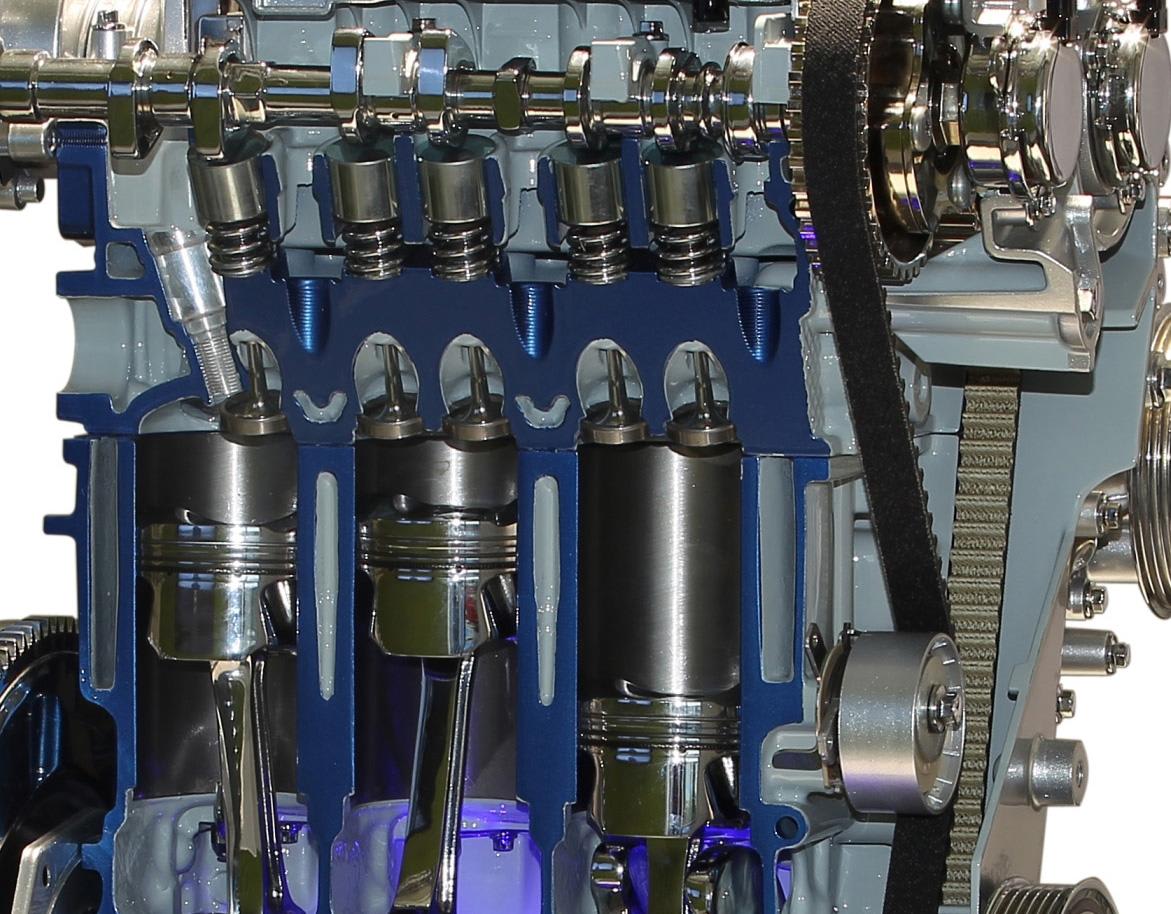
A 1.0-L three-cylinder gasoline engine may not seem a likely candidate for cylinder deactivation, but Ford is doing just that with diminutive EcoBoost triple. Production is slated to begin by early 2018 with the technology—which turns the engine into a 670-cc twin under certain load conditions—expected to deliver up to a 6% fuel saving with associated CO2 emissions reduction.
Claimed as a “world first” for a triple, Ford believes its deactivation technology will meet refinement requirements and confound skeptics that such a system applied to a 3-cylinder engine would be unacceptable in NVH terms.
The EcoBoost effectively enters twin-cylinder operation in some cruise and light engine load conditions. Depending on throttle position it reverts to 3-cylinder operation when conditions change—in a claimed 14 ms.
According to Bob Fascetti, Vice President Global Powertrain Engineering, the development demonstrates the continuing potential of gasoline engine technology.
Ford worked with Schaeffler Group on the variable displacement system, which will operate up to 4500 rpm, using oil pressure to activate a special valve rocker to interrupt the connection between the camshaft and one cylinder. Ford engineers reveal that a single-piece camshaft module similar to that used for its EcoBlue diesel provides added space in the cylinder head for new oil channels and the valve switching components.
Further changes to the regular engine include the use of a new dual-mass flywheel and a vibration damping clutch disc to help counter engine oscillations set up in twin-cylinder mode that would otherwise manifest vibration, particularly at low revs. Intake and exhaust valves are closed when the system is active, trapping gases to provide a “spring effect” to help balance forces across all cylinders and to retain temperatures inside the cylinder to ensure fuel efficiency when reactivated, engineers report.
Also included in the system are new engine mounts, drive shafts and suspension bushes, a new camshaft chain and metal-injection-molded valve rockers.
About 20% of all Ford models sold in Europe during 2015 used the 1.0-L triple, which can be specified for 11 models sold there.
Ford gave no indication as to what the cylinder deactivation system will add to unit cost, nor how much, if any, of that would be passed to the end-user.
More From SAE Media Group
Automotive Engineering
2016 Pentastar V6 Adds New VVT, Cooled EGR
Automotive Engineering
Extending a Wankel Future on Hydrogen Fuel
Automotive Engineering
V-CR, Water Injection, New EGR Methods Top SAE Engines Symposium
Off-Highway Engineering
Improving Heavy-duty Engine Component Efficiencies
Automotive Engineering
New Technology for Exhausting Jobs
Automotive Engineering
New Aramco Research Center in Detroit to Advance Fuels and Engine Development
Automotive Engineering
Camless Engine Evaluation Nearly Complete in China
Automotive Engineering
Pinnacle Engines Partners with India's Greaves Cotton on New Low-Emissions Technology
Tech Briefs INSIDER
Replacing Camshafts with Valves Paves Way for Cheaper, Greener Engines
Off-Highway Engineering
Lund University Runs Truck Diesel Engines on Gasoline to Boost Efficiency, Reduce Emissions
Automotive Engineering
New 90-Degree Turbo V6 Leads Audi's Hybridization Blitz
Automotive Engineering
German Spark-Ignited Compression-Ignition Research Paralleling Mazda’s SPCCI
Off-Highway Engineering
In Aftertreatment, less Is More
Automotive Engineering
Tenneco Unveils Emission-Control Solutions for Euro 6c
Automotive Engineering
Mazda Pushes the Propulsion Frontier
Automotive Engineering
Achates Power OP Engine Begins Real-World Test Phase
Automotive Engineering
Audi Evolves the Miller Cycle in Its New 2.0-L Spark-Ignition Engine
Off-Highway Engineering
Navistar Updates A26 Engine, Improves FE by 4%
Automotive Engineering
Tula Turns Its Tech Toward EV Motor Control
Automotive Engineering
More sting for the STINGRAY
Automotive Engineering
V-Charging Aims to Add Muscle to Downsized Engines
Aerospace & Defense Tech Briefs
X Marks the Spot
Automotive Engineering
New Peugeot 3-Cylinder Gasoline Engine Family Optimizes Combustion
Off-Highway Engineering
Isuzu Motors Announces Heavy-Duty Natural Gas Engine for Off-Highway
Automotive Engineering
New Piston Ring Engineered for Lower Emissions Targets
Aerospace & Defense Tech Briefs
2050 Aircraft Engine Designs Go Radical, Part 2
Off-Highway Engineering
Combustion Engines Carry on in Construction
Automotive Engineering
OEMs Expand Testing of FEV Variable-Compression Ratio Engine
Automotive Engineering
Delphi and Hyundai GDCI Program Aims to Top Diesel Efficiency
Automotive Engineering
Injecting a Sense of Urgency to Clean up Diesels
Top Stories
INSIDERManufacturing & Prototyping
 How Airbus is Using w-DED to 3D Print Larger Titanium Airplane Parts
INSIDERManned Systems
 FAA to Replace Aging Network of Ground-Based Radars
NewsTransportation
 CES 2026: Bosch is Ready to Bring AI to Your (Likely ICE-powered) Vehicle
NewsSoftware
 Accelerating Down the Road to Autonomy
EditorialDesign
 DarkSky One Wants to Make the World a Darker Place
INSIDERMaterials
 Can This Self-Healing Composite Make Airplane and Spacecraft Components Last...
Webcasts
Defense
 How Sift's Unified Observability Platform Accelerates Drone Innovation
Automotive
 E/E Architecture Redefined: Building Smarter, Safer, and Scalable...
Power
 Hydrogen Engines Are Heating Up for Heavy Duty
Electronics & Computers
 Advantages of Smart Power Distribution Unit Design for Automotive...
Unmanned Systems
 Quiet, Please: NVH Improvement Opportunities in the Early Design...
