




LED and ADAS Technologies Fuel Growth for Taiwan's Suppliers
Emerging markets and technologies are both creating openings for Taiwanese suppliers. China’s burgeoning automotive market is a primary target for companies that focus on OEM sales, while emerging technologies like LEDs and head-up displays (HUD) are also providing opportunities.
China’s many automakers are helping fuel growth for several Taiwanese companies. Car sales are up, and some Chinese automakers are aggressive about adopting new systems like HUD.
“In China, they’re accepting new technologies quickly, we have several HUD projects in China right now,” said Dennis Chen, Sales Manager at E-Lead. “Combiner types will be the mainstream for mid-range vehicles, windshield systems are more for luxury vehicles.”
Taiwanese component makers are also trying to increase their presence in Europe, where transitions to new technologies like white LEDs are creating openings.
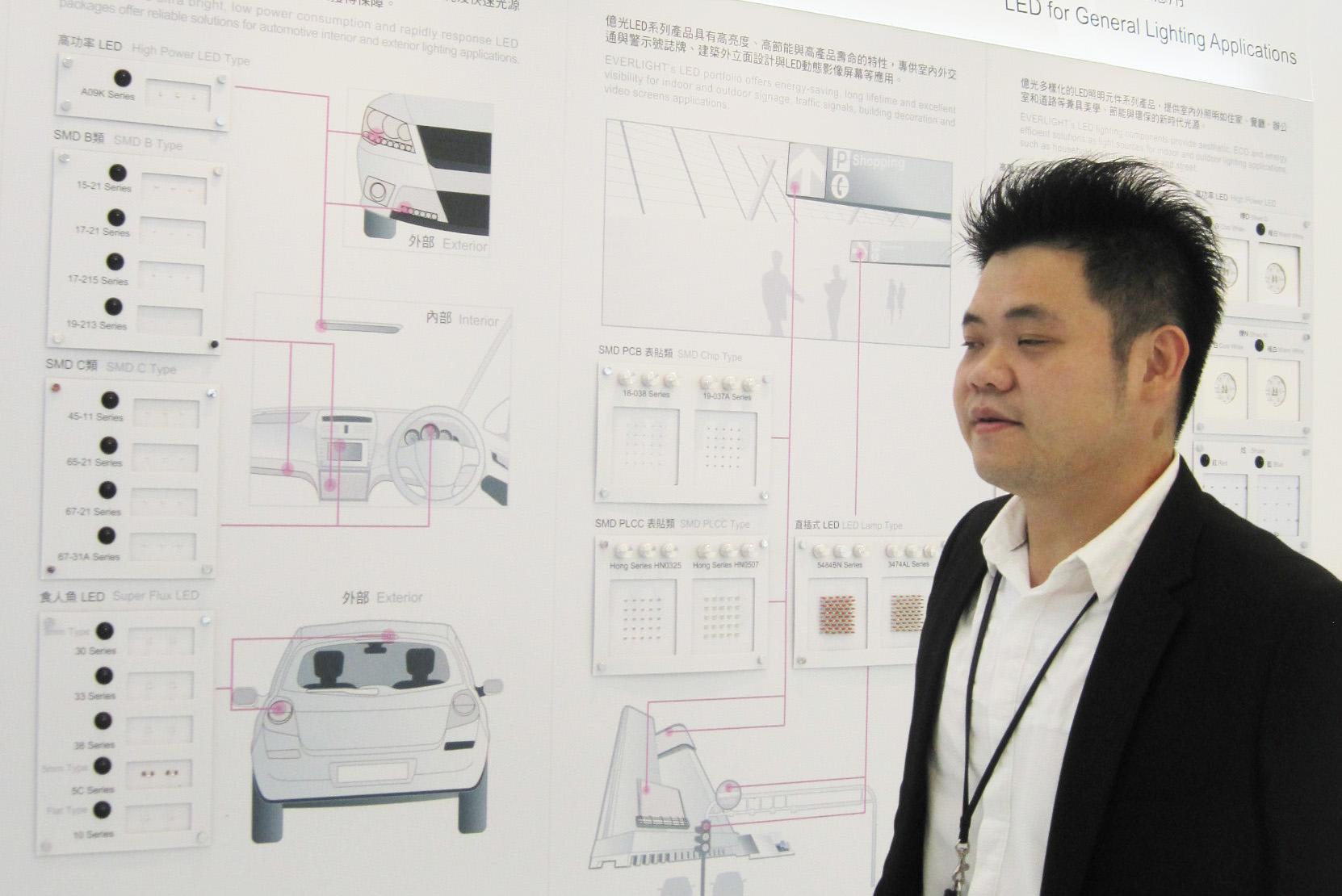
“I think we can continue to grow at about 12% in automotive,” said Matt Liu, Automotive Business Unit Director at Everlight Electronics Co., ranked in the top 10 for packaged LED shipments by IHS Markit. “Our main sales are in China, but we’re focusing more on Europe, they’re looking for new suppliers of white LEDs. European countries want warmer colors for low beams than China.”
Other companies are also moving into areas like advanced driver assistance systems (ADAS). Some of these moves into new fields will be highlighted at the upcoming Taipei AMPA/Autotronics Conference in April.
For example, Cub Elecparts Inc., known for making aftermarket tire pressure monitoring systems, is expanding into the ADAS market. Cub purchased Harbinger, a radar integrator, early this year, gaining 77-GHz capabilities. That could help the company expand OEM sales, which currently account for roughly 10% of revenues, according to Lily Chen, Sales Manager at Cub.
Taiwanese companies are often known for low pricing, but many are changing that image by pushing technology forward. E-Lead recently unveiled a HUD system that it says surpass the performance of competitive hardware from a European Tier 1.
“Our combiner system consumes 50% less energy, so 50% less heat is produced,” said E-Lead's Chen. “It’s also 25% smaller compared to Continental, our leading competitor.”
While some suppliers are pushing their technical skills, pricing is always a factor in automotive. LEDs give stylists a lot of flexibility, but many cost-sensitive markets won’t switch from bulbs until pricing premiums disappear.
“Cost is still the biggest barrier for LEDs,” Liu said. “We think the time when LEDs for headlights becoming cheaper than bulbs may be around 2020.”
Pricing is also behind the optimism held by many HUD suppliers. Combiner systems use dedicated screens, so they’re cheaper than systems that shine images onto specially designed windshields.
“About 70% of our sales use combiner technology, about 30% are windshield systems,” Chen said. “Combiners are easier to design in and maintain.”
More From SAE Media Group
Automotive Engineering
Taiwan’s Planners Predict Bullish Growth for Automotive Electronics
Automotive Engineering
Android, CarPlay Alter Taiwanese Companies' Strategies
Automotive Engineering
OEMs, China Are Targets of Many Taiwanese Manufacturers
Automotive Engineering
ZF and Hella Launch Sensor-Systems Development Partnership
Automotive Engineering
Continental Shows Next-Generation Highly Automated Car
Automotive Engineering
OEMs Continue to Diversify MaaS, Expand UX
Automotive Engineering
Panasonic Enters Market with Reduced-Size Heads-Up Display
Automotive Engineering
Researching the Green Zone of Plug-In Hybrid Electric Driving
Autonomous Vehicle Engineering
Why Car Washes Threaten Automated Vehicles
Automotive Engineering
Nissan's ProPILOT Assist Is More Than Lane-Keeping
Automotive Engineering
2016 SAE Congress: Fear of the Driverless Car as 2020 Approaches
Off-Highway Engineering
Forward-Looking Lidar Can Revolutionize Driver-Assistance Systems
Automotive Engineering
Renault ARMs Its Twizy EV with Open-Source Architecture
Automotive Engineering
Daimler and Uber Team up to Bring More Self-Driving Cars to the Road
Automotive Engineering
CES 2017: Faraday Future Shows Its First Vehicle—the FF 91
Automotive Engineering
Automatic Braking Pact for 2022 Will Alter System Development
Automotive Engineering
Ford Scores Greater Autonomous Capability with New Velodyne Ultra Puck LiDAR
Automotive Engineering
AT&T, Airbiquity Team up for Connected-Vehicle Services
Automotive Engineering
The Ever-Changing Mobility Landscape
Automotive Engineering
Toyota Sticking with Measured, ‘Teammate’ Approach to Autonomous Development
Automotive Engineering
Autonomous Vehicle Challenge Ramps up Competition at Convergence
Automotive Engineering
Broader Data Sharing for Connected Transportation Will Require Widespread Collaboration
Automotive Engineering
Google Goes Hands- and Feet-Free in Pursuit of Driverless Cars
Automotive Engineering
SAE Publishes Terminology Standard for Automated Driving Systems
Automotive Engineering
Ford Demonstrates Collision Avoidance with Automatic Evasive Steering
Automotive Engineering
New Alliance to Bring Android Platform to the Car
Automotive Engineering
BMW, Honda and Yamaha Form Connected Motorcycle Consortium
Automotive Engineering
Honda Introduces 'Industry First' Intelligent Adaptive Cruise Control
Automotive Engineering
700 Miles, Hands-Free!
Automotive Engineering
Magna Safety Systems Give Parents "Eyes in the Back of Their Heads"
Top Stories
INSIDERManufacturing & Prototyping
 How Airbus is Using w-DED to 3D Print Larger Titanium Airplane Parts
INSIDERManned Systems
 FAA to Replace Aging Network of Ground-Based Radars
NewsTransportation
 CES 2026: Bosch is Ready to Bring AI to Your (Likely ICE-powered) Vehicle
NewsSoftware
 Accelerating Down the Road to Autonomy
EditorialDesign
 DarkSky One Wants to Make the World a Darker Place
INSIDERMaterials
 Can This Self-Healing Composite Make Airplane and Spacecraft Components Last...
Webcasts
Defense
 How Sift's Unified Observability Platform Accelerates Drone Innovation
Automotive
 E/E Architecture Redefined: Building Smarter, Safer, and Scalable...
Power
 Hydrogen Engines Are Heating Up for Heavy Duty
Electronics & Computers
 Advantages of Smart Power Distribution Unit Design for Automotive...
Unmanned Systems
 Quiet, Please: NVH Improvement Opportunities in the Early Design...
