




Ford Scores Greater Autonomous Capability with New Velodyne Ultra Puck LiDAR

Ford Motor Co. was widely expected to announce an autonomous-vehicle production deal with Google during the 2016 CES in Las Vegas. Instead, Ford CEO Mark Fields revealed that his company has begun evaluating a new, smaller-size LiDAR that will help enable vehicle autonomy at SAE Levels 4 and 5. Ford claims this is the first LiDAR capable of supporting fully autonomous ADAS (automated driver assistance system) performance.

Ford will equip its expanding fleet of 30 Fusion Hybrid autonomous research vehicles with the new 32-channel Hybrid Ultra Puck solid-state LiDAR sensors supplied by Velodyne Acoustics Inc. during early 2016, Fields said. The vehicles will be tested on the road in Arizona, California, and Michigan. The third-generation sensor—resembling a stack of two hockey pucks—is significantly more compact than current-generation, cylindrical form-factor HDL-32E LiDAR units.
According to Fields, it is small enough (thanks to its solid-state architecture) to be mounted on the exterior mirrors while extending the 3D sensing range to 200 m (656 ft) — about twice that of the incumbent technology.
And Ford’s CEO is equally excited about the Ultra Puck’s price. Velodyne has set target pricing of less than $500 per unit in automotive mass production quantities—a significant cost reduction from the $7900 per unit of Velodyne’s previous compact LiDAR champ, the VLP-16 (16 channel) Puck that weighs 800 g (1.76 lb).
While Velodyne has not yet released a specifications sheet for the Ultra Puck, a Ford engineer on the Fusion Hybrid autonomous test program told Automotive Engineering that the new LiDAR will have greater 3D mapping capability than the VLP-16, which is capable of measuring 300,000 points per second in a 360° horizontal field of vision (FOV), and ± 15° vertical FOV, according to Velodyne. Power consumption will be equal to or less than the 12W rating of the HDL-32E.
Last November, Ford became the first OEM to test an autonomous vehicle at the University of Michigan’s Mcity, the world's first full-scaled simulated urban environment. Ford’s autonomous test fleet is in the advanced-engineering stage, according to CTO Raj Nair. The company expects to introduce an autonomous production vehicle by 2020.
More From SAE Media Group
Automotive Engineering
Ford Promises Full-Autonomous Car in 2021
Automotive Engineering
CES 2017: Automotive Suppliers Eclipsing OEMs in Advanced Tech
Automotive Engineering
ZF and Hella Launch Sensor-Systems Development Partnership
Off-Highway Engineering
Forward-Looking Lidar Can Revolutionize Driver-Assistance Systems
Automotive Engineering
SAE Publishes Terminology Standard for Automated Driving Systems
Automotive Engineering
SAE Offers Free Summary Document on Levels of Vehicle Automation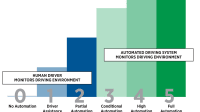
Automotive Engineering
Autonomous Vehicle Challenge Ramps up Competition at Convergence
Automotive Engineering
Toyota Sticking with Measured, ‘Teammate’ Approach to Autonomous Development
Automotive Engineering
Nvidia’s New Level 2+ Autonomy Platform Is Making Cars Safer Today

Automotive Engineering
2016 SAE Congress: Fear of the Driverless Car as 2020 Approaches
Automotive Engineering
Lower-Cost Lidar Is Key to Self-Driving Future
Automotive Engineering
Subaru Uses ANSYS Tools to Accelerate Hybrid Vehicle Design
Automotive Engineering
Sharpening the Focus on OBD-II Security
Automotive Engineering
SAE Convergence 2016: Automakers, Suppliers Firm That Autonomous Driving Not Decades Away
Autonomous Vehicle Engineering
Why Car Washes Threaten Automated Vehicles
Automotive Engineering
Nissan's ProPILOT Assist Is More Than Lane-Keeping
Automotive Engineering
Ford Demonstrates Collision Avoidance with Automatic Evasive Steering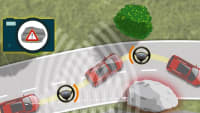
Automotive Engineering
Car Sickness, Occupant Seating and Politics Will Shape Autonomous Vehicle Interiors
Automotive Engineering
BorgWarner Prepares Manual Gearchange for ADAS Vehicles

Automotive Engineering
The Impact of Shifting to the ‘Softer’ Side
Automotive Engineering
Delphi Showcasing Next-Gen Autonomous System at CES 2017
Automotive Engineering
SAE Eye on Engineering Quick Take: Selling Vehicle Data
Automotive Engineering
Google Goes Hands- and Feet-Free in Pursuit of Driverless Cars
Automotive Engineering
AT&T, Airbiquity Team up for Connected-Vehicle Services
Automotive Engineering
Ford Focuses on Cameras
Automotive Engineering
Broader Data Sharing for Connected Transportation Will Require Widespread Collaboration
Automotive Engineering
Continental Shows Next-Generation Highly Automated Car
Automotive Engineering
The Ever-Changing Mobility Landscape
Top Stories
INSIDERManufacturing & Prototyping
 How Airbus is Using w-DED to 3D Print Larger Titanium Airplane Parts
INSIDERManned Systems
 FAA to Replace Aging Network of Ground-Based Radars
NewsTransportation
 CES 2026: Bosch is Ready to Bring AI to Your (Likely ICE-powered) Vehicle
NewsSoftware
 Accelerating Down the Road to Autonomy
EditorialDesign
 DarkSky One Wants to Make the World a Darker Place
INSIDERMaterials
 Can This Self-Healing Composite Make Airplane and Spacecraft Components Last...
Webcasts
Defense
 How Sift's Unified Observability Platform Accelerates Drone Innovation
Automotive
 E/E Architecture Redefined: Building Smarter, Safer, and Scalable...
Power
 Hydrogen Engines Are Heating Up for Heavy Duty
Electronics & Computers
 Advantages of Smart Power Distribution Unit Design for Automotive...
Unmanned Systems
 Quiet, Please: NVH Improvement Opportunities in the Early Design...
