




Google Goes Hands- and Feet-Free in Pursuit of Driverless Cars
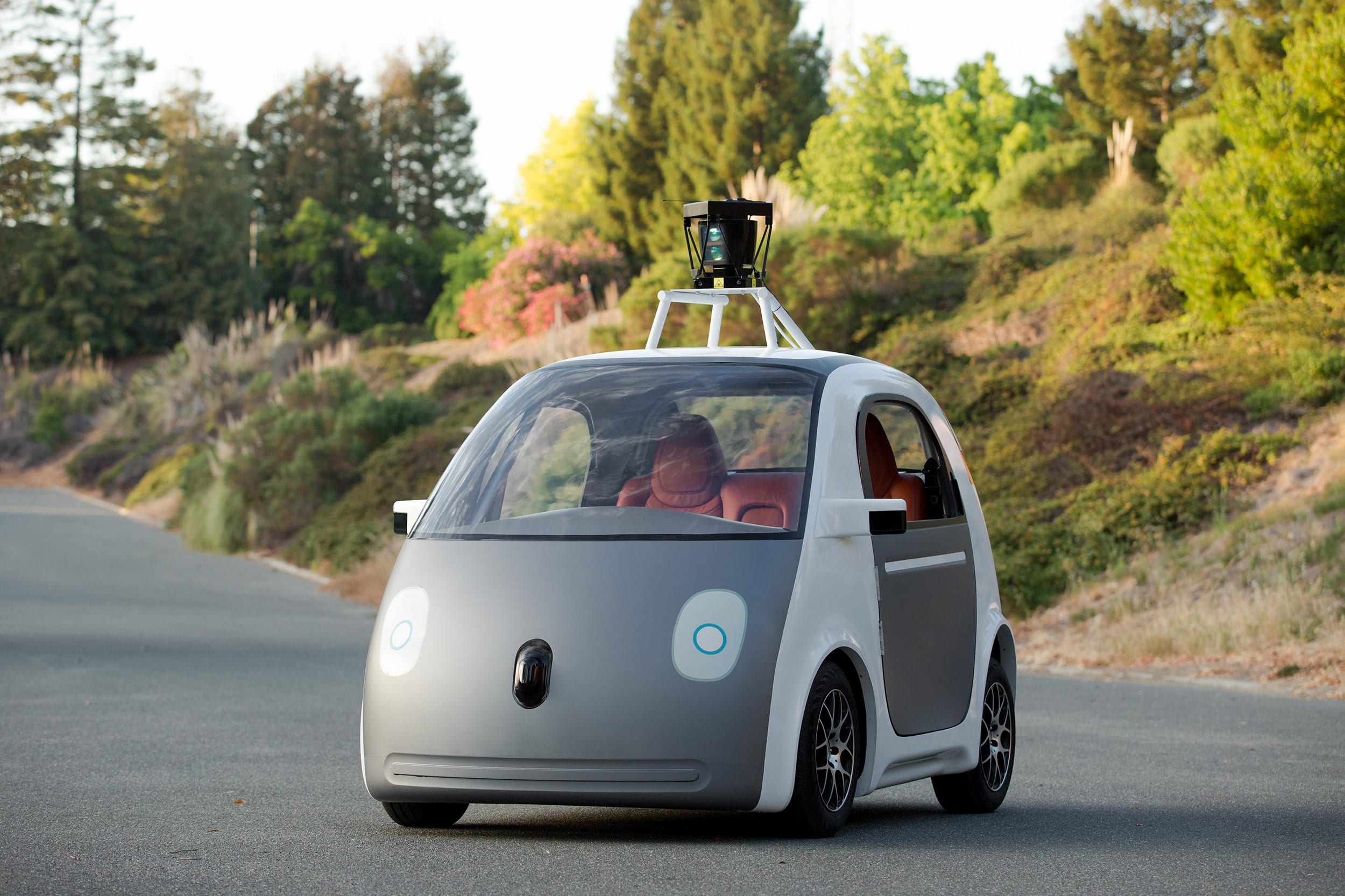
Even though its first prototype car has no pedals or steering wheel, it's correct to say that Google is putting the pedal to the metal in its quest to develop fully self-driving vehicles. The company on May 27 released a photo of its prototype and announced that it will build about 100 of them. Later this summer, it will "start testing early versions of these vehicles that have manual controls. If all goes well, we’d like to run a small pilot program here in California in the next couple of years."
Automotive Engineering is waiting for clarification/elaboration from Google on a number of matters, including why the early cars will have manual controls when the one shown on its website and demonstrated in its video ( https://www.youtube.com/watch?v=CqSDWoAhvLU ) doesn't have any.
The press release further states that "the vehicles will be very basic—we want to learn from them and adapt them as quickly as possible—but they will take you where you want to go at the push of a button. And that's an important step toward improving road safety and transforming mobility for millions of people."
New sensors on the cars can "see" out in all directions to a distance of more than 200 m (650 ft). Based on sensor inputs, Google software takes the car to its destination while avoiding other drivers' blind spot, "nudging away from" large trucks, and pausing before proceeding after a traffic signal turns green as an extra precaution. Speed is capped at 25 mph (40 km/h).
The prototypes will run the same software as Google had developed for it fleet of Lexus test models. For the prototypes, the sensors will be integrated, rather than "bolted on wherever they fit" as they were for the Lexus models.
Incorporated into the prototypes for evaluation will be several innovative safety features, such as a "foam" front end and a flexible windshield.
Google has contracted Roush Enterprises in the Detroit area to build the first 100 cars, confirms a Roush source. They should be road-ready by early 2015. Roush did all the engineering for the diminutive vehicles, which are based on a unique architecture, not derived from a production vehicle. Industry tier auto suppliers are supporting the program, according to the Roush source.
Watch a video of Google's self-driving car chief discuss the project at https://www.youtube.com/watch?v=cdeXlrq-tNw .
More From SAE Media Group
Automotive Engineering
Google's Krafcik Talks Self-Driving Vehicle Development
Automotive Engineering
Daimler and Uber Team up to Bring More Self-Driving Cars to the Road
Automotive Engineering
ZF and Hella Launch Sensor-Systems Development Partnership
Automotive Engineering
Autonomous Vehicle Challenge Ramps up Competition at Convergence
Automotive Engineering
It Takes Two
Automotive Engineering
SAE Publishes Terminology Standard for Automated Driving Systems
Automotive Engineering
Nissan's ProPILOT Assist Is More Than Lane-Keeping
Automotive Engineering
Reality Check for Robot Cars
Automotive Engineering
SAE Convergence 2016: Automakers, Suppliers Firm That Autonomous Driving Not Decades Away
Automotive Engineering
‘Cruising Chauffeur’ Demos SAE Level 3 Autonomy
Automotive Engineering
Nvidia’s New Level 2+ Autonomy Platform Is Making Cars Safer Today
Automotive Engineering
Driver Still Has a Seat in Delphi's Automated-Driving Vision
Automotive Engineering
Continental Shows Next-Generation Highly Automated Car
Autonomous Vehicle Engineering
Why Car Washes Threaten Automated Vehicles
Automotive Engineering
Ford Promises Full-Autonomous Car in 2021
Automotive Engineering
Toyota Sticking with Measured, ‘Teammate’ Approach to Autonomous Development
Automotive Engineering
SAE Offers Free Summary Document on Levels of Vehicle Automation
Automotive Engineering
Car Sickness, Occupant Seating and Politics Will Shape Autonomous Vehicle Interiors
Automotive Engineering
Self-Parking Vehicle Via Valeo Valet
Automotive Engineering
NAIAS 2017: Yanfeng Shows Concept Interior for Autonomous Driving
Automotive Engineering
SAE Eye on Engineering Quick Take: Selling Vehicle Data
Automotive Engineering
‘Supercars’ and Character Are Critical in the Autonomous Future
Automotive Engineering
2016 SAE Congress: Fear of the Driverless Car as 2020 Approaches
Automotive Engineering
Integrated Electronic Stability Control
Automotive Engineering
Panasonic Enters Market with Reduced-Size Heads-Up Display
Automotive Engineering
V2X Communications Face Many Challenges Before Deployment
Automotive Engineering
BMW, Honda and Yamaha Form Connected Motorcycle Consortium
Off-Highway Engineering
Commercial Vehicles in a Digital World
Automotive Engineering
WCX17: Former Transportation Secretary Warns Against Potential CAFE Pullback
Automotive Engineering
CES 2017: Automotive Suppliers Eclipsing OEMs in Advanced Tech
Top Stories
INSIDERManufacturing & Prototyping
 How Airbus is Using w-DED to 3D Print Larger Titanium Airplane Parts
INSIDERManned Systems
 FAA to Replace Aging Network of Ground-Based Radars
NewsTransportation
 CES 2026: Bosch is Ready to Bring AI to Your (Likely ICE-powered) Vehicle
NewsSoftware
 Accelerating Down the Road to Autonomy
EditorialDesign
 DarkSky One Wants to Make the World a Darker Place
INSIDERMaterials
 Can This Self-Healing Composite Make Airplane and Spacecraft Components Last...
Webcasts
Defense
 How Sift's Unified Observability Platform Accelerates Drone Innovation
Automotive
 E/E Architecture Redefined: Building Smarter, Safer, and Scalable...
Power
 Hydrogen Engines Are Heating Up for Heavy Duty
Electronics & Computers
 Advantages of Smart Power Distribution Unit Design for Automotive...
Unmanned Systems
 Quiet, Please: NVH Improvement Opportunities in the Early Design...
