




Panasonic Enters Market with Reduced-Size Heads-Up Display
“Eyes on the road, hands on the wheel” has been a dictum from the NHTSA (U.S. National Highway Traffic Safety Administration) and it has led the automotive supplier industry to take a harder look at the heads-up display. The hope is that product improvement and cost reduction will turn what has been a niche product into a high-volume feature.

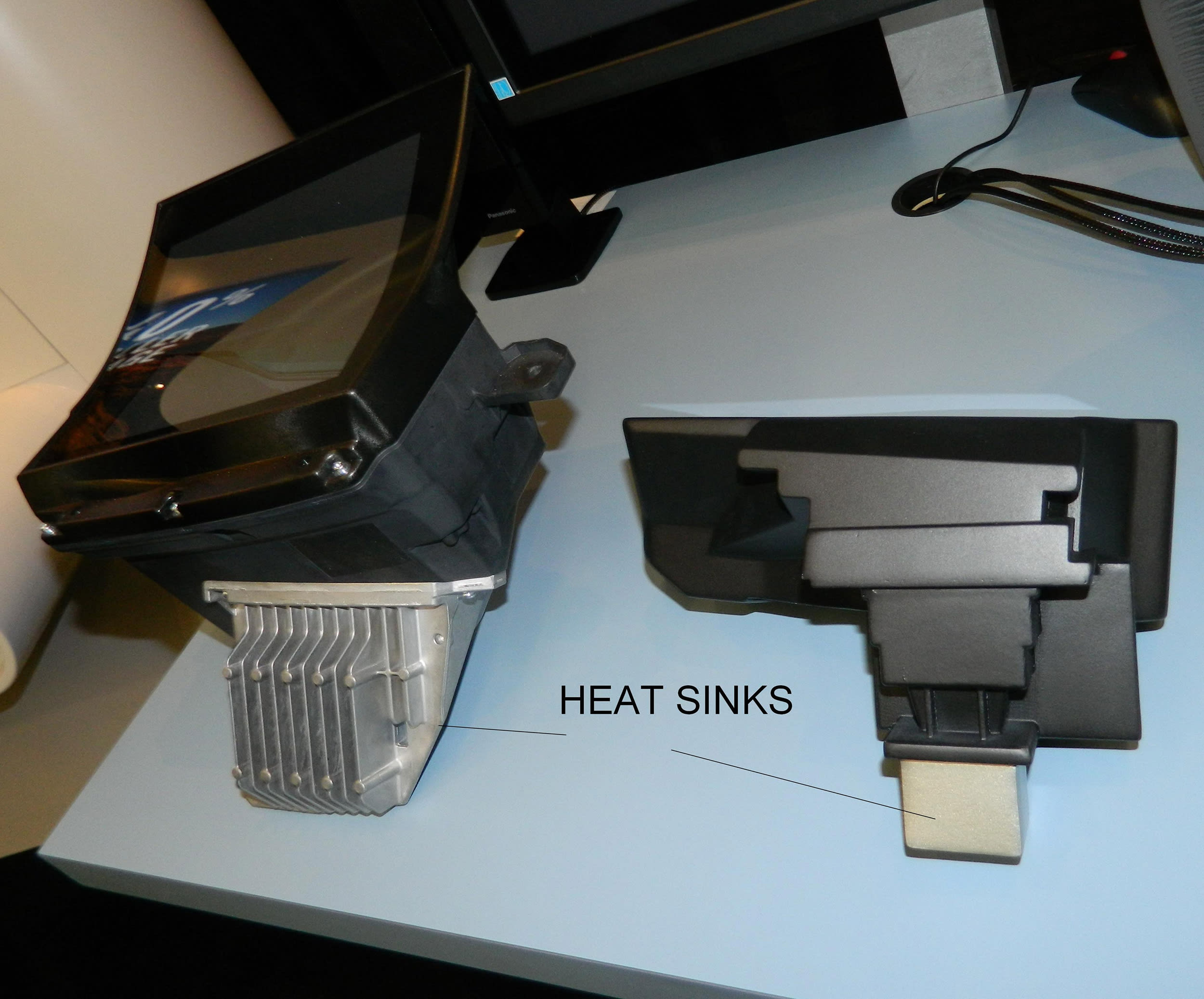
Panasonic at last week's North American International Auto Show in Detroit featured its current offering as well as what it is planning to have ready for vehicles in the 2016 model year. It is aiming at size reduction. Its first entry was a “mini”—a small unit that is already on sale for use with its navigation system, to provide a heads-up display of turn-by-turn directions. Installed on the top of the dashboard a short distance from the projector unit, it produces a 148 x 72 mm (5.8-x-2.8-in) display from a 1.3-m (51-in) viewing distance.
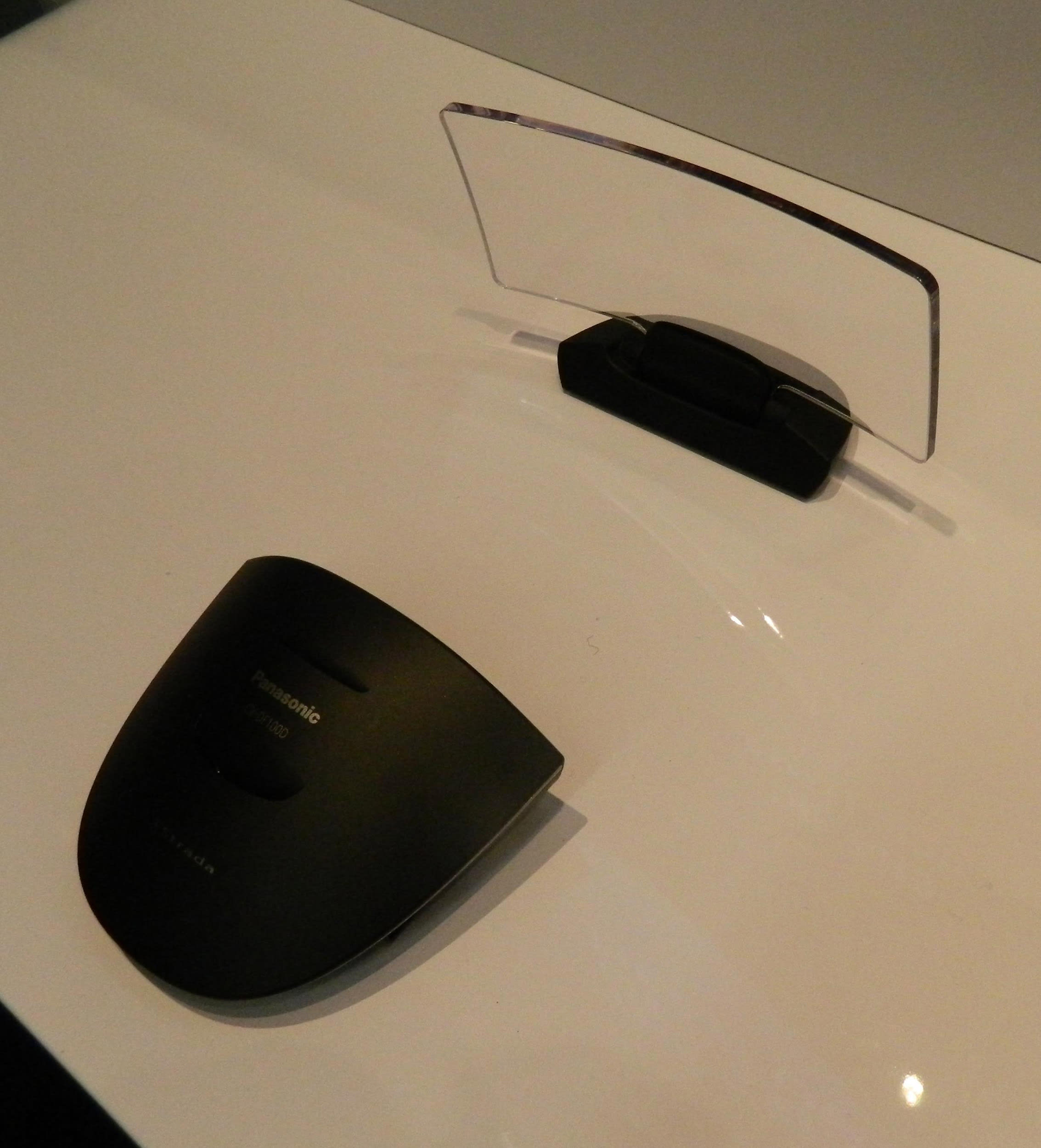
However, Panasonic’s forthcoming, primary entry will be a competitor for a leading unit already on the market. It has a 240 x 90-mm (9.45 x 3.54-in) display from a viewing distance of 2.0 m (78 in). This compares with 210 mm x 90 mm (8.27 x 3.5 in) from 2.2 m (86 in) for the competitive unit. The Panasonic is at least 40% smaller. The “full-size” units, although significantly larger than the “mini,” provide nearly twice the size of the display, and so can show far more information.
The size reduction was achieved by mounting electronics on a proprietary plastic board that provides high heat-transfer qualities, according to James Grace, Director of Advanced Engineering for the Panasonic's Automotive Systems Group. This mounting permits a large reduction in the size of the heat sink. Heat buildup in the projector assembly is a major issue for heads-up displays, which contain magnifying glass that intensifies heat from sunlight, and so existing modules have large heat sinks.
The display can show real-time traffic, including adjacent lanes, and flash warning indications, such as a vehicle coming into its path. So long as the selection of information is what the motorist wants most of the time, he has no reason to repeatedly refocus to check the instrument cluster.
More From SAE Media Group
Automotive Engineering
2016 SAE Congress: Fear of the Driverless Car as 2020 Approaches
Automotive Engineering
OEMs Continue to Diversify MaaS, Expand UX
Automotive Engineering
Google Goes Hands- and Feet-Free in Pursuit of Driverless Cars
Automotive Engineering
SAE Eye on Engineering Quick Take: Selling Vehicle Data
Automotive Engineering
Autoliv, Seeing Machines Team up to Develop Driver Monitoring Systems
Automotive Engineering
Daimler and Uber Team up to Bring More Self-Driving Cars to the Road
Automotive Engineering
Nissan's ProPILOT Assist Is More Than Lane-Keeping
Autonomous Vehicle Engineering
Why Car Washes Threaten Automated Vehicles
Automotive Engineering
BMW, Honda and Yamaha Form Connected Motorcycle Consortium
Automotive Engineering
Toyota Sticking with Measured, ‘Teammate’ Approach to Autonomous Development
Automotive Engineering
Ford Demonstrates Collision Avoidance with Automatic Evasive Steering
Automotive Engineering
Continental Shows Next-Generation Highly Automated Car
Automotive Engineering
Android, CarPlay Alter Taiwanese Companies' Strategies

Automotive Engineering
LED and ADAS Technologies Fuel Growth for Taiwan's Suppliers
Automotive Engineering
Integrated Electronic Stability Control
Automotive Engineering
SAE Convergence 2016: Automakers, Suppliers Firm That Autonomous Driving Not Decades Away
Automotive Engineering
Autonomous Vehicle Challenge Ramps up Competition at Convergence
Automotive Engineering
Johnson Controls, Faurecia Envision Interiors for Autonomous Driving
Automotive Engineering
Sharpening the Focus on OBD-II Security
Off-Highway Engineering
Revolutionizing ADAS with Forward-Looking Lidar, Part I
Automotive Engineering
CES 2017: Automotive Suppliers Eclipsing OEMs in Advanced Tech

Automotive Engineering
Delphi's RACam Integrated Radar-Vision System Enables Active-Safety Suites
Automotive Engineering
Cybersecurity, Safety Issues Require Government/industry Cooperation
Automotive Engineering
Can Ads Help in Vehicle-To-Vehicle Rollout?
Automotive Engineering
Annual Traffic Safety Forum Looks at NHTSA Data, OE Teen Driving Aids
Automotive Engineering
SAE Offers Free Summary Document on Levels of Vehicle Automation
Automotive Engineering
SAE Publishes Terminology Standard for Automated Driving Systems
Automotive Engineering
Continental's Matschi: Mobility Is Changing
Top Stories
INSIDERManufacturing & Prototyping
 How Airbus is Using w-DED to 3D Print Larger Titanium Airplane Parts
INSIDERManned Systems
 FAA to Replace Aging Network of Ground-Based Radars
NewsTransportation
 CES 2026: Bosch is Ready to Bring AI to Your (Likely ICE-powered) Vehicle
NewsSoftware
 Accelerating Down the Road to Autonomy
EditorialDesign
 DarkSky One Wants to Make the World a Darker Place
INSIDERMaterials
 Can This Self-Healing Composite Make Airplane and Spacecraft Components Last...
Webcasts
Defense
 How Sift's Unified Observability Platform Accelerates Drone Innovation
Automotive
 E/E Architecture Redefined: Building Smarter, Safer, and Scalable...
Power
 Hydrogen Engines Are Heating Up for Heavy Duty
Electronics & Computers
 Advantages of Smart Power Distribution Unit Design for Automotive...
Unmanned Systems
 Quiet, Please: NVH Improvement Opportunities in the Early Design...
