




Ford Expands ‘Split-View’ Camera Applications in SUVs, Trucks
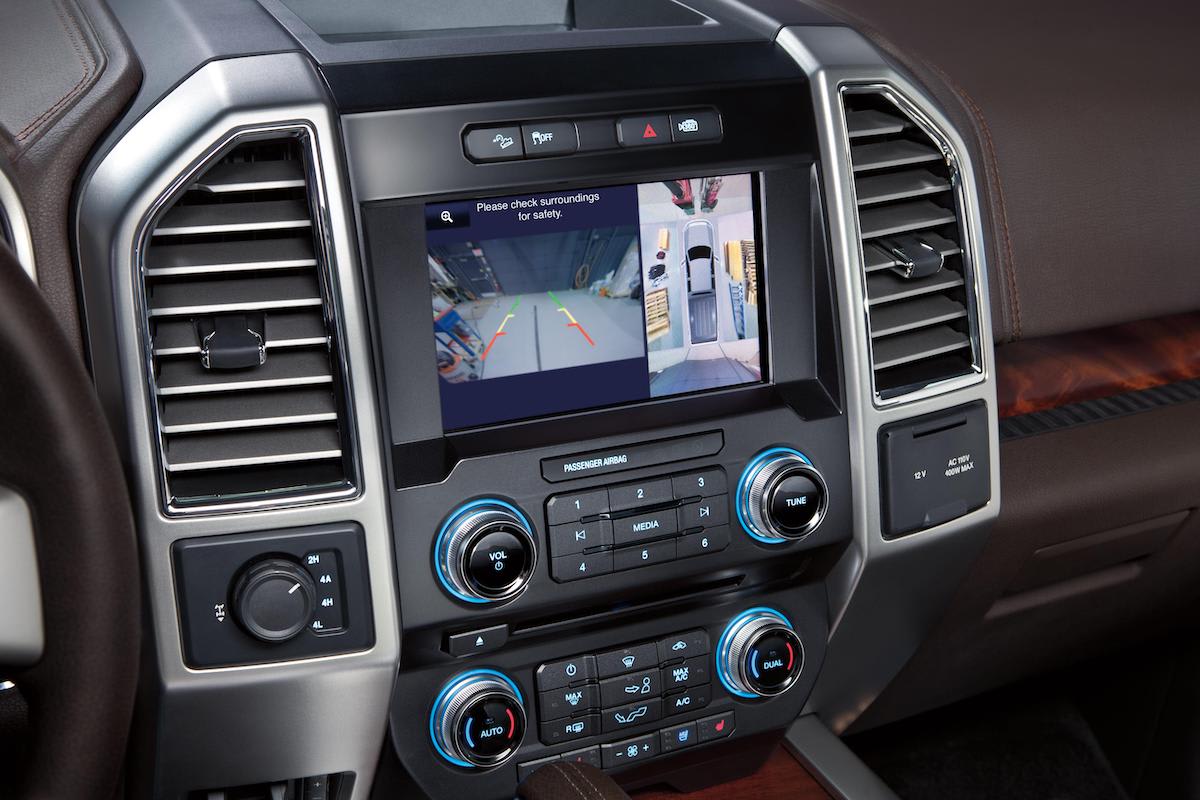
Ford’s latest vehicle camera technology can help drivers see around corners. The optional “split-view” camera feature enables a view of traffic and obstacles that enter the vehicle’s path from the side by displaying a 180° view ahead of or behind a vehicle.
Split view uses real-time video from 1-megapixel wide-angle-lens cameras mounted in the vehicle’s grill and lift gate. A tri-panel display in the 8-in screen helps customers to perceive quickly whether an obstacle is coming from either side or straight on. Split view is activated by button and automatically shuts off when vehicle speed reaches just over 6 mph (10 km/h).
Split view will be offered on nearly all Ford SUVs globally by 2020, according to the company. A front-only system was introduced on the 2015 Ford Edge, and a front/rear system is standard on the 2016 Explorer Limited and Platinum trim levels in the U.S. and China. European Galaxy and S-Max models get front split view next year.
A small telescopic jet washer keeps the front camera clean on split-view-equipped vehicles; Explorer also uses a washer for the rear camera.
The new aluminum-intensive 2017 Super Duty pickup features up to seven cameras and all-new electrical architecture, making Ford an industry leader in advanced camera technology. The 2016 F-150 has up to five cameras available—four of them mounted in the outside mirrors, and at the rear and front of the vehicle, to enable a 360° view and backup-view functions.
A forward-looking camera mounted behind the rearview mirror is used to activate auto high beams and lane-keeping assist. While the driver never sees the image from this camera, the vehicle’s computer uses the visual signal to operate the rest of the system.
More From SAE Media Group
Automotive Engineering
2017 Ford Escape Gains Major NVH, Powertrain, Connectivity Upgrades
Automotive Engineering
Magna Safety Systems Give Parents "Eyes in the Back of Their Heads"
Automotive Engineering
NAIAS 2017: Yanfeng Shows Concept Interior for Autonomous Driving
Automotive Engineering
Ford Focuses on Cameras
Off-Highway Engineering
Mercedes Improves 2015 Sprinter with 4x4 Option, Cross Wind Assist
Automotive Engineering
Hyundai Controls CO2 Level Inside Genesis Cabin
Automotive Engineering
Engineering Ford’s Jumbo SUV for Off-Roading
Automotive Engineering
Integrated Electronic Stability Control
Automotive Engineering
AT&T, Airbiquity Team up for Connected-Vehicle Services
Automotive Engineering
Sharpening the Focus on OBD-II Security
Automotive Engineering
SAE Publishes Terminology Standard for Automated Driving Systems
Automotive Engineering
Ford SmartLink Brings Wireless Connectivity to Older-Model Vehicles
Automotive Engineering
Android, CarPlay Alter Taiwanese Companies' Strategies
Automotive Engineering
Nissan's ProPILOT Assist Is More Than Lane-Keeping
Automotive Engineering
‘Supercars’ and Character Are Critical in the Autonomous Future
Automotive Engineering
Car Sickness, Occupant Seating and Politics Will Shape Autonomous Vehicle Interiors
Automotive Engineering
Delphi's RACam Integrated Radar-Vision System Enables Active-Safety Suites
Off-Highway Engineering
Mercedes-Benz Bills 3rd-Gen Sprinter as First Holistic Mobility Solution
Automotive Engineering
BMW, Honda and Yamaha Form Connected Motorcycle Consortium
Automotive Engineering
Voltage Spike at 2017 Frankfurt Auto Show
Automotive Engineering
CES 2017: Faraday Future Shows Its First Vehicle—the FF 91
Automotive Engineering
ZF and Hella Launch Sensor-Systems Development Partnership
Automotive Engineering
Automakers and Suppliers Crank up Their Interest in Electric Bikes
Automotive Engineering
OEMs Continue to Diversify MaaS, Expand UX
Automotive Engineering
2022 Toyota Tundra: V8 Out, Twin-Turbo Hybrid Takes Over
Automotive Engineering
Volvo's 2017 S90 Has Standard Semi-Autonomous Driving System
Automotive Engineering
Ford Scores Greater Autonomous Capability with New Velodyne Ultra Puck LiDAR
Automotive Engineering
Autonomous Vehicle Challenge Ramps up Competition at Convergence
Automotive Engineering
SAE Convergence 2016: Automakers, Suppliers Firm That Autonomous Driving Not Decades Away
Automotive Engineering
Google Goes Hands- and Feet-Free in Pursuit of Driverless Cars
Top Stories
INSIDERManufacturing & Prototyping
 How Airbus is Using w-DED to 3D Print Larger Titanium Airplane Parts
INSIDERManned Systems
 FAA to Replace Aging Network of Ground-Based Radars
NewsTransportation
 CES 2026: Bosch is Ready to Bring AI to Your (Likely ICE-powered) Vehicle
NewsSoftware
 Accelerating Down the Road to Autonomy
EditorialDesign
 DarkSky One Wants to Make the World a Darker Place
INSIDERMaterials
 Can This Self-Healing Composite Make Airplane and Spacecraft Components Last...
Webcasts
Defense
 How Sift's Unified Observability Platform Accelerates Drone Innovation
Automotive
 E/E Architecture Redefined: Building Smarter, Safer, and Scalable...
Power
 Hydrogen Engines Are Heating Up for Heavy Duty
Electronics & Computers
 Advantages of Smart Power Distribution Unit Design for Automotive...
Unmanned Systems
 Quiet, Please: NVH Improvement Opportunities in the Early Design...
