




Rockwell Collins Launches New High-Fidelity Image Generator
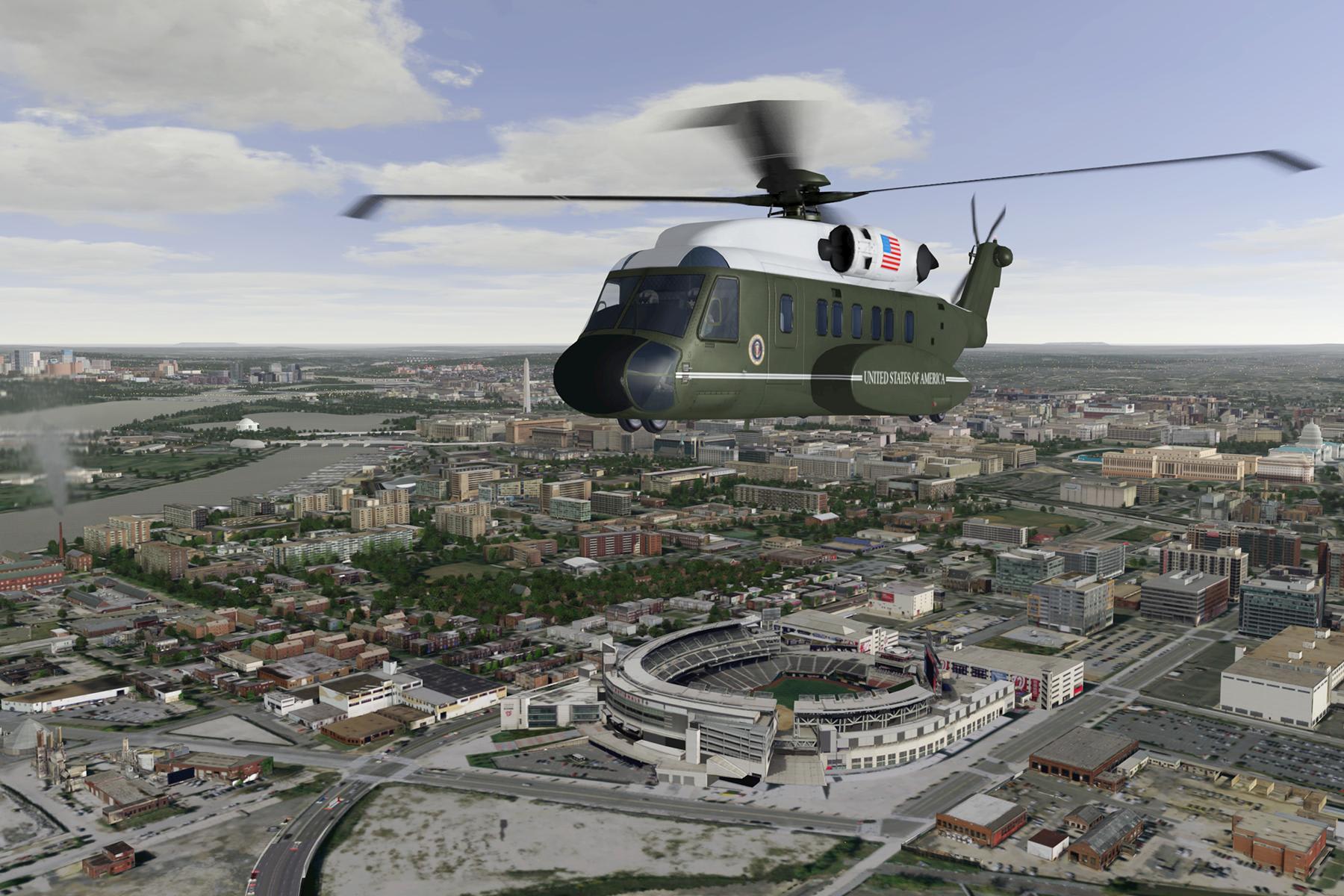
In the launch of its EP-8100 image generating system for commercial and military simulation and training, Rockwell Collins said that the system addresses the key issues facing its customers today, namely how to bring new levels of realism and performance to their training environments while preserving the investments they’ve already made. It is fully backward compatible with the EP-8000 image generator.
One of the key differentiators of the EP-8100 is the system’s ability to use customers’ existing databases. The Database Generation System (DBGS) features conversion software that allows existing Rockwell Collins synthetic environments, as well as many industry standard synthetic environments, to run on the EP-8100.

These converted environments can be executed in their original form or may be enhanced to take advantage of the unique capabilities of the EP-8100. It contains system support, including edge blend, image warping, symbology overlay, and auto alignment native to the EP-8100 with no additional third-party hardware or software required.
In a market where all other image generators are based on video-game graphics cards, Rockwell Collins emphasizes that the EP-8100 is driven by real-time, simulation-specific graphics cards and software designed for real missions. It provides procurement cycles of five to eight years and life-cycle support in excess of 15 years.
While leveraging game-like concepts, the real-time software is specifically designed for simulation and training applications. Updates of the software for program-specific requirements concurrency updates require no hardware changes and can be performed in the field.
Other new capabilities that are highlighted in the EP-8100 include a WholeEarth environment, allowing large-area training with small inset development; a large catalog of high-resolution airport models, as well as automatic generation of secondary airfields capable of supporting many training tasks; regional weather, allowing up to eight simultaneous, unique weather patterns with smooth and continuous transition from one to another; adaptive architecture, providing efficient volumetric rendering (patent pending) for more realistic clouds, smoke, and dust; high-fidelity sensor simulation, addressing IR, NVG, EO, and LLTV requirements; and "industry-leading" anti-aliasing algorithms, yielding a much improved moving image quality. It also includes real-world lighting with advanced, physics-based atmospheric light scattering and particle effects.
More From SAE Media Group

Aerospace & Defense Tech Briefs
High-Performance Enclosure Systems for Aerospace and Defense Applications: Preparing for What’s Next
Aerospace & Defense Tech Briefs
Automating the Software Build Process for an Aerospace Embedded System
Aerospace & Defense Tech Briefs
In-Network Processing on Low-Cost IoT Nodes for Maritime Surveillance
Aerospace & Defense Tech Briefs
A Supercomputer for Aerospace and Defense Systems Modeling and Simulation
Aerospace & Defense Tech Briefs
No Shortcuts for Verifying, Validating Aerospace System Designs
Tech Briefs
Product of the Month
Robotics & Automation INSIDER
New Imaging Technique Reconstructs the Shapes of Hidden Objects
Tech Briefs
Embracing Agile Product Development
Aerospace & Defense Tech Briefs
The Art of Reverse Engineering Yesteryear for Aerospace and Defense Data Storage Drives
Aerospace & Defense Tech Briefs
From 3D Printer to Practice

Aerospace & Defense Tech Briefs
CAD-CAM-CNC System
Aerospace & Defense Tech Briefs
Automatic Collision Avoidance Added to Inspection Software
Aerospace & Defense Tech Briefs
Architecture Developed for Monitoring and Anomaly Detection of Space Systems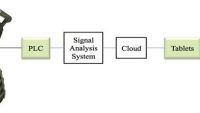

Aerospace & Defense Tech Briefs
New Products
Aerospace & Defense Tech Briefs
A 'STEP' Forward for Product Lifecycle Management
Aerospace & Defense Tech Briefs
Industry Invited to Participate in AeroTech Aerospace and Defense Technical Program
Aerospace & Defense Tech Briefs
MathWorks Rolls out Major Update to Aerospace Blockset
Aerospace & Defense Tech Briefs
HTX Labs Adapts Its VR Platform for the Air Force Pilot Training Next Initiative
Aerospace & Defense Tech Briefs
3D Scanning Provides Key Weapon for Aerospace and Defense Manufacturing
Off-Highway Engineering
AI Moves into Military Boards and Subsystems

Off-Highway Engineering
Energid Actively Working on Simulation Technologies for Lunar and Planetary Rovers
Automotive Engineering
DSpace Launches Simphera AV Development Simulator
Aerospace & Defense Tech Briefs
Software for Additive Design, Manufacturing Evolves Quickly
Tech Briefs
Executive Roundtable: Cloud Software
Aerospace & Defense Tech Briefs
Aerion Taps Siemens’ Xcelerator Portfolio to Enable Next-Generation Global Transportation Networks
Aerospace & Defense Tech Briefs
Video Graphics Modules
Top Stories
INSIDERManufacturing & Prototyping
 How Airbus is Using w-DED to 3D Print Larger Titanium Airplane Parts
INSIDERManned Systems
 FAA to Replace Aging Network of Ground-Based Radars
NewsTransportation
 CES 2026: Bosch is Ready to Bring AI to Your (Likely ICE-powered) Vehicle
NewsSoftware
 Accelerating Down the Road to Autonomy
EditorialDesign
 DarkSky One Wants to Make the World a Darker Place
INSIDERMaterials
 Can This Self-Healing Composite Make Airplane and Spacecraft Components Last...
Webcasts
Defense
 How Sift's Unified Observability Platform Accelerates Drone Innovation
Automotive
 E/E Architecture Redefined: Building Smarter, Safer, and Scalable...
Power
 Hydrogen Engines Are Heating Up for Heavy Duty
Electronics & Computers
 Advantages of Smart Power Distribution Unit Design for Automotive...
Unmanned Systems
 Quiet, Please: NVH Improvement Opportunities in the Early Design...
