




Projected-Capacitive Touch Panel

Tianma NLT America is introducing a new touch screen technology developed by NLT Technologies, Ltd. The new 8.4-in XGA is an amorphous-silicon thin-film-transistor (TFT) liquid crystal display (LCD) module with a "Wet & Glove" projected capacitive (PCAP) touch sensor bonded to the front, which enables operation even when the screen is wet and/or the operator is wearing gloves. It provides dry screen tracking, water buildup tracking, and single glove operation, even in a wet environment. PCAP touch panels are being adopted in a range of industrial equipment, according to the company, for the enhanced features they provide, such as flush surface designs, multi-touch functionality, and gesture operation. Touch coordinates are detected using a combination of mutual-capacitance and self-capacitance sensors, and a proprietary sensitivity adjustment tool enables operation while wearing 2-mm (0.08-in) thick gloves. Wet & Glove touch technology also supports various design options, such as bonding method or surface treatments. Treatments to protect against fingerprints or reduce glare, for example, are accommodated, so end-product designers can set specifications to suit a range of usage scenarios.
More From SAE Media Group
Off-Highway Engineering
Multi-Display Controller Board
Off-Highway Engineering
Displays Add Color to Simplify Operator Tasks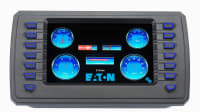
Aerospace Manufacturing and Machining INSIDER
Army Launches CMOSS Prototyping Competition for Computer Chassis and Cards
Automotive Engineering
Development Kit for Gesture Recognition
Automotive Engineering
Mixed Signal Chip Helps Trim Cost of Adding Display Screens
Automotive Engineering
Automotive Display Driver Integrated Circuit
Off-Highway Engineering
Microcontroller-Based Display

Automotive Engineering
Haptic Feedback Is Key to Continental’s New Anti-Distraction Touch Screen
Aerospace & Defense Tech Briefs
VPT Rad-Hard Point of Load Converters Designed for Digital Processing in Space Environments
Aerospace & Defense Tech Briefs
Military, Suppliers Focus on Long-Term Technical Advances, Compatibility
Off-Highway Engineering
Rugged Handheld
Aerospace & Defense Tech Briefs
How SpaceVPX is Influencing the Design of Next Generation Spacecraft Avionics
Automotive Engineering
Touch Panel Computer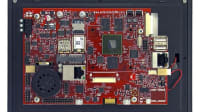
Off-Highway Engineering
Defense Agencies Focus on Electronic System Compatibility
Automotive Engineering
HMI’s Simple Challenge: Control Everything Possible Without Any Difficulty
Aerospace Manufacturing and Machining INSIDER
Field-Deployable Computing Platform
Automotive Engineering
Renesas Reigns Among Automotive Semiconductor Makers
Aerospace & Defense Tech Briefs
Marvin Test Solutions Tailors GX3800e PXI Express FPGA Module for Test, Automation, Instrumentation Engineering
Automotive Engineering
Renesas Increases Its Focus on Platforms
Automotive Engineering
Market for 8-Bit Chips Remains Strong
Automotive Engineering
Q&A: Print Your Next Wiring Harness
Automotive Engineering
Haptic Feedback for Gesture-Control HMI
Off-Highway Engineering
Military System Designers Aren’t Resting on COTS Deployment
Automotive Engineering
1000-V SiC MOSFET
Off-Highway Engineering
Robust Controller Board
Automotive Engineering
LIN Family for In-Vehicle Networking
Automotive Engineering
Four-Channel Decoder for Automotive Around-View Systems
Automotive Engineering
Heavy-Duty LVIT Inductive Linear Position Sensors
Automotive Engineering
Electromechanical Joining System
Top Stories
INSIDERManufacturing & Prototyping
 How Airbus is Using w-DED to 3D Print Larger Titanium Airplane Parts
INSIDERManned Systems
 FAA to Replace Aging Network of Ground-Based Radars
NewsTransportation
 CES 2026: Bosch is Ready to Bring AI to Your (Likely ICE-powered) Vehicle
NewsSoftware
 Accelerating Down the Road to Autonomy
EditorialDesign
 DarkSky One Wants to Make the World a Darker Place
INSIDERMaterials
 Can This Self-Healing Composite Make Airplane and Spacecraft Components Last...
Webcasts
Defense
 How Sift's Unified Observability Platform Accelerates Drone Innovation
Automotive
 E/E Architecture Redefined: Building Smarter, Safer, and Scalable...
Power
 Hydrogen Engines Are Heating Up for Heavy Duty
Electronics & Computers
 Advantages of Smart Power Distribution Unit Design for Automotive...
Unmanned Systems
 Quiet, Please: NVH Improvement Opportunities in the Early Design...
