




Boeing to Design XS-1 Experimental Spaceplane
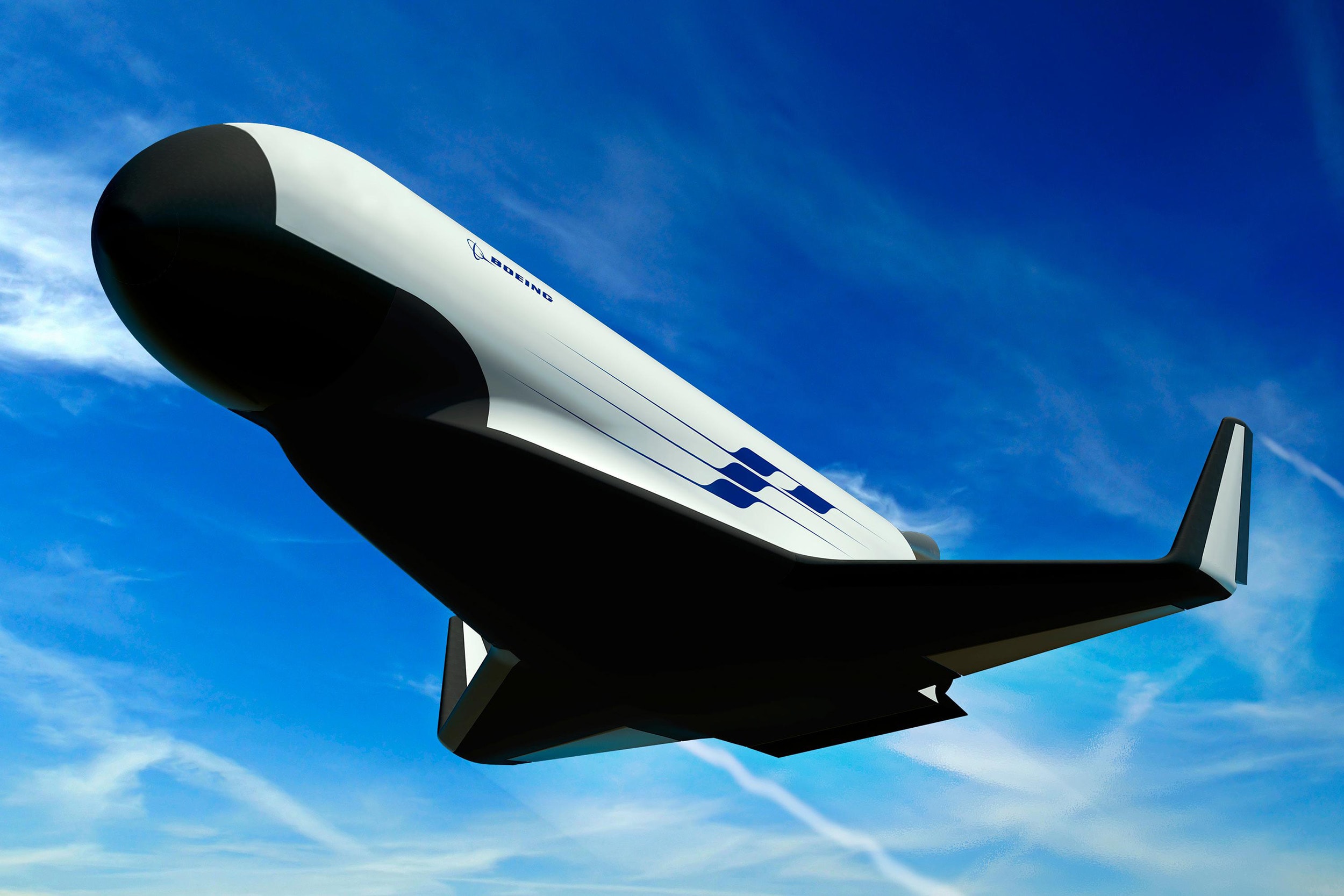
Boeing plans to design a reusable launch vehicle for the Defense Advanced Research Projects Agency (DARPA) in support of the U.S. government’s efforts to reduce satellite launch costs. DARPA’s XS-1 Experimental Spaceplane is conceived as a reusable, unmanned booster with costs, operation, and reliability similar to modern aircraft. Under the $4 million preliminary design contract, Boeing plans to work on a reusable first stage launch vehicle capable of carrying and deploying an upper stage to launch small satellite payloads of 3000 to 5000 lb into low-Earth orbit. Boeing’s design would allow the autonomous booster to carry the second stage and payload to high altitude and deploy them into space. The booster would then return to Earth, where it could be prepared for the next flight by applying operation and maintenance principles similar to modern aircraft. DARPA plans to hold a Phase II competition next year for the follow-on production order to build the vehicle and conduct demonstration flights.
More From SAE Media Group
Aerospace INSIDER
DARPA Teams With Industry to Create Spaceplane
Aerospace & Defense Tech Briefs
Intuitive Machines Developing Sample Return Vehicle for ISS National Lab
Tech Briefs
Readying an Innovative RSGS Payload for Launch
Aerospace & Defense Tech Briefs
Can the Air Force Reach a 24-Hour Launch Window?
Aerospace & Defense Tech Briefs
NASA Backs Commercialization of Human Spaceflight, Commercial Marketplace in LEO
Aerospace & Defense Tech Briefs
Airbus Group and Safran Join Forces in Launcher Activities

Aerospace & Defense Tech Briefs
Firefly Aerospace Is the Latest Addition to Florida’s “Space Coast”
Aerospace & Defense Tech Briefs
Late Paul Allen’s Stratolaunch Company Cancels Launch Vehicle Projects
Aerospace & Defense Tech Briefs
Blue Origin Aims for Crewed New Shepard Launch in 2019
Aerospace & Defense Tech Briefs
Iridium, Aireon, SpaceX Celebrate Satellite Launch, System Deployment
Aerospace & Defense Tech Briefs
OmegA Rocket Sustains Explosion During First Static Test, Northrop Grumman Maintains Test Was a Success
Aerospace & Defense Tech Briefs
AVIO Engineers Evolve Vega Rocket Design, Enhance Avionics and Propulsion
Aerospace INSIDER
3D Printers Create Tomorrow’s Rocket Engines
Aerospace INSIDER
DARPA-Boeing Spaceplane Completes Engine Tests
Aerospace INSIDER
Boeing X-37B Latest Mission Tests Quantum Inertial Sensor in Space
NASA Spinoff
Launch, Return, Repeat

Aerospace & Defense Tech Briefs
Three Stages of Separation: Bidding Farewell to the Delta II Launch Vehicle

NASA Spinoff
A Huge Development for Tiny Satellites
Aerospace & Defense Tech Briefs
Space Launch Providers Submit Proposals for National Security Space Launch Program
Aerospace & Defense Tech Briefs
Stratolaunch Composite Air-Launch Aircraft Pulls the Wheels up During Latest Taxi Test
Aerospace & Defense Tech Briefs
Stratolaunch All-Composite Aircraft Achieves First Flight

Aerospace INSIDER
Vulcan Rocket Completes First National Security Launch for Space Force
NASA Spinoff
Commercial Sales Flow from NASA Valves

Top Stories
INSIDERManufacturing & Prototyping
 How Airbus is Using w-DED to 3D Print Larger Titanium Airplane Parts
INSIDERManned Systems
 FAA to Replace Aging Network of Ground-Based Radars
NewsTransportation
 CES 2026: Bosch is Ready to Bring AI to Your (Likely ICE-powered) Vehicle
NewsSoftware
 Accelerating Down the Road to Autonomy
EditorialDesign
 DarkSky One Wants to Make the World a Darker Place
INSIDERMaterials
 Can This Self-Healing Composite Make Airplane and Spacecraft Components Last...
Webcasts
Defense
 How Sift's Unified Observability Platform Accelerates Drone Innovation
Automotive
 E/E Architecture Redefined: Building Smarter, Safer, and Scalable...
Power
 Hydrogen Engines Are Heating Up for Heavy Duty
Electronics & Computers
 Advantages of Smart Power Distribution Unit Design for Automotive...
Unmanned Systems
 Quiet, Please: NVH Improvement Opportunities in the Early Design...
