




Blue Origin Aims for Crewed New Shepard Launch in 2019
After the successful NS-10 launch, Blue Origin hopes for a crewed test flight by the end of the year.

Kent, Washington-based Blue Origin successfully completed the tenth launch of its suborbital launch vehicle New Shepard . The NS-10 launch – the fourth launch for this specific vehicle – was in support of NASA ’s Space Technology Mission Directorate Flight Opportunities program and carried eight agency-sponsored research and technology payloads into low Earth orbit (LEO). The New Shepard is designed to be a crewed, space tourism vehicle, and although the launch was unmanned, statements made during Blue Origin’s launch broadcast suggest that the company has its first crewed launch test flight targeted for the end of this year.

“So exciting to think that human spaceflight is just around the corner [for Blue Origin], said Blue Origin Director of Astronaut and Orbital Sales, Ariane Cornell, during the launch broadcast. “We're aiming for the end of this year, by the end of this year, but as we have said before, we are not in a rush. We want to take our time, we want to do this right.”
Previously, owner and founder Jeff Bezos, had suggested crewed launches as early as December 2017.
According to a June, 2018 Blue Origin announcement, the company will begin ticket sales at some point in 2019, although pricing and expected launch dates have not been announced.
NS-10

According to Blue Origin, New Shepard’s vertical-landing feature and reusability is lowering launch costs and creating routine access to space. Lowering the cost of microgravity research increases the opportunities for universities, government researchers and entrepreneurs to test payloads and technologies in space.
Flying New Shepard more frequently is critically important to the future of Blue Origin, its growing fleet of launch vehicles, and the goal of lowering the cost of access to space. Blue Origin is using the continued success and proven stability of the New Shepard configuration to validates methods, operations, and technology needed for larger scale programs like its New Glenn launch vehicle.
The New Glenn will have a seven-meter payload fairing enabling two times the payload volume of any existing launch vehicle.
William Kucinski is content editor at SAE International, Aerospace Products Group in Warrendale, Pa. Previously, he worked as a writer at the NASA Safety Center in Cleveland, Ohio and was responsible for writing the agency’s System Failure Case Studies. His interests include literally anything that has to do with space, past and present military aircraft, and propulsion technology.
More From SAE Media Group
Aerospace & Defense Tech Briefs
Blue Origin Mission 9 a Success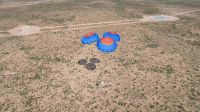
Aerospace & Defense Tech Briefs
Late Paul Allen’s Stratolaunch Company Cancels Launch Vehicle Projects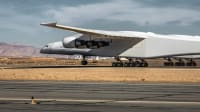
Aerospace & Defense Tech Briefs
Can the Air Force Reach a 24-Hour Launch Window?
Aerospace & Defense Tech Briefs
Space Launch Providers Submit Proposals for National Security Space Launch Program
Aerospace & Defense Tech Briefs
Firefly Aerospace Is the Latest Addition to Florida’s “Space Coast”
Aerospace & Defense Tech Briefs
OmegA Rocket Sustains Explosion During First Static Test, Northrop Grumman Maintains Test Was a Success
Aerospace & Defense Tech Briefs
SpaceX Tests Raptor Engine, Prepares for Starship “Hop”
Aerospace & Defense Tech Briefs
Stratolaunch All-Composite Aircraft Achieves First Flight
Aerospace & Defense Tech Briefs
Orbex Debuts Innovative Smallsat Launch Vehicle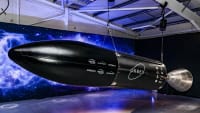
Aerospace & Defense Tech Briefs
Northrop Grumman Wins $792M to Deliver Intermediate, Heavy Versions of OmegA Space Launch Vehicle
Aerospace & Defense Tech Briefs
U.K. Space Agency Partners with Industry to Advance Spaceflight Program
Aerospace & Defense Tech Briefs
New Zealand and LeoLabs Establish the First Low-Earth Orbit Regulatory Platform
Aerospace & Defense Tech Briefs
Stratolaunch Composite Air-Launch Aircraft Pulls the Wheels up During Latest Taxi Test
Aerospace & Defense Tech Briefs
First Orion European Space Module Delivered
Aerospace & Defense Tech Briefs
Three Stages of Separation: Bidding Farewell to the Delta II Launch Vehicle
Off-Highway Engineering
NASA Opens the International Space Station for Commercial Business
Aerospace & Defense Tech Briefs
Delta II’s Final Flight a Success
Aerospace & Defense Tech Briefs
NASA Budget Amendment to Help Send Americans to Moon by 2024, Then Mars
Aerospace & Defense Tech Briefs
Northrop Grumman Tests, Qualifies Orion Launch Abort Motor for Flight in Cold Conditions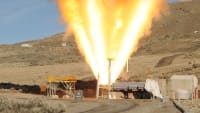
Aerospace & Defense Tech Briefs
What Does NASA Do with a Space Station Originally Developed for a Now-Cancelled Mission?
Aerospace & Defense Tech Briefs
Orion Launch Abort System Passes Full-Stress Flight Test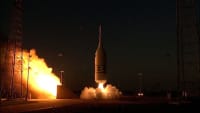
Automotive Engineering
OneWeb Ramps up Satellite Production with New Round of Funding
Aerospace & Defense Tech Briefs
Northrop Grumman Completes First Live Motor Cast for OmegA Rocket
Aerospace & Defense Tech Briefs
NASA, Boeing, SpaceX to Launch ‘New Era in Human Spaceflight’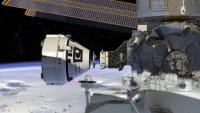
Aerospace & Defense Tech Briefs
JAXA Launches HTV7 Unmanned Cargo Spacecraft on Resupply Mission to ISS
Aerospace & Defense Tech Briefs
ULA’s Vulcan Centaur Will Launch Sierra Nevada Corporation’s Dream Chaser Spaceplane
Aerospace & Defense Tech Briefs
Lockheed Martin’s “Non-Operational” Space Fence Detects Indian Anti-Satellite Operations While Still in Test Mode
Aerospace & Defense Tech Briefs
Jeff Bezos Lays out Blue Origin’s Moon Shot, Debuts Lunar Lander
Aerospace & Defense Tech Briefs
Techstars and Starburst Start New Space Technology Business Accelerator
Aerospace & Defense Tech Briefs
Raytheon, DARPA Push Forward with Hypersonic Weapon Design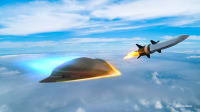
Transcript
No transcript is available for this video.
Top Stories
NewsRF & Microwave Electronics
 Microvision Aquires Luminar, Plans Relationship Restoration, Multi-industry Push
INSIDERAerospace
 A Next Generation Helmet System for Navy Pilots
INSIDERDesign
 New Raytheon and Lockheed Martin Agreements Expand Missile Defense Production
INSIDERMaterials
 How Airbus is Using w-DED to 3D Print Larger Titanium Airplane Parts
NewsPower
 Ford Announces 48-Volt Architecture for Future Electric Truck
ArticlesAR/AI

Webcasts
Electronics & Computers
 Cooling a New Generation of Aerospace and Defense Embedded...
Automotive
 Battery Abuse Testing: Pushing to Failure
Power
 A FREE Two-Day Event Dedicated to Connected Mobility
Unmanned Systems
 Quiet, Please: NVH Improvement Opportunities in the Early Design Cycle
Automotive
 Advantages of Smart Power Distribution Unit Design for Automotive &...
Energy
 Sesame Solar's Nanogrid Tech Promises Major Gains in Drone Endurance